
Understanding RentGrow Tenant Screening Reports
Learn how RentGrow tenant screening works, how to get your report, fix errors, and protect your rental housing rights.
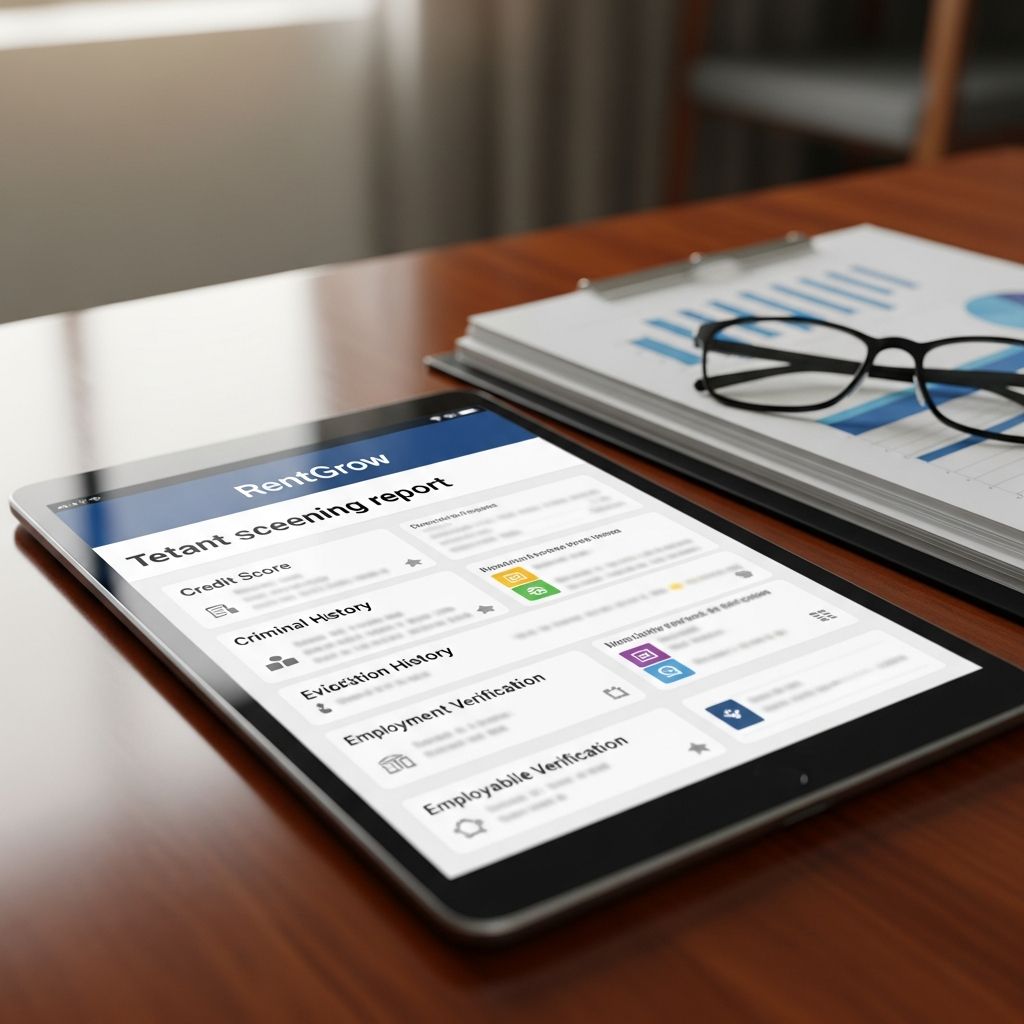
RentGrow, Inc. is a consumer reporting company that prepares tenant screening reports for landlords and property managers. These reports can influence whether you are approved for a rental home, what deposit you pay, or whether your lease is renewed. Understanding how RentGrow works and how to review and correct your information is essential for protecting your access to housing.
1. What RentGrow Is and How It Fits Into Tenant Screening
RentGrow is a resident screening provider and a wholly owned subsidiary of Yardi Systems, Inc., a major property management software company used by landlords and management firms across the United States. Property owners and managers use RentGrow to evaluate prospective tenants by ordering screening reports about applicants.
Key points about RentGrow:
- It is a consumer reporting agency (CRA) that sells consumer reports to landlords and property managers.
- It does not make rental decisions; the property owner or manager sets criteria and decides whether to approve you.
- It collects data from credit bureaus, public records, and other third-party sources to build screening reports.
Because RentGrow is a CRA, its operations are regulated by the Fair Credit Reporting Act (FCRA), a federal law that sets standards for accuracy, consumer access, and dispute rights for consumer reports.
2. What Information a RentGrow Tenant Screening Report May Contain
A RentGrow report is not just a simple credit check. It can combine multiple categories of information to give a landlord a broad picture of your background as a prospective tenant.
| Type of Information | Typical Contents | Where It May Come From |
|---|---|---|
| Credit data | Credit report details, payment history, open accounts, delinquencies, and possibly a credit score. | Major credit bureaus such as Experian, Equifax, and TransUnion. |
| Rental and eviction history | Previous rental addresses, payment performance, lease breaks, and any available eviction records. | Tenant databases, public court records, and rental-related subsidiaries of credit bureaus. |
| Criminal history | Criminal records, sex offender registry checks, and other law-enforcement-related records. | National, state, and county criminal databases and other public record vendors. |
| Civil records | Judgments, liens, and other civil court actions that may be relevant to tenancy. | Civil and municipal court records, and public data providers. |
| Employment and income | Employment verification, stated income, and sometimes income confirmation. | Information you provide on the rental application and verification sources. |
Landlords can customize which pieces of information RentGrow includes, so different properties may receive different types of reports.
3. Why RentGrow May Appear on Your Credit Report
When a property manager orders a RentGrow report, that request may show up on your credit report as an inquiry under RentGrow’s name or an affiliated name.
Common reasons RentGrow appears as an inquiry include:
- You applied to rent an apartment or home that uses RentGrow for background checks.
- You acted as a co-signer or guarantor for someone else’s rental application.
- Your landlord rescreened you when your lease was up for renewal.
Landlords generally must obtain your permission before they run a tenant screening report, usually via a signed authorization in your application. If you see a RentGrow inquiry that you did not authorize, that may be an error or an unauthorized inquiry, and you have the right to dispute it with the credit bureau and potentially with RentGrow.
4. How to Request Your RentGrow Screening Report or File
As a consumer, you have the right to access the information RentGrow maintains about you. The Consumer Financial Protection Bureau (CFPB) lists RentGrow among the consumer reporting companies that will provide a free screening report if you request it and if they have a file on you.
4.1 Steps to Request Your Current Screening Report
To get a copy of the most recent tenant screening report that a landlord obtained from RentGrow (if one exists), you generally need to:
- Identify the property where you applied or were screened.
- Contact RentGrow using the contact information provided in your adverse action notice or the CFPB’s directory.
- Submit a request for your screening report, providing identity verification details (such as name, address, and Social Security number).
According to CFPB guidance about consumer reporting companies, if a company is required to give you an annual free report, it must send that report within 15 days of receiving your request. Requesting your own consumer report does not hurt your credit scores.
4.2 Requesting Your Full Consumer File From RentGrow
RentGrow also allows consumers to request all tenant screening reports it has ever prepared about them, sometimes referred to as your consumer file. This file may contain multiple reports ordered by different landlords over time and can take up to 60 days to compile.
This broader file request can be useful when you want to see the history of how your data has been reported, but it is usually better to request the current or most recent report if you are dealing with an urgent issue like a recent denial.
5. Your Rights Under the Fair Credit Reporting Act (FCRA)
Because RentGrow is a consumer reporting agency, it must follow the FCRA. The FCRA gives you powerful rights when a rental decision is based on information in a screening report. The CFPB describes these rights in its general guidance on tenant screening and consumer reports.
5.1 Access and Review
- You can request and review a copy of any tenant screening report prepared about you.
- You may obtain free credit reports from each of the three nationwide credit bureaus weekly via AnnualCreditReport.com, which can help you cross-check data used in tenant screening.
5.2 Adverse Action Notices
If a landlord takes an adverse action against you based on a RentGrow report—such as denying your application, requiring a higher deposit, or adding a co-signer—you are entitled to a written notice that includes:
- The name, address, and phone number of the consumer reporting company (such as RentGrow) that provided the report.
- A statement that the company did not make the decision and cannot explain the reasons for the decision.
- Your right to a free copy of the report and your right to dispute the accuracy or completeness of any information.
5.3 Disputing Errors
- You can dispute information you believe is inaccurate or incomplete with RentGrow and, if applicable, the credit bureau or public record source that supplied it.
- The company generally must investigate disputes, usually within 30 days, and correct or delete information found to be inaccurate or unverifiable, under FCRA rules enforced by the CFPB and FTC.
5.4 Accuracy and Obsolescence
The FCRA and some state laws limit how long negative information can be reported and impose standards for accuracy. For example, most negative credit information generally cannot be reported for more than seven years, with some exceptions for longer-term items like certain bankruptcies. Some states also restrict how criminal records may be reported or used in housing decisions.
6. Common Problems With RentGrow Reports and How to Respond
Like other tenant screening providers, RentGrow can sometimes report information that is inaccurate, outdated, or legally restricted. Consumer advocates have documented cases where automatic tenant screening based on large data sets can mis-match records or fail to reflect updates like expungements or dismissed cases.
6.1 Typical Issues Tenants May Encounter
- Mistaken identity or mixed files (records for someone with a similar name or Social Security number appearing on your report).
- Old or obsolete records that should no longer be reported under FCRA or state law.
- Incomplete criminal or civil records, such as showing an arrest but omitting that charges were dismissed.
- Incorrect eviction information, including cases where you were not actually evicted or where the case was resolved in your favor.
- Incorrect credit data, such as debts that have been paid or settled but still appear as outstanding.
6.2 Steps to Take if Your Application Is Denied
If you are denied housing or offered worse terms because of a RentGrow report:
- Ask the landlord for the name of the tenant screening company used and obtain your adverse action notice, which should list RentGrow if it was the provider.
- Request a free copy of your RentGrow screening report promptly.
- Carefully review the report for errors or outdated items.
- Gather supporting documents (court records, payment confirmations, identity documents) to show why the information is wrong or misleading.
- File a written dispute with RentGrow and, if relevant, with the credit bureau or public record source that supplied the data.
- Keep copies of all correspondence and notes about phone calls.
If RentGrow does not correct clear errors, some consumers choose to seek legal advice. Because RentGrow is bound by the FCRA, it can potentially face liability if it fails to use reasonable procedures to assure maximum possible accuracy or to properly handle disputes.
7. Best Practices Before You Apply for a Rental
Proactively checking your information before applying can reduce unpleasant surprises and help you address issues early.
- Review your credit reports from the major credit bureaus through a free access channel so you can spot errors before a landlord does.
- Check public records in jurisdictions where you have lived to confirm that dismissals or expungements are properly recorded.
- Gather references and documentation (such as proof of on-time rent payments) that you can provide to landlords if your report contains older negative information.
- Ask landlords which screening company they use and whether they focus more on credit, rental history, or other factors.
The CFPB recommends that renters ask which screening companies landlords use and then contact those companies to verify and correct data where necessary before applying.
8. Frequently Asked Questions About RentGrow Screening
Q1: Does requesting my RentGrow report hurt my credit score?
No. Requesting your own consumer reports, including a tenant screening report, does not affect your credit scores. The CFPB confirms that requesting copies of your consumer reports for personal review is a soft inquiry that does not impact scores.
Q2: How often can I get a free report from RentGrow?
RentGrow will provide at least one free tenant screening report if you request it and if it has a file on you, as indicated in the CFPB’s directory of consumer reporting companies. If an adverse action is taken against you based on a RentGrow report, you are also entitled to a free copy of that report.
Q3: Can I remove a legitimate RentGrow inquiry from my credit report?
You generally cannot remove a legitimate, authorized inquiry that was made for a permissible purpose, such as applying for an apartment lease. However, if you see an inquiry you did not authorize, you can dispute it with the credit bureau and may also contact RentGrow to investigate.
Q4: Who actually decides whether I am approved for the rental?
RentGrow only provides background information. The landlord or property management company sets the eligibility criteria and makes the approval decision. This means you should speak directly with the landlord if you want to understand how they interpret the report.
Q5: Can I sue if a RentGrow error costs me an apartment?
Under the FCRA, consumers may bring legal claims against consumer reporting agencies for willful or negligent violations, including failure to ensure accuracy or to properly correct errors. Many people consult a consumer law attorney if major housing opportunities are lost due to incorrect tenant screening reports.
References
- RentGrow, Inc. — Consumer Financial Protection Bureau. 2024-01-01. https://www.consumerfinance.gov/consumer-tools/credit-reports-and-scores/consumer-reporting-companies/companies-list/rentgrow-inc/
- Was Your RentGrow Background Check Wrong? — Consumer Attorneys (analysis of RentGrow as a consumer reporting agency). 2023-06-01. https://consumerattorneys.com/article/rentgrow-by-yardi-systems-background-check
- LEARN – RentGrow — RentGrow, Inc. 2023-10-01. https://www.rentgrow.com/learn-now/
- REQUEST – RentGrow — RentGrow, Inc. 2023-10-01. https://www.rentgrow.com/request-now/
- RentGrow, Inc. Business Profile — Better Business Bureau. 2024-01-01. https://www.bbb.org/us/ma/boston/profile/tenant-screening/rentgrow-inc-0021-89492
- RentGrow by Yardi Systems Errors and Application Denials — Francis Mailman Soumilas, P.C. 2022-08-01. https://www.consumerlawfirm.com/rentgrow-resident-screening/
- NACA v. RentGrow — Electronic Privacy Information Center (EPIC). 2020-05-01. https://epic.org/documents/naca-v-rentgrow/
Similar Articles








Read full bio of medha deb


