
Understanding Reload Packs for Prepaid Cards
Learn what reload packs are, how they fund prepaid cards, and how to use them safely and avoid costly mistakes.
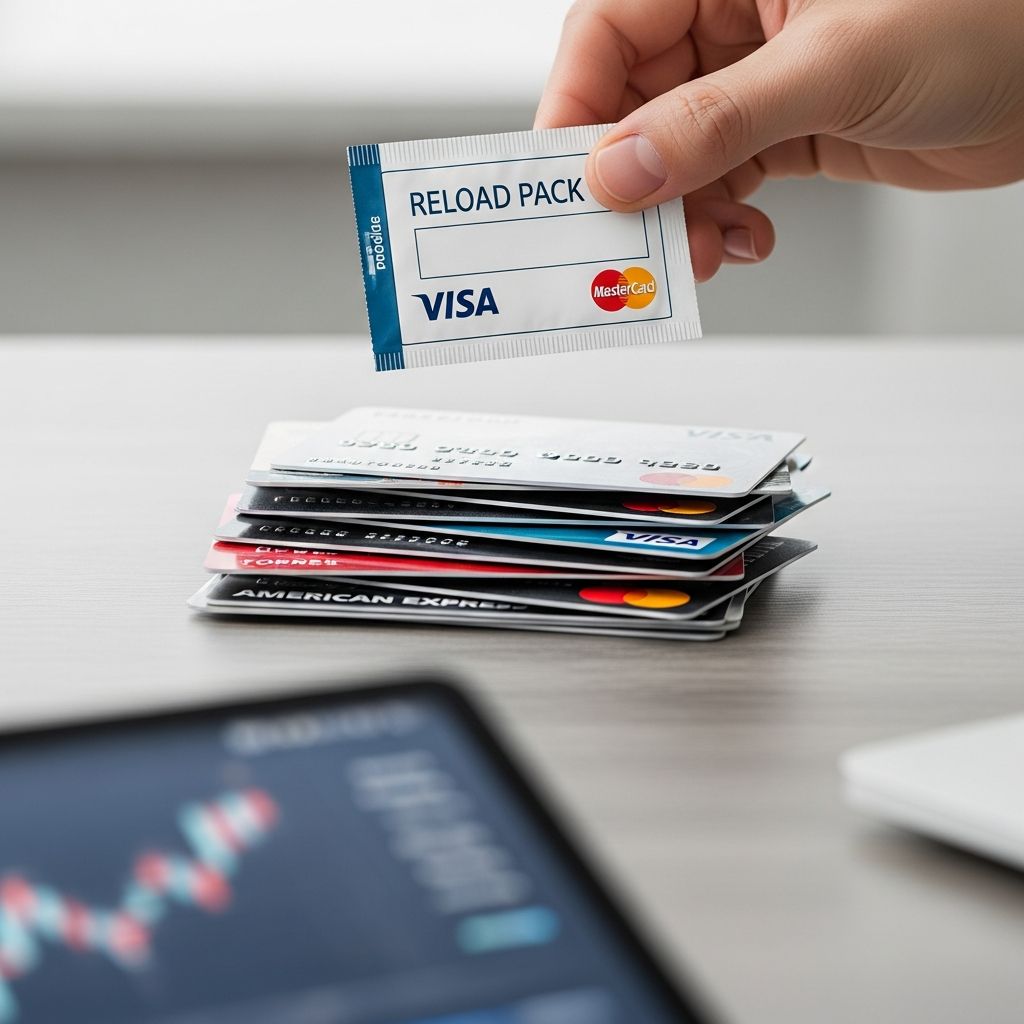
Reload packs are a convenient way to add money to certain reloadable prepaid cards, but they can be confusing and sometimes risky if you do not understand how they work. This guide explains what reload packs are, how they interact with prepaid cards, common fees and limits, and how to use them safely.
Many consumers rely on prepaid cards instead of traditional checking accounts, or use them to control spending, shop online, or budget specific expenses. Understanding reload packs will help you keep control of your money and avoid avoidable costs or fraud.
What Is a Reload Pack?
A reload pack is a product you purchase—often at a supermarket, convenience store, or pharmacy—that lets you add a specific amount of money to an eligible reloadable prepaid card. Instead of loading cash directly onto your card at the register, you buy a pack that contains a code. You then use that code to transfer the value to your prepaid card account.
Reload packs are designed to work with general-purpose reloadable prepaid cards and similar card programs, not with one-time gift cards.
Key features of reload packs
- Predetermined value: Each pack typically comes in fixed denominations (for example, $20, $50, $100).
- Unique code: The pack (or its receipt) includes a code or PIN that you enter online, by phone, or in an app to move money to your prepaid card.
- Single use: Once you use the code, that pack cannot be used again.
- Non-refundable in many cases: Retailers often treat reload packs as no-refund items after purchase and activation.
How Reloadable Prepaid Cards Work
To understand reload packs, it helps to know the basics of reloadable prepaid cards. A reloadable prepaid card lets you spend only the amount of money you have added to it—similar to a pay-as-you-go account. It is not a credit card and is usually not tied to your bank account like a debit card.
| Type of card | Where funds come from | Can you overspend? | Requires bank account? |
|---|---|---|---|
| Reloadable prepaid card | Money you load (cash, direct deposit, transfers) | Usually no; you spend up to loaded balance only | Not necessarily; some cards work without a bank account |
| Debit card | Linked checking account balance | Possible, if bank allows overdraft | Yes, linked to a bank account |
| Credit card | Borrowed funds from card issuer | Yes, up to your credit limit | Requires credit approval |
With a reloadable prepaid card:
- You can usually pay in stores, online, or by phone, much like a debit or credit card.
- Some cards let you withdraw cash at ATMs, sometimes with fees.
- Your spending is limited by the balance on the card—once it hits zero, you must load more money to keep using it.
How Reload Packs Load Money onto Your Prepaid Card
When you buy a reload pack, you are not buying a card. You are buying a way to move cash onto an existing prepaid card. The general process is similar across many brands, though details vary by program.
Typical step-by-step process
- Check compatibility: Confirm that your prepaid card brand accepts the specific reload pack you plan to buy. This information may be on your card issuer’s website or in your card materials.
- Choose a pack amount: Select from the available denominations and review any posted fees before paying.
- Pay at the register: The cashier activates the reload pack when you pay. Keep the card and your receipt.
- Locate the code: You will find a PIN or code printed on the pack, visible on the receipt, or under a scratch-off panel.
- Apply the value to your card: Follow the issuer’s instructions, which may include:
- Entering the code on a website or mobile app, or
- Calling an automated phone number and following voice prompts.
- Verify the balance: After successfully loading, check your prepaid card balance by app, website, phone, or ATM (if allowed).
Other ways to load money without a reload pack
Not all prepaid cards use reload packs. Many programs offer one or more of these options:
- Direct deposit from an employer or government benefits agency
- Bank transfer from a checking or savings account
- Cash reload at participating retailers’ customer service counters
- Online transfers from another prepaid card or funding account
- Mobile check deposit through the card’s app
Some of these methods may have lower fees than reload packs, particularly direct deposits, which are often free.
Fees, Limits, and Timing to Watch For
Costs and rules vary widely between prepaid card providers and reload pack brands. Before using reload packs regularly, it is important to understand how fees, limits, and timing can affect your money.
Common fees associated with reload packs
- Purchase fee: A flat fee added when you buy the reload pack (for example, a few dollars per pack), which reduces the value you effectively load.
- Reload fee charged by the card issuer: Some prepaid cards charge their own fee whenever you add funds, including via reload pack.
- Retailer or agent fee: Some stores charge an additional fee for cash-based reload services when you buy the pack or load at the counter.
Load and balance limits
Prepaid card programs usually place limits on how much money you can load or hold.
- Minimum reload amounts per transaction
- Maximum reload per transaction, per day, or per month
- Maximum total card balance
- Limits on the number of reloads in a set period
Exceeding these limits may cause a reload attempt to be declined, even if the reload pack itself is valid.
How long does the money take to appear?
Depending on the issuer, reload pack transfers may be:
- Nearly instant: Funds appear on your prepaid card minutes after entering the code.
- Delayed: Some systems may take several hours or up to one business day, particularly if additional verification is required.
Card issuers and pack providers typically specify expected timing in their disclosures. Always confirm timing if you need funds available immediately.
Advantages and Drawbacks of Using Reload Packs
Reload packs can be useful in certain situations, but they are not the only way—or always the cheapest way—to add money to a prepaid card.
Potential benefits
- Cash-friendly: Helpful for people who are paid in cash or who prefer not to deposit cash into a bank account.
- Widely available: Often sold in common retail locations like grocery stores, drugstores, and big-box retailers.
- No bank account required: You can move cash to your prepaid card without opening a traditional bank account.
- Separate from your card number: If you buy a pack with cash and keep the code safe, your prepaid card number is not disclosed during the purchase.
Possible disadvantages
- Higher overall costs: Purchase and reload fees can add up, making reload packs more expensive than direct deposit or bank transfer.
- No-refund policies: If you buy the wrong brand or cannot successfully apply the code, you may not get your money back from the retailer.
- Risk of loss or theft: If someone else gets your code and uses it first, you may not be able to recover the funds.
- Scam risk: Fraud schemes often pressure victims to buy reload packs and share the codes.
Staying Safe: Avoiding Scams and Misuse
Because reload packs convert cash to digital value quickly, they are appealing to scammers. Law enforcement and consumer protection agencies repeatedly warn that you should never share a reload code with someone you do not know and trust.
Red flags that signal a reload-pack scam
- Someone calls, texts, or emails you claiming to be from the government, a utility, or a tech support service and demands payment with a reload pack.
- You are told you must pay a fee via reload pack to receive a prize, grant, loan approval, or job offer.
- A caller pressures you to stay on the phone while you go to the store to buy reload packs, then asks you to read the numbers on the back.
- The requestor refuses safer payment methods such as checks, credit cards, or online bill pay.
Legitimate government agencies and reputable companies typically do not demand payment via reload packs or similar products. Consumer guidance from banking and regulatory sources consistently warns that such requests are strong indicators of fraud.
Safe practices when using reload packs
- Buy packs only from reputable, authorized retailers.
- Confirm your prepaid card supports the specific reload product before you pay.
- Keep the receipt and packaging until you see the funds in your card account.
- Do not scratch off protective panels or reveal codes in the store; handle them privately.
- Enter the reload code only on the official website, app, or phone number listed by your card issuer.
- If you suspect a scam, do not provide the code. Instead, contact your card issuer or a trusted consumer protection agency for guidance.
Tips for Choosing the Best Way to Reload Your Card
Reload packs are just one option. Depending on your situation, there may be cheaper or more convenient ways to keep your prepaid card funded.
Compare total costs
When deciding how to add money to your card, consider:
- Reload pack purchase fee
- Per-reload fee charged by your card issuer
- Monthly maintenance fees that might be waived with a certain level of direct deposits
- ATM withdrawal fees, especially if you rely on cash access frequently
Official guides on prepaid cards emphasize reviewing the fee schedule and choosing the card and reload method that best matches how you plan to use the account.
Think about convenience and reliability
- If you receive regular paychecks or benefits, setting up direct deposit to your prepaid card may be more convenient and often has no reload fee.
- If you are paid in cash, reload packs or in-person cash reload services may be more practical.
- If you have a bank account, online transfers can offer a low-cost, trackable way to move funds to your prepaid card.
Frequently Asked Questions (FAQs)
Q1: Can I use a reload pack on any prepaid card?
No. Each reload pack brand works only with specific card programs. Always check your card issuer’s materials or website to confirm compatibility before buying a pack.
Q2: What should I do if my reload code does not work?
First, verify that you entered the code correctly and that you have not exceeded your card’s reload or balance limits. Then contact the customer service number for the reload pack or your prepaid card, using the information on the packaging or card. Keep your receipt until the issue is resolved.
Q3: Are funds loaded through a reload pack insured?
If your prepaid card is issued by a bank or similar institution and you have registered it properly, your funds may be covered by federal deposit insurance up to applicable limits; this protection depends on the issuer and program design, not on the reload pack itself.
Q4: Can I get a refund if I buy the wrong reload pack?
In many retail locations, reload packs are treated as non-refundable once activated, due to the risk of code misuse. Store policies vary, so check posted rules before purchasing.
Q5: Is it better to use reload packs or direct deposit?
For people with steady income, direct deposit to a prepaid card is often cheaper and more convenient because it usually has no reload fee and may help avoid monthly charges on some cards. Reload packs can still be useful for occasional cash-based loads or for people who prefer not to use bank accounts.
References
- What Is a Prepaid Card and How Does It Work? — Capital One. 2022-03-24. https://www.capitalone.com/learn-grow/money-management/how-do-prepaid-debit-cards-work/
- FAQs for Prepaid Reloadable VISA Cards — First South Financial Credit Union. 2023-05-01. https://www.firstsouth.com/reloadable-card-faqs
- Reloadable Prepaid Cards (Prepaid Q&A) — Consumer Action. 2012-09-01. https://www.consumer-action.org/downloads/english/Prepaid_Q&A_2012.pdf
- Choose the Right Prepaid Card for Your Situation — Consumer Financial Protection Bureau. 2023-04-25. https://www.consumerfinance.gov/consumer-tools/prepaid-cards/choose-the-right-card/
- Reloadable Prepaid Cards for Everyday Spending — Visa. 2023-06-15. https://www.visa.com/en-us/personal/cards/prepaid/reloadable
- Prepaid Debit Cards: What They Are and How They Work — NerdWallet. 2023-08-18. https://www.nerdwallet.com/banking/learn/how-do-prepaid-debit-cards-work
Similar Articles








Read full bio of medha deb


