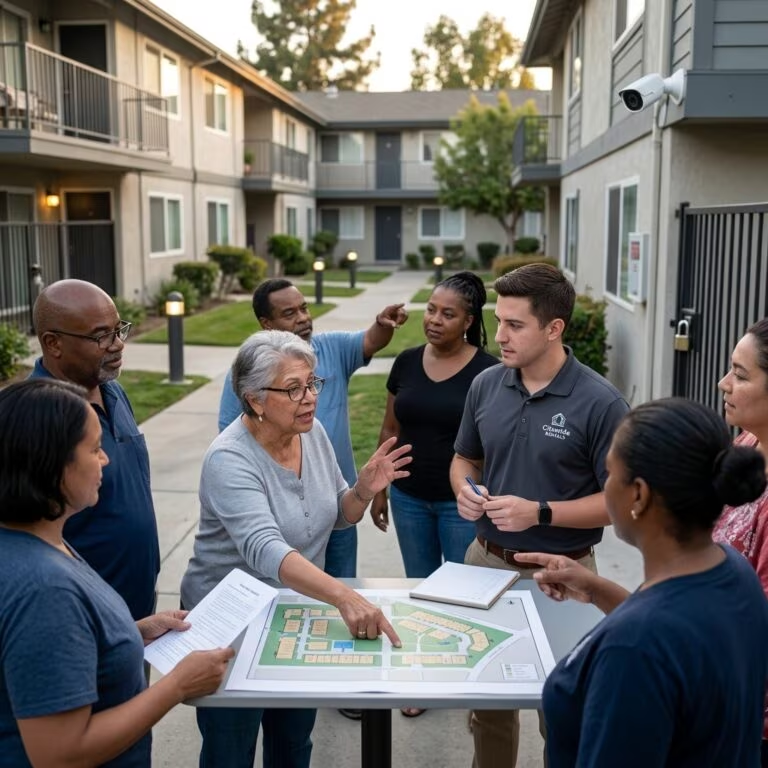
Public nuisance law addresses activities or conditions that harm the broader community by infringing on collective rights to safety, health, and property use. These legal principles protect public welfare by holding individuals or entities accountable for disruptions affecting numerous people.
Core Definition of Public Nuisance
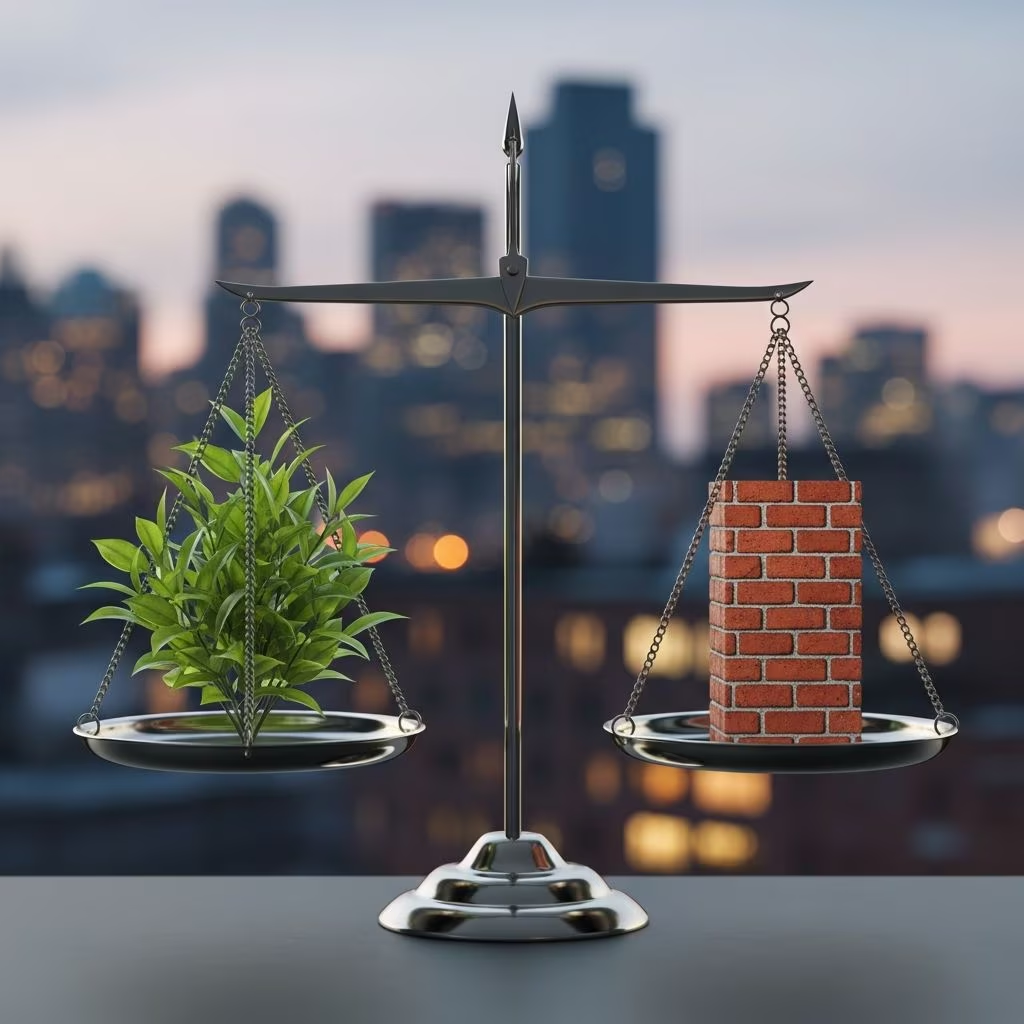
A **public nuisance** arises when someone’s actions or omissions unreasonably interfere with the rights of the general public, such as access to streets, parks, or waterways, or the overall comfort and safety of a neighborhood. Courts evaluate ‘unreasonableness’ by weighing the harm’s extent against any utility of the offending activity, considering factors like duration, frequency, and community impact.
Statutory definitions vary by jurisdiction. For instance, California’s Penal Code Section 360 describes it as anything injurious to health, indecent, offensive to senses, or obstructing property use, affecting an entire community or considerable number of persons. Similarly, Washington’s RCW 9.66.010 labels places fostering fights, illegal liquor sales, or obstructions to public passages as public nuisances.
Common Scenarios Constituting Public Nuisance
Public nuisances often involve widespread disruptions. Key examples include:
- Excessive Noise: Blasting music in public parks or operating loud machinery at odd hours that prevents community enjoyment of shared spaces.
- Health and Safety Hazards: Illegal dumping polluting waterways, overflowing garbage attracting pests, or storing hazardous materials like explosives near populated areas.
- Physical Obstructions: Blocking streets, sidewalks, or highways with debris or unauthorized structures, impeding free passage.
- Dangerous Animals or Activities: Harboring aggressive wildlife or conducting drug-related operations that endanger public safety.
- Environmental Offenses: Releasing pesticides poisoning streams or allowing noxious odors from decaying matter to spread.
These acts not only annoy but can endanger lives, as seen in cases of public intoxication or disorderly conduct escalating into broader threats.
Distinguishing Public from Private Nuisance
While both nuisances involve unreasonable interference, **public nuisance** impacts the community at large, whereas **private nuisance** affects specific individuals’ property enjoyment.
| Aspect | Public Nuisance | Private Nuisance |
|---|---|---|
| Scope of Harm | Affects entire neighborhood or public right (e.g., polluted public river) | Harms individual property owner (e.g., neighbor’s smoke invading yard) |
| Who Can Sue | Government or specially harmed individuals | Affected private party |
| Examples | Street blockages, mass health hazards | Personal noise, odors, light pollution |
| Legal Basis | Often criminal; protects collective rights | Civil tort; protects personal use |
**Mixed nuisances** blend both, like an unfenced pool attracting trespassing children, posing public risk while privately harming adjacent owners.
Legal Framework and Enforcement
Public nuisances derive from common law and statutes. They constitute crimes against public order, prosecutable by authorities. Local governments enforce via ordinances, issuing abatement notices requiring owners to remedy issues like junk accumulation or unsanitary conditions.
In some states, premises used for unlawful gatherings qualify as nuisances, endangering health or obstructing property use. Enforcement prioritizes prevention, with cities abating nuisances on private land if owners fail to comply.
Criminal and Civil Consequences
Violators face **criminal penalties** including fines, imprisonment, or both, classified often as misdemeanors. For example, Oregon treats public intoxication or pollution as misdemeanor public nuisances with jail time and fines.
Civilly, courts issue **injunctive relief** to halt the activity, such as ordering cleanup of dumped waste. Damages compensate specially injured parties beyond general public harm.
Steps for Addressing a Public Nuisance
Communities tackling nuisances follow structured processes:
- Documentation: Gather evidence like photos, witness statements, and impact records.
- Report to Authorities: Notify local code enforcement or prosecutors.
- Abatement Notice: Officials issue deadlines for voluntary fixes.
- Government Action: If ignored, cities abate at owner’s expense or pursue injunctions.
- Private Suits: Individuals with unique damages file tort claims.
Special Considerations: Attractive Nuisances and Mental Harm
**Attractive nuisances** involve hazards luring children, like unguarded pools or machinery, imposing duties on owners to secure them despite trespassing. Even threats to mental tranquility, such as a menacing dog, can sustain claims if they disrupt peace.
Modern cases increasingly address environmental and technological nuisances, like drone obstructions or excessive light from billboards.
Frequently Asked Questions
Can a single noise complaint qualify as a public nuisance?
Typically no; it must affect the public broadly, not just one person. Repeated public disturbances, however, can escalate to public nuisance status.
Who enforces public nuisance laws?
Primarily local governments via code enforcement, with prosecutors handling criminal aspects. Private suits are limited to those with special damages.
Is illegal dumping always a public nuisance?
Yes, if it pollutes public areas or waterways, harming community health and access.
What defenses exist against public nuisance charges?
Defendants may argue reasonableness, lack of public impact, or necessity. Legal counsel is crucial for misdemeanors.
Can businesses be liable for public nuisances?
Absolutely; factories emitting fumes or obstructing streets exemplify corporate accountability.
Recent Developments and Community Impact
Public nuisance laws evolve with societal needs. Post-pandemic, enforcement targets illegal gatherings and sanitation issues more rigorously. Communities benefit from proactive abatement, fostering safer environments. Property owners should consult statutes like RCW 9.66.010 for jurisdiction-specific rules.
Understanding these laws empowers residents to protect shared spaces. For personalized advice, seek qualified legal professionals, especially facing charges.
References
- What is a Public Nuisance? — LawInfo.com. Accessed 2026. https://www.lawinfo.com/resources/criminal-defense/what-is-a-public-nuisance.html
- Public Nuisance — Legal Information Institute, Cornell Law School. Accessed 2026. https://www.law.cornell.edu/wex/public_nuisance
- Nuisance Regulation and Abatement Authority — MRSC. Accessed 2026. https://mrsc.org/explore-topics/code-enforcement/nuisances/nuisance-regulation-authority
- Public Nuisance: Understanding Its Legal Definition — US Legal Forms. Accessed 2026. https://legal-resources.uslegalforms.com/p/public-nuisance
- Public Nuisance Crimes — JinnOPC. Accessed 2026. https://www.jinnopc.com/criminal-defense/public-nuisance-crimes/