
Understanding Probation Violations and Their Consequences
Learn what counts as a probation violation, how hearings work, and what penalties you could face if you do not follow court-ordered rules.
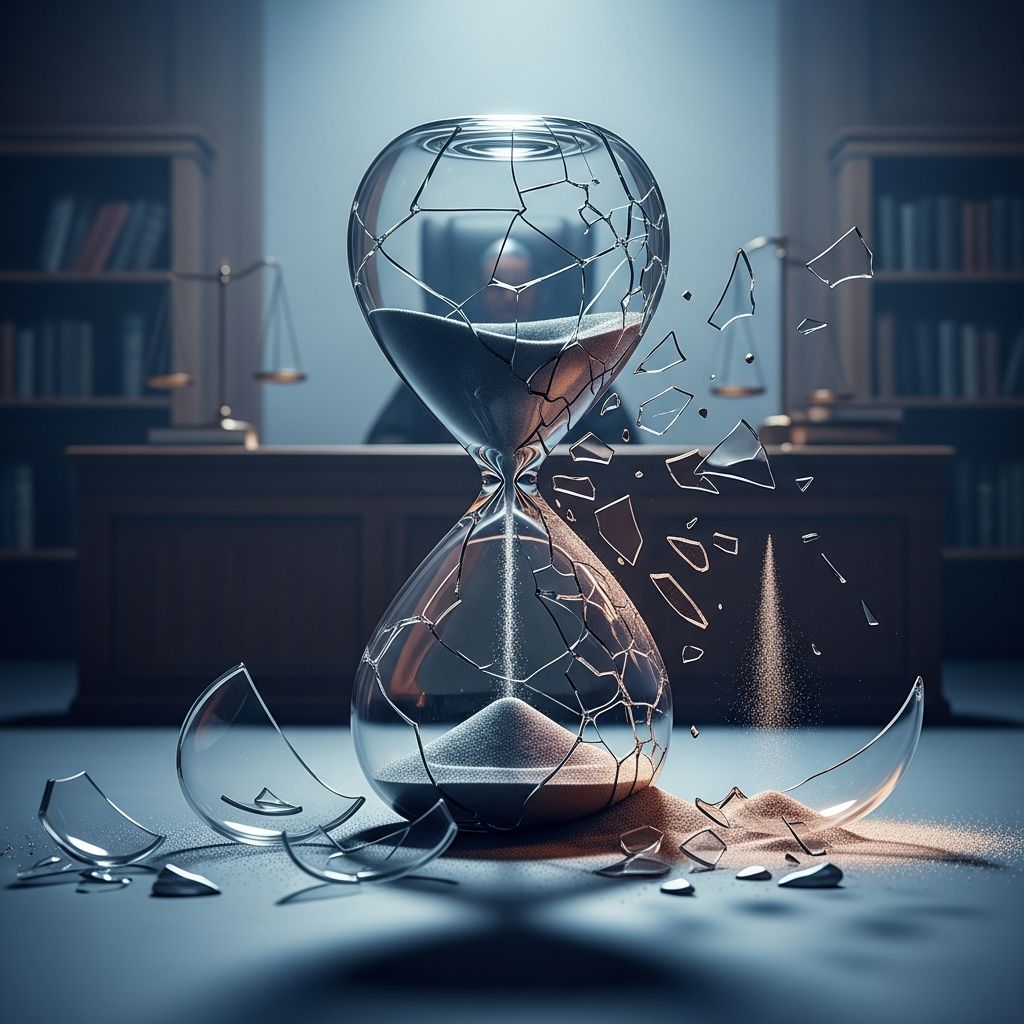
Probation allows a person convicted of a crime to remain in the community instead of serving all of their time in jail or prison, but it comes with strict court-ordered rules that must be followed. When those rules are broken, the result may be a probation violation, which can expose the person to serious consequences, including the possibility of serving the original sentence behind bars.
This guide explains in plain language what counts as a probation violation, the different types of violations, what to expect at a violation hearing, potential penalties, and practical steps to protect yourself if you are accused of violating probation.
1. How Probation Works
Probation is a form of community supervision that is ordered instead of, or in addition to, jail or prison time. The court releases the defendant into the community under conditions designed to protect public safety and encourage rehabilitation.
While details vary by state and by case, typical features of probation include:
- Regular check-ins with a probation officer
- Obeying all laws and avoiding new criminal charges
- Restrictions on where you can go and who you can associate with
- Requirements to work, go to school, or participate in treatment programs
- Payment of fines, fees, and restitution to victims, if ordered
If the person successfully completes the probation period without violating the conditions, the court usually releases them from further supervision and does not impose additional jail or prison time for that case.
2. What Is a Probation Violation?
A probation violation occurs when a person under supervision does not comply with one or more of the conditions set by the court. This can involve either doing something that is forbidden (like committing a new crime) or failing to do something that is required (like missing scheduled appointments).
In many jurisdictions, a violation is formally defined as a failure to comply with the terms and conditions of probation as ordered by the court.
2.1 Common Examples of Probation Violations
- Missing or arriving late to meetings with a probation officer
- Testing positive for drugs or alcohol when testing is required
- Failing to attend court-ordered counseling, treatment, or classes
- Not paying court-ordered fines, fees, or restitution when able to do so
- Leaving the state or county without permission
- Contacting victims or people you are ordered to avoid
- Possessing weapons in violation of probation rules
- Committing or being arrested for a new crime while on probation
3. Technical vs. Substantive Violations
Courts and probation departments often divide violations into two broad categories: technical and substantive (sometimes called “new law” violations).
| Type of violation | What it means | Typical examples | Relative seriousness |
|---|---|---|---|
| Technical | Breaking a condition of probation without committing a new crime. | Missing appointments, skipped treatment, unpaid fees, curfew violations, positive drug tests. | Often treated as less serious but can still lead to sanctions or revocation. |
| Substantive | Committing a new offense while on probation. | Theft, assault, DUI, or other new criminal charges during the probation period. | Generally viewed as more serious and more likely to lead to revocation and incarceration. |
3.1 Why the Distinction Matters
- Technical violations may result in warnings, increased reporting, or added conditions rather than immediate jail time, especially for a first violation.
- Substantive violations can trigger both a probation violation case and a new criminal case, exposing you to additional penalties and a higher chance of having probation revoked.
4. How a Probation Violation Case Begins
Probation officers are responsible for monitoring compliance. When they have reasonable cause to believe a condition has been broken, they generally must investigate and decide whether to treat the conduct as noncompliance that can be handled informally or as a formal violation that should go back to court.
In many states, the formal process starts when the prosecution or probation department files a written request asking the court to revoke or modify probation, often called a motion to revoke probation or violation report.
That filing usually asks the court to:
- Issue a notice requiring the person to appear for a hearing
- Or, in some cases, issue an arrest warrant if the court believes the person may not appear voluntarily
5. The Probation Violation Hearing
A probation violation hearing is a court proceeding where a judge decides whether the person violated probation and, if so, what should happen next.
5.1 Legal Rights at the Hearing
While rules can vary, people accused of violations typically have important rights, including:
- The right to receive notice of the alleged violations in advance of the hearing
- The right to be represented by an attorney, and to request appointed counsel if they cannot afford one in many jurisdictions
- The right to present evidence and call witnesses
- The right to question or cross-examine witnesses who testify against them, subject to limited exceptions
5.2 Burden and Standard of Proof
A critical difference between an original criminal trial and a probation violation hearing is the standard of proof the state must meet.
- In a criminal trial, guilt must be proven beyond a reasonable doubt.
- In many probation violation hearings, the state only needs to show by a preponderance of the evidence that a violation occurred — meaning it is more likely than not (over 50% likelihood) that the violation happened.
This lower standard makes it easier for prosecutors to prove a violation than to win a new criminal conviction.
5.3 Possible Outcomes of the Hearing
After hearing the evidence, the judge generally has three broad options:
- No violation found: The court rules that the evidence does not prove a violation and probation continues under the existing terms.
- Violation found, probation continues with changes: The judge finds a violation but decides to keep the person on probation, possibly with:
- Extended probation length
- Additional conditions (for example, more treatment or community service)
- Short periods of jail as a sanction in some jurisdictions
- Violation found, probation revoked: The court cancels (revokes) probation and may order the person to serve all or part of the original suspended jail or prison sentence.
6. Sentencing and Consequences After a Violation
If the judge decides that a violation occurred, they then decide what sanctions are appropriate. Factors that commonly affect this decision include:
- The seriousness of the violation (technical vs. substantive)
- Whether it is a first violation or part of a pattern
- The nature and seriousness of the original offense
- The probationer’s efforts at rehabilitation (treatment, employment, education)
- Any risk to public safety
6.1 Range of Possible Penalties
Depending on state law and the specifics of the case, possible penalties for a probation violation may include:
- Extending the probation period by months or years
- Imposing additional conditions such as more frequent reporting, stricter curfews, or extra community service
- Ordering participation in treatment programs for substance use, mental health, or anger management
- Short jail stays as a sanction while leaving probation otherwise in place (in some systems)
- Revoking probation fully and ordering the person to serve some or all of the previously suspended jail or prison term
Where the violation involves a new crime, the person may face:
- Jail or prison for the probation violation itself
- Separate sentencing for the new offense if they are convicted in that case
7. How to Respond If You Are Accused of Violating Probation
A probation violation accusation should be taken extremely seriously. Because the standard of proof is lower and the judge has wide discretion, the outcome often turns on preparation and advocacy at the hearing.
7.1 Immediate Steps to Take
- Do not ignore letters, calls, or notices from your probation officer or the court.
- Contact a qualified criminal defense attorney as soon as you learn about the alleged violation.
- Gather documents and evidence that may support your side of the story — for example:
- Proof of work or school attendance
- Medical records explaining missed appointments
- Receipts or bank records showing paid fines or restitution
- Certificates from completed treatment programs or classes
- Follow all existing probation rules carefully while the violation is pending, as new problems can make the situation worse.
7.2 Possible Defense Strategies
Depending on the facts, your lawyer may be able to:
- Argue that no violation actually occurred — for example, the test result was inaccurate or you had permission for your actions.
- Show that the violation was minor or technical and that you are otherwise doing well on probation, encouraging the judge to continue supervision instead of revoking it.
- Present evidence of good-faith efforts to comply (seeking treatment, working, caring for family) to support a lenient outcome.
- Negotiate with the prosecutor or probation officer for an agreed recommendation that avoids or limits jail time.
8. Practical Tips to Avoid Probation Violations
Staying in compliance with probation can be challenging, especially when balancing work, family, and transportation issues. A few practical steps can reduce the risk of problems:
- Know your conditions in detail: Keep a written copy of your probation order and review it regularly.
- Stay in contact with your probation officer: Let them know early if you are having trouble meeting a requirement (for example, transportation to appointments).
- Track deadlines and appointments: Use a calendar or phone reminders for payments, treatment, and check-ins.
- Document your compliance: Keep pay stubs, attendance records, program completion certificates, and payment receipts.
- Avoid risky situations: Stay away from people, locations, and activities that may lead to new criminal charges or violations.
9. Frequently Asked Questions (FAQs)
Q1: Can I be found in violation of probation even if my new criminal charge is dismissed?
Yes. Because the standard of proof at a probation violation hearing is often a preponderance of the evidence, the judge may find a violation based on conduct related to a dismissed case if the judge believes it is more likely than not that the conduct occurred, even without a conviction.
Q2: Do I get a jury trial for a probation violation?
In most jurisdictions, probation violation hearings are held before a judge, not a jury. The hearing is usually more informal than a criminal trial, though important rights still apply.
Q3: What happens if I cannot afford to pay fines or restitution?
Courts often consider whether nonpayment is willful or due to genuine financial hardship. Evidence of efforts to work, seek assistance, or make partial payments can be important. You should discuss your situation with your attorney and probation officer rather than simply stopping payments.
Q4: Can my probation be extended because of a technical violation?
Yes. One common response to violations, especially for less serious misconduct, is extending the probation period or adding new conditions instead of revoking probation entirely.
Q5: Do I need a lawyer if my violation is only for missing an appointment?
Even technical violations can lead to serious outcomes, including jail time if the judge decides to revoke probation. Having a lawyer helps you explain the circumstances, present evidence, and argue for a less severe response.
References
- Violating Probation & Potential Legal Consequences — Justia. 2023-06-01. https://www.justia.com/criminal/parole-and-probation/probation-violations/
- What Happens If I Violate My Probation? — Just Criminal Law. 2024-10-01. https://www.justcriminallaw.com/blog/2024/october/what-happens-if-i-violate-my-probation-/
- Probation Violations: Technical vs. Substantive — Hanlon Law. 2023-08-15. https://www.criminalattorneyorlando.net/probation-violations-technical-vs-substantive
- Violations of Probation and Procedures — New York State Division of Criminal Justice Services (Part 352). 2017-01-01. https://www.criminaljustice.ny.gov/opca/pdfs/352r.pdf
- Probation Violations & Your Rights — Criminal Law Center. 2024-07-10. https://www.criminallawcenter.com/blog/2024/july/probation-violations-your-rights/
- Violation of Probation in New Jersey — NJ Criminal Defense. 2023-03-20. https://www.njcriminaldefensellc.com/violation-of-probation-in-new-jersey
Similar Articles








Read full bio of medha deb




