
Probate Process: Benefits, Drawbacks and Alternatives
Explore the probate process in depth: its key advantages, significant challenges, detailed steps, and practical strategies to bypass it entirely.
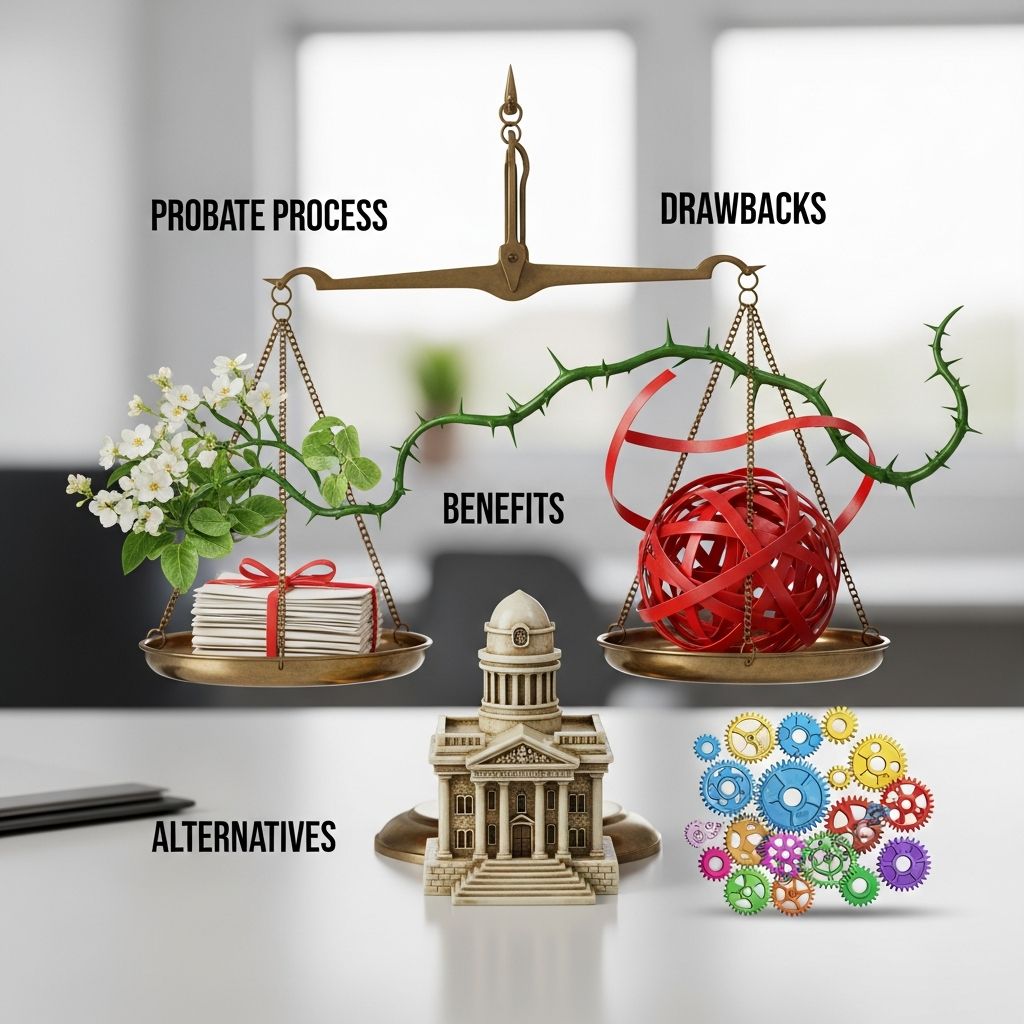
The probate process serves as the legal mechanism for validating a deceased person’s will, settling debts, and transferring assets to heirs under court supervision. While it provides essential safeguards, it often involves extended timelines and expenses that prompt many to explore avoidance options.
Defining the Core Elements of Probate
Probate refers to the court-overseen procedure that handles a deceased individual’s estate, encompassing asset inventory, debt resolution, and beneficiary distributions as specified in a will or dictated by state intestacy laws when no will exists. This structured framework ensures transparency but demands adherence to specific protocols that vary by jurisdiction.
In essence, courts appoint a personal representative—known as an executor if named in a will or an administrator otherwise—to manage proceedings. This individual gathers documentation like death certificates and wills, files petitions, and secures court authorization known as ‘letters testamentary’ or ‘letters of administration’. These letters grant the authority to act on behalf of the estate, from accessing bank accounts to selling property.
Key Stages in Executing Probate
The probate journey unfolds through distinct phases, each building on the previous to culminate in estate closure. Initial steps involve petitioning the local superior court with forms such as California’s DE-111, attaching the original will and death certificate. Courts then schedule hearings to validate documents and appoint representatives, often within 4-6 weeks of filing.
Following appointment, the representative compiles a comprehensive inventory using tools like Form DE-160, appraising assets through neutral referees for items like real estate or valuables. Creditors receive notices, debts and taxes are settled from estate funds, and only then do distributions occur after a final court-approved plan. The American Bar Association notes average durations of 6-9 months nationally, though California processes often extend to 20 months due to rigorous requirements.
- Petition Filing: Submit death certificate, will, and probate request to county court.
- Court Hearing: Validate will and issue letters to personal representative.
- Asset Inventory: Appraise and list all probate assets formally.
- Debt Settlement: Notify creditors and pay obligations using estate resources.
- Final Distribution: Obtain court order for asset transfer to beneficiaries.
- Estate Closure: File final accounting and petition to end proceedings.
Primary Advantages of Undergoing Probate
One compelling strength of probate lies in its impartial judicial oversight, which verifies will authenticity and prevents fraud or undue influence. Courts meticulously review documents during initial hearings, ensuring only legitimate claims proceed, thus protecting vulnerable heirs from disputes.
Additionally, probate enforces creditor notifications, systematically resolving outstanding obligations before distributions, which safeguards beneficiaries from future liabilities. This public process also establishes clear title to assets like real property, facilitating seamless transfers without lingering ownership questions. For complex estates with disputes, the court’s authority resolves conflicts efficiently, often faster than private negotiations.
| Advantage | Benefit Description |
|---|---|
| Court Validation | Confirms will validity and appoints qualified representatives. |
| Debt Clearance | Legally bars creditor claims post-notification period. |
| Dispute Resolution | Judicial intervention settles heir disagreements authoritatively. |
| Title Clarity | Provides documented proof of asset transfers. |
Significant Challenges and Downsides of Probate
Despite its protections, probate’s prolonged timelines represent a major hurdle, with national averages of 6-9 months escalating in states like California to over a year due to mandatory hearings, inventories, and accountings. Delays compound emotional strain on families awaiting asset access for living expenses.
Costs further burden estates, including court fees, attorney charges (often 2-7% of estate value), appraisal expenses, and bond premiums. Public proceedings expose financial details, inviting unwanted scrutiny or challenges from distant relatives. Moreover, only assets solely in the decedent’s name enter probate; joint accounts or trusts bypass it, potentially fragmenting the process.
- Time Delays: Multiple hearings and filings extend beyond a year in many cases.
- High Expenses: Legal and administrative fees erode inheritance significantly.
- Lack of Privacy: Estate details become public court records.
- Rigidity: Strict procedures limit flexibility for urgent distributions.
Factors Influencing Probate Duration and Complexity
Probate length hinges on estate size, will presence, and location-specific rules. Small estates under thresholds like California’s $184,500 may qualify for simplified affidavits, avoiding full proceedings. Contested wills or located-out-of-state assets trigger additional delays via secondary administrations.
Personal representatives must file interim accounts every six months if unresolved beyond nine months, adding paperwork. States mandate probate referee appraisals for non-cash assets, further pacing the timeline. Executors navigating without legal aid risk errors prolonging closure.
Effective Strategies to Circumvent Probate
Avoiding probate preserves privacy, accelerates transfers, and minimizes costs through proactive planning. Joint tenancy with right of survivorship automatically passes property to co-owners upon death, sidestepping court involvement. Transfer-on-death (TOD) designations for securities and vehicles similarly enable direct beneficiary receipt.
Living trusts stand as the most versatile tool, holding assets outside probate for trustee-managed distribution per instructions. Beneficiary designations on retirement accounts and life insurance bypass estates entirely. Gifting assets during life reduces probate inventory, though gift taxes apply above annual exclusions.
| Method | How It Works | Key Pros |
|---|---|---|
| Joint Ownership | Survivor inherits automatically. | Simple, no court needed. |
| Living Trust | Assets titled to trust, distributed privately. | Flexible, private, comprehensive. |
| TOD/POD Designations | Direct transfer to named parties. | Quick for financial assets. |
| Gifting | Transfer assets pre-death. | Reduces estate size. |
Comparing Probate to Popular Avoidance Techniques
Probate suits straightforward estates needing validation, but trusts excel for privacy and speed, albeit requiring upfront setup costs. Joint ownership risks unintended consequences like divorce claims on assets, unlike irrevocable trusts offering creditor protection.
For modest estates, small estate affidavits provide a middle ground, capping at state limits without full probate. Hybrid approaches combine wills as backups to trusts, ensuring coverage for unforeseen assets.
Frequently Asked Questions About Probate
Is probate always required after someone dies?
No, only assets in the deceased’s sole name without beneficiaries or trusts enter probate. Many holdings transfer automatically via designations or co-ownership.
How long does the average probate take?
Nationally, 6-9 months, but California often exceeds 18-20 months due to extensive filings and hearings.
Can I handle probate without a lawyer?
Possible for simple cases, but professionals navigate forms, deadlines, and disputes effectively, especially in complex scenarios.
What happens without a will in probate?
Courts apply intestacy laws, distributing to spouses, children, or relatives in statutory order.
Are probate records public?
Yes, filings and inventories become accessible court records, contrasting with private trust administrations.
Planning Ahead: When Probate Makes Sense
Not all estates benefit from avoidance; probate’s structure proves invaluable for disputed families or high-value assets demanding title assurance. Consulting estate attorneys tailors strategies, balancing costs against protections. Recent trends emphasize hybrid planning, integrating wills, trusts, and designations for optimal outcomes.
Ultimately, understanding probate empowers informed decisions, aligning estate plans with personal priorities like speed, privacy, or security. Proactive measures today streamline tomorrow’s transitions for loved ones.
References
- How does probate work? Your guide to the probate process — FreeWill. 2023. https://www.freewill.com/learn/guide-to-probate-process
- California Probate Process Explained: Timelines and Steps — Vistas Law Group. 2024-05-15. https://vistaslawgroup.com/california-probate-process-timeline-steps/
- How to Probate a Will in California: a Step-by-Step Guide — Cunningham Legal. 2023-11-01. https://www.cunninghamlegal.com/california-legal-services/how-to-do-probate-in-california-on-your-own-or-with-legal-help/
- What Is the “Probate” Process? How Does It Work? Why Do People Want to Avoid It — Saul Ewing LLP. 2024-02-20. https://www.saul.com/insights/blog/what-probate-process-how-does-it-work-why-do-people-want-avoid-it
- Guide to property after someone dies — California Courts Self Help Guide. 2025-01-10. https://selfhelp.courts.ca.gov/probate
Similar Articles








Read full bio of Sneha Tete




