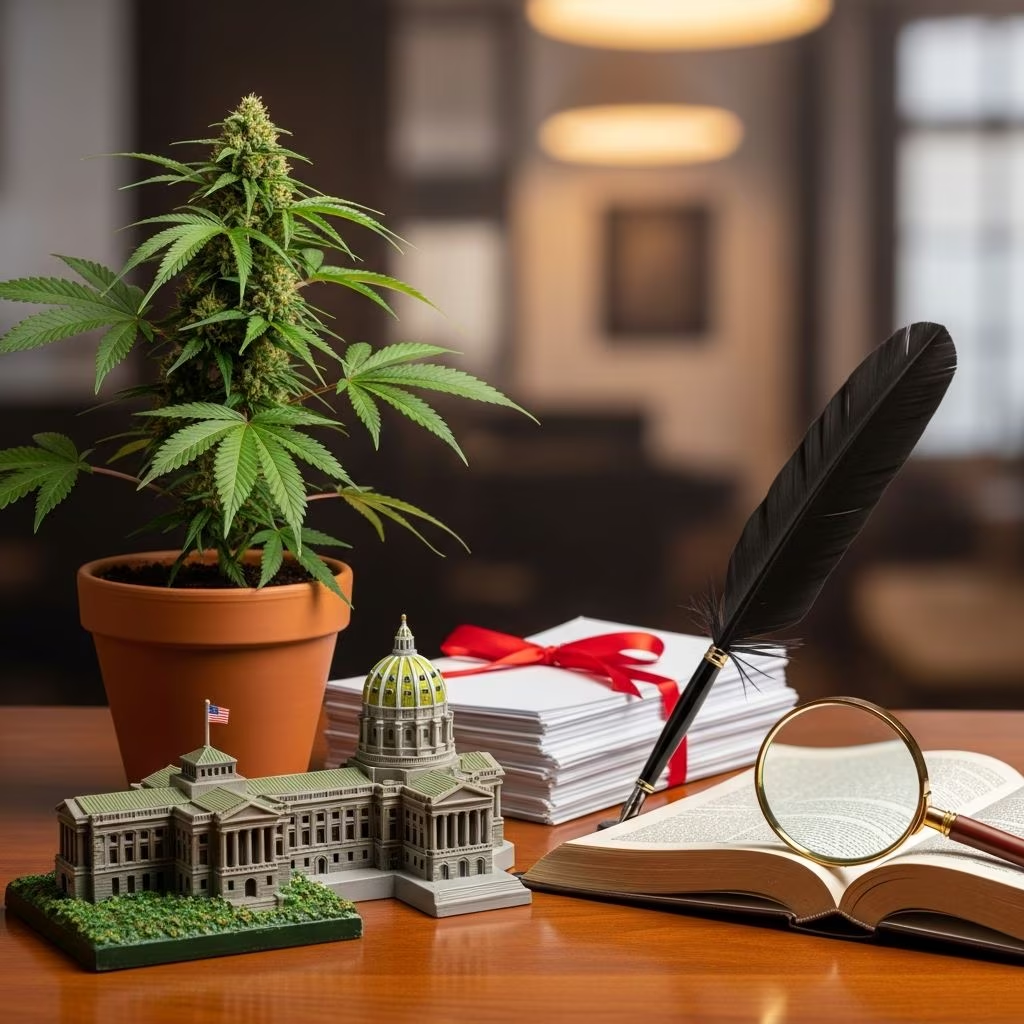
Pennsylvania’s marijuana laws are in a period of rapid change. Medical cannabis is legal statewide, some cities have reduced penalties for simple possession, and lawmakers regularly debate full legalization. Yet, under current state law, most non-medical marijuana use and possession remain criminal offenses, and marijuana is still illegal under federal law.
This guide explains how Pennsylvania treats marijuana today, how penalties work, what protections exist for medical patients, and how proposed reforms could reshape the landscape.
1. Big Picture: Is Marijuana Legal in Pennsylvania?
At the state level, marijuana law in Pennsylvania is split into two major categories:
- Medical marijuana: Legal for qualified patients and caregivers through the state’s regulated program, overseen by the Pennsylvania Department of Health.
- Recreational (adult-use) marijuana: Still illegal under state law as of late 2025, despite ongoing legislative proposals and public debate.
Federally, marijuana remains a Schedule I controlled substance under the federal Controlled Substances Act, which technically criminalizes possession, distribution, and cultivation nationwide, although federal enforcement typically focuses on large-scale or interstate activity rather than individual users.
2. Medical Marijuana in Pennsylvania
Pennsylvania legalized medical marijuana in 2016, when the governor signed the Medical Marijuana Act. The Department of Health manages the program, including patient registration, dispensary licensing, and oversight of growers and processors.
2.1 Who Can Qualify as a Medical Marijuana Patient?
To participate in the state’s medical marijuana program, a person generally must:
- Be a Pennsylvania resident with valid proof of residency.
- Receive a certification from an approved physician for a qualifying medical condition.
- Register with the Department of Health medical marijuana registry and obtain a patient ID card.
Approved physicians are required to register with the program before issuing certifications and must confirm that the patient has a qualifying serious medical condition as defined by the Medical Marijuana Act.
2.2 How Patients Obtain and Use Medical Marijuana
State law does not allow patients to grow their own marijuana. Instead, they must purchase medical products from licensed dispensaries authorized by the Department of Health.
- Medical marijuana is available in forms permitted by regulation, commonly including oils, tinctures, topical products, capsules, and certain inhaled or vaporized products, subject to state rules.
- Dispensaries may only sell to registered patients and caregivers who present their state-issued medical marijuana ID cards.
- Usage is typically restricted to private settings; consuming marijuana in public areas or on federal property remains prohibited.
The Department of Health periodically updates program rules, including product safety standards and laboratory testing requirements, to protect patient health.
3. Recreational Use and Possession: Current Offenses
Despite a well-established medical program, Pennsylvania has not yet legalized recreational cannabis for adults. Non-medical possession, cultivation, and sale remain criminal offenses under state law.
3.1 Typical Penalties for Possession
Although specific punishments depend on the amount involved, prior record, and local prosecutorial practices, marijuana possession outside the medical framework is generally treated as a controlled substance offense. Penalties can include:
- Fines that vary by charge level and prior offenses.
- Possible jail time, especially for larger amounts or repeat violations.
- Criminal record, which can affect employment, housing, and education opportunities.
Some Pennsylvania municipalities have enacted local ordinances to reduce penalties for small amounts of marijuana, but these local changes do not alter state or federal law and may not apply outside city limits.
3.2 Distribution, Sale, and Trafficking
Activities that go beyond personal possession, such as selling or intending to sell marijuana, generally face more serious penalties. Factors that can increase the severity of charges include:
- The quantity of marijuana involved.
- Evidence of intent to distribute, such as packaging materials, scales, or large sums of cash.
- Proximity to schools or protected areas.
- Involvement of minors in distribution.
These offenses can lead to substantial fines and significant incarceration time under Pennsylvania’s controlled substance laws, particularly for repeat offenders or large-scale operations.
4. Federal Law, State Law, and Local Reforms
Because marijuana remains illegal under federal law, Pennsylvania’s current and proposed reforms operate against a backdrop of federal prohibition.
4.1 Federal Prohibition and Its Practical Impact
Although federal authorities generally do not prioritize low-level, in-state marijuana possession, federal law can still matter in several contexts:
- Employment: Some federal contractors and safety-sensitive positions require drug-free testing policies.
- Housing: Federally subsidized housing programs may treat marijuana use as a violation of federal rules.
- Firearms: Federal law prohibits unlawful users of controlled substances, including marijuana, from possessing firearms, regardless of state medical programs.
- Immigration: Non-citizens may face immigration consequences for marijuana-related conduct, even if it is lawful under state law.
4.2 Local Decriminalization and Diversion
Certain Pennsylvania cities and counties have adopted policies that treat possession of small amounts of marijuana more like a civil violation than a criminal offense. These reforms typically:
- Replace criminal charges with civil fines for minor possession.
- Reduce the likelihood of arrests or criminal records for small amounts.
- Operate only within the local jurisdiction’s authority and do not change statewide statutes or federal law.
These measures reflect shifting local attitudes and an attempt to reduce the burden of marijuana enforcement on the criminal justice system, but statewide penalties still apply outside those jurisdictions.
5. Ongoing Legalization Efforts and Proposed Changes
In recent years, legislators, the governor, and advocacy groups have pushed to legalize adult-use cannabis in Pennsylvania. Debates focus on how legalization should work, not just whether it should happen.
5.1 Legislative Proposals for Adult-Use Cannabis
Among the noteworthy efforts in 2025:
- House Bill 1200: The Pennsylvania House passed a bill in May 2025 that would have legalized adult-use cannabis and created a system of state-run cannabis stores under the Pennsylvania Liquor Control Board.
- The bill also addressed issues such as personal cultivation, expungement of certain marijuana convictions, and social equity initiatives to support communities disproportionately affected by past enforcement.
- Days later, the Senate Law and Justice Committee voted to table the bill, effectively halting its progress for that legislative session.
After HB 1200 stalled, additional bipartisan proposals emerged that favored a private retail model rather than state-operated stores. These bills would still regulate licensing, testing, and taxation but rely on private businesses instead of state ownership.
5.2 Governor’s Budget Proposals
The governor has repeatedly included marijuana legalization in budget proposals, citing economic, regulatory, and equity reasons.
- Legal sales are projected to generate hundreds of millions of dollars in annual tax revenue after the market matures.
- Budget plans have included funding for restorative justice initiatives, automatic expungement of simple possession records, and support programs for small and diverse businesses entering the cannabis industry.
However, until the General Assembly agrees on a bill and it is signed into law, adult-use marijuana remains illegal statewide.
6. Marijuana and the Workplace
Employers in Pennsylvania must navigate a complex intersection of state medical protections, federal drug-free requirements, and safety concerns. While this guide is not employment law advice, several key themes have emerged in legal commentary and practice.
6.1 Medical Patients on the Job
Most medical marijuana laws, including Pennsylvania’s, do not require employers to permit on-duty impairment or on-site use. Employers generally retain the right to:
- Prohibit employees from working while impaired by marijuana.
- Maintain drug-free workplace policies, especially for safety-sensitive roles or where federal law applies.
- Conduct drug testing consistent with applicable law and policy.
At the same time, employers may need to consider disability and anti-discrimination laws when interacting with registered medical marijuana patients, especially if the underlying medical condition qualifies as a disability.
6.2 Anticipated Changes if Adult-Use Is Legalized
If Pennsylvania eventually legalizes recreational marijuana, employers will likely continue to:
- Prohibit working under the influence, particularly in safety-sensitive positions.
- Apply federal regulations that require drug testing for certain transportation, aviation, and similar roles.
- Adjust policies to clearly distinguish between off-duty lawful conduct and workplace impairment, depending on future state statutes and court decisions.
7. Comparing Medical and Recreational Marijuana Frameworks
The table below summarizes some of the major differences between Pennsylvania’s current medical program and the adult-use systems being debated.
| Feature | Current Medical Marijuana | Potential Adult-Use Legalization (Examples from Proposals) |
|---|---|---|
| Legal status | Legal statewide for registered patients and caregivers. | Still illegal; several bills propose legalization for adults 21+. |
| Who can buy | Only registered patients and caregivers. | Any adult over a minimum age (often 21), with no medical requirement. |
| Where products are sold | Licensed medical dispensaries. | Depending on the bill: state-run stores (HB 1200) or licensed private retailers. |
| Home growing | Not permitted under current law. | Some proposals allow limited home cultivation for adults. |
| Criminal penalties | Patients compliant with rules are protected; unregistered possession is criminal. | Simple adult possession would be legal up to defined limits; penalties would shift to unlicensed sales or exceeding limits. |
| Revenue use | Fees and taxes support administration and health-related programs. | Proposals direct tax revenue to general funds, community reinvestment, and substance-use services. |
8. Practical Tips for Pennsylvania Residents
Given the mixed legal environment, Pennsylvania residents can reduce legal risk by following a few general practices:
- Know your status: Only registered patients and caregivers are covered by the medical program protections.
- Respect possession limits: Even as a patient, stay within the amounts and product types permitted by your dispensary and state rules.
- Avoid public and federal property: Do not use or carry marijuana on federal land, in federal buildings, or where local ordinances forbid it.
- Be cautious when driving: Driving under the influence of marijuana is illegal and can result in DUI charges, regardless of medical status.
- Stay informed: Legalization proposals can quickly change the rules; monitoring official state updates is essential.
9. Frequently Asked Questions about Pennsylvania Marijuana Laws
Q1: Is recreational marijuana legal in Pennsylvania right now?
No. As of late 2025, recreational marijuana remains illegal at the state level. Although the Pennsylvania House passed a legalization bill in 2025, the Senate committee tabled it, and no final law has been enacted.
Q2: Can I be arrested for possessing a small amount of marijuana?
Yes. Under state law, possession of marijuana without a valid medical authorization is still a criminal offense, regardless of the amount, although some cities have reduced penalties locally.
Q3: Are medical marijuana patients fully protected from prosecution?
Registered patients and caregivers who follow program rules are generally protected under the Medical Marijuana Act, but they can still face consequences if they exceed limits, divert products, use in prohibited places, or violate federal law (for example, on federal property).
Q4: What happens to past marijuana convictions if Pennsylvania legalizes adult use?
Recent proposals, including House Bill 1200 and gubernatorial budget plans, have emphasized expungement or automatic clearing of certain simple possession records and funding for restorative justice. However, these changes will only take effect if a legalization bill passes and specifies which convictions qualify.
Q5: Does federal law still matter if my city has decriminalized marijuana?
Yes. Local decriminalization ordinances do not override state or federal law. While local police may treat small possession as a civil fine, federal authorities remain free to enforce federal prohibition, especially in contexts like immigration, firearms, and federal employment.
References
- Pennsylvania Medical Marijuana Program — Pennsylvania Department of Health. 2023-03-04. https://www.pa.gov/agencies/health/programs/medical-marijuana
- Pennsylvania — Marijuana Policy Project. 2025-11-11. https://www.mpp.org/states/pennsylvania/
- Pennsylvania Recreational Marijuana: Where It Stands Now and What Comes Next — McNees Wallace & Nurick LLC. 2025-07-09. https://www.mmwr.com/pennsylvania-recreational-marijuana-where-it-stands-now-and-what-comes-next/
- House Bill 1200 Information – 2025–2026 Regular Session — Pennsylvania General Assembly. 2025-05-05. https://www.palegis.us/legislation/bills/2025/hb1200
- Will Pennsylvania Legalize Marijuana in 2025? — Ketchel Law. 2025-04-01. https://ketchellaw.com/2025/04/will-pennsylvania-legalize-marijuana-in-2025/
- Marijuana Legality by State 2025 — DISA Global Solutions. 2025-01-01. https://disa.com/marijuana-legality-by-state/