
Understanding PACE Loans for Home Improvements
Learn how Property Assessed Clean Energy (PACE) financing works, its benefits, and key risks before you sign any home improvement contract.
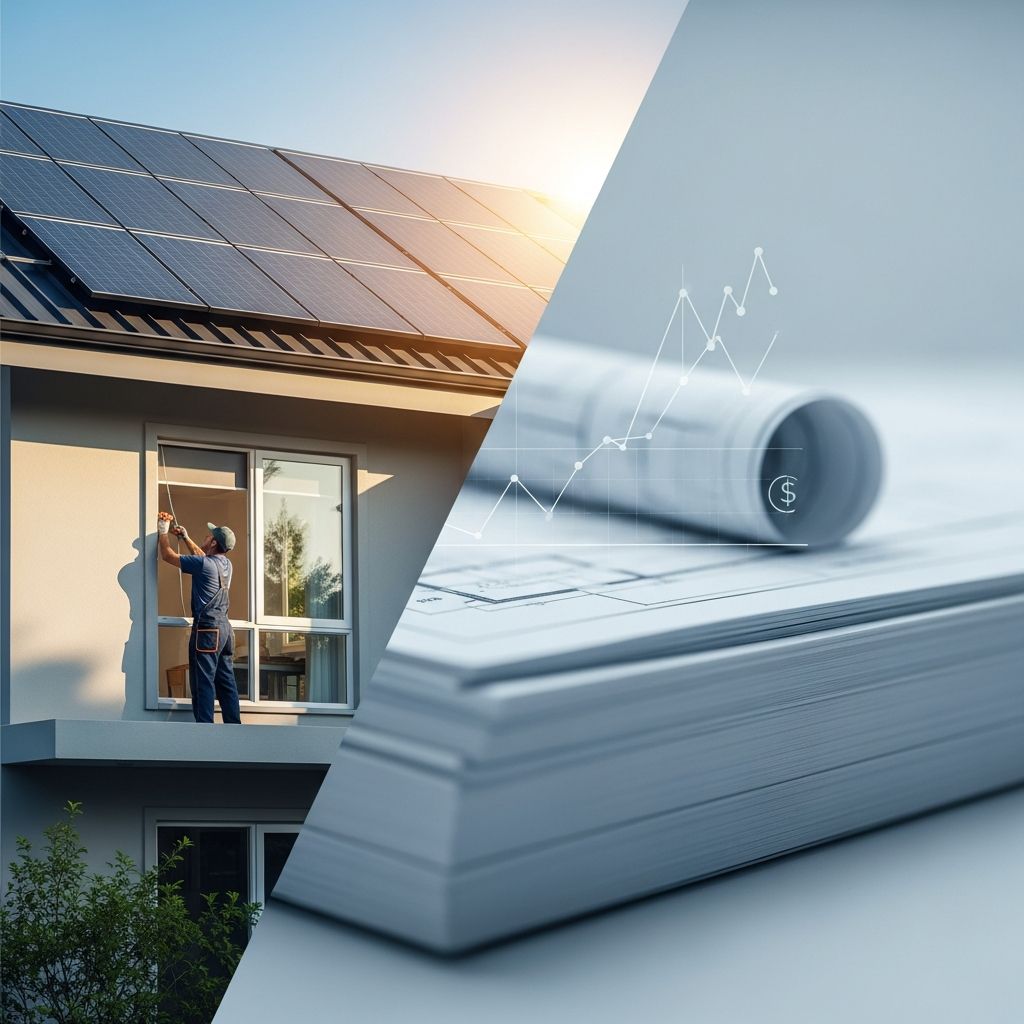
Property Assessed Clean Energy, commonly called PACE financing, is a specialized way to pay for certain home improvements such as energy efficiency, renewable energy, water-saving measures, and in some areas resilience upgrades like storm hardening or seismic retrofits. Instead of using a traditional home equity loan or credit card, the cost is repaid over many years as a charge on your property tax bill, and the obligation is generally tied to the property, not to you personally.
This guide explains how PACE works, which projects may qualify, the advantages and serious risks to consider, and practical tips to protect yourself before you sign any agreement.
1. What Is a PACE “Loan”?
PACE stands for Property Assessed Clean Energy. In most programs, what many people casually call a “PACE loan” is legally structured as a special property tax assessment or similar charge rather than a conventional consumer loan. That means:
- The financing is attached to the property instead of directly to the individual homeowner.
- Repayment is made through an extra line item on your real estate tax bill over a fixed term, often 5 to 30 years.
- The assessment can create a lien on the property, which in many cases can have priority over your existing mortgage.
Because of this unique structure, PACE is often treated differently from other debts by mortgage lenders, tax authorities, and consumer protection rules.
1.1 Typical features of PACE financing
- Purpose-limited funding – Only approved improvements that meet program rules (energy, water, or resilience) can be financed.
- Long repayment terms – Many programs allow terms up to 20–30 years, roughly matching the useful life of the improvement.
- Security interest in the property – A lien or assessment is recorded in county records and collected with property taxes.
- Transferability – The remaining assessment may stay with the property when you sell, subject to the buyer’s and lender’s approval.
2. How PACE Financing Works Step by Step
While details vary by state and local program, the process usually follows a similar pattern.
2.1 From interest to installation
- Program availability
Your state and local government must authorize PACE, and a public or private administrator runs the program in your area. - Project proposal
A contractor or program representative identifies eligible improvements, such as solar panels, insulation, efficient HVAC, or impact-resistant windows. - Application and approval
The program reviews your property, existing mortgage situation, and—under many state rules—your ability to repay before approving financing. - Contract signing
You sign a financing agreement that spells out project costs, interest rate or fees, term length, prepayment conditions, and how charges appear on your property tax bill. - Work performed
The contractor completes the authorized improvements, often subject to inspection or verification of completion before full payment is released. - Assessment added to tax bill
After funding, an annual or semi-annual assessment is placed on your property tax bill for the term of the agreement.
2.2 How repayment shows up
Instead of paying a separate monthly loan bill, you repay through your property taxes:
- If you pay taxes directly, you send the full amount (including the PACE charge) to the tax collector when due.
- If your lender manages taxes through an escrow account, your monthly mortgage payment may rise to cover the higher tax bill.
Because the assessment is typically collected the same way as property taxes, missing payments can trigger tax collection remedies, and ultimately—even though rare—can contribute to tax liens or foreclosure risks if left unpaid.
3. What Types of Projects Can PACE Finance?
PACE is limited to specific categories of improvements defined in state law and local program rules. Common uses include:
| Category | Examples of Eligible Improvements | Primary Benefit |
|---|---|---|
| Energy efficiency | High-efficiency HVAC systems, insulation, efficient windows, LED lighting | Lower energy use and utility bills |
| Renewable energy | Solar photovoltaic systems, solar water heaters | On-site clean power and potential bill reduction |
| Water conservation | High-efficiency toilets, irrigation upgrades, drought-tolerant landscaping | Reduced water use and bills |
| Resilience & safety | Storm-hardening, seismic retrofits, fire-resistant roofing (where allowed) | Improved protection from disasters |
Always check the official program list to confirm that your planned project qualifies and meets any technical or performance standards.
4. Key Benefits of PACE Financing
PACE was designed to remove common barriers to energy and resilience upgrades by addressing high upfront costs and long payback periods.
4.1 Spreading costs over many years
- 100% project financing is often available, covering equipment, labor, permits, and sometimes associated soft costs.
- Long repayment terms (up to 20–30 years in some programs) can make annual or semi-annual payments more manageable compared with shorter-term credit options.
4.2 Alignment with property and potential bill savings
- The obligation is typically tied to the property rather than the individual, so the assessment may be transferred to a new owner if the property is sold, depending on lender and buyer acceptance.
- For well-designed projects, energy or water bill savings may offset part of the added tax assessment, though savings are not guaranteed.
4.3 Policy and environmental benefits
- PACE can help communities meet climate and resilience goals by accelerating adoption of efficient and clean technologies.
- Local and state agencies note that PACE projects can stimulate jobs and local economic activity in construction and clean technology sectors.
5. Major Risks and Trade-Offs to Consider
Despite its advantages, PACE financing carries important risks that can affect your mortgage, the sale of your property, and your overall financial health.
5.1 Impact on your mortgage and refinancing
Many residential PACE assessments are structured so that they have a priority lien status similar to or ahead of your existing mortgage. According to federal mortgage guidelines, standard Fannie Mae and Freddie Mac security instruments generally prohibit loans that take senior lien status over their mortgage. This can create several issues:
- Your current mortgage lender may object to or restrict the use of PACE financing.
- Refinancing with a new lender can be more complicated or even impossible unless the PACE assessment is paid off or subordinated.
- Some lenders may require full payoff of the PACE balance as a condition of refinancing or selling.
5.2 Higher property tax bill and payment shock
- Your annual property taxes increase due to the added assessment, sometimes significantly.
- If your mortgage includes an escrow account, your monthly mortgage payment may rise once your lender recalculates escrow needs.
- Falling behind on payments can ultimately lead to tax collection actions, including potential tax lien sale or foreclosure in extreme cases.
5.3 Selling a property with a PACE assessment
- While PACE is often described as “staying with the property,” a buyer’s lender may require the assessment to be paid off at closing due to lien priority concerns.
- Some buyers may be hesitant to take on higher property taxes or may demand a lower purchase price to compensate.
- If you must pay off the assessment to sell, your net sale proceeds could be reduced.
5.4 Contractor and marketing issues
States such as California have adopted consumer protection rules for PACE administrators, including ability-to-repay requirements and restrictions on contractor conduct. However, risks remain:
- High-pressure sales tactics that emphasize immediate upgrades without clearly explaining long-term costs.
- Overstated claims about energy savings or property value increases.
- Work quality or scope that does not match what was promised or financed.
6. Consumer Protections and Regulatory Oversight
PACE programs operate within a legal framework established by state legislatures and local governments. Oversight and consumer protections can include:
6.1 Ability-to-repay and underwriting requirements
Some states require PACE program administrators to consider a homeowner’s reasonable ability to pay before approving financing, similar in concept to mortgage underwriting. For example, California requires program administrators to review income, assets, debt obligations, household expenses, and the relationship between the financed amount and the property’s value.
6.2 Disclosures and documentation
- Written disclosures explaining the total cost of the assessment, term, interest rate or fees, and projected payment schedule.
- Clear information about how the assessment will appear on the property tax bill and its potential impact on mortgage escrow.
- Notices that the assessment may affect refinancing and sale of the property, particularly because of lien priority.
6.3 Program and contractor oversight
- Licensing or registration requirements for PACE program administrators and sometimes for participating contractors.
- Standards for eligible improvements, equipment quality, and installation practices.
- Complaint-handling and dispute-resolution processes through the program, state regulators, or local consumer protection agencies.
7. Questions to Ask Before You Agree to PACE Financing
Before signing a PACE contract, consider asking these questions and documenting the answers:
- Is PACE available in my area? Verify through your city, county, or state energy office that the program and administrator are officially authorized.
- Exactly how much will I pay over the full term? Ask for the total financed amount, fees, interest, and the estimated total of all future payments.
- How will this affect my property tax bill and monthly mortgage payment? Request a written estimate of your new annual tax bill and any expected escrow change.
- Will my current mortgage lender permit this? Read your mortgage documents and, if needed, contact your servicer about their policy.
- What happens if I sell or refinance? Clarify whether the assessment must be paid off and whether buyers in your market typically assume PACE obligations.
- Are there other financing options? Compare PACE to home equity loans, personal loans, utility on-bill programs, or rebates and grants.
8. Alternatives to PACE for Home Improvements
PACE is only one of several ways to pay for energy or resilience projects. Depending on your situation, alternatives may be more suitable:
- Home equity loans or lines of credit (HELOCs) – Secured by your home, with monthly payments and often competitive rates for qualified borrowers.
- Unsecured personal loans – No property lien, but usually higher interest rates and shorter terms.
- Utility or state programs – Some utilities and public agencies offer rebates, low-interest loans, or on-bill financing for efficiency projects.
- Cash or staged upgrades – Paying over time as you save can avoid debt altogether, though projects may take longer to complete.
9. Frequently Asked Questions (FAQs)
Q1: Is PACE financing considered a traditional loan?
No. PACE is usually structured as a special assessment on your property tax bill rather than a standard loan in your name, although it functions similarly in that you are borrowing money and repaying it over time with interest.
Q2: Can PACE financing hurt my credit score?
PACE assessments are typically collected through the property tax system and may not be reported like traditional consumer loans. However, failure to pay your tax bill, including the PACE portion, can lead to serious consequences such as tax liens or foreclosure, which could indirectly affect your credit and financial standing.
Q3: What happens to PACE when I sell my home?
In principle, the remaining PACE assessment can stay with the property and be paid by the new owner. In practice, some mortgage lenders or buyers may insist that you pay off the outstanding balance at closing, so you should not assume that the obligation will automatically transfer.
Q4: Are there federal rules specifically governing residential PACE?
PACE is mainly enabled and regulated at the state and local level, though federal housing entities such as Fannie Mae and Freddie Mac have policies related to how PACE liens interact with mortgages they purchase or guarantee. Always review current guidance before proceeding.
Q5: How can I check if a PACE administrator is legitimate?
Contact your state energy office, department of financial regulation, or local government to verify whether a PACE program and its administrator are officially approved in your jurisdiction. Many states list authorized administrators and provide consumer guidance online.
References
- PACE financing (Property Assessed Clean Energy) — U.S. Environmental Protection Agency. 2023-06-12. https://www.epa.gov/statelocalenergy/commercial-property-assessed-clean-energy
- PACE financing — Nevada Governor’s Office of Energy. 2022-04-01. https://www.energy.nv.gov/resources/property-assessed-clean-energy/
- PACE financing — PACENation. 2024-01-10. https://www.pacenation.org/what-is-pace/
- PACE — California Department of Financial Protection and Innovation. 2023-08-15. https://dfpi.ca.gov/consumers/housing/pace/
- B5-3.4-01, Property Assessed Clean Energy Loans — Fannie Mae Selling Guide. 2025-10-08. https://selling-guide.fanniemae.com/sel/b5-3.4-01/property-assessed-clean-energy-loans
- PACE financing (Property Assessed Clean Energy) — Summary of U.S. programs. 2023-09-01. https://en.wikipedia.org/wiki/PACE_financing
Similar Articles








Read full bio of medha deb


