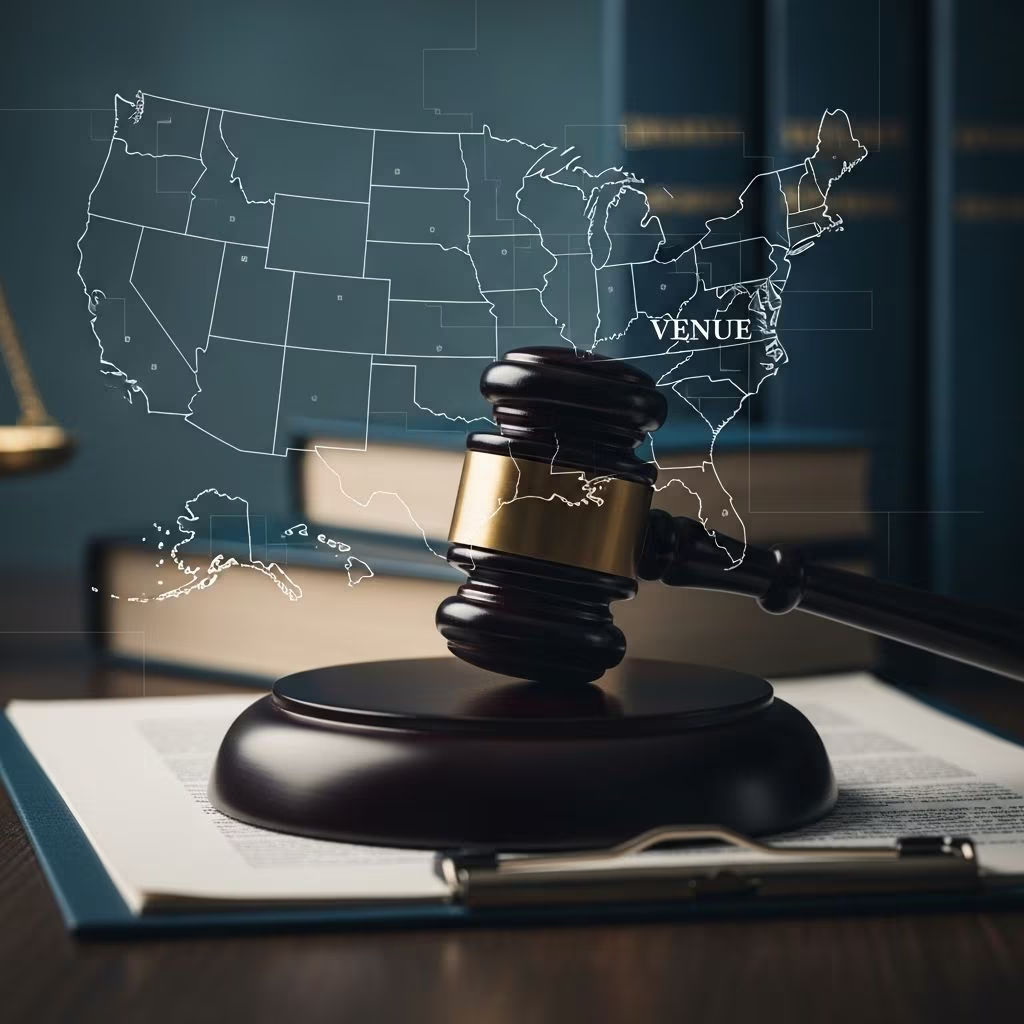
A motion to change venue is a formal request asking a court to move a case from one location to another court that is legally authorized to hear it. In both civil and criminal matters, the goal is usually to protect the parties’ right to a fair and efficient proceeding when the original venue is inconvenient, biased, or otherwise inappropriate.
Venue rules determine where within a court system a case is heard, while jurisdiction determines which court system has power over the dispute. A change of venue assumes the court has jurisdiction, but shifts the case to a different, proper forum within that system.
Venue vs. Jurisdiction: Key Distinctions
Before understanding venue changes, it helps to see how venue differs from jurisdiction.
| Concept | What It Regulates | Typical Question Answered | Can It Be Changed by Motion to Change Venue? |
|---|---|---|---|
| Subject-matter jurisdiction | Court’s power over the type of case (e.g., federal vs. state, probate, family) | Does this court have authority to hear this kind of dispute? | No. If lacking, the case must be dismissed or filed in the correct court. |
| Personal jurisdiction | Court’s authority over the parties | Does this court have power over this defendant or plaintiff? | No. Challenges are made through motions to dismiss or quash, not venue change. |
| Venue | Geographic location within a system (county, district, division) | Which courthouse within this system should hear this case? | Yes. A motion to change venue can transfer the case to another proper court. |
Why Courts Allow Changes of Venue
Legislatures and courts recognize that even when a case is filed in a technically proper location, practical or fairness concerns might require moving it. Federal law, for example, allows a civil action to be transferred to another district court “for the convenience of parties and witnesses, in the interest of justice.”
Broadly, changes of venue serve two core purposes:
- Protecting fairness – preventing local prejudice, excessive media coverage, or community hostility from undermining an impartial jury or judge.
- Enhancing efficiency and convenience – placing the case where evidence, witnesses, and parties are located, reducing costs and delay for everyone.
Common Reasons to Request a Change of Venue
Although the precise rules vary by jurisdiction, courts frequently see similar grounds for venue motions.
1. Prejudicial Publicity and Community Bias
In high-profile criminal prosecutions or widely publicized civil disputes, intense coverage can saturate a community with information and opinions that make it difficult to empanel an unbiased jury. Moving the trial to another county or district can reduce the impact of:
- Sensational or one-sided media reports
- Social media campaigns targeting the accused or parties
- Local campaigns or petitions demanding a particular outcome
Courts in the United States have long recognized that excessive pretrial publicity may justify a venue change when it threatens the right to an impartial jury under the Constitution.
2. Local Hostility or Community Interest
Even without extensive media coverage, a community may be so directly affected by the events in dispute that neutral jurors are hard to find—for example, where:
- A major employer in the area is a party in a mass layoff or environmental case
- The alleged criminal conduct deeply affected a small town
- Local political or social conflicts make the case especially sensitive
In such circumstances, some states authorize transfers when an impartial trial cannot reasonably be held in the original county.
3. Convenience of Parties and Witnesses
In civil litigation, courts often weigh how burdensome the chosen venue is for witnesses, parties, and the presentation of evidence. U.S. federal law explicitly allows transfer for convenience, applying a doctrine related to forum non conveniens—the idea that a case should be heard in the most convenient forum available.
Factors often considered include:
- Where key witnesses live or work
- Where documents and physical evidence are located
- Travel time, cost, and disruption of business operations
- The relative congestion of the courts in each potential venue
4. Improper Original Venue
Sometimes the case is filed in a location that does not meet the statutory venue requirements. In federal civil cases, if venue is wrong, the court may dismiss the case or transfer it to a district where it could have been brought initially.
Examples of improper venue include filing in a county or district:
- Where none of the defendants reside
- That has no connection to the events giving rise to the lawsuit
- That does not satisfy venue statutes for that type of claim
5. Statutory or Regulatory Grounds
Specific case types sometimes have special venue rules. For instance, immigration proceedings, certain administrative reviews, or multi-district litigation may be subject to regulations that permit or govern transfers between courts or hearing locations.
Who Can Ask for a Change of Venue?
Either side in a lawsuit may be able to request venue transfer, depending on the procedural rules that apply.
- Criminal cases – The defendant is most likely to move for a change, arguing that local conditions make a fair trial impossible. In some jurisdictions, prosecutors can also request transfer in limited circumstances.
- Civil cases – Any party, including the plaintiff who originally chose the venue, may move to transfer the case to a different court that would also be a proper venue.
- By agreement – Courts may transfer cases when all parties consent, provided the new court has jurisdiction and venue is otherwise proper.
Legal Standards Courts Use to Decide Venue Motions
Although language and details differ, certain themes appear consistently in statutes and case law governing venue transfers.
Federal Civil Standard (Example)
Under U.S. federal law, a district court may transfer a civil action to another district where it could have been brought, “for the convenience of parties and witnesses, in the interest of justice.” Courts examine multiple factors, such as:
- Ease of access to sources of proof
- Availability and cost of obtaining witness attendance
- Local interest in having localized disputes decided at home
- Familiarity of each forum with the governing law
- Court congestion and likely time to trial
The moving party generally bears the burden of proving that transfer is justified and must make a persuasive showing, not simply prefer another location.
Criminal Cases and Fair Trial Concerns
State and federal constitutions guarantee criminal defendants a fair trial before an impartial jury. Many states authorize venue changes when a fair trial cannot be had in the original county due to prejudice, publicity, or other local conditions.
Courts may look to:
- The nature and extent of media coverage
- Survey evidence or voir dire results indicating bias
- Time elapsed since the events in question
- Whether procedural safeguards (e.g., careful jury selection, sequestration) can adequately address the problem
How to Request a Change of Venue
Procedures differ by jurisdiction and case type, but there are common steps involved in seeking a transfer.
Typical Steps in Filing the Motion
- Draft the motion
The motion explains what change you want (where the case should go) and why the law allows it. It should cite relevant statutes, rules, and, when possible, supporting case law. - Attach evidence
Supporting materials might include news articles, affidavits describing prejudice or hardship, or documentation of travel burdens and witness locations. - Serve all parties
The motion and any supporting documents must be formally delivered to opposing counsel or self-represented parties according to court rules. - Attend the hearing (if scheduled)
Many courts schedule a hearing where each side presents arguments. The judge may take evidence, ask questions, and rule immediately or later. - Comply with the transfer order
If granted, the court will issue an order identifying the new venue. Case files, schedules, and future hearings move to that court, and parties must follow any additional instructions regarding timelines or logistics.
Timing Considerations
Venue motions are more likely to be successful when filed promptly. Some systems impose explicit deadlines (for example, a specified number of days before trial in certain state courts), and delay can be a reason to deny the motion if it appears strategic or disruptive rather than necessary.
Potential Outcomes of a Venue Motion
After reviewing the motion, evidence, and arguments, the judge generally has several options:
- Grant the motion fully – The case is transferred to the requested venue.
- Grant the motion in part – The case is transferred, but to a different court than requested, or only certain claims are moved (where rules permit).
- Deny the motion – The case remains where it was filed, and trial proceeds there.
In some jurisdictions, instead of moving the entire case, the court may consider alternatives such as importing a jury from another county in criminal matters, balancing fairness with practical constraints.
Strategic Pros and Cons of Seeking a Venue Change
Requesting a change of venue is not purely a procedural step; it is often a major strategic decision.
Advantages
- Increased chance of impartial fact-finding – Especially valuable in high-profile or emotionally charged cases.
- Reduced litigation costs – A more convenient venue for key witnesses and evidence can lower travel and preparation expenses.
- Access to a more suitable court – Some courts may have more experience with certain legal issues or be less congested, reducing time to resolution.
Disadvantages
- Delay while the motion is litigated – Preparing, opposing, and deciding a venue motion can slow the case.
- Upfront legal expense – Collecting evidence of prejudice or inconvenience and briefing legal issues requires additional attorney time.
- Loss of perceived “home court” advantage – The party who filed in the original venue, or who is local to that court, may feel disadvantaged by a move.
Practical Tips for Parties Considering a Venue Motion
Whether you are a plaintiff, defendant, or criminal accused, consider the following before pursuing a change of venue:
- Evaluate the legal basis – Check applicable statutes, rules of civil or criminal procedure, and local court rules for specific standards and deadlines.
- Gather concrete evidence – General complaints about inconvenience or vague claims of bias are unlikely to persuade a judge. Compile documents, data, or sworn statements.
- Consider alternatives – In some cases, careful jury selection, protective orders, or video testimony may mitigate problems without changing venue.
- Assess overall strategy – A transfer may change the jury pool, local legal culture, and even applicable procedural rules; your counsel can help weigh these effects.
Frequently Asked Questions (FAQs)
Q: Does a change of venue change the law that applies to my case?
In many civil cases, transferring venue within the same court system does not change the substantive law that governs your claims. For example, a federal civil case transferred from one district to another generally remains governed by the same underlying state law if that was the rule before transfer. However, procedural rules and local practices may differ between courts, so you should discuss the implications with an attorney.
Q: Is it easier to get a change of venue in a criminal case than in a civil case?
Not necessarily. In criminal cases, courts take claims of prejudice and publicity very seriously because constitutional rights are at stake, but defendants still must show that local conditions threaten a fair trial. In civil matters, the focus is often on convenience and efficiency, and courts balance the moving party’s arguments against the plaintiff’s initial choice of forum.
Q: Can a case be moved to a different state through a change of venue?
A typical change of venue involves moving a case within the same court system—such as from one county to another within a state, or from one federal district court to another. Moving a case to a different state usually involves different legal mechanisms, such as filing in federal court or using doctrines like forum non conveniens to dismiss in favor of a foreign forum, rather than a simple intra-system venue transfer.
Q: Do I need a lawyer to file a motion to change venue?
Some people file venue motions without counsel, particularly in administrative or immigration contexts where self-representation is common, and there are guides specifically designed for such filers. However, the standards can be complex, and the outcome may significantly affect your case, so obtaining legal advice is usually advisable in civil and criminal court proceedings.
Q: What happens to upcoming hearings or deadlines if the case is transferred?
When a court orders a transfer, it typically sends the file to the new court, which then issues its own schedule and deadlines. Existing hearing dates in the original court usually become moot, but any prior orders, such as discovery rulings, may remain in effect unless the new court decides otherwise. Parties should carefully review the transfer order and new notices to avoid missing deadlines.
References
- Change of Venue in California — Judicial Council of California / California Courts. 2023-04-18. https://newsroom.courts.ca.gov/branch-facts/change-venue-california
- 28 U.S. Code § 1404 – Change of venue — Legal Information Institute, Cornell Law School. Accessed 2025. https://www.law.cornell.edu/uscode/text/28/1404
- Justice Manual, Civil Resource Manual 42: Change of Venue — U.S. Department of Justice. 2020-01-17. https://www.justice.gov/archives/jm/civil-resource-manual-42-change-venue
- Change of venue — Descriptive overview of venue transfers in U.S. law. Accessed 2025. https://en.wikipedia.org/wiki/Change_of_venue
- A Pro Se Guide to Filing a Motion to Change Venue in Immigration Court — National Immigration Project of the National Lawyers Guild (NIPNLG). 2025-07-01. https://nipnlg.org/sites/default/files/2025-07/pro-se-venue.pdf
- Change of Venue in a Criminal Case — Law Office of Joseph M. Pacella. 2024-03-05. https://www.josephmpacellaspringfield.com/change-of-venue-in-a-criminal-case