
Modified Gross Lease: Balanced Leasing Guide For 2025
Discover the essentials of modified gross leases: a balanced approach to sharing costs in commercial real estate for tenants and landlords alike.
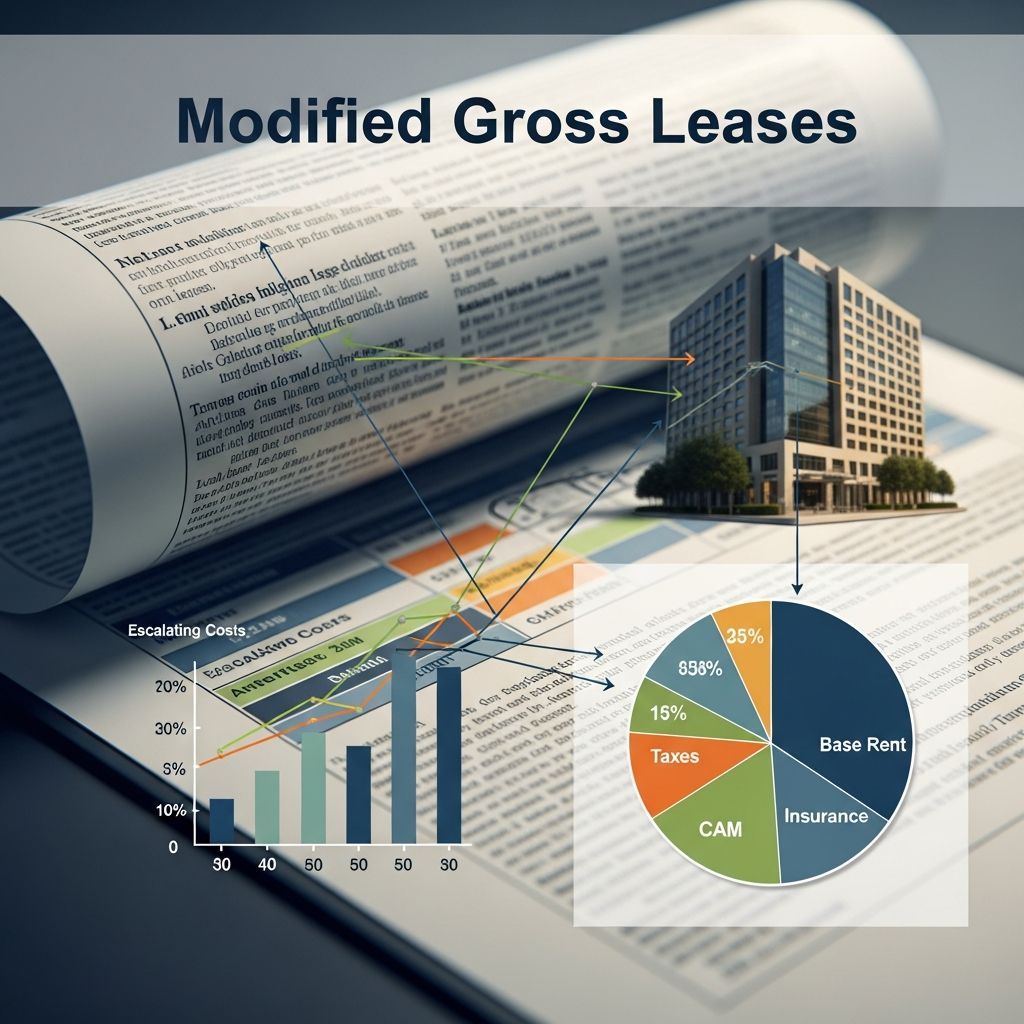
In the dynamic world of commercial real estate, selecting the right lease structure can significantly impact a business’s financial health and operational flexibility. Among the various options available, the
modified gross lease
stands out as a hybrid model that blends predictability with shared responsibility. This lease type strikes a middle ground between full-service gross leases—where landlords shoulder all operating costs—and net leases, where tenants bear nearly everything. By negotiating specific expense allocations, parties create customized arrangements tailored to their needs.Defining the Core Elements of a Modified Gross Lease
A modified gross lease requires tenants to pay base rent plus certain directly attributable operating expenses, while landlords cover the rest. This setup typically includes the tenant handling utilities for their space, such as electricity or water measured separately, and sometimes interior upkeep. Landlords, meanwhile, manage broader costs like property taxes, building insurance, and major structural repairs.
The flexibility inherent in this structure arises from negotiations. Unlike rigid formats, terms are bespoke: one agreement might shift janitorial services to the tenant, another could include a portion of common area maintenance (CAM). This negotiation process fosters collaboration, allowing businesses to align costs with usage patterns and property owners to stabilize income streams.
- Base Rent: Fixed monthly payment forming the lease’s foundation.
- Tenant Expenses: Often utilities, cleaning, and minor repairs specific to the leased area.
- Landlord Expenses: Typically taxes, insurance, roof replacements, and shared building systems.
This division promotes transparency, as parties define responsibilities upfront, reducing future disputes. For multi-tenant properties, pro-rata shares of certain costs may apply, calculated by square footage.
Key Advantages for Tenants and Landlords
Tenants appreciate the
predictability
of knowing exact obligations beyond base rent, aiding budgeting in volatile markets. Customization lets them avoid overpaying for unused services—for instance, opting out of full-building HVAC if their space has independent controls.Landlords gain from reduced risk exposure; by offloading tenant-specific costs, they mitigate unpredictable spikes in utilities or maintenance. This can lead to steadier cash flows, especially attractive for properties with diverse occupants.
| Stakeholder | Primary Benefits |
|---|---|
| Tenants | Budget certainty, customization, lower capital outlay for alterations |
| Landlords | Shared risk, stable revenue, long-term tenant retention potential |
Both parties benefit from stronger relationships built on mutual concessions, often resulting in lease renewals and referrals.
How Modified Gross Leases Differ from Other Commercial Structures
To grasp its value, compare it to common alternatives:
Gross Lease Comparison
In a pure gross lease, tenants pay flat rent; landlords absorb all expenses like taxes, insurance, and CAM. This simplicity suits startups but can inflate base rent to cover landlord risks. Modified versions introduce tenant contributions for equity, potentially lowering headline rent.
Net Lease and Triple Net Distinctions
Net leases shift more burdens to tenants: single net adds taxes; double net includes insurance; triple net (NNN) encompasses CAM too. Modified gross leases lighten this load, keeping major expenses with landlords while tenants handle measurables. NNN suits creditworthy tenants in single-occupancy buildings; modified gross fits multi-tenant offices.
| Lease Type | Tenant Pays | Landlord Pays |
|---|---|---|
| Gross | Base rent only | All operating expenses |
| Modified Gross | Base rent + select expenses (e.g., utilities) | Taxes, insurance, structural |
| Triple Net (NNN) | Base rent + taxes + insurance + CAM | Minimal/none |
These contrasts highlight modified gross as ideal for mid-sized firms seeking balance without full net lease exposure.
Common Expense Categories in Negotiations
Negotiations center on categorizing expenses:
- Utilities: Tenants often pay metered services; landlords handle common areas.
- Maintenance: Interior by tenant; exterior/roof by landlord.
- Taxes & Insurance: Usually landlord’s domain, sometimes shared proportionally.
- CAM: Negotiable—full pass-through rare; caps or base-year exclusions common.
Escalation clauses protect against inflation, tying reimbursements to indices like CPI. Caps limit annual increases, safeguarding tenants from sharp rises.
Negotiation Strategies for Success
Effective bargaining requires preparation:
- Audit Historical Data: Review past bills to benchmark fair shares.
- Define Measurables: Insist on sub-metering for accuracy.
- Include Audit Rights: Allow tenant verification of landlord charges.
- Cap Increases: Negotiate 3-5% annual limits.
- Base Year Protection: First-year expenses as reimbursement floor.
Legal review is crucial; attorneys spot hidden fees like administrative markups on CAM.
Real-World Applications and Case Scenarios
Modified gross leases thrive in office parks, retail strips, and medical buildings. Consider a 5,000 sq ft office tenant: base rent $30/sq ft/year ($12,500/month), plus utilities ($1,000/month). Landlord covers $200,000 annual taxes/insurance. Total tenant cost: predictable ~$13,500/month vs. NNN’s variability.
In retail, tenants might add janitorial; industrials include minor repairs. During market shifts, like post-pandemic hybrid work, these leases adapt via renegotiation, extending terms with adjusted splits.
Potential Pitfalls and Mitigation Tactics
Challenges include ambiguous terms leading to disputes or uncapped CAM surges. Mitigate with precise definitions, third-party audits, and dispute resolution clauses like mediation.
- Vague ‘operating expenses’—specify exclusions (e.g., capital improvements).
- Unexpected hikes—demand transparency reports quarterly.
- End-of-term reconciliations—set short windows for true-ups.
Market Trends Influencing Modified Gross Adoption
Recent years show rising popularity amid inflation and hybrid models. Tenants favor them over NNN for cost control; landlords use them to attract amid vacancies. In 2025 data, 25% of urban office deals featured modified structures, up from 15% pre-2020.
Frequently Asked Questions About Modified Gross Leases
What expenses does a tenant typically cover in a modified gross lease?
Tenants usually handle utilities, interior maintenance, and sometimes janitorial services specific to their space.
How does it compare to a full gross lease?
Unlike full gross, where landlords pay everything, modified gross shares select costs, often reducing base rent.
Are escalation clauses standard?
Yes, to adjust for rising costs, often capped and indexed.
Who benefits most from this lease type?
Mid-sized businesses in multi-tenant buildings seeking flexibility without full net risks.
Can terms be renegotiated mid-lease?
Possible via amendments, especially with strong relationships or market shifts.
References
- Modified Gross Leases in Commercial Real Estate — Commercial Real Estate Loans. 2023. https://www.commercialrealestate.loans/commercial-real-estate-glossary/modified-gross-lease/
- The Modified Gross: A Flexible and Efficient CRE Solution — Prophia. 2024-05-15. https://www.prophia.com/blog/commercial-lease-types-the-modified-gross
- Gross vs. Modified Gross Leases — NAI Harmon. 2023-08-22. https://www.naiharmon.com/gross-vs-modified-gross-leases/
- AI Review for Modified Gross Office Lease Agreements — LegalOn Technologies. 2024. https://www.legalontech.com/contracts/modified-gross-office-lease-agreement-olm
- What is a Modified Gross Lease & How Does It Work? — PropertyMetrics. 2022-11-10. https://propertymetrics.com/blog/modified-gross-lease/
- Understanding Different Types of Commercial Leases — Visual Lease. 2024-03-01. https://visuallease.com/understanding-different-types-of-commercial-leases-exploring-triple-net-and-pass-through-leases/
Similar Articles








Read full bio of Sneha Tete


