
Understanding Missouri DWI Laws and Penalties
A practical guide to Missouri DWI rules, penalties, license consequences, and your rights during and after an arrest.
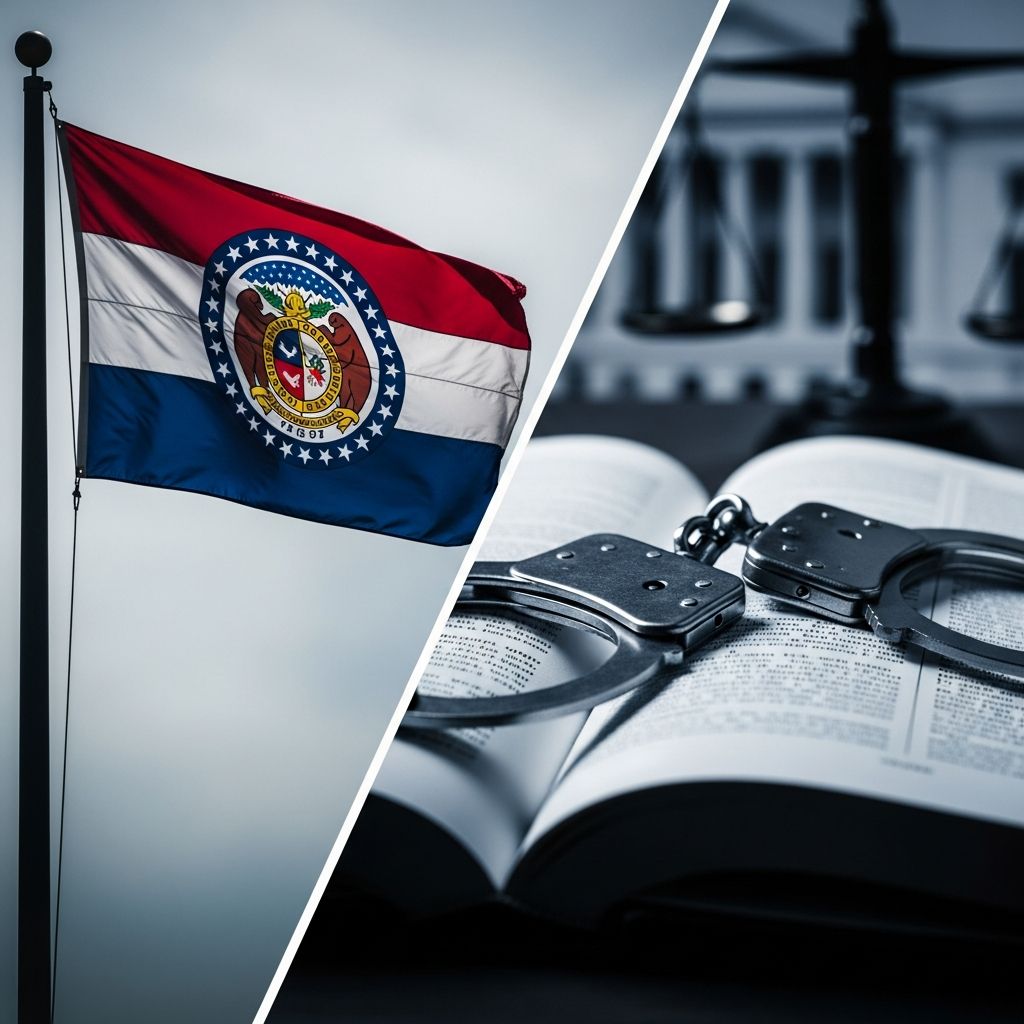
Missouri takes impaired driving very seriously. A conviction for driving while intoxicated (DWI) can affect your freedom, finances, and driving record for years. This guide explains how Missouri defines DWI, the blood alcohol concentration (BAC) limits, possible criminal penalties, and the separate process that can suspend your driver’s license even before your court case ends.6
What “DWI” Means in Missouri
Missouri commonly uses the term Driving While Intoxicated (DWI) rather than DUI. Under state law, a driver can be accused of DWI in two main ways:2
- Impairment-based DWI: The state alleges your ability to operate a vehicle was impaired by alcohol, drugs, or a combination, even if your exact BAC is unknown or below 0.08%.2
- Per se BAC violation: The state alleges your BAC met or exceeded the legal limit, regardless of visible impairment.2
In other words, you can be charged with DWI either because your BAC is too high, because you appear impaired, or both.
Standard BAC Limits
Missouri law sets different legal BAC limits based on the type of driver and age:36
| Driver Category | Legal BAC Limit | Notes |
|---|---|---|
| Most adult drivers (21+) | 0.08% or higher | Can be charged with DWI/BAC offense at or above this level.2 |
| Commercial drivers (CDL) in a commercial vehicle | 0.04% or higher | Also face a 1-year disqualification from commercial driving at this level.6 |
| Drivers under 21 | 0.02% or higher | May trigger separate “minor in possession” or license sanctions even below 0.08%.26 |
Even below these thresholds, officers may still investigate for impairment if your driving or behavior suggests you are not safe to drive.
How a Missouri DWI Case Begins
Most DWI investigations begin with a traffic stop or crash response. Common reasons an officer may stop a vehicle include:
- Speeding, weaving, or crossing lane lines
- Running a red light or ignoring traffic signs
- Equipment problems, such as a broken taillight
- Responding to a collision or stalled vehicle
After the stop, the officer may look for signs of impairment, such as the smell of alcohol, slurred speech, bloodshot eyes, or confusion. If the officer suspects impairment, you may be asked to perform roadside field sobriety tests and to take a preliminary breath test.
Breath, Blood, and Chemical Testing
Missouri’s implied consent law requires drivers lawfully arrested for DWI to submit to a chemical test (usually breath or blood) to measure BAC. Refusing that test can trigger an automatic license revocation separate from any criminal case.56
If you take the test and your BAC is at or above the legal limit, the officer will normally issue a notice of license suspension and a short-term temporary driving permit.56
Criminal Penalties for DWI in Missouri
Penalties depend heavily on whether it is your first DWI or you have prior convictions. Courts consider prior offenses, BAC level, and aggravating factors such as injuries or children in the vehicle.
First DWI Conviction
A first DWI in Missouri is generally treated as a misdemeanor, but it still carries significant consequences. Typical potential penalties include:236
- Up to 6 months in jail
- Fine of up to $500–$1,000 depending on the exact offense charged
- 90-day driver’s license suspension, often with the possibility of a restricted driving privilege (RDP)6
- Possible probation and conditions such as alcohol education or treatment
Missouri law can also require minimum jail time if your BAC was 0.15% or higher, particularly if you do not complete a court-ordered treatment program.2
Repeat Offenses and Felony DWI
Penalties escalate quickly for repeat offenders. As the number of prior DWI convictions rises, the charge can shift from a misdemeanor to a felony, with far more severe consequences.3
- Second offense (often a higher-level misdemeanor):
- Up to about 1 year in jail
- Fines that can reach $2,000 or more
- License revocation of approximately 1 year, sometimes longer depending on prior history
- Third offense and beyond (often felony-level):
- Possible prison time measured in years, not months
- Fines that may go up to $10,000 in serious cases
- Lengthy revocations, including potential 10-year license loss for certain repeat offenders3
Because felony convictions affect civil rights, employment, and housing, the long-term impact of repeat DWI can extend well beyond the sentence itself.
Other Possible Court Orders
Beyond jail and fines, a Missouri court may also require:
- Completion of a Substance Abuse Traffic Offender Program (SATOP)3
- Attendance at victim impact panels or community service
- Installation of an ignition interlock device (IID) as a condition of driving
- Random alcohol or drug testing as part of probation
License Suspensions and Revocations: Criminal vs. Administrative
Missouri handles driving privileges through two separate systems:
- The criminal court case, where a judge decides guilt and imposes sentence.
- The administrative process, run by the Missouri Department of Revenue (DOR), which focuses solely on your driver’s license.256
This means your license can be suspended or revoked even if the criminal case is reduced or dismissed.
Administrative Suspension for High BAC
If you submit to a chemical test and your BAC is at or above the legal limit, Missouri may impose an administrative suspension separate from any court-ordered license action.256
- First-time BAC over 0.08% (adult driver): Typically a 90-day suspension.
- Usually divided into 30 days of no driving, followed by 60 days of restricted driving for limited purposes such as work, school, or treatment.2
- Prior alcohol-related actions on record within 5 years:
- Possible 1-year revocation of driving privileges, often without the option for restricted driving.2
The officer typically takes your physical driver’s license and issues a temporary permit and notice of suspension. You usually have a limited time window (often 15 days) to request an administrative hearing to contest this action.56
Refusing a Chemical Test
Refusing a breath, blood, or urine test in Missouri can carry longer license consequences than failing the test. Under implied consent laws, a refusal can lead to:
- Automatic license revocation, often for 1 year on a first refusal25
- Separate administrative hearing procedures, where the issue is primarily whether you refused after a proper request
- Potential requirement to install an ignition interlock device to regain driving privileges
The state’s burden of proof in administrative hearings is typically lower than in criminal court, which can make these hearings challenging to win without legal assistance.5
Underage Drivers and Alcohol
Drivers under 21 face special rules. Even if they are not charged with DWI, a BAC of 0.02% or higher can trigger consequences such as:
- Suspension or revocation of driving privileges by court order or administrative action6
- Possible “minor in possession” charges based solely on a breath test result above 0.02%2
Ignition Interlock Devices and Restricted Driving
Ignition interlock devices (IIDs) are small breath-testing units wired to a vehicle’s ignition. To start the vehicle, the driver must blow into the device and register a BAC below a preset level.
Missouri may require an IID as a condition of:
- Receiving a Restricted Driving Privilege (RDP) after a DWI or BAC suspension6
- Reinstating a license following a more serious or repeat DWI
- Probation orders in cases with high BAC or prior convictions
While an IID can be expensive, it may be the only way for some drivers to continue driving to work, school, or treatment during or after a suspension period.
Collateral Consequences Beyond Court and License Penalties
The impact of a DWI conviction often extends beyond the courtroom.
- Insurance rates: Premiums typically rise sharply after a DWI and may remain elevated for years.
- Employment: Jobs that require driving, a professional license, or background checks may be affected by a DWI record.
- Professional and commercial licenses: Commercial drivers face separate disqualifications, and some professions must report criminal convictions to licensing boards.6
- Travel and immigration: Certain countries restrict entry for individuals with criminal records, and non-citizens may face immigration consequences depending on the case.
Practical Tips if You Are Accused of DWI
While every case is different and this article is not legal advice, some general steps can help protect your rights:
- Pay attention to deadlines: Administrative license challenges must usually be filed within a short time window (often 15 days) after notice of suspension.56
- Track paperwork: Keep copies of any notice of suspension, temporary permits, and court documents.
- Consider legal help promptly: Because Missouri uses both criminal and administrative processes with different rules, early legal advice can be important.
- Document your situation: Write down details about the stop, field tests, and anything you told the officer while your memory is fresh.
Frequently Asked Questions About Missouri DWI
What is the legal BAC limit for most drivers in Missouri?
For most adult drivers, the legal limit is 0.08% BAC. Commercial drivers in a commercial vehicle have a stricter limit of 0.04%, and drivers under 21 can face consequences starting at 0.02% BAC.236
Can I lose my license even if I am not convicted in criminal court?
Yes. The Missouri Department of Revenue can suspend or revoke your license through an administrative process based on a failed or refused chemical test, even if your criminal case is later reduced or dismissed.256
How long is the license suspension for a first DWI?
A first-time DWI or excessive BAC conviction generally leads to a 90-day suspension. In many cases, drivers may qualify for a restricted driving privilege during part of that period if they meet certain requirements.26
Is a Missouri DWI always a felony?
No. A first DWI is normally a misdemeanor. However, repeat offenses, high BAC cases, or incidents involving injury or death can be charged as felonies and may carry years of possible prison time.23
What happens if I refuse a breath or blood test?
Refusing a chemical test can result in a separate license revocation that often lasts longer than a suspension for failing the test, along with more complicated reinstatement and potential ignition interlock requirements.25
References
- Driving While Intoxicated (DWI) — Missouri Department of Revenue. 2024-06-01. https://dor.mo.gov/driver-license/revocation-reinstatement/dwi.html
- Missouri DWI Laws Overview — National College for DUI Defense (citing Mo. Rev. Stat. §§ 577.010, 577.012, 302.500–302.540). 2023-08-15. https://www.ncdd.com/missouri-dwi-laws
- DWI vs. DUI in Missouri: Is There a Difference? — Cooper Law Firm. 2023-11-10. https://www.cooperlaw-firm.com/blog/dwi-vs-dui-in-missouri-is-there-a-difference/
- Understanding the DWI Administrative Process in Missouri — Combs Waterkotte. 2025-03-14. https://www.combswaterkotte.com/understanding-the-dwi-administrative-process/
- Missouri Revised Statutes, Chapter 577: Public Safety Offenses — Missouri General Assembly. 2022-08-28. https://revisor.mo.gov/main/OneChapter.aspx?chapter=577
Similar Articles








Read full bio of Sneha Tete




