
Waive Miranda Rights: 3 Key Requirements For Valid Waiver
Learn how waiving Miranda rights works, when it’s valid, and what protections still apply.
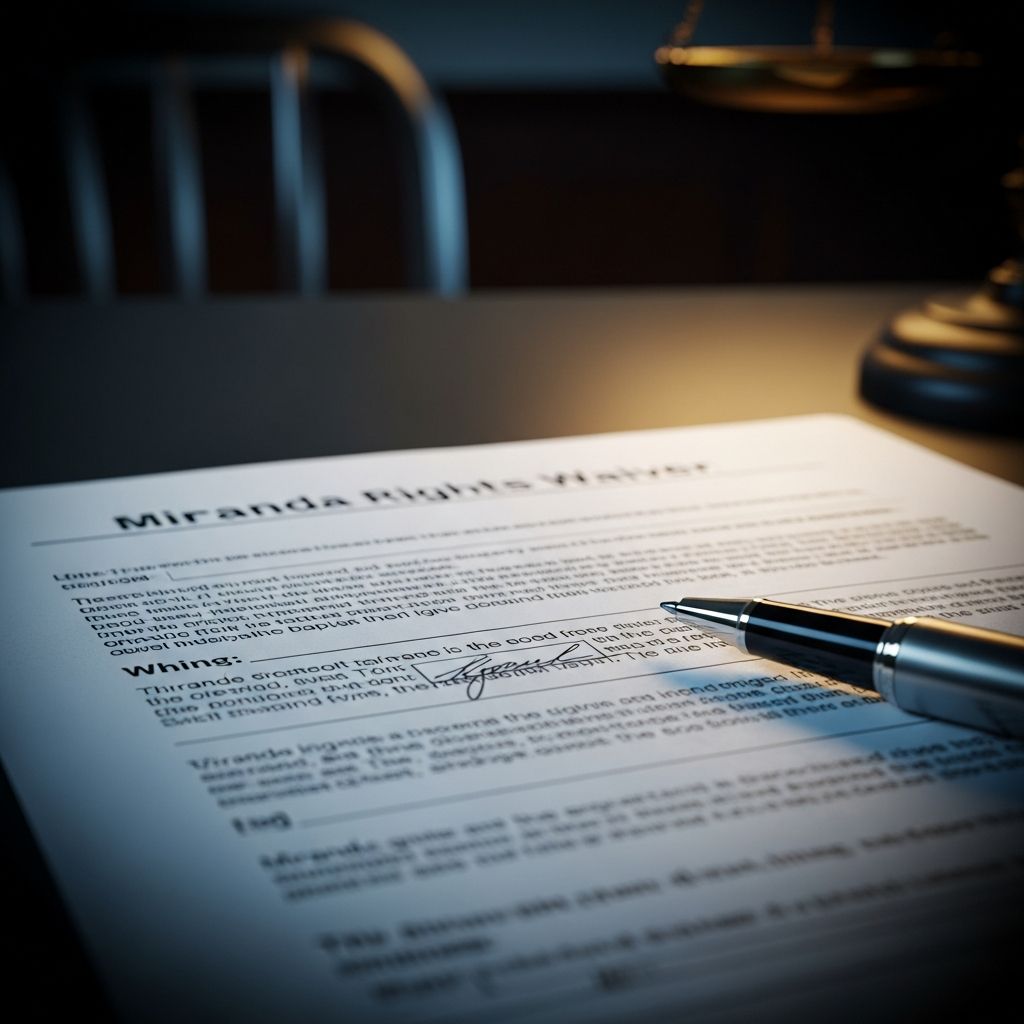
What It Means to Waive Miranda Rights
When someone is taken into police custody and subjected to questioning, officers are required to deliver what is commonly known as the Miranda warning. This notification informs the individual of their constitutional right to remain silent and their right to legal counsel. However, simply hearing these rights does not end the legal analysis. A critical follow-up question arises: did the person choose to give up those rights?
Waiving Miranda rights means that a suspect, after being properly informed of their rights, voluntarily decides to speak with law enforcement without an attorney present. This decision can have serious consequences, because any statements made afterward may be used as evidence in a criminal case. But not every decision to talk counts as a valid waiver. Courts apply strict standards to determine whether a waiver was truly knowing, intelligent, and voluntary.
When Miranda Rights Must Be Given
The requirement to provide Miranda warnings only applies in specific situations. The U.S. Supreme Court has held that Miranda protections are triggered when two conditions are met: the person is in custody, and they are subject to interrogation.
- Custody generally means the person is not free to leave, such as being formally arrested or held in a setting where a reasonable person would not feel free to walk away.
- Interrogation includes direct questioning by police, as well as any words or actions that officers should know are reasonably likely to produce an incriminating response.
If both custody and interrogation are present, police must give the Miranda warning before asking questions that could lead to self-incrimination. If they fail to do so, any statements obtained during that questioning may be excluded from trial, unless an exception applies.
How a Waiver Is Established
Once Miranda warnings are given, the next legal hurdle is whether the suspect waived those rights. The prosecution bears the burden of proving that any waiver was valid. This means showing that the suspect:
- Understood their right to remain silent,
- Understood their right to an attorney,
- Understood that anything they said could be used against them in court, and
- Voluntarily chose to give up those rights.
A waiver does not have to be in writing or even spoken aloud. It can be implied from the suspect’s behavior. For example, if someone is read their rights and then begins answering questions without asking for a lawyer, a court may conclude that they implicitly waived their rights. But the circumstances matter greatly. The more coercive the environment, the harder it is for the prosecution to prove that the waiver was truly voluntary.
The Three Legal Requirements for a Valid Waiver
Courts evaluate Miranda waivers based on three key legal standards: knowing, intelligent, and voluntary. Each of these elements must be satisfied for the waiver to be valid.
1. Knowing Waiver
A waiver is “knowing” if the suspect generally understands the rights they are giving up. This does not require a law degree or perfect recall of every detail, but the person must comprehend that they have the right to stay silent and the right to consult with a lawyer before speaking.
Factors that courts may consider include:
- Whether the warnings were delivered clearly and in a language the suspect understands,
- Whether the suspect was asked if they understood the rights,
- Whether the suspect had prior experience with the criminal justice system,
- Whether the suspect asked questions about the rights or appeared confused.
2. Intelligent Waiver
“Intelligent” means the suspect appreciates the consequences of waiving their rights. They do not need to predict exactly how their statements will be used, but they should understand that what they say can be used against them in court.
For example, if a suspect is told that anything they say can be used in court and then proceeds to talk, this supports a finding of an intelligent waiver. If, however, the suspect is misled—for instance, told that their statements will only be used for internal purposes—that undermines the intelligence of the waiver.
3. Voluntary Waiver
“Voluntary” means the decision to waive rights was not the product of police coercion. This is often the most contested issue in waiver cases.
Coercion can take many forms, including:
- Physical threats or violence,
- Excessive pressure, such as prolonged questioning without breaks,
- Promises of leniency or favorable treatment in exchange for cooperation,
- Exploitation of a suspect’s vulnerabilities, such as mental illness, youth, or intoxication.
Courts look at the “totality of the circumstances” when assessing voluntariness. This includes both the suspect’s personal characteristics and the nature of the police conduct. If coercion is found, the waiver is invalid, and any resulting statements may be suppressed.
Express vs. Implied Waivers
Waivers can be either express or implied. An express waiver is clear and direct, such as signing a written waiver form or verbally stating, “I understand my rights and I want to talk.” Many law enforcement agencies use standardized forms that ask suspects to confirm they understand their rights and wish to speak without a lawyer.
An implied waiver occurs when the suspect does not explicitly say they are waiving their rights, but their actions show that they are doing so. For example:
- A suspect who, after being Mirandized, begins answering questions without asking for a lawyer,
- A suspect who initiates conversation with officers after being warned,
- A suspect who agrees to continue talking after being reminded of their rights.
The Supreme Court has held that silence alone is not enough to establish a waiver. But if a suspect remains silent for a time and then voluntarily speaks, that can support an implied waiver, especially if they appear to understand their rights.
When a Waiver Is Not Valid
Not every decision to talk after receiving Miranda warnings results in a valid waiver. Several situations can render a waiver invalid:
- Lack of understanding: If the suspect does not comprehend the warnings due to language barriers, intellectual disability, or intoxication, the waiver may not be knowing or intelligent.
- Coercion: If police use threats, promises, or other improper tactics to obtain a statement, the waiver is not voluntary.
- Unclear or equivocal invocation: If a suspect makes an ambiguous statement about wanting a lawyer (e.g., “Maybe I should talk to a lawyer”), police must clarify before continuing questioning. Proceeding without clarification can invalidate any subsequent waiver.
- Failure to re-warn after invocation: If a suspect initially invokes their right to remain silent or right to counsel, police must stop questioning. If they later want to resume, they must re-administer Miranda warnings and obtain a new, valid waiver.
What Happens After a Valid Waiver
Once a suspect has validly waived their Miranda rights, police may continue custodial interrogation. However, the suspect retains the right to change their mind at any time. If they clearly invoke their right to remain silent or their right to counsel, questioning must stop immediately.
Any statements made before the invocation remain potentially admissible, but anything said after the invocation, if questioning continues, is generally inadmissible. Courts look for a clear and unambiguous assertion of the right. Vague or ambiguous statements may not be enough to stop questioning, but officers must err on the side of caution and clarify the suspect’s intent.
Re-Waiver After Invoking Rights
If a suspect initially invokes their right to remain silent or right to counsel, the interrogation must cease. But that does not permanently bar all future questioning. Police may later re-initiate contact, but only under strict conditions.
To obtain a new, valid waiver after an invocation, the following must occur:
- Police must re-administer Miranda warnings,
- The suspect must then voluntarily, knowingly, and intelligently waive those rights again,
- The suspect must clearly indicate a willingness to talk without a lawyer present.
If these steps are not followed, any statements obtained during the second round of questioning may be suppressed. Courts are especially cautious when police re-contact suspects who have already asked for a lawyer, because of the risk of coercion or overreaching.
Special Considerations for Vulnerable Suspects
Certain individuals may face greater challenges in making a valid Miranda waiver. Courts and legal scholars have long recognized that factors like age, mental capacity, and education level can affect a suspect’s ability to understand and voluntarily give up their rights.
Minors
Children are often more susceptible to police pressure and may not fully grasp the consequences of waiving their rights. Some jurisdictions require additional safeguards for juveniles, such as the presence of a parent or guardian during questioning, or a higher standard for proving that a waiver was knowing and voluntary.
Individuals with Mental Health or Cognitive Impairments
People with intellectual disabilities, mental illness, or developmental disorders may struggle to understand Miranda warnings or resist coercive interrogation tactics. Courts must carefully examine whether such individuals truly comprehended their rights and whether their decision to waive them was truly voluntary.
Non-Native Speakers
If a suspect does not speak or understand English well, the Miranda warning must be delivered in a language they can understand. Using an interpreter or providing written warnings in the suspect’s native language helps ensure that the waiver is knowing and intelligent. Failure to do so can undermine the validity of any waiver.
Common Misconceptions About Miranda Waivers
Several myths persist about Miranda rights and waivers. Clarifying these can help people better understand their legal position.
- Misconception: You must always remain silent. Reality: You have the right to remain silent, but you can choose to talk if you understand the risks.
- Misconception: If you don’t say “I waive my rights,” you can’t be questioned. Reality: An implied waiver is possible if you understand your rights and then voluntarily answer questions.
- Misconception: Once you talk, you can’t stop. Reality: You can invoke your right to remain silent or right to counsel at any time, and questioning must stop.
- Misconception: Miranda applies to all police questioning. Reality: Miranda only applies in custodial interrogation; routine questions (like name and address) or non-custodial interviews may not require warnings.
Practical Advice for Individuals Facing Custodial Interrogation
While every situation is different, there are general principles that can help protect one’s rights:
- Listen carefully to the Miranda warning and ask for clarification if anything is unclear.
- Do not feel pressured to talk just because police say they “just want to hear your side.”
- If in doubt, it is usually safest to invoke the right to remain silent and request an attorney.
- Remember that anything said can be used in court, even casual comments or offhand remarks.
- If you later decide to talk, understand that you are waiving important constitutional protections.
Frequently Asked Questions
Can I change my mind after waiving my Miranda rights?
Yes. At any point during questioning, you can invoke your right to remain silent or your right to counsel. Once you do so clearly, police must stop questioning you.
Do I have to sign a waiver form to waive my rights?
No. A written waiver is not required. You can waive your rights verbally or through your actions, as long as the waiver is knowing, intelligent, and voluntary.
What if I don’t understand the Miranda warning?
If you do not understand the warning, you should say so. Police should clarify or provide the warning in a language you understand. If they do not, that may affect the validity of any waiver.
Can police trick me into waiving my rights?
Police are allowed to use certain interrogation tactics, but they cannot use threats or false promises to obtain a waiver. If they do, the waiver may be found invalid, and your statements may be excluded from evidence.
Does waiving Miranda rights mean I’m admitting guilt?
No. Waiving your rights simply means you are choosing to speak with police. It does not mean you are admitting guilt. However, anything you say can be used against you, so it is important to think carefully before talking.
References
- Miranda v. Arizona, 384 U.S. 436 (1966) — Supreme Court of the United States. 1966-06-13. https://supreme.justia.com/cases/federal/us/384/436/
- North Carolina v. Butler, 441 U.S. 369 (1979) — Supreme Court of the United States. 1979-04-18. https://supreme.justia.com/cases/federal/us/441/369/
- U.S. Constitution, Fifth Amendment — National Archives. https://www.archives.gov/founding-docs/bill-of-rights/transcript
- U.S. Courts: Miranda Warning — United States Courts. https://www.uscourts.gov/sites/default/files/mirandawarningfinal.pdf
- Colorado v. Connelly, 479 U.S. 157 (1986) — Supreme Court of the United States. 1986-12-09. https://supreme.justia.com/cases/federal/us/479/157/
Similar Articles








Read full bio of medha deb


