
Understanding Minnesota DWI Laws and Penalties
A practical guide to Minnesota DWI rules, penalties, and license consequences for first-time and repeat impaired driving offenses.
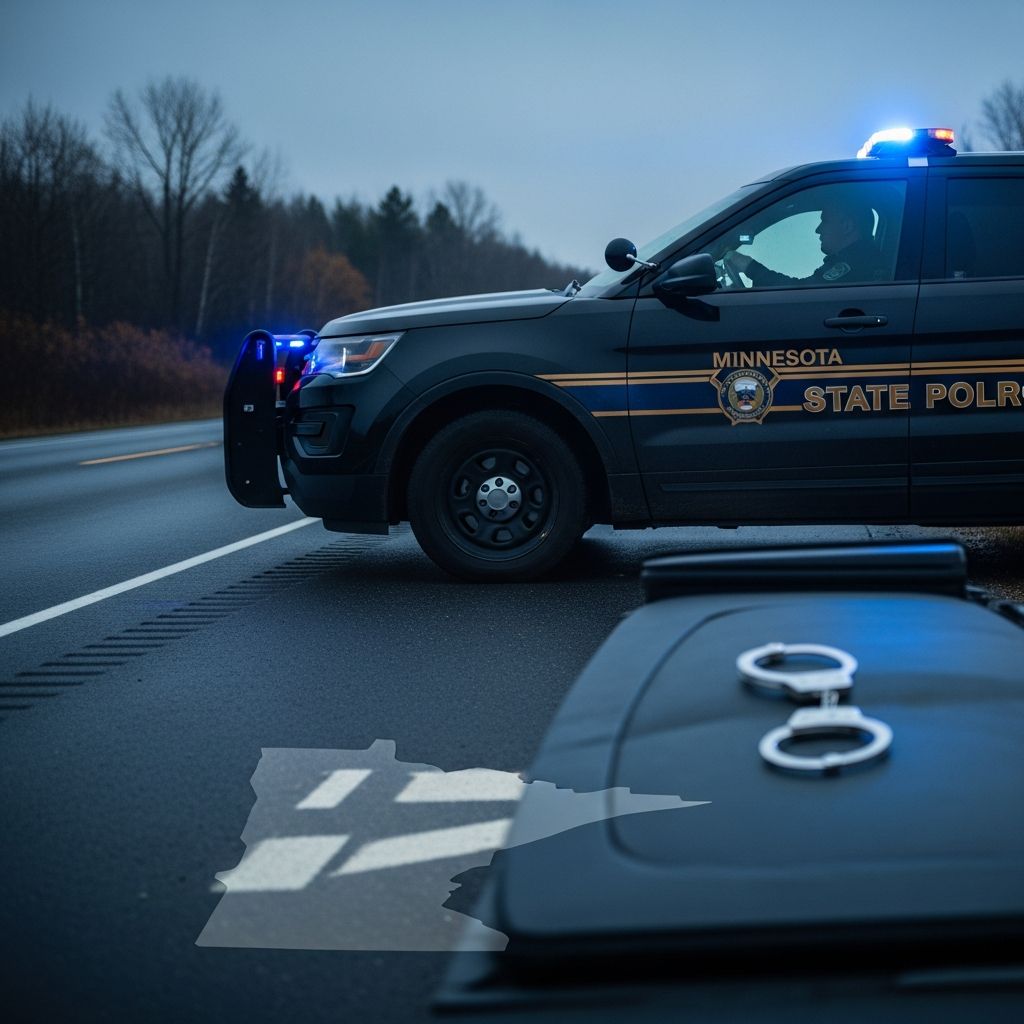
Minnesota takes driving while impaired (DWI) very seriously. Criminal penalties, license consequences, and ignition interlock rules are strict and have become even tougher under recent law changes in 2025.
This guide explains how Minnesota defines impaired driving, the degrees of DWI offenses, what happens to your driver’s license, how ignition interlock works, and what the 2025 reforms mean for drivers.
How Minnesota Defines Driving While Impaired
Under Minnesota law, you can be charged with DWI for more than just driving over a specific blood alcohol concentration (BAC). State impaired driving statutes cover alcohol, drugs, and combinations of substances.
- Per se alcohol limit: BAC of 0.08 or more for most drivers.
- Lower limit for commercial drivers: BAC of 0.04 or higher while driving a commercial motor vehicle.
- Impairment without a number: Officers may arrest if they can document that your ability to drive is impaired, even if your BAC is below 0.08 or involves drugs.
- Drug-impaired driving: You may be charged if impaired by controlled substances, including some prescription medications, when they affect safe driving.
Refusing a breath, blood, or urine test after a lawful request can itself trigger serious administrative and criminal consequences under Minnesota’s implied consent laws.
Degrees of DWI Offenses in Minnesota
Minnesota classifies DWIs into four degrees. The degree depends on prior incidents, aggravating factors, and whether there is a refusal to test.
| Degree | Level of crime | Typical situation (simplified) |
|---|---|---|
| Fourth-degree DWI | Misdemeanor | First offense, no aggravating factors, test not refused. |
| Third-degree DWI | Gross misdemeanor | First offense with aggravating factor(s), or test refusal without prior DWIs. |
| Second-degree DWI | Gross misdemeanor | Two or more aggravating factors, or one factor plus test refusal. |
| First-degree DWI | Felony | Typically fourth offense within 10 years, or prior felony DWI, or certain combinations of refusal with multiple priors. |
Aggravating factors in Minnesota usually include:
- Prior qualifying impaired driving incidents within the statutory lookback period.
- High BAC (often 0.16 or greater, under state law).
- Having a child in the vehicle at the time of the offense.
Exact definitions and charging decisions depend on specific statutes and prosecutorial discretion, but the basic pattern is that more priors and more risk factors lead to higher degrees and harsher penalties.
Criminal Penalties: Fines, Jail, and Felony Exposure
Criminal consequences for a DWI conviction vary widely based on the degree of the offense and the person’s record.
- Misdemeanor DWI (fourth degree):
- Potential jail time, often up to 90 days.
- Fines that can reach several hundred dollars or more.
- Probation conditions such as treatment, abstinence, and monitoring.
- Gross misdemeanor DWI (second or third degree):
- Maximum jail exposure typically up to one year.
- Higher maximum fines than misdemeanors.
- Mandatory minimum jail or community custody in some repeat cases.
- Felony DWI (first degree):
- Substantial potential prison time under Minnesota sentencing law.
- Very high fines and lengthy probation.
- Long-term consequences for employment, housing, voting, and firearm rights.
Judges also frequently impose conditions such as chemical dependency assessments, completion of treatment or education programs, and abstinence monitoring with testing or electronic devices.
Administrative License Revocation After a DWI
Separate from any criminal case, Minnesota imposes administrative license sanctions through the Department of Public Safety (DPS). These revocations can start quickly after a failed or refused test, often before a criminal conviction.
Key features of the administrative process include:
- Immediate notice of revocation after a test failure or refusal.
- Right to seek a hearing in district court to challenge the revocation (implied consent hearing).
- Different revocation lengths based on prior incidents and refusal status.
In 2025, Minnesota reorganized and updated the statute that governs revocation periods and ignition interlock requirements, consolidating rules that were previously scattered across several sections.
2025 Changes: New 20-Year Lookback and Longer Revocations
Legislation enacted in 2025 significantly reworked Minnesota’s impaired driving license rules. The new law, summarized by Minnesota Senate Counsel and other official sources, created a unified framework for revocations and ignition interlock in a new statutory section and extended the lookback period.
- Lookback period for license consequences extended to 20 years:
- Previously, many administrative penalties looked back only 10 years.
- Now, prior impaired driving incidents within 20 years can increase revocation periods and interlock requirements.
- Standard revocation/cancellation durations for most repeat offenders:
- One prior in the last 20 years: approximately 2 years of revocation/cancellation.
- Two lifetime priors: about 6 years of cancellation.
- Three or more lifetime priors: about 10 years of cancellation.
- Unified statute: Revocation timeframes, ignition interlock participation, and reinstatement rules are grouped into a single section to reduce confusion.
These changes mean a DWI from 15 or even 19 years ago can still influence how long you lose driving privileges after a new offense.
Ignition Interlock: How the Program Works
An ignition interlock device (IID) is a breath-testing system installed in a vehicle that prevents the engine from starting if the driver has alcohol on their breath. Minnesota uses ignition interlock to allow some people to drive during revocation periods while enforcing sobriety.
Basic elements of the Minnesota ignition interlock program include:
- Installation by an approved vendor at the driver’s expense.
- Requirement to provide a clean breath sample to start the car.
- Periodic rolling retests while driving.
- Data logging and reporting to state authorities.
Participants typically must comply with all program rules, avoid tampering, and stay violation-free to complete their required period on interlock and move toward full license reinstatement.
Expanded Ignition Interlock Requirements in 2025
New laws effective in 2025 dramatically broaden when ignition interlock is required and how long drivers must participate. State summaries and legal analyses highlight several major changes.
- Mandatory interlock for more repeat offenders:
- Drivers with more than one DWI within the past 20 years must complete the ignition interlock program to regain a license.
- Previously, the lookback period for many repeat determinations was 10 years; that is now 20 years.
- Longer participation periods:
- Second incident within 20 years often requires at least 2 years of interlock.
- Third qualifying incident can trigger about 6 years.
- Fourth or more can lead to 10 years of cancellation with interlock as the only path back to lawful driving in many cases.
- Violations can extend or restart the clock:
- Recorded alcohol use (often readings as low as 0.02), missed service, or tampering may extend interlock time or restart requirements.
- Participants can seek judicial review if they believe an extension is improper.
- Inclusion of serious alcohol-related driving crimes:
- Criminal vehicular homicide and criminal vehicular operation involving alcohol can carry very long revocations, sometimes 15 years or lifetime cancellation, with ignition interlock as a conditional path to limited driving.
Overall, the 2025 reforms shift Minnesota toward a model in which repeat impaired driving almost always means years of ignition interlock and structured monitoring before full reinstatement.
Collateral Consequences Beyond Court and DPS
A DWI in Minnesota can affect far more than fines and a license status. Additional impacts may include:
- Insurance: Premiums often rise sharply after a DWI, and some drivers may be dropped or forced into high-risk policies.
- Employment: Jobs that require driving, professional licenses, or background checks may be jeopardized by a DWI conviction or by a lost license.
- Travel: Some countries restrict entry to people with certain criminal records, including impaired driving.
- Vehicle registration and plates: Special registration or plate impoundment rules can apply in some aggravated impaired driving cases under Minnesota law.
These indirect consequences often last years and can be as disruptive as the direct criminal penalties.
Staying Compliant and Protecting Your Rights
Because Minnesota’s DWI framework involves both criminal courts and administrative agencies, managing a case requires attention to multiple timelines and obligations.
- Read and respond to any DPS notices about revocation or cancellation promptly.
- Track deadlines to request a court hearing if you intend to challenge an implied consent revocation.
- If enrolled in ignition interlock, follow all device rules, service schedules, and reporting requirements carefully to avoid extensions.
- Complete any ordered treatment or education and keep proof for both the court and DPS.
Many drivers consult private counsel to help interpret the new 2025 rules, weigh plea options, and coordinate the criminal and administrative aspects. While this article provides general information, specific cases depend on detailed facts and current statutory language.
Frequently Asked Questions About Minnesota DWI
Q1: Is a DWI the same as a DUI in Minnesota?
Minnesota law uses the term Driving While Impaired (DWI), but many people casually say DUI. Both refer to impaired driving offenses; the formal statutory term in Minnesota is DWI.
Q2: Can I be charged if my BAC is below 0.08?
Yes. If law enforcement can document that alcohol, drugs, or a combination have impaired your ability to drive safely, you may face a DWI charge even if your BAC is under 0.08.
Q3: What happens if I refuse the breath or blood test?
Refusal can lead to immediate license revocation under Minnesota’s implied consent law and may result in a higher-degree DWI charge with enhanced penalties in some situations.
Q4: How long will I lose my license after a second DWI?
Under 2025 reforms, a second qualifying incident within 20 years can trigger roughly a two-year revocation or cancellation period, often coupled with mandatory ignition interlock as a condition of driving again.
Q5: Is ignition interlock optional or mandatory?
For many repeat offenders and people with serious alcohol-related driving offenses, ignition interlock is now effectively mandatory if they wish to regain a license. The 2025 law expanded both who must enroll and how long they must participate.
Q6: Do the new 2025 rules affect old DWIs from many years ago?
Yes. The lookback period for license consequences is now 20 years, so qualifying incidents from up to two decades ago may increase your revocation length and ignition interlock requirements after a new case.
References
- Impaired driving laws — Minnesota Department of Public Safety, Office of Traffic Safety. 2025. https://dps.mn.gov/divisions/ots/safe-driving-information-and-laws/traffic-safety-laws/impaired-driving-laws
- New Laws Effective Aug. 1, 2025 — Minnesota House Research. 2025. https://www.lrl.mn.gov/docs/2025/other/251279.pdf
- Laws 2025, Chapter 29 Act Summary — Minnesota Senate Counsel, Research & Fiscal Analysis. 2025. https://assets.senate.mn/summ/chapter/2025/0/Chapter%2029%20summary.pdf
- 2025 DWI Law Changes in Minnesota — Lundgren & Johnson, PSC. 2025-08. https://lundgrenjohnson.com/2025-dwi-law-changes-in-minnesota/
- Minnesota DWI Law Changes Take Effect July 1 2025 — Tamburino Law Group. 2025-08. https://www.tamburinolawgroup.com/blog/2025/august/major-changes-to-minnesota-dwi-laws-take-effect-/
- New DWI Revocation Periods in Minnesota — Kohlmeyer Hagen Law Office. 2025-07-29. https://khmnlaw.com/blog/new-dwi-revocation-periods-mn-2025/
- New Minnesota DWI Law Expands Ignition Interlock Requirements — Sieben Edmunds Miller. 2025. https://siebenedmunds.com/new-minnesota-dwi-law-expands-ignition-interlock-requirements-as-of-august-1-2025/
Similar Articles








Read full bio of medha deb




