
Understanding the Migrant Protection Protocols
Analyzing the legal and human impact of the 'Remain in Mexico' border policy.
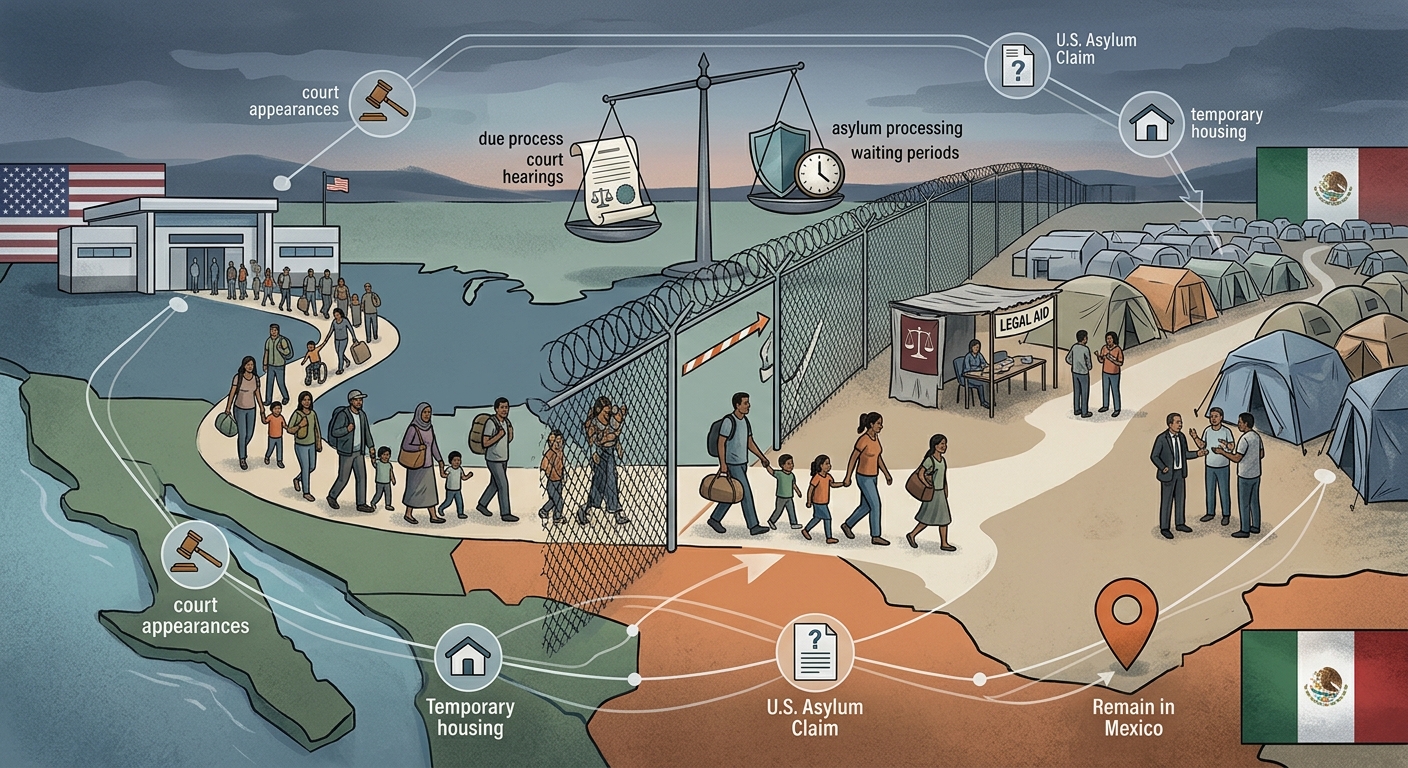
Introduction: The Complex Realities of US-Mexico Border Protocols
The landscape of United States immigration enforcement has undergone seismic shifts over the past decade, with few initiatives generating as much controversy and systemic disruption as the Migrant Protection Protocols (MPP). Colloquially known to the public as the ‘Remain in Mexico’ policy, this framework fundamentally altered the procedural reality for tens of thousands of asylum seekers arriving at the southern border of the United States. Rather than allowing individuals fleeing persecution to await their immigration hearings within the safety of the U.S. interior—a standard practice for decades—this program mandated their return to adjacent foreign territories.
The implementation of this policy sparked a multi-year legal, diplomatic, and humanitarian saga. Navigating the intersection of domestic immigration statutes, international human rights obligations, and volatile geopolitical dynamics, the MPP represents a critical case study in modern border management. To truly comprehend the gravity and the enduring legacy of this deterrence-based strategy, it is essential to examine its legislative roots, the ensuing judicial roller-coaster, and the profound toll it exacted on vulnerable populations waiting in limbo.
Historical Context: The Evolution of Asylum Restrictions
Inception of the Policy under Previous Administrations
The statutory backbone of the Migrant Protection Protocols stems from Section 235(b)(2)(C) of the Immigration and Nationality Act (INA), a provision added by Congress in 1996. For over two decades, this specific contiguous-territory return authority remained largely dormant, utilized only sporadically in isolated, individual circumstances. However, in January 2019, the Department of Homeland Security (DHS) announced an unprecedented programmatic expansion of this statute. The objective was explicitly rooted in deterrence: to discourage non-meritorious asylum claims and alleviate overcrowding in domestic detention centers by forcing applicants to remain in Mexico for the duration of their legal proceedings.
The rollout upended the traditional asylum processing framework. Previously, migrants who established a credible fear of persecution were frequently paroled into the United States, provided a Notice to Appear in immigration court, and permitted to integrate into local communities while their cases moved through the notoriously backlogged judicial system. By replacing this interior-release model with an exterior-waiting mandate, the 2019 policy effectively moved the U.S. immigration backlog across the sovereign border, shifting the logistical and humanitarian burden onto Mexican border municipalities.
Legal Mandates and the Reinstatement Paradox
The trajectory of the MPP became historically convoluted following the 2021 change in the executive branch. The incoming administration immediately suspended new enrollments and subsequently issued formal memoranda terminating the program, citing systemic inefficiencies and unacceptable human costs. However, this administrative reversal was swiftly met with formidable legal challenges. A coalition of states sued the federal government, arguing that the termination violated the Administrative Procedure Act (APA) and that the INA required the detention or return of asylum seekers if domestic detention capacity was insufficient.
This legal standoff culminated in a federal court injunction that paradoxically forced an administration opposed to the policy to reinstate and administer it in ‘good faith.’ The ensuing judicial battle reached the highest echelons of the American legal system. In the landmark case Biden v. Texas, the Supreme Court ultimately ruled that the executive branch did indeed possess the discretionary authority to terminate the protocols, clarifying that Section 235(b)(2)(C) of the INA confers a discretionary option rather than an inflexible mandate. Despite this ruling, the structural mechanism remains codified in law, leaving the door open for future administrations to resurrect similar contiguous-return policies.
The Human Cost: Security and Living Conditions at the Border
Severe Safety Risks for Waiting Populations
Beyond the complex legal maneuvering in Washington D.C., the everyday reality of the Migrant Protection Protocols unfolded in the streets of northern Mexican cities like Tijuana, Ciudad Juarez, and Matamoros. Returning thousands of vulnerable individuals to these border regions created an unprecedented humanitarian crisis. Human rights organizations extensively documented the grim conditions faced by enrollees, noting a severe lack of permanent shelter, sanitation infrastructure, and basic medical care. Many families were forced to construct makeshift encampments in plazas or sleep on the streets, entirely exposed to the elements.
More alarming than the lack of infrastructure was the severe security environment. Cartels and organized criminal networks quickly recognized these concentrated populations of displaced individuals as lucrative targets. Because these asylum seekers were essentially stranded, lacked local social safety nets, and often had relatives in the United States willing to pay ransoms, they became commodities. Numerous reports from human rights watchdogs detailed pervasive incidents of kidnapping for ransom, extortion, sexual assault, and armed robbery targeting individuals actively enrolled in the U.S. waiting program.
Barriers to Fair Legal Representation
A cornerstone of the American justice system is the ability to mount a fair legal defense. In the realm of immigration law, where cases are notoriously complex and the stakes are life-or-death, access to qualified legal counsel is paramount. Statistics consistently demonstrate that asylum seekers with legal representation are vastly more likely to successfully navigate the system than those proceeding pro se (without an attorney).
The contiguous-return model systematically dismantled the ability of applicants to secure representation. U.S.-based immigration attorneys faced immense logistical and security hurdles in crossing the border to consult with their clients in Mexico. Furthermore, asylum seekers living in transient camps lacked reliable access to telephones, internet connectivity, or secure mail services, making it virtually impossible to communicate with lawyers, gather corroborating evidence from their home countries, or prepare for their imminent hearings. When their court dates finally arrived, migrants were escorted to heavily fortified, temporary ‘tent courts’ at ports of entry, where proceedings were often conducted via video teleconference with judges located hundreds of miles away—a setup that further eroded the procedural integrity of the hearings.
Expanding the Scope: How the Policy Grew and Shifted
Demographic Shifts in Asylum Seekers
When the protocols were initially piloted at the San Ysidro port of entry in California, the targeted demographic consisted primarily of Spanish-speaking single adults from the Northern Triangle region of Central America (Guatemala, Honduras, and El Salvador). However, as the policy became the cornerstone of the administration’s border strategy, its geographic and demographic scope expanded aggressively.
Eventually, the program was rolled out across the entirety of the U.S.-Mexico border, encompassing families with young children and non-Spanish speaking populations. Over time, individuals from countries spanning the Caribbean, South America, and even other continents were subjected to the waiting mandate. This expansion exacerbated the logistical chaos, as the language barriers and differing cultural contexts of these diverse groups made navigating the Mexican infrastructure and the U.S. court system even more insurmountable.
The International Diplomacy Angle
The execution of a contiguous-territory return policy is unique in that it is not a unilateral domestic action; it intrinsically requires the acquiescence of the receiving nation. The United States could not simply expel foreign nationals into Mexican territory without a diplomatic framework. Consequently, the program strained bilateral relations and required intense diplomatic negotiations.
The Mexican government, navigating its own political pressures and domestic resource limitations, agreed to accept these third-country nationals under the premise of humanitarian cooperation. However, the sheer volume of returnees placed an enormous burden on Mexican municipal and state governments. The diplomatic agreements often involved complex concessions regarding trade, tariffs, and broader regional migration enforcement strategies. This dynamic highlighted a significant shift in North American geopolitics, where migration management became deeply intertwined with economic and trade negotiations, effectively outsourcing U.S. border enforcement to a neighboring sovereign state.
Navigating the Complexities of International Asylum Law
Due Process Under Severe Constraints
A central pillar of international refugee law, codified in the 1951 Refugee Convention and incorporated into U.S. law, is the principle of non-refoulement. This principle prohibits states from returning individuals to a country where they would face torture, cruel, inhuman, or degrading treatment, or where their lives or freedom would be threatened.
Critics and legal scholars have vigorously argued that by forcing asylum seekers into dangerous border regions dominated by violent cartels, the United States was violating the spirit, if not the letter, of its non-refoulement obligations. The legal defense of the policy relied on the technicality that the migrants were not being returned to their home countries (where the initial persecution occurred), but rather to a third country (Mexico). However, this technical distinction offered little comfort to those facing imminent physical harm while waiting in border camps.
Humanitarian Exemptions versus Reality
To address legal concerns regarding vulnerable populations, the programmatic guidance for the return policy included provisions for humanitarian exemptions. In theory, individuals with known physical or mental health issues, those who were pregnant, or those who could affirmatively demonstrate that they would face persecution specifically in Mexico were supposed to be exempt from the program and processed within the United States.
In practice, however, these safeguards routinely failed. The threshold for proving a fear of return to Mexico was set exceptionally high, and border agents—rather than trained asylum officers—often held wide discretion over these initial screening determinations. Language barriers, the traumatized state of newly arrived migrants, and the rapid nature of border processing meant that many highly vulnerable individuals, including those with severe medical conditions and targeted minority groups, were erroneously returned to Mexico, exposing the stark contrast between policy design and ground-level execution.
Comparison of Asylum Processing Models
| Feature | Traditional Interior Processing | Contiguous-Territory Return (MPP) |
|---|---|---|
| Waiting Location | Within the United States (paroled or detained). | Northern Mexican border cities. |
| Access to Legal Counsel | High; ability to meet attorneys in person. | Extremely low; severe logistical barriers. |
| Living Conditions | Living with family, sponsors, or in U.S. detention centers. | Makeshift camps, shelters, facing high security risks. |
| Court Format | Standard domestic immigration courts. | Temporary port-of-entry tent courts; often via video link. |
The Future of Border Asylum Processing
The Role of Non-Governmental Organizations (NGOs)
Throughout the lifespan of these stringent border protocols, non-governmental organizations and mutual aid groups stepped in to fill the massive humanitarian void. In cities like Matamoros, where sprawling refugee camps emerged on the banks of the Rio Grande, grassroots coalitions provided essential survival services. They set up makeshift medical clinics, distributed clean drinking water, and organized legal defense workshops. However, NGOs repeatedly warned that private humanitarian aid is not a substitute for state-sponsored asylum processing and adequate shelter infrastructure. The heavy reliance on volunteer organizations underscored the unsustainable nature of displacing an entire federal processing system onto border municipalities that lacked the resources to manage it.
Long-term Policy Alternatives and Systemic Reform
The turbulent history of the contiguous-return experiment has sparked an urgent debate regarding the future of border management. Relying on deterrence through hardship has proven to be legally fraught, morally questionable, and ultimately ineffective at addressing the root causes of regional migration. As global displacement reaches historic highs due to political instability, economic collapse, and climate change, policymakers are being urged to develop sustainable alternatives.
Advocates for immigration reform emphasize the necessity of comprehensively overhauling the domestic asylum system. Proposed solutions include drastically increasing the funding for immigration courts to ensure rapid, fair adjudications, thereby eliminating the years-long backlogs that serve as a pull factor. Additionally, community-based case management programs have demonstrated high compliance rates for court appearances without the astronomical costs of mass detention or the human rights violations associated with exterior waiting policies.
Furthermore, addressing the hemispheric migration crisis requires robust international cooperation. Rather than simply outsourcing enforcement to Mexico, sustainable strategies involve investing in the economic and political stability of origin countries, establishing safe, orderly processing centers further south in Latin America, and expanding lawful pathways for labor and family reunification.
Frequently Asked Questions (FAQs)
- What does the acronym MPP stand for in immigration law?
MPP stands for the Migrant Protection Protocols, a federal immigration policy first implemented in 2019 that required certain asylum seekers to wait in Mexico while their cases were processed in U.S. courts. - How does this policy differ from Title 42?
While both policies restricted access to the U.S. border, they relied on different legal authorities. MPP is an immigration law mechanism (under Title 8) that requires migrants to wait outside the U.S. for their formal hearings. Title 42 was a public health order invoked during the COVID-19 pandemic that allowed for the immediate expulsion of migrants without any asylum screening or court proceedings. - Did the Supreme Court permanently end the policy?
In the Biden v. Texas decision, the Supreme Court ruled that the executive branch has the authority to end the program and that the underlying statute is discretionary. While the specific program was subsequently terminated, the underlying law remains, meaning a future administration could legally reinstate a similar policy. - Were unaccompanied minors subject to this waiting mandate?
Officially, unaccompanied children were exempt from the Migrant Protection Protocols. However, human rights organizations reported instances where families felt compelled to send their children across the border alone to protect them from the dangerous conditions in the Mexican waiting camps.
References
- Policy Guidance for Implementation of the Migrant Protection Protocols — Department of Homeland Security. 2019-01-25. https://www.dhs.gov/sites/default/files/publications/19_0129_OSEC_Memorandum_on_Migrant_Protection_Protocols.pdf
- 21-954 Biden v. Texas (06/30/2022) — Supreme Court of the United States. 2022-06-30. https://www.supremecourt.gov/opinions/21pdf/21-954_7l48.pdf
- “We Can’t Help You Here”: US Returns of Asylum Seekers to Mexico — Human Rights Watch. 2019-07-02. https://www.hrw.org/report/2019/07/02/we-cant-help-you-here/us-returns-asylum-seekers-mexico
Similar Articles








Read full bio of medha deb


