
Maryland Marijuana Laws: Essential Guide To Use And Penalties
A clear, practical guide to Maryland’s current marijuana laws, from legal personal use to serious criminal penalties.
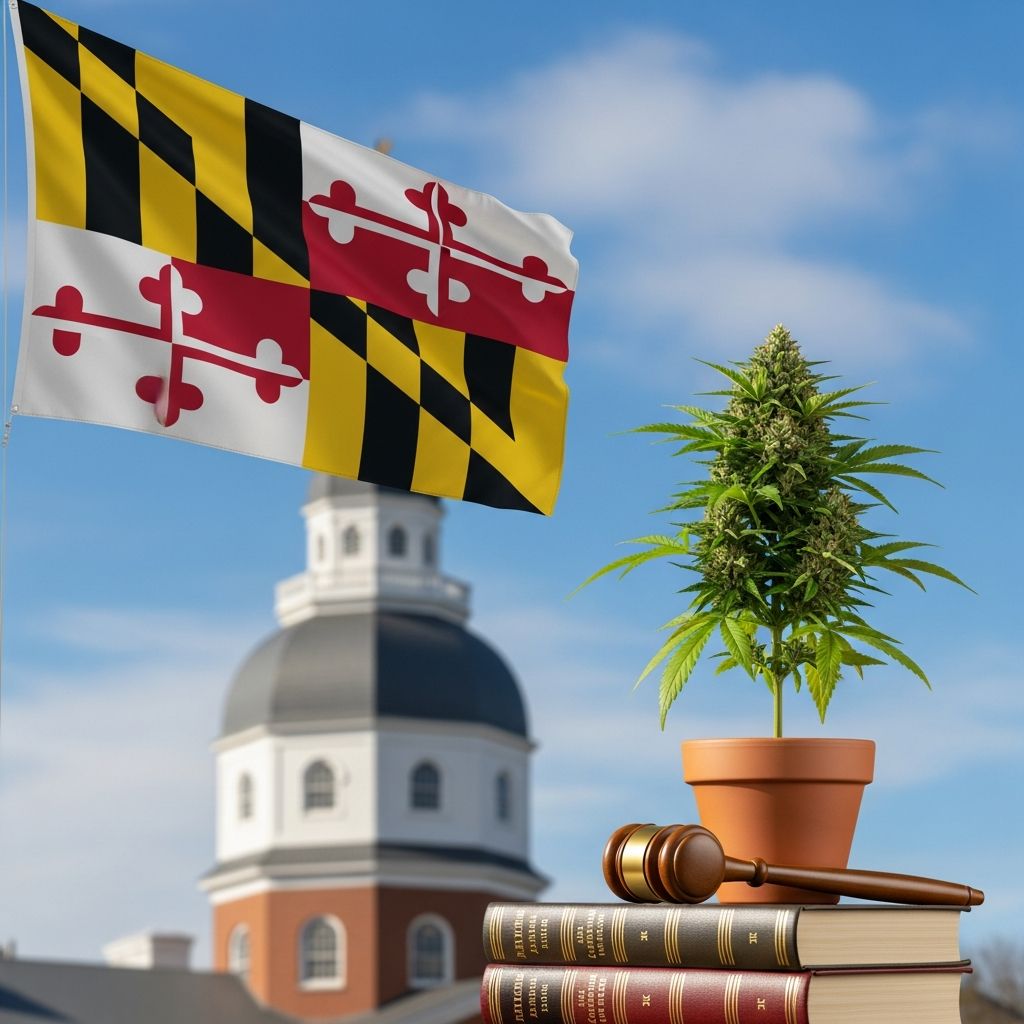
Maryland has significantly changed how it regulates marijuana, moving from strict criminalization toward a system that allows legal adult use, regulated sales, and medical access. Yet, important limits and potential criminal penalties still apply. This guide explains the key rules for possession, use, cultivation, and distribution of marijuana (cannabis) under Maryland law, with a focus on what is legal, what can still lead to fines or arrest, and how penalties increase with more serious conduct.
Maryland’s Approach to Cannabis: Big Picture
Maryland treats cannabis differently depending on:
- Age of the person (under 21 vs. 21 and older)
- Amount possessed (small, moderate, or large quantities)
- Type of product (flower, concentrates, edibles, other products)
- Purpose (personal use vs. sale, distribution, or trafficking)
- Location and circumstances (near schools, involving minors, or while driving)
Adult personal use in limited amounts is legal, but large-scale possession, unlicensed distribution, and trafficking remain serious crimes with substantial prison exposure and fines.
Who May Legally Use Marijuana in Maryland?
Maryland law now allows adults to use cannabis under certain conditions.
- Minimum age: Adults 21 years and older may legally possess and use limited amounts of cannabis for personal use.
- Under 21: People younger than 21 are not allowed to possess or use recreational cannabis, and may face civil or criminal penalties, as well as school or juvenile system consequences.
- Medical use: Patients registered under Maryland’s medical cannabis program may possess cannabis as allowed by medical regulations, which operate alongside (not instead of) adult-use rules.
Legal Possession Limits for Adults
Maryland distinguishes between small, moderate, and larger amounts of cannabis. The smallest category is sometimes referred to as personal-use amounts.
Personal-Use Quantities (Legal for Adults 21+)
For adults 21 or older, possession at or below these limits is generally lawful, although some jurisdictions may still allow civil fines for certain conduct:
- Up to 1.5 ounces of cannabis flower (plant material)
- Up to 12 grams of concentrated cannabis (such as wax, oil, or shatter)
- Cannabis products containing up to 750 mg of delta-9 THC in total
Maryland law also permits adults to maintain a limited number of cannabis plants for personal use within their home, subject to rules discussed below.
Moderate (“Civil Use”) Amounts
Possession above personal-use amounts but under a higher threshold is treated as a civil violation rather than a crime, so long as the person is otherwise following the law. These amounts are sometimes called “civil use” quantities:
- More than 1.5 ounces but less than 2.5 ounces of cannabis
- More than 12 grams but less than 20 grams of concentrates
- Products with more than 750 mg but less than 1,250 mg of THC
These violations can result in civil fines (for example, up to a few hundred dollars) but do not carry jail time.
Criminal Possession Above Civil Limits
Possession at levels above civil-use quantities can result in misdemeanor or felony charges, depending on the total amount and the circumstances.
- More than 2.5 ounces of cannabis, or comparable quantities of concentrates or THC in products, can lead to criminal charges.
- Extremely large quantities (for example, 50 pounds or more of marijuana) can trigger mandatory minimum prison terms and very high fines under Maryland criminal law.
Home Cultivation: Growing Cannabis Legally
Maryland allows limited home cultivation by adults who meet age and quantity requirements.
- Adults 21+ may grow a limited number of plants in their primary residence for personal use.
- The law typically allows up to 2 plants per household before any criminal penalties apply.
- Plants must generally be kept in a secure, non-public location, such as an enclosed area not visible from the street.
Growing more plants than permitted can result in a misdemeanor charge with potential jail time and fines.
Where You Can and Cannot Use Cannabis
Even for adults using legal amounts, there are restrictions on where cannabis may be consumed.
- No public consumption: Using marijuana in public places remains prohibited and can result in a civil citation and fine.
- No use in vehicles: Consuming cannabis (smoking, vaping, or ingesting) while driving or riding as a passenger can lead to penalties, especially if it affects driving ability.
- Private property rules: Landlords, property owners, and employers can set their own restrictions on cannabis use on their property or at work.
- Federal property: Because cannabis remains illegal under federal law, possession on federal property (such as some government buildings, military facilities, or federal parks) can trigger federal charges.
Driving and Marijuana: Impaired Driving Laws
Driving under the influence of cannabis is treated similarly to drunk driving. A driver can be charged if they operate a vehicle while impaired to any degree by marijuana.
- DUI or DWI with cannabis can lead to license suspension, fines, probation, or jail.
- Officers may rely on observed impairment, field sobriety tests, and evidence of recent use.
- Having legal authorization to use cannabis (for example, as an adult or medical patient) does not excuse impaired driving.
In many cases, a drugged driving conviction can carry significant penalties and lasting consequences similar to those for alcohol-related DUIs.
Distribution, Sale, and Trafficking Offenses
While personal possession is greatly liberalized, unlicensed distribution and commercial activity remain heavily penalized under Maryland law.
Unlicensed Distribution and Possession With Intent
Maryland criminal law draws a sharp distinction between personal use and distribution. Penalties escalate when the conduct suggests sales activity.
- Possession with intent to distribute can be charged when police find evidence such as large amounts, packaging, scales, or cash.
- Possession with intent to distribute less than 50 pounds is a felony in Maryland, carrying up to several years in prison and substantial fines.
- Larger quantities and repeat offenses can trigger mandatory minimum prison sentences and higher fines.
High-Volume Trafficking and “Drug Kingpin” Penalties
Maryland imposes severe penalties for large-scale marijuana trafficking.
| Conduct | General Penalty Range (Approximate) |
|---|---|
| Trafficking more than several kilograms of marijuana | Felony; can involve 10+ years in prison and significant fines |
| Possession of 50 pounds or more | Felony; often a mandatory minimum prison term and very high fines (for example, up to $100,000) |
| “Drug kingpin” level trafficking | Felony; can carry 20–40 years of imprisonment and up to $1,000,000 in fines |
Additional enhancements apply when the conduct occurs near schools, involves minors, or is combined with firearms.
Special Rules for Cannabis Products and THC Content
Maryland regulates not only plant material but also concentrates and consumer products containing THC, such as edibles and vape cartridges.
- Concentrates: Specific possession thresholds apply to concentrated cannabis (e.g., 12 grams for personal-use amounts, 20 grams for civil-use limits).
- THC strength in products: The law uses total milligrams of delta-9 THC in a product to determine whether it counts as personal, civil, or criminal possession.
- Unlicensed THC products: Selling or distributing products intended for consumption that exceed low THC limits without the required license is a misdemeanor and can lead to fines.
Paraphernalia and Related Offenses
Maryland has narrowed some penalties related to cannabis paraphernalia, but not all conduct is consequence-free.
- Personal use paraphernalia (pipes, rolling papers, etc. used to consume cannabis) is treated more leniently, and in many cases no criminal penalty applies for simple adult possession.
- Selling paraphernalia to minors or using paraphernalia in a commercial or distribution context can still lead to misdemeanors and jail time.
Criminal Records, Expungement, and Past Convictions
Legal reforms in Maryland have opened the door for people with certain past cannabis convictions to seek record relief.
- Many low-level marijuana possession offenses may be
eligible for expungement
, allowing individuals to clear or shield those records. - More serious distribution or trafficking convictions are less likely to qualify, though relief options depend on the exact charge and date of the offense.
- People with past convictions should consider consulting a lawyer or legal aid organization to review potential expungement or resentencing options.
Medical Cannabis and Adult-Use: How They Interact
Maryland has both a medical cannabis program and a separate adult-use framework.
- Medical patients must register with the state, obtain a certification from a licensed provider, and purchase from regulated dispensaries.
- Medical rules can allow different purchase and possession limits, and may offer certain protections (for example, against discrimination in some circumstances), separate from adult-use law.
- Adult-use rules apply to any person 21 or older regardless of medical status, but they do not expand medical rights.
Because the programs operate in parallel, patients should be careful to follow both medical regulations and general state criminal law.
Consequences Beyond Criminal Penalties
Even when cannabis conduct does not result in felony charges, it can still carry major life consequences.
- Employment: Employers may maintain drug-free workplace policies, and a cannabis-related incident can lead to discipline or termination.
- Housing: Landlords (especially those following federal rules) may restrict cannabis use on their property or consider drug-related convictions in rental decisions.
- Immigration: Non-citizens can face immigration consequences for cannabis-related conduct, even when it is legal under state law.
- Professional licensing: Certain licensed professionals may encounter disciplinary actions following drug-related convictions.
Practical Tips for Staying Within the Law
To reduce the risk of legal trouble in Maryland:
- Verify that you are 21 or older before possessing or using marijuana recreationally.
- Keep amounts within personal-use limits whenever possible, and avoid carrying more than you are allowed.
- Use cannabis only in private, permitted locations, never in public or while driving.
- If you grow cannabis at home, count your plants and keep them secure and out of public view.
- Never sell or distribute cannabis without a state license.
- Consult a qualified attorney if you are charged with a cannabis offense or need advice tailored to your situation.
Frequently Asked Questions (FAQs)
Q: Is marijuana completely legal in Maryland now?
No. Adults 21 and older may legally possess limited amounts of cannabis for personal use, but larger quantities, unlicensed sales, public use, and impaired driving can still lead to fines or criminal charges.
Q: How much cannabis can I legally carry as an adult in Maryland?
Adults 21+ may generally possess up to 1.5 ounces of cannabis flower, up to 12 grams of concentrates, or cannabis products totaling up to 750 mg of THC as personal-use amounts.
Q: Can I grow marijuana at home?
Yes, but only in limited quantities. Adults may keep a small number of plants at home (commonly up to 2 plants per household) for personal use, and growing more than that can result in criminal charges.
Q: What happens if I am caught with a large amount of marijuana?
Possession of more than 2.5 ounces can lead to criminal charges. Very large amounts, such as 50 pounds or more, can carry felony charges, mandatory minimum prison sentences, and high fines.
Q: Do I still need a lawyer for a cannabis charge now that laws are more lenient?
Yes. Even a misdemeanor or civil citation can have serious long-term effects. An attorney can explain your rights, explore defenses, and advise you on options such as expungement or diversion programs.
References
- Maryland Laws and Penalties — NORML. 2023-07-01. https://norml.org/laws/maryland-penalties-2/
- Recreational Cannabis Use and Possession in Maryland — People’s Law Library of Maryland (Maryland State Law Library). 2023-07-01. https://www.peoples-law.org/recreational-marijuana-cannabis-use-and-possession-maryland
- Adult-Use Cannabis FAQs — Maryland Cannabis Administration. 2023-07-01. https://cannabis.maryland.gov/pages/cannabisfaq.aspx
- Maryland Laws Governing Marijuana — Maryland Code, Criminal Law, §§ 5-101, 5-601, 5-602, 5-607. Current through 2023 session. https://mgaleg.maryland.gov/mgawebsite/Laws/StatuteText?article=gcr§ion=5-601
- 2024: Can I Be Charged with Marijuana Possession in Maryland? — Castro Law Group. 2024-01-15. https://www.castrolawgroup.com/blog/2024-can-i-be-charged-with-marijuana-possession-in-maryland/
Similar Articles








Read full bio of medha deb


