Marijuana laws in the United States are in constant motion. While many states now allow medical or adult (recreational) use of cannabis, it remains illegal under federal law, and penalties can still be severe in some jurisdictions.[10] Understanding where and how marijuana is regulated is essential for avoiding criminal charges and protecting your rights.
1. The Big Picture: How Marijuana Is Regulated in the U.S.
Marijuana sits at the crossroads of federal criminal law and state-level legalization. These overlapping systems can make the rules confusing, especially for people who travel or live near state borders.
1.1 Federal Status of Marijuana
Under federal law, marijuana is still treated as an illegal controlled substance, though federal officials are actively considering changing its status. This means:
- It is generally illegal to produce, distribute, or possess marijuana under federal law.
- Federal authorities can prosecute conduct that violates federal drug statutes, particularly when larger quantities or interstate activities are involved.
- Federal law affects banking, firearms ownership, immigration, and employment for people involved with marijuana businesses or use.
As of March 2025, federal regulators are reviewing whether marijuana should be moved to a different category (rescheduled), which could affect criminal penalties and medical research rules.
1.2 State Legalization Trends
Despite federal prohibition, most of the country has moved toward some form of legalization or decriminalization.[10]
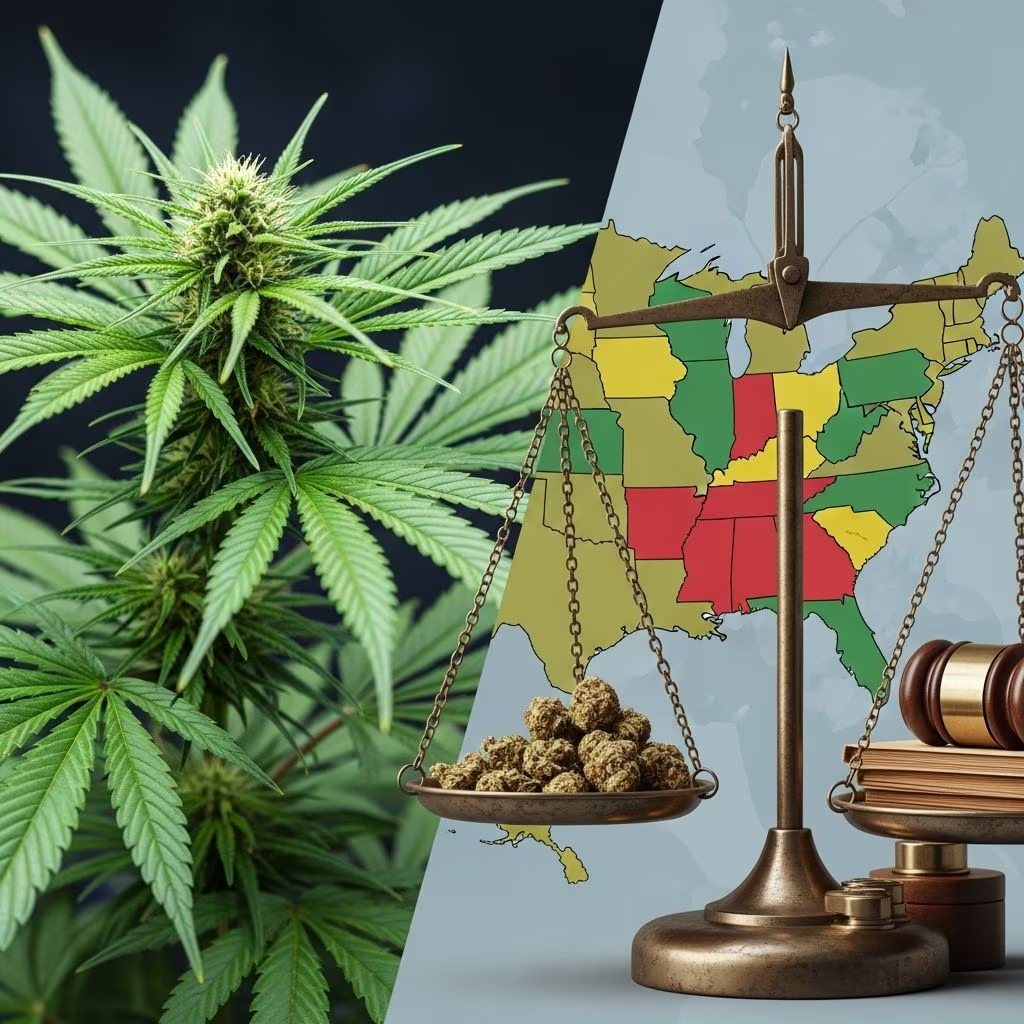
- Recreational (adult-use) cannabis is legal in 24 states plus Washington, D.C.[10]
- Medical cannabis is legal in 40 states, three territories, and D.C. as of mid-2025.
- The remaining states typically either prohibit marijuana outright or allow only very limited, low-THC medical products.[10]
States that legalize adult use typically allow adults 21 and older to possess limited amounts, buy from licensed retailers, and sometimes grow a small number of plants at home, subject to strict regulations.[10]
2. Key Categories of State Marijuana Laws
Every state classifies and penalizes marijuana in its own way. To understand your risk, it helps to break laws into broad categories.
2.1 Full Prohibition States
In prohibition states, nearly all marijuana possession, use, and sales are criminal offenses. Some may allow very narrow use of low-THC products (like CBD oils) under specific medical conditions, but traditional cannabis flower and typical products remain illegal.[10]
- Possession can be charged as a misdemeanor or felony, depending on quantity and prior record.
- Sale, distribution, or cultivation often carry harsher penalties, including potential prison time.
- Even small amounts can lead to arrest, criminal records, probation, fines, and collateral consequences (housing, employment, education).
2.2 Decriminalized States
Decriminalization generally means the state has reduced or removed criminal penalties for possession of a small amount of marijuana for personal use, but has not fully legalized it.[10]
- Small amounts may lead to a civil fine (similar to a traffic ticket) instead of arrest or jail.
- Larger quantities, sales, or repeated violations can still result in criminal charges.
- Possession may still violate local ordinances, workplace rules, or federal law.
Decriminalization does not create a legal supply chain; growing or selling marijuana usually remains illegal.
2.3 Medical Marijuana States
Medical marijuana laws allow patients with qualifying conditions to use cannabis products under specified rules.
- Patients typically must obtain a doctor’s certification and register with a state program.
- States limit allowable forms (flower, oils, capsules, topicals, edibles) and THC content.
- Dispensaries and cultivators must be licensed and follow strict regulations.
Rules vary widely. Some states allow only low-THC or non-smokable products, while others permit a full range of cannabis products and home cultivation.
2.4 Recreational (Adult-Use) States
Adult-use or recreational legalization allows adults, usually 21 and over, to legally possess and buy cannabis from licensed retailers.[10]
- States set possession limits (for example, up to a specified number of grams or ounces).
- Many prohibit use in public places, in vehicles, or near schools.
- Driving under the influence of marijuana remains illegal.
Some states also permit adults to grow a limited number of cannabis plants at home, often subject to privacy and security requirements.
3. Comparing State Approaches to Marijuana
The table below summarizes major categories of state approaches to marijuana as of 2025. Specific states may fit more than one category or have unique exceptions, so always verify local law.
| Category | Typical Legal Status | Common Penalties or Rules |
|---|---|---|
| Full prohibition | No legal recreational or medical access (or extremely limited CBD-only programs). | Criminal penalties for most possession and all unlicensed sales; potential jail time, fines, and record. |
| Decriminalized | Small personal-use amounts treated as civil infractions; still illegal. | Fines instead of jail for minor possession; sales and large quantities remain criminal. |
| Medical-only | Registered patients can use marijuana for qualifying conditions. | Licensing for dispensaries; limits on products, THC content, and possession amounts; non-patients still subject to penalties. |
| Recreational + medical | Adults 21+ may purchase and possess; medical program typically coexists. | Taxed and regulated marketplace, possession caps, licensing schemes, impaired-driving laws, and local zoning limits. |
4. Typical Marijuana Crimes and Penalties
Even in states with legalized use, certain marijuana-related conduct can lead to arrest and prosecution. Laws often distinguish between possession, distribution, and cultivation, with penalties based on quantity, location, and prior record.
4.1 Simple Possession
Simple possession refers to having marijuana for personal use without evidence of intent to sell. Consequences vary widely:
- In adult-use states, possession within legal limits is allowed for adults but may still be illegal for minors or in certain locations (schools, federal property).
- In medical-only states, registered patients may possess within program limits; others may face criminal or civil penalties.
- In prohibition states, any amount can be prosecuted, sometimes as a misdemeanor for small quantities and a felony for larger ones.
Factors that can increase penalties include possession near schools, on school buses, in prisons, or on federal land such as national parks.
4.2 Distribution, Trafficking, and Sale
Selling, delivering, or giving away marijuana often carries more serious penalties than simple possession, especially if money is exchanged or large quantities are involved.
- Unlicensed sales are illegal in every state, even where adult-use markets exist.
- Penalties can include substantial prison time, large fines, and asset forfeiture.
- Transporting marijuana across state lines can trigger federal charges, even between two legal states.[10]
Some states impose enhanced penalties for sales to minors or for sales occurring near schools or playgrounds.
4.3 Cultivation and Manufacturing
Cultivating cannabis plants and manufacturing concentrates (such as hash oils) can be regulated differently than possession of finished products.
- In some adult-use and medical states, limited home grows (for example, a set number of plants per household) are permitted.
- Unlicensed large-scale cultivation is often treated as trafficking or intent to distribute.
- Manufacturing concentrates with volatile solvents (like butane) may trigger separate criminal charges and fire or safety violations.
5. Collateral Consequences of Marijuana Convictions
Even where penalties have been reduced, a marijuana conviction can have far-reaching effects.
- Employment: A criminal record can limit job opportunities, professional licenses, or promotions, especially for safety-sensitive or federal positions.
- Housing: Landlords, public housing authorities, and mortgage lenders may treat drug convictions as red flags.
- Education: Drug convictions can affect access to scholarships or admission to certain programs.
- Immigration: Noncitizens can face denial of visas, green cards, or citizenship because of marijuana offenses, even if legal under state law.
- Firearms: Federal law treats unlawful users of controlled substances, including marijuana, as prohibited from possessing firearms.
Some states and cities are introducing expungement or record-sealing processes for certain past marijuana offenses, especially those that are no longer illegal under updated laws.[10]
6. How Legal Markets Are Regulated
Where marijuana is legal, states use complex regulatory systems to control how it is grown, sold, and consumed. These rules are designed to protect consumers, generate tax revenue, and limit illegal diversion.
6.1 Licensing and Compliance
- Growers, processors, labs, and retailers usually must hold separate licenses.
- States require seed-to-sale tracking to monitor cannabis from cultivation through retail sale.
- Businesses must follow testing, packaging, labeling, and security rules.
- Many states cap the number of licensees or reserve licenses for social equity applicants.
6.2 Taxation and Revenue
States that legalize adult-use cannabis often impose excise taxes on marijuana products, in addition to standard sales tax. Revenue may be earmarked for:
- Public health and substance use treatment programs
- Education and school construction
- Community reinvestment in areas heavily impacted by past drug enforcement
- Program administration and enforcement
6.3 Public Health and Safety Rules
Legal markets commonly regulate:
- Maximum THC content per serving and per package for edibles
- Child-resistant packaging and clear labeling of potency and ingredients
- Restrictions on advertising and marketing, especially to minors
- Prohibitions on use in certain public places and restrictions on cannabis lounges or social-use venues
7. Crossing State Lines and Federal Property
One of the most misunderstood aspects of marijuana law is what happens when you leave a legal state.
- Interstate transport: Taking marijuana across state borders can violate federal law, even if both states have legalized cannabis.[10]
- Air travel: Airports and airspace are subject to federal authority. Policies vary, but carrying marijuana onto a plane can carry legal risk.
- Federal land: Using or possessing marijuana in national parks, federal buildings, military bases, or other federal property can lead to federal charges, even inside a legal state.
8. Staying Informed and Protecting Yourself
Because marijuana laws evolve quickly, staying updated is essential. Lawmakers across multiple states consider new cannabis bills every year, including legalization, decriminalization, and medical expansion proposals.
8.1 Practical Tips for Consumers
- Always confirm the current law in your state or any state you plan to visit.
- Know possession limits, age requirements, and rules about where you may consume.
- Never drive under the influence of marijuana or combine cannabis with alcohol before driving.
- Keep cannabis products in sealed containers and stored out of reach of children and pets.
- Be aware that what is allowed under state law may still create problems in employment or immigration contexts.
8.2 When to Speak With a Lawyer
You should strongly consider contacting a criminal defense or cannabis law attorney if:
- You are arrested or cited for marijuana possession, cultivation, or sale.
- Your home, vehicle, or person has been searched in relation to suspected cannabis activity.
- You face immigration issues linked to marijuana use or business involvement.
- You are applying for or operating a marijuana-related business license.
Frequently Asked Questions About Marijuana Laws
Q1: Is marijuana legal at the federal level in the United States?
No. Marijuana remains illegal under federal law, although many states have legalized it for medical or recreational use and federal officials are reviewing its classification.[10]
Q2: Can I be arrested in a legal state for having marijuana?
Yes. You can still face charges if you are underage, carry more than the legal limit, sell without a license, use in prohibited places, drive while impaired, or possess marijuana on federal property, even within a legal state.[10]
Q3: What is the difference between legalization and decriminalization?
Legalization allows adults to lawfully possess and buy marijuana under regulated conditions. Decriminalization typically reduces penalties for small amounts to civil fines but does not create a legal market, and larger quantities or sales remain criminal offenses.[10]
Q4: Are medical marijuana patients protected from all prosecution?
No. Patients must follow program rules, including possession limits, registration, and use restrictions. Violations, use on federal property, or activity outside allowed medical conditions can still lead to penalties.
Q5: Where can I find reliable information on my state’s marijuana laws?
Check your state’s official legislative or health department websites, recent legislative summaries from reputable policy organizations, or consult a licensed attorney who practices in your state.[10]
References
- State Medical Cannabis Laws — National Conference of State Legislatures. 2025-06-26. https://www.ncsl.org/health/state-medical-cannabis-laws
- How do marijuana laws differ between states? — USAFacts. 2025-03-25. https://usafacts.org/articles/how-marijuana-laws-are-different-between-states/
- Marijuana Legalization by State 2025 — Recovered.org. 2025-06-26. https://recovered.org/marijuana/marijuana-legalization-by-state
- Federal Marijuana Rescheduling: Process and Impact — Drug Enforcement and Policy Center, Ohio State University Moritz College of Law. 2025-03-01. https://moritzlaw.osu.edu/faculty-and-research/drug-enforcement-and-policy-center/research-and-grants/policy-and-data-analyses/federal-marijuana-rescheduling
- 2025 Cannabis Policy Reform Legislation and Voter Measures — Marijuana Policy Project. 2025-08-01. https://www.mpp.org/issues/legislation/key-marijuana-policy-reform/
- 12 States That Could Legalize Cannabis in 2025 — Cannabis Business Times. 2025-02-28. https://www.cannabisbusinesstimes.com/legislation-and-regulation/news/15738376/12-states-that-could-legalize-cannabis-in-2025