
Understanding LLCs: Structure and Benefits
Discover what an LLC truly means for your business: protection, flexibility, and tax advantages explained in detail.
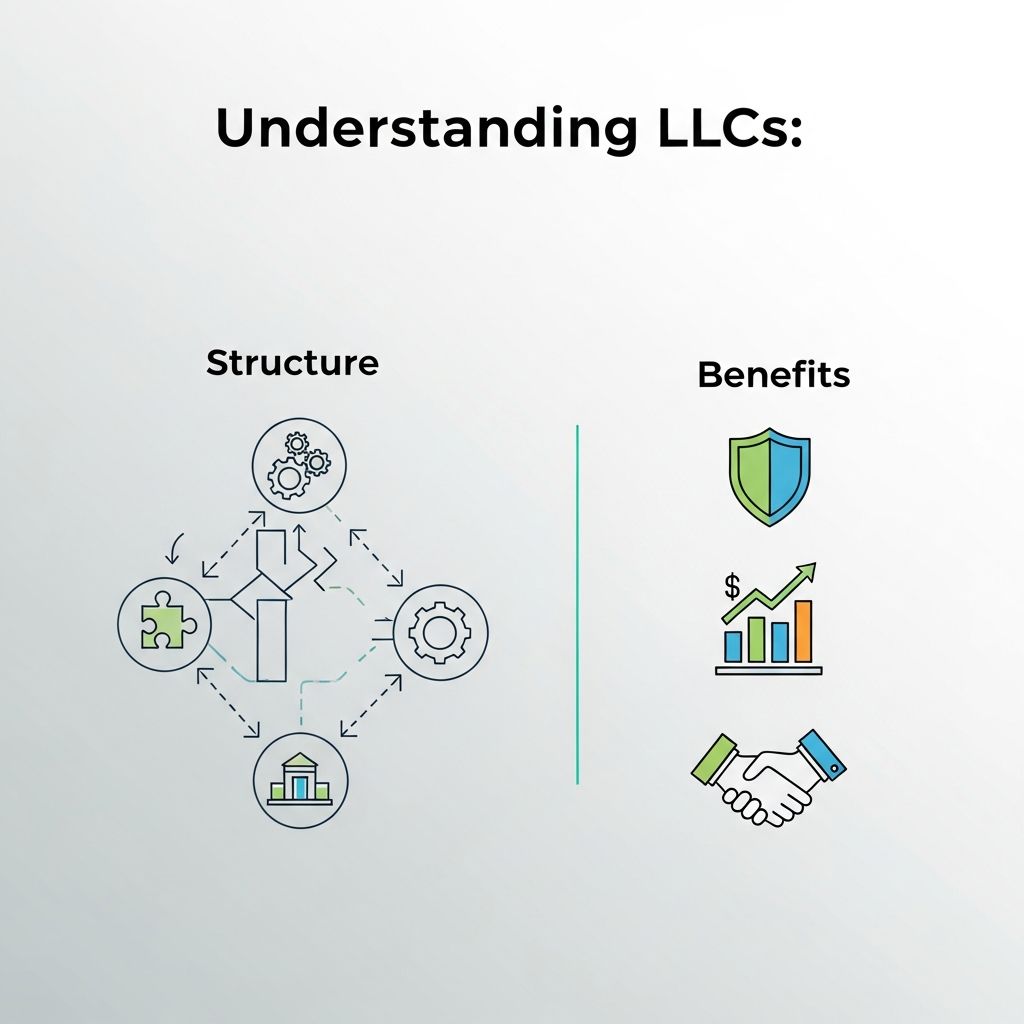
A Limited Liability Company (LLC) represents a popular business structure that merges corporate liability safeguards with partnership-like operational simplicity. This hybrid model appeals to entrepreneurs aiming to protect personal finances while maintaining control over daily operations.
Core Definition of an LLC
An LLC establishes itself as a separate legal entity from its owners, termed members. This separation ensures that members’ personal assets, including homes and savings, remain insulated from business-related debts or lawsuits in most cases. Unlike sole proprietorships, where owners bear full personal responsibility, LLCs limit exposure to the capital invested in the company.
The structure draws from both partnership and corporate frameworks. It provides the asset protection of a corporation alongside the tax pass-through mechanism of a partnership, where income flows directly to members’ individual tax returns, bypassing entity-level corporate taxes.
Key Advantages of Choosing an LLC
Forming an LLC delivers multiple strategic benefits, making it a go-to choice for small enterprises and startups.
- Asset Protection: Members enjoy limited liability, shielding personal property from business obligations. This protection holds unless members engage in fraudulent activities or fail to maintain proper separation between personal and business affairs.
- Tax Efficiency: By default, LLCs qualify for pass-through taxation, reporting profits and losses on members’ personal returns. This avoids double taxation common in C-corporations, where entities pay corporate taxes before distributing dividends.
- Management Versatility: Owners can opt for member-managed or manager-managed setups. Member-managed suits hands-on operations, while manager-managed allows delegation to professionals, ideal for passive investors.
- Continuity and Stability: Most states grant LLCs perpetual existence, enabling the business to persist through changes in membership without dissolution.
- Credibility Boost: The LLC designation signals professionalism, aiding in securing loans, contracts, and partnerships.
How LLCs Differ from Other Business Forms
Comparing LLCs to alternatives highlights their unique positioning.
| Structure | Liability Protection | Taxation | Management | Compliance Burden |
|---|---|---|---|---|
| LLC | Limited | Pass-through (flexible) | Flexible | Low |
| Sole Proprietorship | None | Pass-through | Owner-directed | Minimal |
| Partnership | Unlimited (general) | Pass-through | Partner-based | Moderate |
| C-Corporation | Limited | Double taxation | Board-directed | High |
LLCs strike a balance, offering superior protection over partnerships without the rigid formalities of corporations, such as mandatory board meetings or extensive record-keeping.
Steps to Form and Operate an LLC
Establishing an LLC involves straightforward state-specific processes.
- Select a Name: Choose a unique name compliant with state rules, typically including ‘LLC’ or similar.
- File Articles of Organization: Submit formation documents to the state’s secretary of state, often with a modest fee.
- Draft an Operating Agreement: Though not always required, this internal document details ownership percentages, profit sharing, voting rights, and dissolution procedures. It prevents disputes and customizes operations.
- Obtain Licenses and EIN: Secure necessary permits and an Employer Identification Number from the IRS for banking and taxes.
- Comply Ongoing: Maintain annual reports and state fees to preserve good standing.
Single-member LLCs function like sole proprietorships for tax purposes, while multi-member ones resemble partnerships. Owners can elect corporate taxation if beneficial, such as for S-corp status to save on self-employment taxes.
Tax Implications and Strategies for LLCs
Taxation forms a cornerstone of LLC appeal. Profits pass through to members, taxed at individual rates, which often prove lower than corporate rates. Members report via Schedule C (single-member) or Form 1065 (multi-member), with K-1 forms distributing shares.
Strategic elections enhance savings:
- Default pass-through for simplicity.
- S-corporation election to minimize self-employment taxes on distributions.
- C-corporation for reinvestment-focused growth, despite double taxation.
Employees of LLCs benefit indirectly through deductible business expenses for health plans and retirement contributions. However, members must navigate self-employment taxes on earned income.
Potential Drawbacks of LLC Ownership
While advantageous, LLCs present challenges.
- Self-Employment Taxes: Members pay these on business income unless electing S-corp status.
- State Variations: Rules differ by state, affecting fees, publication requirements, and franchise taxes.
- Funding Limitations: Investors may prefer corporations for stock issuance ease.
- Veil Piercing Risk: Neglecting formalities can expose personal assets.
Despite these, the pros typically outweigh cons for most small operations.
LLCs for Diverse Business Types
LLCs suit freelancers, e-commerce ventures, real estate holdings, and professional services. Real estate investors favor them for property isolation, limiting lawsuit risks to specific assets. Tech startups leverage flexibility for rapid pivots without corporate bureaucracy.
Professional LLCs (PLLCs) cater to fields like law or medicine, offering liability protection while meeting licensing mandates.
Frequently Asked Questions
Can a single person form an LLC?
Yes, single-member LLCs are valid and provide full liability protection, taxed as sole proprietorships by default.
Does an LLC need an operating agreement?
Not legally required in all states, but strongly recommended to clarify operations and avoid conflicts.
How much does forming an LLC cost?
Costs range from $50 to $500 in filing fees, plus optional legal fees for agreements.
Can an LLC have employees?
Absolutely; LLCs can hire staff, withhold taxes, and offer benefits like any employer.
What happens if an LLC member dies?
With perpetual existence, the LLC continues; the operating agreement dictates buyout or succession.
Suitability Assessment for Your Venture
Evaluate LLC fit by considering risk exposure, growth plans, and tax needs. High-liability industries like construction benefit most from protection, while low-risk service providers might opt for simplicity elsewhere. Consulting professionals ensures alignment with goals.
In summary, embracing LLC status means gaining a robust shield for assets, adaptable governance, and optimized taxes, empowering sustainable business growth.
References
- Limited liability company (LLC) — Internal Revenue Service. 2023-10-18. https://www.irs.gov/businesses/small-businesses-self-employed/limited-liability-company-llc
- Choose a business structure — U.S. Small Business Administration. 2025-01-15. https://www.sba.gov/business-guide/launch-your-business/choose-business-structure
- LIMITED LIABILITY COMPANIES — University of Richmond School of Law. 2022-05-01. https://law.richmond.edu/academics/clinics-skills/in-house/ip-clinic/pdf_archive/business-limited-liability-company.pdf
- Benefits of Forming a Limited Liability Company (LLC) — Mosey. 2024-08-20. https://mosey.com/blog/benefits-of-an-llc/
- Business Entities Defined: Limited Liability Company and Its Benefits — Todd Greene CPA. 2023-11-10. https://toddgreenecpa.com/business-entities-defined-limited-liability-company-and-its-benefits/
Similar Articles








Read full bio of Sneha Tete




