A Limited Liability Company, abbreviated as **LLC**, appears at the end of many business names to indicate its legal structure. This designation signals that the entity provides personal asset protection for its owners while offering operational flexibility.
Core Meaning and Legal Foundation of LLC
The term **LLC** stands for Limited Liability Company, a business form created by state statutes that blends elements of partnerships and corporations. Owners, called members, enjoy limited personal liability for business debts and lawsuits, meaning personal assets like homes or savings are generally shielded. This structure emerged in the U.S. in the late 1970s and gained popularity for its simplicity and protections.
Unlike sole proprietorships, where owners bear full personal risk, an LLC establishes the business as a separate legal entity capable of owning property, entering contracts, and facing lawsuits independently. State laws govern formation, with each requiring specific filings to legitimize the entity.
Why Businesses Append LLC to Their Names
State regulations mandate that LLCs include designators like “LLC,” “L.L.C.,” or “Limited Liability Company” in their official name to inform the public of their status. This transparency prevents confusion with other entities and upholds legal distinctions. For instance, using the suffix ensures creditors and partners recognize the limited liability feature.
- Legal requirement: Most states prohibit omitting the LLC indicator in official documents and public usage.
- Credibility boost: It conveys professionalism and protection to clients and investors.
- Branding clarity: Helps differentiate from unincorporated businesses or corporations.
Failure to include it can lead to rejected filings or penalties, emphasizing its non-optional role.
Key Protections Offered by LLC Structure
The hallmark of an LLC is **limited liability protection**, safeguarding members’ personal assets from business obligations unless personal guarantees or fraud occur. If the company faces bankruptcy or litigation, creditors target business assets first, not personal ones.
Additionally, LLCs provide perpetual existence in many states, allowing continuity despite member changes like death or departure. This stability appeals to investors seeking long-term viability.
| Protection Type | Description | Benefit to Owners |
|---|---|---|
| Asset Shielding | Personal property insulated from debts | Reduces financial risk |
| Legal Separation | Business sues/settles independently | Simplifies operations |
| Perpetual Duration | Entity survives owner transitions | Enhances succession planning |
Tax Advantages and Flexibility
LLCs default to **pass-through taxation**, where profits and losses flow directly to members’ personal tax returns, avoiding corporate-level taxes. This prevents double taxation common in C-corporations, potentially lowering overall tax burdens. Members can elect corporate taxation if beneficial, such as for S-corp status.
Tax reporting simplifies: Single-member LLCs file via Schedule C (Form 1040), while multi-member ones use Form 1065. This efficiency suits small businesses, with deductions for business expenses passing through proportionally.
Management and Operational Simplicity
LLCs offer flexible management: member-managed (owners handle daily affairs) or manager-managed (designated managers lead). No rigid board or annual meetings required, unlike corporations, reducing administrative burdens.
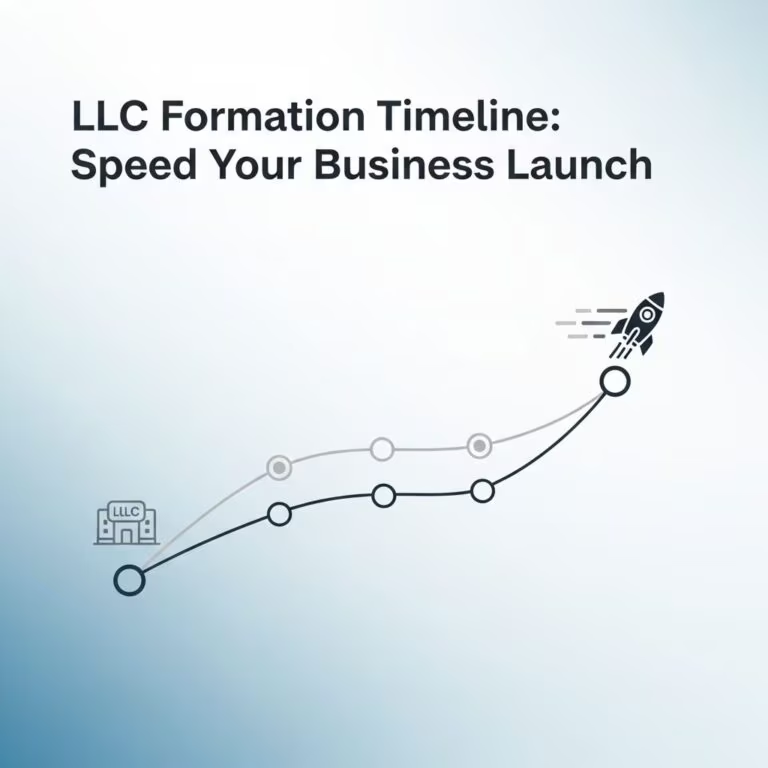
Startup is straightforward: File Articles of Organization with the state, pay fees (typically $50-$500), and draft an operating agreement outlining rules. Less paperwork means faster launch, ideal for startups.
- Member-managed: Democratic, hands-on control.
- Manager-managed: Scalable for passive investors.
- Custom operating agreement: Defines profit shares, voting, and exits.
Comparing LLC to Other Business Structures
LLCs stand out for balancing protection and ease, but alternatives exist based on needs.
| Structure | Liability Protection | Taxation | Management | Best For |
|---|---|---|---|---|
| Sole Proprietorship | None | Pass-through | Owner-only | Solo low-risk ventures |
| Partnership | Limited (LP variant) | Pass-through | Partners | Collaborative small ops |
| LLC | Strong | Flexible pass-through | Customizable | Most small/medium businesses |
| C-Corp | Strong | Double taxation | Board-required | Investment-heavy growth |
| S-Corp | Strong | Pass-through (limits) | Board/shareholders | Profitable pass-through seekers |
LLCs excel for small businesses due to fewer formalities and hybrid benefits.
Steps to Form an LLC and Name It Properly
- Choose name: Unique, compliant with state rules, includes LLC suffix.
- Check availability: Search state database.
- File Articles: Submit to secretary of state with fee.
- Draft operating agreement: Internal governance document.
- Obtain EIN: From IRS for taxes/banking.
- Register locally: For taxes, licenses.
Post-formation, use full legal name (e.g., ABC Solutions LLC) in contracts. DBAs allow trade names without altering the legal one.
Restrictions and Common Mistakes in LLC Naming
States restrict names resembling government entities, other firms, or misleading terms like “bank” without approval. Reserves names temporarily and prohibits certain words.
Common pitfalls: Omitting suffix, ignoring trademarks, or using restricted terms, leading to rejections or lawsuits.
- Ensure distinctiveness: Avoid generic or conflicting names.
- Trademark check: Federally via USPTO.
- Future-proof: Scalable and brandable.
State Variations and Compliance Essentials
Rules differ: California requires biennial statements; Delaware offers privacy. All demand annual reports/fees for good standing. Non-compliance risks dissolution.
Frequently Asked Questions
Can I use a name without LLC if I’m an LLC?
No, official documents and signage must include the LLC designator per state law.
Does LLC protect against all liabilities?
Generally yes for business debts, but personal guarantees or veil-piercing (e.g., fraud) can expose assets.
How much does forming an LLC cost?
Varies by state: $40-$500 filing, plus optional legal fees.
Can a single person form an LLC?
Yes, single-member LLCs operate like sole proprietorships with added protections.
Do LLCs need annual meetings?
No, unlike corporations; operating agreements guide governance.
Strategic Reasons to Choose LLC for Your Business
Entrepreneurs favor LLCs for risk mitigation in litigious environments, tax optimization, and scalability. It suits freelancers, e-commerce, real estate, and consultancies. Growth potential includes adding members or converting structures.
In summary, appending **LLC** denotes a resilient, adaptable entity prioritizing owner security and efficiency.
References
- What Is a Limited Liability Company? Benefits of an LLC — NerdWallet. 2023-10-15. https://www.nerdwallet.com/business/legal/learn/starting-successful-llc
- Benefits of Forming a Limited Liability Company (LLC) — Mosey. 2024-05-20. https://mosey.com/blog/benefits-of-an-llc/
- Top 10 Advantages and Disadvantages of LLC — WebHR. 2023-08-12. https://web.hr/contents/advantages-and-disadvantages-of-llc
- Business Entities Defined: Limited Liability Company and Its Benefits — Todd Greene CPA. 2024-02-28. https://toddgreenecpa.com/business-entities-defined-limited-liability-company-and-its-benefits/
- Limited Liability Company — Minnesota Department of Employment and Economic Development (mn.gov). 2025-01-10. https://mn.gov/deed/business/starting-business/organizing/limited-liability.jsp
- What does LLC mean, and is it right for your business? — Citizens Bank. 2024-11-05. https://www.citizensbank.com/learning/what-does-llc-mean.aspx
- Choose a business structure — U.S. Small Business Administration (sba.gov). 2025-09-01. https://www.sba.gov/business-guide/launch-your-business/choose-business-structure
- Limited liability company (LLC) — Internal Revenue Service (irs.gov). 2026-01-15. https://www.irs.gov/businesses/small-businesses-self-employed/limited-liability-company-llc