
Understanding Legal Ages in the United States
Explore how different legal ages shape youth rights, responsibilities, and protections across the United States.
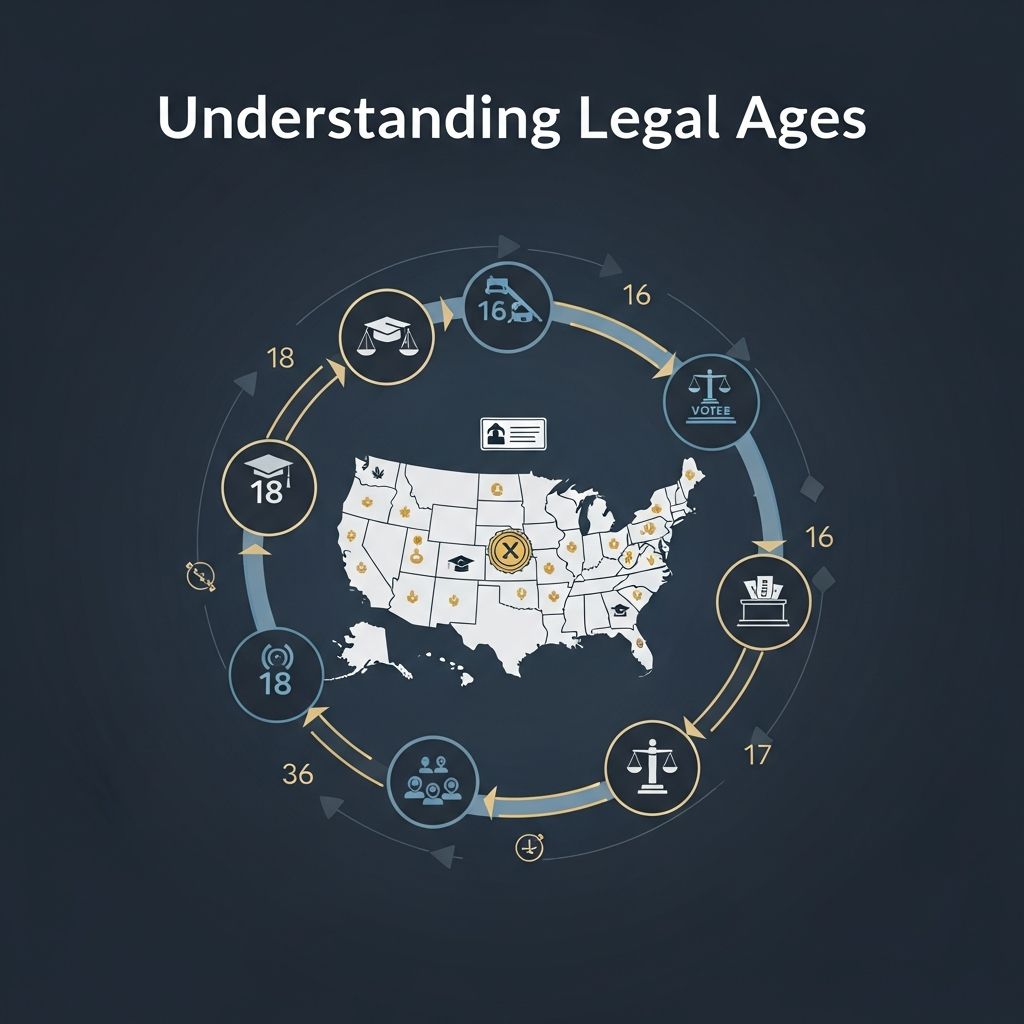
In the United States, there is no single age when a young person instantly receives every adult right and responsibility. Instead, different legal ages apply to different activities, from signing contracts and working for pay to marrying, driving, and consuming alcohol. These ages are mostly set by state law, with some important federal rules layered on top.
This guide explains the main legal age milestones that affect children, teens, and young adults, and how parents and caregivers can plan for each transition.
1. The Age of Majority: When the Law Treats You as an Adult
The age of majority is the point at which a person is legally recognized as an adult for most purposes, including making contracts, controlling money, and making personal decisions.
- In most U.S. states, the age of majority is 18 years old.
- There are a few exceptions: Alabama and Nebraska set it at 19, and Mississippi at 21.
Once a young person reaches the age of majority in their state, they usually gain:
- The right to make their own educational and medical decisions
- Control over their finances and property
- The authority to sign contracts without parental consent
- Responsibility for their own debts and legal obligations
Education laws reflect this shift. Under federal special education rules, schools must notify students with disabilities about rights that will transfer to them at the age of majority at least one year before that birthday.
2. Legal Adulthood vs. Specific Age-Based Permissions
Reaching the age of majority does not automatically grant every legal privilege. U.S. law separates general adulthood from specific ages of license, which are ages at which someone can lawfully engage in a particular activity.
Common examples of separate age thresholds include:
- Voting in federal elections
- Buying and consuming alcohol
- Obtaining a driver’s license
- Working in particular jobs or during certain hours
- Marrying with or without parental consent
This creates a patchwork: a person might be old enough to work full time and vote, but not yet old enough to buy alcohol or marry without consent, depending on their state.
3. Working Ages: When Teens Can Get a Job
Federal labor law sets a national baseline for when minors can work, and states can add further protections. The Fair Labor Standards Act (FLSA) generally sets:
- 14 as the minimum age for most non-agricultural employment.
- Strict limits on hours for workers under 16.
Under federal rules, minors under 16 typically:
- May work only limited hours on school days and non-school days
- Cannot work late night or very early morning shifts
- Are restricted from hazardous occupations
States may:
- Require work permits or age certificates
- Impose stricter hour limits during the school year
- Bar minors from additional hazardous industries beyond federal law
Parents should check both federal and state rules before a teen accepts a job, especially in construction, agriculture, or other physically demanding work.
4. Marriage Age: When Can Someone Legally Marry?
Marriage ages are entirely set by state law, and in recent years many states have tightened rules to reduce child marriage. Policy research indicates:
- Every state sets a default minimum marriage age at or above 18, except Nebraska (19) and Mississippi (21).
- Most states historically allowed minors to marry with parental or judicial consent, sometimes at ages well below 18.
- A growing group of states now prohibit all exceptions, meaning no one under a specified age (often 18) can marry under any circumstance.
Research links child marriage with a range of negative outcomes, including lower educational attainment, higher poverty risk, and poorer health. As a result, advocacy and legislative efforts continue to push states toward eliminating marriage under 18 altogether.
| Policy Feature | Common Approach | Recent Trend |
|---|---|---|
| Default minimum age | 18 in most states | Some states higher (e.g., 19 or 21) |
| Parental consent exception | Historically allowed for minors, often 15–17 | Increasingly restricted or abolished |
| Judicial approval | Permitted in some states for younger minors | Closer scrutiny, more states ending this path |
| No exceptions states | Once rare | Rising number of states with no marriage under 18 |
5. Alcohol and Tobacco: Age Limits to Protect Health
5.1 Minimum Legal Drinking Age
At the federal level, the U.S. uses a uniform minimum legal drinking age (MLDA) system. Under federal policy adopted in the 1980s:
- The MLDA is effectively 21 in all states.
- States that failed to adopt 21 risked losing a portion of federal highway funds, leading all to comply.
According to the U.S. Centers for Disease Control and Prevention (CDC), MLDA 21 laws have been associated with:
- Fewer motor vehicle crashes involving young drivers
- Lower rates of underage drinking
- Improved overall community health
Even when individuals reach the age of majority, they must still wait until 21 to buy or be served alcohol in licensed establishments.
5.2 Tobacco Sales Age
Although not covered by older state family law guides, federal law now also sets 21 as the minimum age to purchase tobacco products nationwide. This modern trend aligns tobacco policy with alcohol rules and is aimed at reducing youth nicotine addiction. (This change comes from separate federal legislation, not family law statutes.)
6. Criminal Responsibility and Juvenile vs. Adult Court
Another crucial legal age question is when a young person can be held criminally responsible like an adult. Systems differ across states and between state and federal law.
Key points include:
- Most U.S. states treat 18 as the age at which individuals come under the full jurisdiction of adult criminal courts for new offenses.
- States vary widely in the minimum age at which a child can be prosecuted, and many allow transfers of juveniles to adult court for serious offenses.
- Some states have no fixed minimum age of criminal responsibility, leaving decisions to prosecutors and judges.
Scholars and medical experts have noted that brain development, especially of the prefrontal cortex responsible for decision-making and impulse control, continues into the mid-20s. This has fueled debate about how age thresholds in criminal law should account for developmental science.
7. Education, Schooling, and Youth Rights
Compulsory schooling laws and education rights also intersect with legal ages. While details differ by state, most require school attendance from early elementary years through at least age 16 or 17.
For students with disabilities served under the Individuals with Disabilities Education Act (IDEA):
- Schools must plan for the transfer of educational decision-making rights at the age of majority defined by state law.
- At least one year before that age, the student must be informed of any rights that will transfer to them.
Parents should talk with school teams during middle and high school about:
- How decision-making will change at age 18 (or the applicable state age)
- What options exist if the young person needs continued support with decisions
- How conservatorship, supported decision-making, or powers of attorney might be used where appropriate
8. Why Legal Ages Vary: Policy Goals and Historical Roots
Legal age rules serve several overlapping purposes:
- Protection: shielding young people from exploitation, dangerous work, or high-risk behaviors like early drinking and smoking
- Responsibility: ensuring that people are mature enough to understand and accept the consequences of their actions
- Uniformity: providing clear, predictable standards for courts, schools, employers, and families
- Public health: using age-based limits to reduce injuries, crashes, addiction, and other harms
Historically, many age thresholds were chosen based on custom or intuition about maturity rather than neuroscience or psychological research. Modern science showing that cognitive development continues past age 18 has sparked fresh debates over whether existing age rules are too high, too low, or inconsistently applied.
9. Practical Tips for Parents and Young People
Because U.S. legal ages are a blend of federal and state rules, and each state’s law is different, planning ahead is essential. The following strategies help families navigate these transitions.
9.1 Map Out Key Age Milestones
- Identify when your child will reach the age of majority in your state.
- Check ages for a driver’s license, work permits, and learner’s permits.
- Note the legal ages for alcohol, tobacco, voting, and military service.
- Ask your school district about rights transfers for special education services.
9.2 Talk Openly About Rights and Responsibilities
- Explain what it means to sign a contract or rental agreement.
- Discuss budgeting, credit, and financial obligations once they control their own accounts.
- Review consequences of criminal charges, including how juvenile and adult records differ.
9.3 Consult Reliable Legal Information
- Review your state’s statutes on family law, juvenile law, and labor rules.
- Check state government websites or bar association resources for plain-language guides.
- Seek legal advice for complex situations (such as emancipation, guardianship, or early marriage requests).
10. Frequently Asked Questions (FAQs)
Q1: Is the age of majority the same as the drinking age?
No. The age of majority is typically 18, 19, or 21 depending on the state, and it marks the general start of legal adulthood. The minimum legal drinking age, by federal policy, is 21 in every state, even where the age of majority is lower.
Q2: Can a minor ever be treated like an adult in court?
Yes. Most states have procedures that allow certain juvenile cases—often involving serious felonies—to be transferred to adult criminal court. The details, including minimum ages and offenses, vary widely by state.
Q3: Do all states allow minors to work at age 14?
Federal law sets 14 as the minimum age for most non-agricultural jobs, but states can impose stricter rules. Some states limit the types of work, require work permits, or further restrict hours for 14- and 15-year-olds.
Q4: Can parents consent to marriage for a child under 18?
In the past, many states allowed marriage below 18 with parental or judicial consent. An increasing number of states now prohibit any marriage under 18, eliminating those exceptions. Families must review the current law in their specific state.
Q5: How do I find the exact legal ages for my state?
The best starting points are your state’s official legislative or court websites, state agencies (such as labor and education departments), and reputable legal information providers. Because laws change, make sure any information is current and, for important decisions, consider consulting a licensed attorney.
References
- Why a Minimum Legal Drinking Age of 21 Works — Centers for Disease Control and Prevention. 2022-11-29. https://www.cdc.gov/alcohol/underage-drinking/minimum-legal-drinking-age.html
- Legal Marriage Age — MOST Policy Initiative. 2021-06-28. https://mostpolicyinitiative.org/science-note/legal-marriage-age/
- Age of Majority — Center for Parent Information & Resources. 2017-01-01. https://www.parentcenterhub.org/age-of-majority/
- Age Requirements — U.S. Department of Labor. 2020-01-01. https://www.dol.gov/general/topic/youthlabor/agerequirements
- America’s Age-Based Laws Are Archaic — Bunk / The Washington Post. 2019-03-26. https://www.bunkhistory.org/resources/americas-age-based-laws-are-archaic
- Age Matrix — Interstate Commission for Juveniles. 2023-01-01. https://www.juvenilecompact.org/age-matrix
Similar Articles








Read full bio of Sneha Tete


