
Understanding Junk Fees and How They Impact You
Learn what junk fees really are, how they affect your wallet, and what’s being done to stop them.
What Exactly Are Junk Fees?
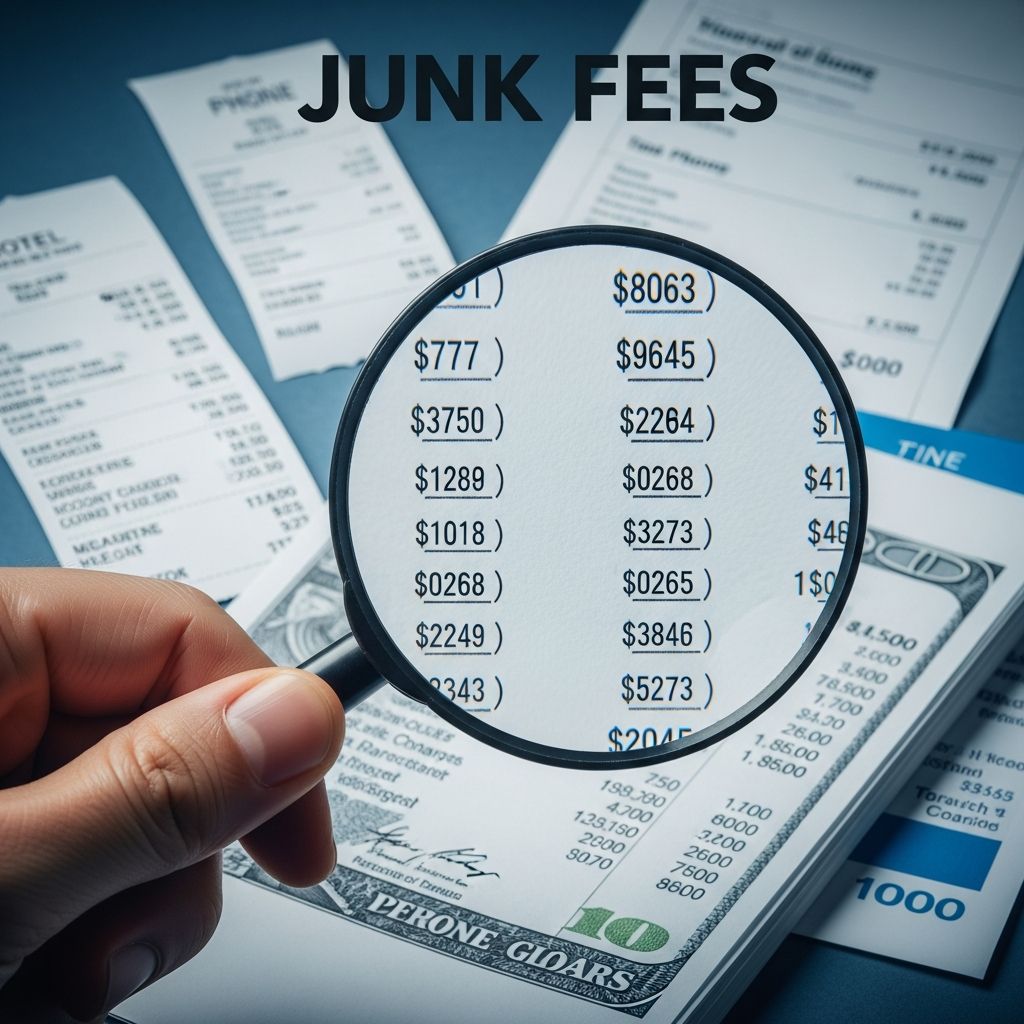
When you see a price tag and then get hit with extra charges at checkout, you’ve likely encountered what regulators and consumer advocates now call “junk fees.” These are not just small, unavoidable surcharges. They are fees that are often hidden, misleading, or imposed in a way that makes them hard to avoid, even when they don’t clearly correspond to any real service or value.
Junk fees typically share a few key traits:
- They are not clearly disclosed upfront, so consumers only see them late in the purchase process.
- They are mandatory in practice, even if labeled as optional.
- They add little or no real benefit to the consumer, yet significantly increase the final cost.
- They are structured so that walking away from the purchase feels difficult or costly, especially after time and effort have already been invested.
These fees appear across many parts of daily life: banking, travel, housing, event tickets, and even basic utilities. The result is that what looks like an affordable option at first glance can end up costing much more than expected.
Where Junk Fees Show Up in Everyday Life
Junk fees are not limited to one industry. They’ve become a widespread pricing strategy in sectors where competition is fierce and margins are thin. Here are some common examples:
Banking and Financial Services
Financial institutions often charge fees that go beyond standard, regulated costs. Examples include:
- Excessive overdraft fees that far exceed the cost of processing a transaction.
- Account maintenance fees that are hard to waive, even for long-term customers.
- “Convenience” fees for using certain payment methods, even when those methods are the only practical option.
- Unnecessary add-ons sold with loans or credit products that provide little value but generate extra revenue.
These fees can be especially harmful to people living paycheck to paycheck, who may not have a buffer to absorb unexpected charges and can quickly fall into cycles of debt.
Travel and Hospitality
Booking a flight, hotel, or rental car often starts with an attractive headline price, only to balloon at checkout:
- Resort fees that are mandatory but not included in the advertised room rate.
- Baggage, seat selection, and change fees that are presented as optional but effectively required for a comfortable or practical trip.
- Dynamic pricing tactics that make it hard to compare true costs across providers.
These practices make it difficult for consumers to shop around and choose the best value, undermining fair competition.
Live Events and Entertainment
Buying tickets to concerts, sports games, or theater performances is a classic example of junk fee inflation:
- Service fees, facility fees, and processing charges that can add 20–30% or more to the face value of a ticket.
- Fees that are only revealed at the final step of checkout, after the consumer has already selected seats and committed time.
- “VIP” packages or add-ons that are aggressively promoted but offer minimal extra value.
Because tickets are often time-sensitive and emotionally charged purchases, consumers are more likely to pay up rather than walk away, even when the final price feels unfair.
Housing and Utilities
From renting an apartment to buying a home, junk fees can significantly impact affordability:
- Application, administration, or “processing” fees that are nonrefundable and not clearly tied to actual costs.
- Utility connection or reconnection fees that are disproportionately high relative to the work involved.
- Hidden charges in lease agreements or service contracts that only become apparent after signing.
These fees can act as barriers to housing access, particularly for low- and moderate-income households already stretched thin by rising rents and living costs.
Why Junk Fees Are More Than Just Annoying
At first glance, a $10 or $15 fee might seem trivial. But when these charges are layered across multiple purchases and services, they add up to hundreds or even thousands of dollars per year for the average household. More importantly, they distort how markets work and harm both consumers and honest businesses.
They Undermine Price Transparency
When the real cost of a product or service is buried in a maze of fees, it becomes nearly impossible to compare options fairly. Consumers end up choosing based on misleading headline prices rather than true value. This erodes trust in the marketplace and makes it harder for genuinely competitive, low-cost providers to stand out.
They Reduce Consumer Choice
Junk fees often create a sense of lock-in. Once a consumer has invested time, effort, or even a nonrefundable deposit, walking away from a purchase feels like a loss, even if the final price is unreasonable. This reduces real choice and gives companies less incentive to improve service or lower prices.
They Disproportionately Harm Vulnerable Households
Low-income families, people with limited financial literacy, and those without access to emergency savings are hit hardest by surprise fees. A single overdraft or late fee can trigger a cascade of additional charges, late payments, and damaged credit. Over time, this can deepen financial insecurity and make it harder to build wealth or achieve long-term goals like homeownership.
They Distort Competition
When companies rely on hidden fees to boost profits, they gain an unfair advantage over businesses that are upfront about pricing. Honest competitors may appear more expensive at first glance, even if their total cost is lower. This rewards deception rather than value, leading to a less efficient and less innovative market overall.
How Regulators Are Responding
Recognizing the harm caused by junk fees, federal and state agencies have begun taking concrete steps to increase transparency and protect consumers.
Federal Trade Commission’s Junk Fees Rule
In late 2024, the Federal Trade Commission finalized a new rule targeting unfair and deceptive pricing practices in several key industries, including live events, hotels, and certain financial services. The rule has two main components:
- Businesses must clearly and prominently disclose the total price of a good or service before the consumer is asked to pay.
- They cannot misrepresent the nature, purpose, or amount of any fee, or hide which product or service the fee applies to.
This means that service fees, processing charges, and other add-ons must be included in the advertised price or at least clearly broken out before checkout. The goal is to ensure that consumers see the bottom-line cost early enough to make informed decisions.
Consumer Financial Protection Bureau’s Focus on Financial Junk Fees
The Consumer Financial Protection Bureau (CFPB) has launched a dedicated initiative to reduce exploitative fees in banking and financial services. This includes:
- Scrutinizing overdraft practices to ensure fees are reasonable and proportional to the cost of the service.
- Examining add-on products sold with loans, credit cards, and other financial products to determine whether they provide real value or are simply revenue generators.
- Pushing for clearer disclosures so consumers understand exactly what they are paying for and how much it will cost.
The CFPB’s work is focused on saving households billions of dollars annually by cutting down on fees that are excessive, hidden, or predatory in nature.
State-Level Actions
Several states have also taken action. For example, California passed a law banning “drip pricing” — the practice of advertising a low price and then adding mandatory fees later in the process. Other states are considering similar measures for industries like telecommunications, auto sales, and housing.
What Consumers Can Do Right Now
While regulatory changes take time, there are practical steps individuals can take to protect themselves from junk fees today.
Always Look for the Total Price
Before completing any purchase, especially online, make sure you see the full, final cost, including taxes, shipping, and all fees. If the total price isn’t clearly displayed, treat that as a red flag and consider shopping elsewhere.
Read the Fine Print
Pay close attention to terms and conditions, especially around cancellation, refunds, and recurring charges. Look for language about “mandatory fees,” “nonrefundable charges,” or “required add-ons.” If something feels unclear or unfair, it probably is.
Compare Across Providers
Don’t just compare headline prices. Compare the total cost, including all known fees. A slightly higher advertised price with fewer add-ons may actually be the better deal.
Speak Up When You See Junk Fees
If you encounter a fee that seems hidden, excessive, or misleading, report it to the relevant agency:
- For financial products and services: Consumer Financial Protection Bureau (CFPB).
- For general business practices and advertising: Federal Trade Commission (FTC).
- For state-specific issues: Your state’s attorney general or consumer protection office.
Individual complaints help regulators identify patterns and prioritize enforcement actions.
What the Future of Pricing Could Look Like
The growing focus on junk fees signals a shift toward a more transparent and consumer-friendly marketplace. If current trends continue, we could see:
- More consistent rules requiring total price disclosure across industries.
- Stronger limits on excessive or predatory fees, especially in essential services like banking and housing.
- Greater accountability for companies that use deceptive pricing tactics.
- More tools and resources to help consumers understand and avoid hidden charges.
Ultimately, the goal is not to eliminate all fees, but to ensure that fees are fair, transparent, and tied to real value. When consumers can see the full cost upfront, they can make better choices, and businesses that compete on quality and price — rather than hidden charges — can thrive.
Frequently Asked Questions (FAQs)
Q: Are all fees junk fees?
A: No. Not every fee is a junk fee. Legitimate fees cover real costs, are clearly disclosed upfront, and are often avoidable (for example, optional insurance or premium seating). Junk fees are those that are hidden, unavoidable in practice, and provide little or no value.
Q: Are junk fees illegal?
A: There is no single law that bans all “junk fees” by name. However, many junk fees violate existing consumer protection laws if they are deceptive, unfair, or not properly disclosed. Regulators are now creating more specific rules to target these practices directly.
Q: How can I tell if a fee is a junk fee?
A: Ask yourself: Was this fee clearly shown at the start? Can I reasonably avoid it? Does it correspond to a real service I actually want? If the fee was hidden until checkout, is mandatory, and doesn’t add clear value, it’s likely a junk fee.
Q: What industries are most affected by junk fees?
A: Common culprits include banking and financial services, travel (airlines, hotels, car rentals), live events (concerts, sports), housing (rentals, homebuying), and telecommunications. However, junk fees can appear in almost any sector where pricing is complex or opaque.
Q: How much money do junk fees cost the average household?
A: Estimates vary, but research suggests that hidden fees can add 10–20% or more to what consumers expect to pay. Over a year, this can amount to hundreds or even thousands of dollars in extra costs for the typical household.
Q: What can I do if I’ve been charged a junk fee?
A: First, contact the company and ask for an explanation or a refund. If that doesn’t work, file a complaint with the CFPB, FTC, or your state consumer protection agency. Keep records of all communications and receipts.
References
- Consumer Financial Protection Bureau: Junk Fees Initiative — Consumer Financial Protection Bureau. Accessed 2025. https://www.consumerfinance.gov/rules-policy/junk-fees/
- FTC Final Rule on Unfair or Deceptive Fees — Federal Trade Commission. December 17, 2024. https://www.ftc.gov/business-guidance/blog/2024/12/getting-bottom-line-ftcs-bipartisan-junk-fees-rule-your-business
- FTC Junk Fees Rule FAQs — Federal Trade Commission. 2025. https://www.ftc.gov/business-guidance/blog/2024/12/getting-bottom-line-ftcs-bipartisan-junk-fees-rule-your-business
- California’s Hidden Fees Statute (SB 478) — California Legislative Information. 2023. https://leginfo.legislature.ca.gov/
Similar Articles








Read full bio of Sneha Tete


