
Understanding Indiana Marijuana Laws and Penalties
A clear, up-to-date guide to how Indiana treats marijuana possession, sale, and related offenses under state law.
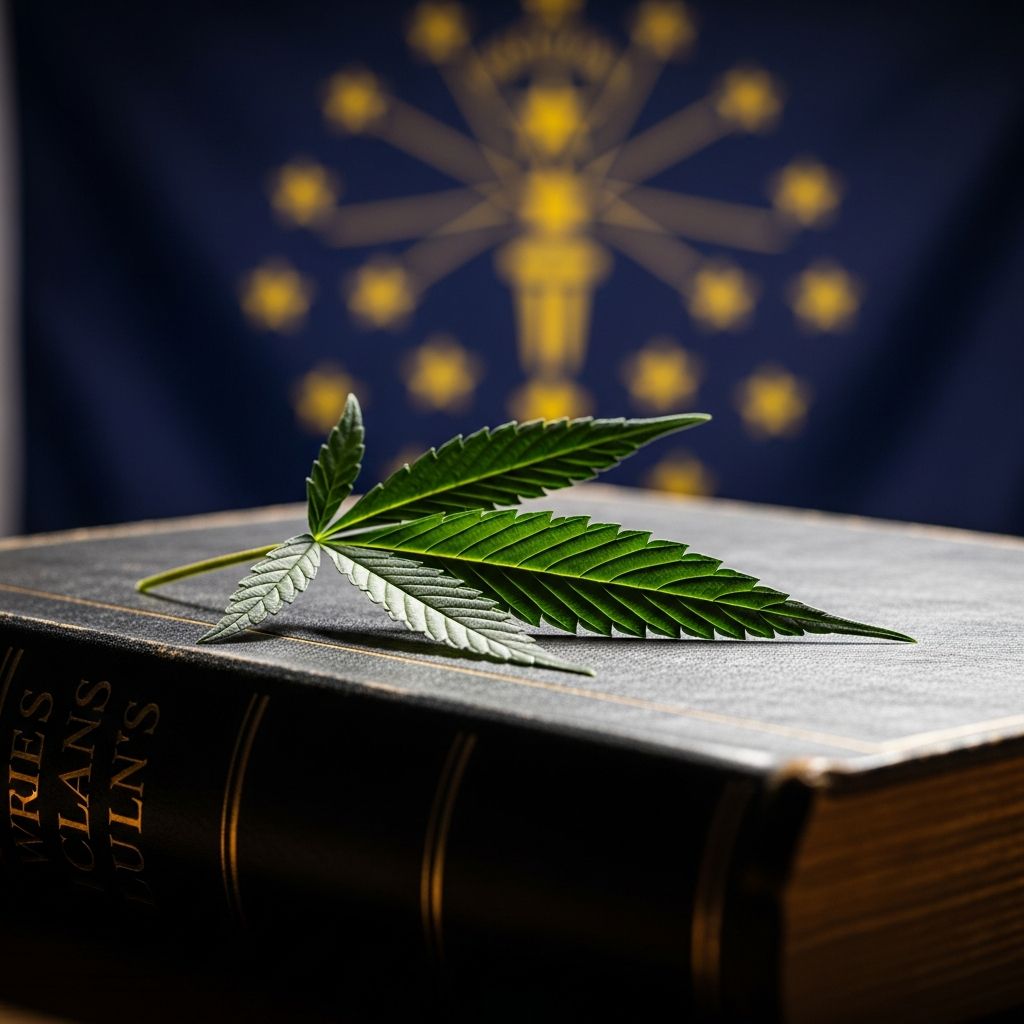
Indiana remains one of the stricter U.S. states when it comes to marijuana. While many jurisdictions have legalized or decriminalized cannabis, Indiana law still treats most marijuana-related conduct as a criminal offense, with penalties that can include jail time, fines, probation, and a permanent criminal record.
This guide explains how Indiana law classifies marijuana, what conduct is illegal, how penalties are structured, and what people should understand about charges involving possession, sale, paraphernalia, and concentrates such as hash oil and hashish.
1. How Indiana Legally Defines Marijuana
Indiana’s drug laws are contained primarily in Indiana Code Title 35, Article 48, which regulates controlled substances. Under these statutes, marijuana and related products are treated as controlled substances, and the law covers several forms:
- Marijuana (cannabis plant material): Leaves, flowers, and other plant parts that contain THC.
- Hash oil and hashish: Concentrated cannabis products with higher THC levels than raw plant material.
- Salvia and certain synthetic drugs: Included in the same statute for possession offenses.
The central possession statute, Indiana Code § 35-48-4-11, makes it a crime to knowingly or intentionally possess marijuana, hash oil, hashish, or salvia, or to grow or cultivate marijuana, or to knowingly allow marijuana to grow on one’s property without destroying it.
2. Criminalization: No General Adult Recreational Use
Unlike states that allow recreational cannabis, Indiana does not permit recreational possession or use of marijuana. There is also no broad medical marijuana program covering typical dispensary-style products; the state’s limited allowances focus mainly on low-THC or CBD products under separate provisions, and recreational possession of marijuana itself is still prosecutable.
Key implications include:
- Any non-authorized possession of marijuana can lead to a misdemeanor or felony charge.
- Lawful cannabis use or possession in another state does not provide a defense to possession in Indiana.
- Transporting marijuana into Indiana from a legal state can still result in Indiana criminal charges.
3. Possession of Marijuana: Basic Offense and Enhancements
Under Indiana Code § 35-48-4-11, possession-related conduct is the starting point for most marijuana cases. The severity of a possession charge depends primarily on:
- The amount of marijuana or concentrate involved.
- Whether the person has a prior drug conviction.
3.1 Simple Possession: Class B Misdemeanor
For many first-time situations involving smaller quantities, possession of marijuana is charged as a Class B misdemeanor under subsection (a) of the statute. A Class B misdemeanor in Indiana can carry:
- Up to 180 days in jail.
- Up to $1,000 in fines.
This basic penalty level often applies where the person is alleged to have a relatively small amount of marijuana and no qualifying prior drug offense.
3.2 Enhanced Misdemeanor or Felony for Prior Convictions and Larger Amounts
The same statute provides for significantly harsher charges when certain aggravating factors exist. If both of the following are true, the offense may be elevated:
- The person has a prior conviction for a drug offense.
- The person possesses at least 30 grams of marijuana, or at least 5 grams of hash oil, hashish, or salvia.
When those conditions are met, possession can be charged as a Level 6 felony, the lowest felony level in Indiana but still much more serious than a misdemeanor. According to Indiana’s general sentencing guidelines, a Level 6 felony can result in:
- 6 months to 2.5 years of incarceration.
- Up to $10,000 in fines.
Even if the amount involved is below 30 grams, having a prior drug conviction can upgrade the offense to a higher-level misdemeanor, depending on the exact circumstances and charge theory used by prosecutors.
3.3 Summary of Typical Possession Penalties
| Situation (Marijuana Possession) | Common Charge Level | Potential Jail/Prison Range | Potential Maximum Fine |
|---|---|---|---|
| First-time possession of a smaller amount | Class B misdemeanor | Up to 180 days | Up to $1,000 |
| Less than 30 grams, with prior drug conviction | Often charged at higher misdemeanor level (e.g., Class A) | Up to 1 year | Up to $5,000 |
| At least 30 grams, and prior drug conviction | Level 6 felony | 6 months to 2.5 years | Up to $10,000 |
Actual outcomes can vary based on plea agreements, diversion programs, probation, and judicial discretion within statutory limits.
4. Sale, Distribution, and Cultivation of Marijuana
Indiana law treats selling or growing marijuana as more serious than possessory conduct alone. Under § 35-48-4-11, knowingly or intentionally growing or cultivating marijuana is itself an offense, and other statutes address dealing and distribution based on weight and circumstances.
Key points about sale and distribution include:
- Smaller-scale sales can be charged as misdemeanors, especially for amounts under 30 grams.
- Larger quantities, repeat offenses, or selling near certain locations (such as schools) can elevate charges to felonies.
- Selling to a minor or selling very large quantities can lead to mid-level felonies with multi-year prison exposures.
Because dealing offenses are highly fact-specific and may involve separate statutes, individuals facing such allegations often encounter more complex sentencing structures than simple possession cases.
5. Hash Oil, Hashish, and Other Concentrates
Concentrates such as hash oil and hashish are explicitly referenced in Indiana’s possession statute. The law distinguishes these substances from standard marijuana plant material due to their higher THC concentration, and penalties can increase more quickly at smaller weights.
For example:
- Possession or manufacture of very small amounts of hash oil or hashish can begin as a misdemeanor.
- Possessing more than a few grams, repeat offenses, or manufacturing larger quantities can result in a Level 6 felony or higher.
- Distributing substantial amounts of concentrates, or any amount to a minor, can be charged as a Level 5 felony, potentially carrying several years in prison.
The threshold in § 35-48-4-11 for enhancing possession to a Level 6 felony is 5 grams or more of hash oil, hashish, or salvia when combined with a qualifying prior drug conviction.
6. Drug Paraphernalia Related to Marijuana
Indiana separately criminalizes certain forms of drug paraphernalia. While the exact charge depends on the item and its intended use, the law generally targets tools designed to ingest, test, grow, or otherwise use controlled substances.
Examples of paraphernalia that can trigger charges when linked to marijuana use include:
- Pipes, bongs, and similar smoking devices.
- Water pipes or devices designed to vaporize cannabis.
- Scales or other tools used to weigh and portion marijuana for sale.
Under Indiana law, possessing drug paraphernalia is often charged as a Class C or Class A misdemeanor, depending on prior history and specific conduct, with potential penalties of up to 60 days in jail for a Class C misdemeanor or up to one year in jail and fines up to $5,000 for a Class A misdemeanor.
Sale of paraphernalia can be treated even more seriously, especially if the seller knowingly supplies items intended to be used with marijuana. Repeat offenses and clear evidence of intent for illegal drug use can elevate a paraphernalia sale to a Level 6 felony, exposing the defendant to up to 2.5 years of incarceration and significant fines.
7. Collateral Consequences of Marijuana Convictions
A marijuana conviction in Indiana can have consequences beyond the direct sentence:
- Criminal record: A misdemeanor or felony conviction can appear on background checks for employment, housing, and licensing.
- Driver’s license issues: Certain drug convictions historically affected driving privileges, though recent reforms have modified some automatic suspensions.
- Immigration consequences: For non-U.S. citizens, drug convictions, including marijuana-related offenses, can affect visa status or lead to removal proceedings under federal immigration law.
- Professional licensing: Teachers, nurses, and other licensed professionals may face disciplinary action following drug convictions.
These collateral effects often last longer than any jail or probationary period and can be a major reason individuals seek diversion programs, reduced charges, or later expungement where eligible.
8. Frequently Asked Questions About Indiana Marijuana Laws
Q1: Is any amount of marijuana legal for personal use in Indiana?
No. Under Indiana law, recreational possession of marijuana remains illegal in all amounts. Even small quantities can result in at least a Class B misdemeanor charge and potential jail time and fines.
Q2: What counts as “possession” under Indiana law?
Possession generally includes both actual possession (having marijuana on your person, such as in a pocket) and constructive possession (having control over a place where marijuana is found, such as a car or home), as long as the person knowingly or intentionally exercises control over the substance.
Q3: How does a prior drug conviction affect a new marijuana charge?
A prior drug conviction can significantly increase the severity of a new marijuana case. For example, if someone with a prior qualifying drug conviction possesses at least 30 grams of marijuana or 5 grams of hash oil, hashish, or salvia, the new offense can be filed as a Level 6 felony instead of a misdemeanor, bringing potential prison time and higher fines.
Q4: Are CBD products treated the same as marijuana in Indiana?
Indiana law distinguishes low-THC hemp-derived CBD products from marijuana, and certain CBD products are legal if they meet state requirements for THC content and labeling. However, products that exceed allowed THC limits or are classified as marijuana under state law can still lead to criminal charges.
Q5: Can a marijuana conviction ever be removed from my record?
Indiana has an expungement process that may allow certain eligible convictions, including some misdemeanor drug offenses, to be sealed after a waiting period if specific criteria are met. Whether a particular marijuana conviction is eligible depends on the offense level, prior record, completion of sentence, and compliance with statutory requirements. Legal advice is important for evaluating expungement options.
Q6: Does legal use in another state protect me if I am charged in Indiana?
No. Indiana applies its own criminal laws regardless of what is legal elsewhere. Having purchased or used marijuana lawfully in another state does not excuse possession in Indiana. Being caught travelling with cannabis across state lines can also create federal legal risks, because transporting controlled substances between states implicates federal jurisdiction.
9. Key Takeaways for Navigating Indiana Marijuana Law
Indiana’s marijuana laws remain firmly prohibitive compared to many other states. The most important practical lessons include:
- Any unauthorized possession is a crime, and even simple possession can carry jail exposure and fines.
- Weight and prior history matter greatly; 30 grams of marijuana or 5 grams of concentrates plus a prior drug conviction can raise the case to a felony level.
- Concentrates and paraphernalia are treated seriously, often resulting in charges separate from or in addition to marijuana possession.
- Collateral consequences can be long-lasting, affecting employment, immigration, and professional licensing even after a sentence is completed.
Because criminal statutes and penalty schemes can change over time, and because the application of the law depends heavily on specific facts, individuals facing marijuana-related accusations in Indiana generally benefit from reviewing the current version of the Indiana Code and seeking advice from a qualified attorney.
References
- Indiana Code § 35-48-4-11: Possession of Marijuana, Hash Oil, Hashish, or Salvia — Indiana General Assembly. 2024-01-01. https://law.justia.com/codes/indiana/title-35/article-48/chapter-4/section-35-48-4-11/
- State Penalties for Marijuana Possession — National Organization for the Reform of Marijuana Laws (NORML). 2024-03-01. https://norml.org/laws/indiana-penalties-2/
- Possession of Marijuana in Indiana – Understanding the Laws — Avnet Law. 2024-01-28. https://avnetlaw.com/2024/01/28/possession-of-marijuana-in-indiana-understanding-the-laws/
- Indianapolis Marijuana Crime Defense Attorney — Eskew Law. 2023-09-15. https://www.eskewlaw.com/criminal-defense-lawyer/drug-crimes/marijuana/
- How to Beat a Possession Charge in Indiana? — Banks & Brower. 2025-02-12. https://banksbrower.com/2025/02/12/how-to-beat-a-possession-charge-in-indiana/
Similar Articles








Read full bio of medha deb


