
Understanding the Implied Warranty of Habitability
Learn how the implied warranty of habitability protects tenants’ rights to safe, sanitary, and livable rental housing in the United States.
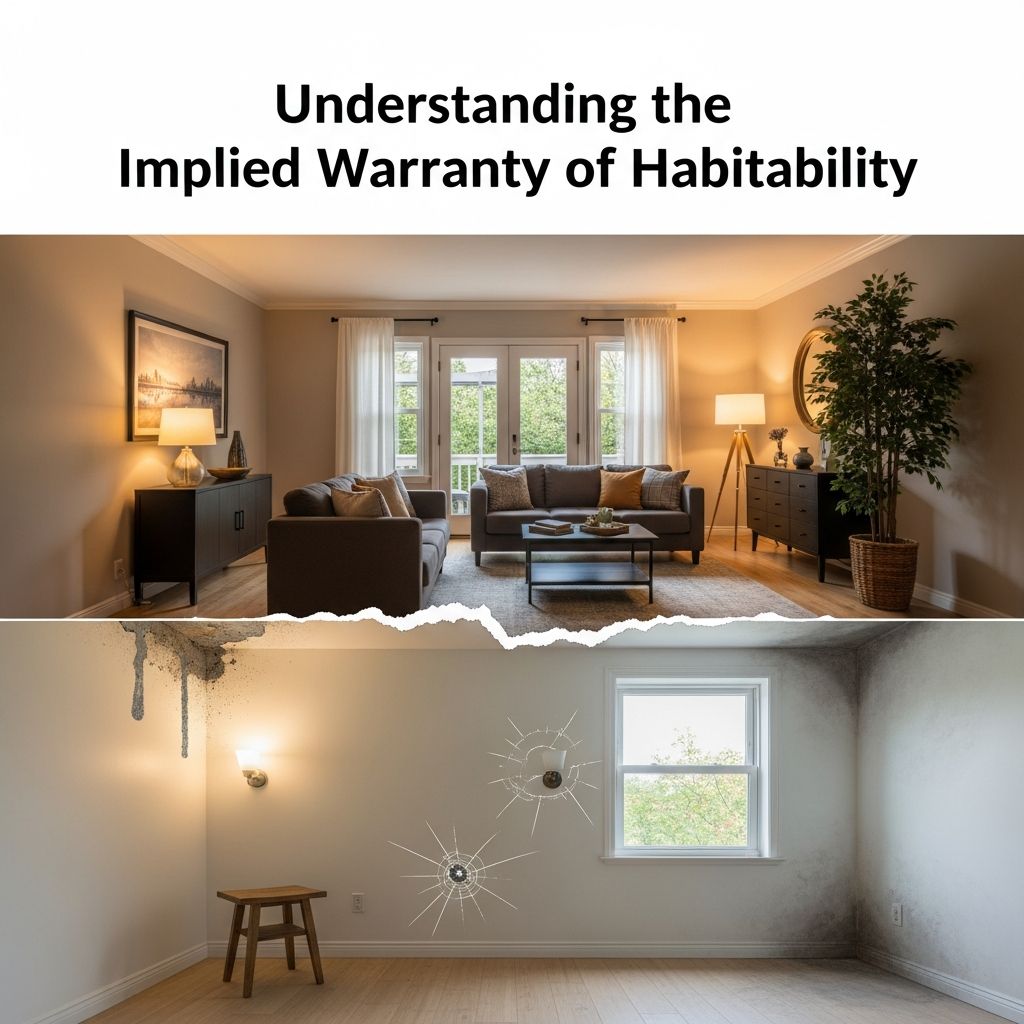
The implied warranty of habitability is a legal rule in most U.S. states that requires residential landlords to provide and maintain rental housing that is safe, sanitary, and fit to live in, even if the lease never mentions these duties. It is “implied” because the obligation automatically attaches to most residential rental agreements by law, not by contract wording.
This guide explains what habitability means, which conditions typically violate the warranty, what both tenants and landlords must do when issues arise, and what remedies may be available under state law.
What Is the Implied Warranty of Habitability?
In modern landlord-tenant law, courts and legislatures have moved away from the old view that tenants “took the property as they found it.” Instead, most states recognize that residential leases are primarily about providing housing services, not just land, and therefore landlords must meet minimum livability standards during the tenancy.
Although details differ by state, the implied warranty of habitability usually means:
- Landlords must provide a rental unit that is safe, sanitary, and fit for human habitation at move-in.
- Landlords must keep the unit habitable throughout the lease by performing necessary repairs within a reasonable time after notice.
- The warranty generally cannot be waived or disclaimed in a lease for residential property.
- Serious defects affecting health or safety trigger legal remedies, while minor cosmetic issues typically do not.
Many states codify this duty in statutes or building codes, while others recognize it primarily through court decisions. State and local housing codes are often used as the baseline for what conditions are considered “habitable.”
Key Features of the Warranty
| Feature | Typical Rule in Many States |
|---|---|
| Applies Automatically | Applies to most residential leases without needing to be written into the contract. |
| Non-Waivable in Leases | Lease clauses that try to waive habitability obligations are usually unenforceable. |
| Focus on Health & Safety | Covers serious conditions that threaten health, safety, or basic shelter, not minor inconvenience or appearance. |
| Ongoing Duty | Landlord must maintain habitability throughout the tenancy, not just at move-in. |
| State-Specific Rules | Exact standards, timelines, and remedies differ by state statute and local code. |
What Does “Habitable” Generally Mean?
Although phrasing differs, a unit is normally considered “fit for human habitation” if it is free from serious conditions that present a substantial risk of harm to the occupants’ health or safety, or that threaten basic shelter if not corrected promptly. Many states and cities use housing or building codes to define these minimum standards.
Examples of elements that are commonly required include:
- Weatherproofing and structure
- Roof and walls that keep out rain and snow.
- Floors, stairs, and railings that are sound and not at risk of collapse.
- Windows and doors that close and lock where required, providing security.
- Essential utilities
- Safe, functioning plumbing with running water and adequate hot water.
- Reasonably safe electrical service and lighting.
- Heat in cold seasons where needed for health and safety, and sometimes cooling where required by law or local code.
- Sanitation and infestation control
- Working sewage or septic systems without leaks or backups.
- Absence of serious rodent or insect infestations that pose health risks.
- Garbage containers and rubbish removal where required by statute.
- Safety protections
- Locks on exterior doors and appropriate window security.
- Smoke detectors and, where required, other safety devices installed and maintained according to code.
- Correction of known fire hazards or exposed wiring.
- Hazard-free environment
- No hazardous levels of toxic substances such as lead-based paint or friable asbestos, where regulated.
- Timely remediation of significant mold growth affecting health, where covered by statute or code.
Minor issues like worn carpet, chipped paint, or outdated appliances rarely rise to the level of a habitability violation unless they create a genuine safety risk.
Common Conditions That May Breach Habitability
Exact rules vary by jurisdiction, but the following problems are frequently cited by courts or state agencies as examples of conditions that may violate the warranty:
- Loss of essential utilities
- No running water, or no hot water for long periods.
- No functioning heat in winter or in climates where heat is necessary for health.
- Extended loss of electricity due to unsafe wiring or landlord inaction (not a wider power outage).
- Serious structural or safety hazards
- Collapsing ceilings, dangerous stairways, or broken railings.
- Broken exterior doors that cannot lock, creating security risks.
- Significant roof leaks that damage the unit and create unsafe conditions.
- Unsanitary or dangerous conditions
- Raw sewage backups or longstanding plumbing failures.
- Serious rodent, roach, or bedbug infestations that are not promptly addressed.
- Standing water, pervasive mold, or severe dampness linked to building defects.
- Code violations tied to health or safety
- Failure to provide required smoke alarms or other legally mandated safety devices.
- Persistent code violations documented by local inspectors that involve fire, structural, or serious health risks.
By contrast, issues that usually do not amount to a breach (by themselves) include:
- Peeling paint, stained but intact flooring, or cosmetic wall damage.
- Small cracks, worn fixtures, or minor appliance issues that do not affect basic health or safety.
- Short delays in repair when the landlord is actively working to fix the problem within a reasonable time frame.
Tenant Responsibilities Under Habitability Rules
The warranty of habitability does not relieve tenants of all responsibilities. Tenants generally must:
- Use the premises reasonably
- Avoid damaging the property beyond normal wear and tear.
- Operate plumbing, electrical systems, and appliances in a normal, safe manner.
- Keep the unit reasonably clean
- Handle routine cleaning and minor upkeep inside their unit.
- Store trash properly if the landlord provides bins and pickup.
- Promptly notify the landlord of serious problems
- Report dangerous or serious conditions as soon as they notice them, generally in writing.
- Allow reasonable access for inspections and repairs once notice is given (with proper advance notice from the landlord, where required by law).
If a tenant’s own misconduct or neglect causes the damage—such as intentionally breaking plumbing fixtures—the landlord’s duty under the warranty may not apply to that particular condition.
How Tenants Should Report Habitability Problems
Notice to the landlord is a critical step in many states before serious remedies, such as rent withholding, are available. While laws differ, these practices are commonly recommended:
- Document the problem
- Take dated photos or videos of the condition.
- Keep records of how long the issue has existed and its impact (e.g., no heat, illness, unusable rooms).
- Provide written notice
- Describe the defect specifically (e.g., “no hot water since January 1” rather than “plumbing problem”).
- Send a dated letter, email, or other form allowed by state law; some states suggest or require certified mail.
- Allow reasonable time to repair
- State law may specify time frames (for example, days for urgent utilities vs. longer for non-emergency repairs).
- Emergencies like complete loss of heat in freezing conditions may require more rapid action than non-urgent issues.
- Consider contacting local housing authorities
- Some jurisdictions allow or encourage tenants to contact code enforcement for inspection and written violation notices.
Tenants should keep copies of all notices sent, responses received, and any inspection reports. These records can be important if a dispute ends up in court or an administrative hearing.
Landlord Obligations When Notified of Serious Defects
Once a landlord has notice of a condition that may affect habitability, they generally must:
- Investigate promptly to evaluate the seriousness of the defect.
- Arrange appropriate repairs within a reasonable time considering the urgency and complexity of the issue.
- Comply with housing and building codes that apply to the property, including required permits and licensed professionals where needed.
- Communicate with the tenant about repair scheduling and needed access to the unit.
In some jurisdictions, landlords must also provide temporary alternative housing or partial rent reductions during major repairs, depending on the extent of the disruption and state law.
Possible Tenant Remedies When Habitability Is Breached
The remedies available to a tenant when the warranty of habitability is violated depend heavily on state or local law. Common remedies recognized in many jurisdictions include:
- Rent abatement (reduction)
- Courts may reduce the rent owed for periods when the unit was partially or fully uninhabitable.
- The reduction often reflects the diminished value of the unit in its defective condition.
- Repair and deduct
- Some states allow tenants, under strict conditions, to pay for certain critical repairs themselves after notice and then deduct the reasonable cost from rent.
- Tenants must follow statutory procedures carefully where this remedy exists.
- Rent withholding
- In some jurisdictions, tenants may withhold rent payments when the landlord refuses to fix serious defects after proper notice, often by paying into court or an escrow account.
- Improper withholding can lead to eviction, so tenants should seek legal advice before using this remedy.
- Termination of the lease
- If conditions are severe and ongoing, the tenant may have the right to move out and end the lease without penalty.
- State laws typically require clear notice and sometimes an opportunity to cure before termination is justified.
- Damages
- Tenants may sue for money damages related to the breach, such as costs of alternative housing, property damage, or in some cases consequential harm.
- In documented cases, tenants use building code violations and expert testimony to prove the extent of the harm.
Because the legal consequences and correct procedures vary, tenants should check their state’s specific rules or consult a qualified housing attorney before choosing a remedy.
Habitability vs. Minor Disputes: Drawing the Line
Not every disagreement between a tenant and landlord involves habitability. Issues like repainting preferences, upgrades to amenities, or small cosmetic flaws usually fall outside the implied warranty.
When deciding whether a problem is serious enough to implicate habitability, consider:
- Health impact: Does the condition pose an actual or potential risk to health (e.g., mold, contaminated water, infestations)?
- Safety risk: Could someone reasonably be injured (e.g., unsafe stairs, exposed electrical wiring, broken entry locks)?
- Basic shelter: Does the problem interfere with fundamental shelter (e.g., extensive leaks, no heat, failing structure)?
- Duration and severity: Is it a brief inconvenience or a persistent serious problem over days, weeks, or months?
- Code violations: Has a housing inspector or agency documented formal violations relating to the condition?
If the issue does not materially affect health, safety, or basic livability, it may still be a legitimate maintenance concern, but not necessarily a breach of habitability.
Special Considerations and Limitations
Two additional points often matter in habitability disputes:
- Type of property
- Some states limit the implied warranty to traditional residential dwellings and exclude certain types of temporary or specialized housing such as hotels or certain recreational facilities.
- Mobile homes, condominiums, and rooming houses may have special rules under state law.
- Contract vs. statutory rights
- Even if the lease is silent, statutory and regulatory standards still apply.
- Any lease clause conflicting with mandatory housing standards is often void or overridden by statute.
Tenants and landlords should check local ordinances as well as statewide statutes, because many cities set more detailed safety and housing requirements than state law alone.
Frequently Asked Questions (FAQs)
Q: Does the implied warranty of habitability exist in every state?
A: Most U.S. states recognize some form of implied warranty of habitability for residential rentals, either through statutes, court decisions, or both. However, the scope, procedures, and remedies differ by jurisdiction, so local law should always be checked.
Q: Can a lease agreement waive the tenant’s right to a habitable home?
A: In many states, no. Courts and legislatures often treat the warranty of habitability as a non-waivable right, meaning lease clauses that attempt to excuse the landlord from providing basic habitability are usually unenforceable.
Q: If my landlord refuses to fix serious problems, can I stop paying rent?
A: Some states allow rent withholding under strict conditions, such as after proper written notice and where serious defects persist. Because wrongful withholding can lead to eviction, tenants should get legal advice and carefully follow state-specific procedures.
Q: What is the difference between a maintenance issue and a habitability issue?
A: Maintenance issues can include minor or cosmetic problems that do not significantly affect health, safety, or the basic use of the home (for example, chipped paint or a single broken cabinet door). Habitability issues involve serious risks such as lack of heat, sewage leaks, major structural failures, or dangerous infestations that make the dwelling unsafe or unfit to live in.
Q: Should I call code enforcement if my landlord ignores my complaints?
A: In many jurisdictions, contacting local housing or building inspectors is an option when serious health and safety problems remain unresolved. Inspectors may issue written violation notices that can support a habitability claim and sometimes require the landlord to make repairs. Tenants should keep copies of inspection reports.
References
- Know Your Rights: Habitability — California Department of Justice, Office of the Attorney General. 2022-03-01. https://oag.ca.gov/system/files/media/Know-Your-Rights-Habitability-English.pdf
- Warranty of Habitability — PALawHELP.org (Pennsylvania Legal Aid Network). 2021-06-15. https://www.palawhelp.org/resource/warranty-of-habitability
- Warranty of Habitability in Rental Housing — Maryland People’s Law Library. 2023-05-10. https://www.peoples-law.org/warranty-habitability-rental-housing
- Colorado Warranty of Habitability — Colorado Department of Health Care Policy & Financing. 2019-08-01. https://hcpf.colorado.gov/sites/hcpf/files/Attachment%205-Warranty%20of%20Habitability.pdf
- What is the Implied Warranty of Habitability? — McNeelyLaw LLP. 2022-01-20. https://www.mcneelylaw.com/what-is-the-implied-warranty-of-habitability/
- What is Florida Implied Warranty of Habitability? — Lopez Law Group. 2022-09-05. https://www.thelopezlawgroup.com/warranty-habitability-florida/
Similar Articles








Read full bio of Sneha Tete


