
Understanding How County Governments Operate
Learn how county governments are structured, what they do, and why they matter for everyday life in communities across the United States.
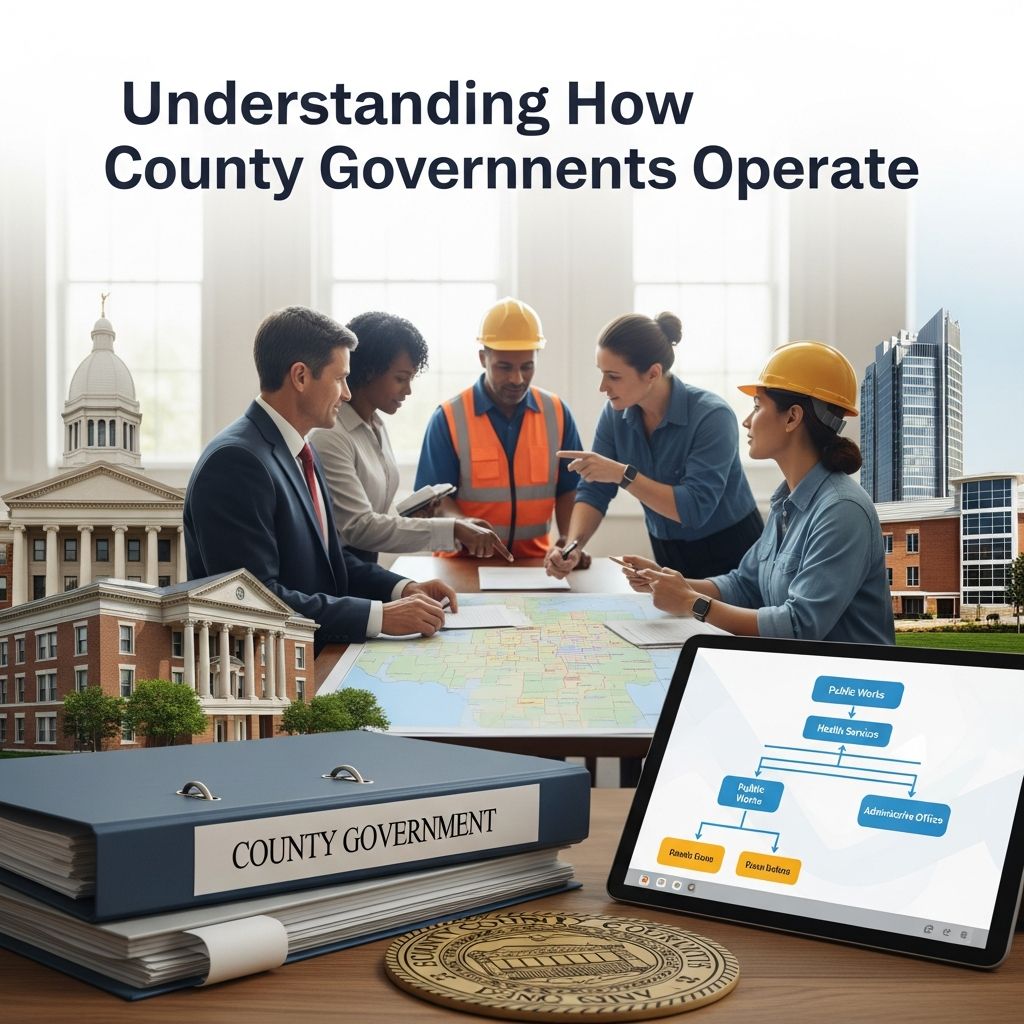
County governments are a core part of local democracy in the United States, sitting between city or town governments and the state. They manage courts, jails, elections, roads, and many of the services residents rely on every day, especially in areas outside incorporated cities. Yet for many people, counties are the least understood level of government.
This guide explains how county governments are organized, what they are responsible for, how they are funded, and how residents can engage with them.
What Is a County Government?
A county is a geographic and political subdivision of a state that serves as an administrative arm of the state and as a provider of local services. Counties exist in nearly every state, with more than 3,000 counties and county equivalents nationwide.
Counties play two major roles:
- Implementing state laws and programs such as running trial courts, recording property deeds, and administering state welfare programs.
- Delivering local services like road maintenance, law enforcement, public health, and elections, especially in unincorporated areas that do not have their own city government.
In incorporated areas (cities, towns, villages), municipal governments handle many day-to-day services, but counties still provide regional services such as courts, jails, and some health and social services.
Counties in the Local Government Landscape
In the U.S., local government is commonly divided into several types:
- Municipalities (cities, towns, villages) – provide dense local services like policing, zoning, and utilities inside their boundaries.
- Counties – cover larger geographic areas, often including multiple municipalities and rural zones.
- Townships – in some states, an additional layer below counties, especially in rural regions.
- Special districts – single-purpose units for services like schools, water, or transit.
Counties often govern unincorporated areas, where residents do not live in a city or town and therefore rely on the county as their primary local government.
Typical County Responsibilities
State law defines what counties must do and what they may choose to do. While the exact list varies by state, many counties share a common set of core functions.
Core, Often State-Mandated Functions
- Justice and public safety
- Operating trial courts and related judicial support services.
- Running county jails and detention facilities.
- Providing law enforcement through the elected sheriff in most states.
- Prosecuting crimes through the district attorney or state’s attorney.
- Property and records
- Recording deeds, mortgages, and liens.
- Maintaining vital records such as birth, death, and sometimes marriage records.
- Assessing property values for taxation and maintaining tax rolls.
- Elections administration
- Managing voter registration and maintaining voter lists.
- Organizing and running local, state, and federal elections.
- Public health and human services
- Operating local public health departments or clinics.
- Administering some state and federal health and social service programs.
Common Optional or Shared Services
Many counties also provide broader community services, especially where cities are small or absent.
- Building and maintaining county roads and bridges.
- Planning, zoning, and land-use regulation for unincorporated areas.
- Libraries, parks, and recreation facilities.
- Emergency medical services and fire protection (sometimes through special districts).
- Economic and workforce development programs.
- Environmental protection, solid waste, and water resource management.
Forms of County Government
Although every county has to comply with its state constitution and laws, the internal structure of county government can look very different from place to place. States typically authorize several basic forms of county organization.
| Form | Main Features | Who Runs Day-to-Day Operations? |
|---|---|---|
| Commission (Traditional) | Small elected board combines legislative and executive authority. | The elected commission or board collectively. |
| Council–Administrator | Elected council sets policy; professional administrator manages operations. | Appointed county administrator or manager, supervised by the council. |
| Council–Elected Executive | Clear separation between legislative council and independently elected executive. | Elected county executive who oversees departments and can often veto legislation. |
| Charter (Home Rule) | County adopts its own charter, customizing structures within state limits. | Depends on charter; may include an executive, manager, or both. |
Commission or Board System
The commission system is the oldest and still one of the most common forms of county government. Under this model:
- A small group of elected commissioners or supervisors serves as the main governing body.
- The board acts as both the legislative and executive authority, passing ordinances and directly overseeing departments.
- Chairs or committees of the board may supervise specific functional areas, such as public works or health.
Council–Administrator Model
The council–administrator form is designed to bring professional management into county operations:
- Voters elect a county council or board to set policies and adopt the budget.
- The council appoints a county administrator or manager, usually a trained public administrator, to oversee daily operations, personnel, and implementation of policies.
- The administrator can be removed by the council, which gives elected officials accountability over management.
Council–Elected Executive Model
In the council–elected executive model:
- Residents elect a separate county executive to head the executive branch.
- The council functions as the legislative body, passing local laws and approving the budget.
- The executive typically prepares the proposed budget, directs departments, and may have veto power over council ordinances, which can often be overridden by a supermajority.
This system mirrors the separation of powers seen at the state and federal levels.
Charter and Home Rule Counties
Some states allow counties to adopt a charter giving them “home rule” authority over their own structure and, in some cases, local policy choices.
- Home rule counties can usually customize their governing bodies, size of the board, and whether to have an executive or manager.
- Dillon’s Rule counties, by contrast, may exercise only those powers the state legislature has expressly granted.
- Many states use a mix: some counties operate under Dillon’s Rule, others under home rule charters.
Key County Officials and Their Roles
County governments involve both a central policy-making body and multiple elected or appointed officers responsible for specific functions.
Governing Board
The main county governing body goes by many names, such as board of supervisors, county commission, or county council. Despite the different titles, these bodies generally:
- Adopt the county budget and set fiscal priorities.
- Levy property taxes and approve other revenue measures as allowed by state law.
- Enact local ordinances that apply in unincorporated areas and to county-wide functions.
- Approve major contracts, infrastructure projects, and policy initiatives.
Independently Elected “Row” or Constitutional Officers
In many states, certain county functions are assigned to independently elected officers, sometimes called row officers or constitutional officers. Common examples include:
- Sheriff – typically the chief law enforcement officer and jail administrator.
- District Attorney/Prosecutor – prosecutes criminal cases on behalf of the state.
- Clerk or Recorder – manages official records, such as deeds, court records, and vital statistics.
- Treasurer or Tax Collector – receives and manages county funds and collects certain taxes or fees.
- Coroner or Medical Examiner – investigates certain deaths within the county.
Because these offices are elected, they may operate with a degree of independence from the county board, even though they depend on the board for funding.
County Authority and Home Rule Powers
How much power a county has is largely a question of state law. Two widely discussed frameworks are Dillon’s Rule and Home Rule.
- Dillon’s Rule
- Counties may exercise only powers explicitly granted by the state legislature, plus those necessarily implied or essential to those powers.
- This model emphasizes that counties are creatures of the state.
- Home Rule
- Counties with home rule charters have wider autonomy to manage local affairs, so long as they do not conflict with state or federal law.
- States may grant home rule in several domains:
- Structural – flexibility in choosing governmental form and internal organization.
- Functional – authority to provide optional services without special state permission.
- Fiscal – some control over local revenues, borrowing, and service districts, within state-imposed limits.
How Counties Pay for Services
County governments finance their operations through a mix of local revenue and funding from state and federal sources. The exact mix depends heavily on state law.
Main Revenue Sources
- Property taxes – often the single largest local revenue source; county assessors determine property values and boards adopt tax rates within state caps.
- Sales and other local taxes – authorized in some states and often subject to voter approval.
- Fees and charges – for services such as permits, records, solid waste, or parks.
- Intergovernmental aid – state and federal funds passed through to counties for health, transportation, and social services programs.
- Debt financing – issuing bonds for long-term capital projects, such as courthouses or road improvements, subject to state debt limitations.
Major Spending Areas
On the spending side, counties commonly devote large portions of their budgets to:
- Public safety (sheriff, jails, emergency services).
- Courts and legal systems.
- Health and human services.
- Transportation and infrastructure.
- General government and administration.
Why County Government Matters to Residents
Although counties often receive less attention than state or federal governments, their decisions have direct and visible consequences for residents’ lives.
- The condition of local roads and bridges.
- The speed and fairness of court processes.
- The availability of public health clinics and emergency response.
- How elections are run and ballots are counted.
- How land is developed in unincorporated communities.
Because county boards and officers are usually elected in relatively low-turnout contests, informed participation by residents can significantly influence local priorities.
How to Engage With Your County Government
Residents who understand how counties work are better prepared to influence decisions and hold officials accountable. Common ways to get involved include:
- Attending county board meetings and public hearings on budgets, land use, and major policy changes.
- Serving on advisory boards or commissions related to topics like planning, health, or parks.
- Contacting county commissioners, supervisors, or council members about local concerns.
- Participating in county elections for commissioners, sheriffs, prosecutors, and other offices.
- Reviewing county budgets and audit reports that are typically published online.
Frequently Asked Questions About County Governments
Q1: Do all states have county governments?
Most states use counties or county-equivalent governments, but there are a few exceptions and variations. For example, some states use boroughs or parishes instead of counties, and a small number of independent cities operate outside any county structure.
Q2: How is a county different from a city?
A city is a municipal corporation created to govern a specific urban area, while a county is a larger regional unit of state government that may encompass several cities and rural areas. Cities typically handle more localized services like zoning within city limits, whereas counties manage regional services and unincorporated areas.
Q3: Who is the top official in a county?
The top official depends on the county’s form of government. In some counties, the chair of the commission or board is the highest-ranking official. In others, voters elect a separate county executive who serves as the chief administrator, while the board or council serves as the legislative body.
Q4: What is an unincorporated area, and who governs it?
An unincorporated area is territory within a county that is not part of any city or town. Residents in these areas rely on the county for many local services and for land-use decisions, since there is no municipal government for that territory.
Q5: How can I find out which services my county provides?
Most counties maintain official websites listing departments, services, and contact information. State-level resources and associations of counties also provide overviews of county responsibilities and structures.
References
- County structure, authority and finances — National Association of Counties (NACo). 2024-03-01. https://www.naco.org/page/county-structure-authority-and-finances
- America’s County Governments: A Short Primer on Our Nation’s Counties — National Association of Counties (NACo). 2024-03-01. https://www.naco.org/sites/default/files/2024-03/2024%20County%20Government%20Primer_v20_FINAL.pdf
- County Government Organization — New York State Department of State. 2018-01-01. https://video.dos.ny.gov/lg/handbook/html/county_government.html
- County Government Structure — Maryland Association of Counties (MACo). 2023-01-01. https://mdcounties.org/152/County-Government-Structure
- Roles of City, County, State and Federal Governments — City of San Luis Obispo. 2022-06-01. https://www.slocity.org/government/roles-of-city-county-state-and-federal-governments
Similar Articles








Read full bio of medha deb


