
Understanding Hostile Witnesses in Court
Demystifying hostile witnesses: definitions, legal handling, real-world examples, and strategic courtroom impacts.
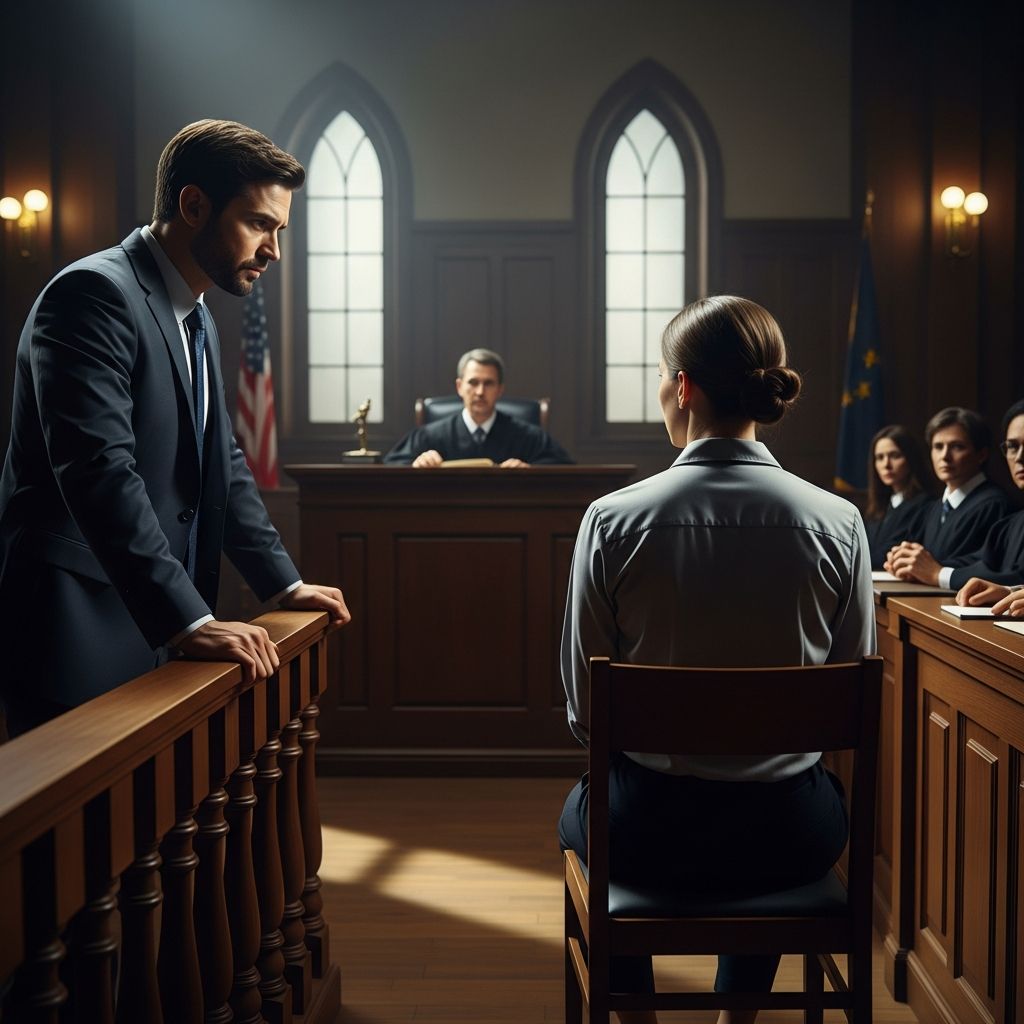
In the high-stakes environment of courtroom trials, witnesses play a pivotal role in shaping outcomes. However, not all testimony unfolds as anticipated. A hostile witness emerges when someone summoned by one side delivers responses that undermine their own case, introducing complexity and requiring swift judicial intervention. This phenomenon, rooted in common law traditions, allows for exceptional procedural adjustments to ensure fairness and truth-seeking.
Defining the Hostile or Adverse Witness
A hostile witness, sometimes termed an adverse or unfavorable witness, is an individual called to testify by a party—typically the prosecution or plaintiff—whose direct examination reveals antagonism or contradiction to that party’s position. Unlike cooperative witnesses who align with expectations, these individuals may exhibit bias, forgetfulness, or deliberate evasion, prompting the calling attorney to seek special permissions from the judge.
The threshold for hostility isn’t mere inconsistency; it demands evidence of unwillingness to provide truthful testimony. Judges assess demeanor, prior statements, and overall conduct before granting status. Once declared, this shifts the interrogation dynamic significantly.
- Key Indicators: Open hostility, prior inconsistent statements, alignment with opposing interests.
- Not Hostile: Simple memory lapses or minor discrepancies without intent to deceive.
The Declaration Process: Step-by-Step
Declaring a witness hostile follows a structured protocol to prevent abuse. During direct examination, if testimony veers adversely, the attorney requests the court’s intervention. The judge evaluates:
- Review of prior consistent statements (e.g., police reports or depositions).
- Witness demeanor and responsiveness.
- Potential prejudice to the calling party’s case.
Upon approval, the witness is treated as if called by the opposition, enabling leading questions—those suggesting answers or challenging credibility. This exception to Federal Rules of Evidence Rule 611(c) balances trial equity.
| Standard Direct Exam | Hostile Witness Exam |
|---|---|
| Open-ended questions only | Leading questions permitted |
| No impeachment by caller | Cross-examination style allowed |
| Aimed at narrative development | Focus on contradiction resolution |
Strategic Handling in Criminal and Civil Trials
In criminal defense, hostile witnesses often arise from reluctant victims, intimidated informants, or recanting eyewitnesses. Prosecutors may call them expecting support, only to face reversals due to fear, coercion, or changed loyalties. Defense attorneys, conversely, presume hostility in cross-examination without declaration.
Civil litigation sees similar dynamics in contract disputes or personal injury claims, where expert or fact witnesses pivot unexpectedly. Attorneys employ psychological tactics, drawing from Gestalt principles to reframe perceptions and utility theory to predict responses, integrating these into trial strategy.
Pretrial preparation mitigates risks: thorough witness interviews, recorded statements, and contingency planning are essential. In gang-related or high-threat cases, protections like anonymity or relocation influence testimony reliability.
Role of Prior Inconsistent Statements
Central to managing hostility are prior inconsistent statements. Under rules like U.S. Federal Evidence Rule 613, these can impeach credibility without automatic truth admission. The process mandates:
Showing the statement to the witness, inquiring about its making, then confronting discrepancies.
If conditions align—such as the statement being under oath or against interest—it may gain substantive evidentiary weight, read to the jury for consideration. This tool underscores preparation’s value, transforming potential liabilities into credibility undermines.
International Perspectives on Witness Hostility
While U.S. practice emphasizes judicial discretion, global variants adapt the concept. In Australia, New South Wales’ Evidence Act Section 38 defines ‘unfavorable witnesses,’ allowing prosecution cross-examination on inconsistent prior statements after court leave.
Trinidad and Tobago’s Evidence Act Sections 5 and 15 mirror English common law, requiring proof of non-truthfulness intent. Judges assess attitude before permitting cross-examination, as refined in cases like Norbert Aaron v The State (2022), updating procedures from Jashier Daniel (2013). These frameworks highlight shared goals amid procedural nuances.
- U.S.: Judge declares ‘hostile’; leading questions on direct.
- Australia: ‘Unfavorable’ via statute; leave required.
- Caribbean: Adverse proof; prior statements for impeachment/substantive use.
Challenges and Behavioral Dynamics
Hostile witnesses display confrontational, evasive, or uncooperative traits, complicating fact-finding. Reasons include:
- Fear of reprisal in violent crime trials.
- Changed personal stakes post-statement.
- Subtle pressures from opposing parties.
Attorneys counter via adaptive questioning, avoiding aggression that alienates juries. Video depositions and expert testimony on recantation patterns bolster arguments. Delays in trials exacerbate reluctance, as seen in protracted prosecutions.
Landmark Cases Illustrating Impact
U.S. jurisprudence, like United States v. Ince, affirms leading questions’ propriety post-declaration. Internationally, Trinidad’s appellate rulings stress procedural rigor, ensuring hostility claims don’t erode due process.
These precedents guide modern practice, emphasizing judicial gatekeeping against strategic witness calls solely for impeachment.
Frequently Asked Questions About Hostile Witnesses
Can any inconsistent witness be declared hostile?
No. Courts require demonstrated intent not to tell the truth, beyond forgetfulness or minor errors.
What questions are allowed after declaration?
Leading questions, suggesting answers or impeaching, akin to cross-examination.
Does a prior statement become fact if inconsistent?
Not automatically; it impeaches credibility unless qualifying as substantive evidence under specific rules.
How common are hostile witnesses in criminal trials?
Frequent in cases with vulnerable witnesses, like domestic violence or organized crime, due to intimidation risks.
Can defense attorneys declare prosecution witnesses hostile?
Typically no, as cross-examination presumes hostility; declaration applies to one’s own witnesses.
Implications for Justice and Trial Fairness
Hostile witness rules safeguard against sandbagging—calling witnesses prematurely for impeachment—while enabling truth extraction. They demand meticulous preparation, underscoring trials’ unpredictability. For observers, they reveal law’s adaptability to human frailties, ensuring juries receive reliable narratives despite testimony twists.
Understanding these mechanics empowers attorneys, judges, and citizens, fostering informed engagement with legal processes.
References
- Hostile Witness: Understanding Legal Definitions and Implications — USLegalForms. Accessed 2026. https://legal-resources.uslegalforms.com/h/hostile-witness
- Hostile witness — Wikipedia. Accessed 2026. https://en.wikipedia.org/wiki/Hostile_witness
- Hostile Witnesses in Criminal Trials — Legal Affairs Attire Association of Trinidad and Tobago. Accessed 2026. https://laaa.org.tt/hostile-witnesses-in-criminal-trials
- What Does Hostile Witness Mean? – CountyOffice.org — YouTube (County Office Law). 2025-02-08. https://www.youtube.com/watch?v=82PEWw1Z7bQ
- hostile witness – Legal Dictionary — Law.com. Accessed 2026. https://dictionary.law.com/Default.aspx?selected=884
Similar Articles








Read full bio of Sneha Tete


