
Hawaii OVUII Laws In 2025: Key Rules, Penalties, And Rights
A clear, practical guide to Hawaii’s DUI and OVUII rules, penalties, and legal process for drivers, visitors, and families.
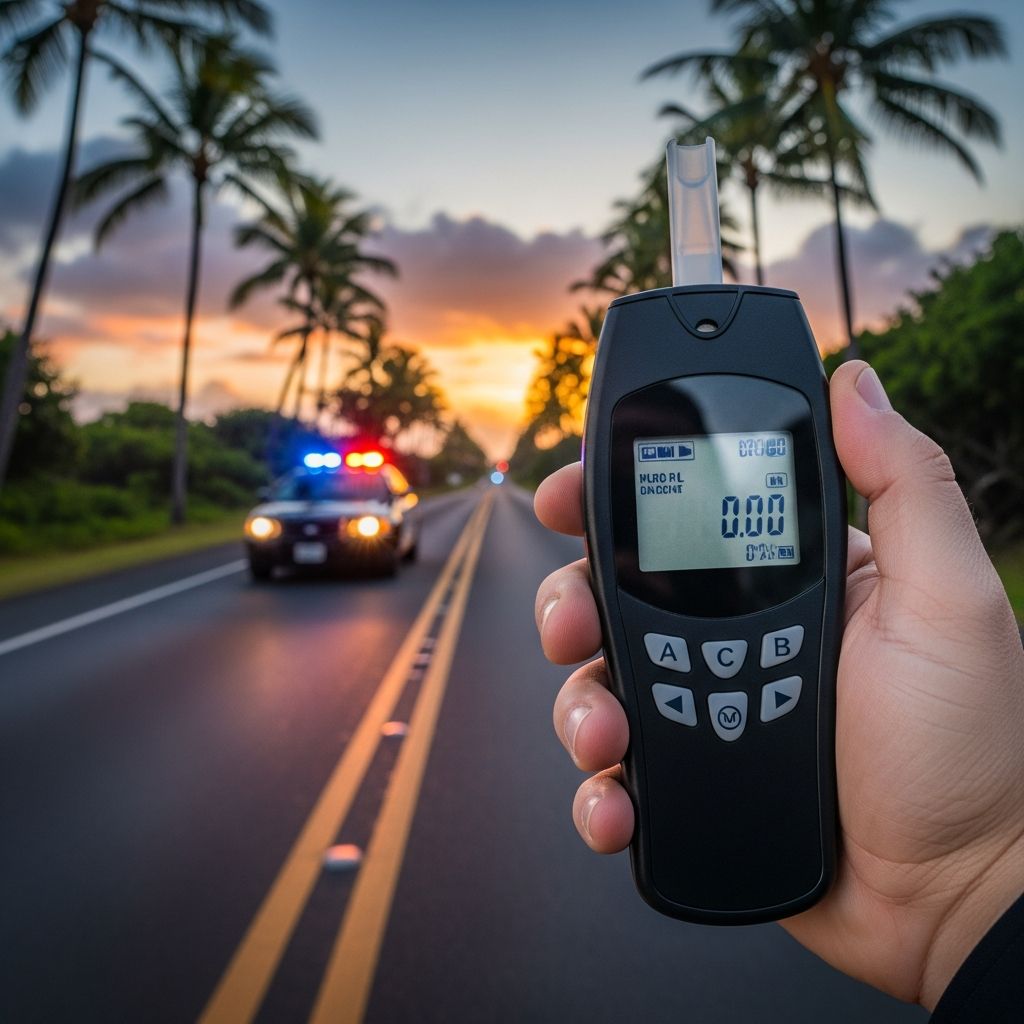
Hawaii treats impaired driving as a serious public safety issue. The state’s drunk and drugged driving laws are often referred to as OVUII — operating a vehicle under the influence of an intoxicant — and they impose criminal penalties, license consequences, and treatment requirements on those who are convicted. To navigate these rules effectively, it helps to understand how Hawaii defines impairment, how blood alcohol concentration (BAC) limits work, and what happens after an arrest.
Key Terms and Legal Definitions
Hawaii law does not rely on the term “DUI” alone. Instead, state statutes and law enforcement agencies use more precise language to describe impaired driving offenses.
- OVUII (Operating a Vehicle Under the Influence of an Intoxicant): The primary criminal charge for drunk or drugged driving in Hawaii. It applies when a person operates or is in actual physical control of a vehicle on a public road while impaired by alcohol or drugs.
- Actual physical control: A driver may be charged even if the vehicle is not moving, so long as the person has the immediate ability to operate it (for example, seated in the driver’s seat with the keys present).
- Intoxicant: Includes alcohol, illegal drugs, prescription medications, or other substances that affect a driver’s ability to operate safely.
- Habitual OVUII offender: A driver with multiple prior OVUII convictions or related alcohol enforcement actions within a specified period; this status can elevate penalties substantially.
How Hawaii Proves an OVUII Offense
Law enforcement and prosecutors in Hawaii can rely on two main paths to prove that a driver violated impaired driving laws.
- Per se BAC violation: A driver is over the legal limit based on chemical test results.
- Impairment-based violation: The driver is under the influence to the extent that their ability to operate the vehicle is diminished, regardless of the measured BAC.
Both routes can lead to a conviction, and the same incident can involve evidence of each type.
Standard BAC Limits in Hawaii
Hawaii follows widely adopted per se limits for alcohol in the bloodstream, with stricter thresholds for commercial and underage drivers.
- General adult drivers: BAC of 0.08% or higher is unlawful.
- Commercial drivers: BAC of 0.04% or higher while operating a commercial motor vehicle can trigger OVUII charges and professional licensing consequences.
- Drivers under 21: Any measurable amount of alcohol is prohibited under Hawaii’s zero-tolerance laws.
In addition to alcohol, Hawaii’s OVUII law applies to drugs and combinations of drugs and alcohol that impair driving ability.
Implied Consent and Chemical Testing
Like most states, Hawaii uses an implied consent system for drivers on public roads. By driving, you are deemed to have consented to certain chemical tests if lawfully arrested for impaired driving.
Types of Chemical Tests
After an OVUII arrest, law enforcement may request one or more of the following tests to detect alcohol or drugs:
- Breath tests: Common in roadside or station environments to estimate BAC.
- Blood tests: Often used when drug impairment is suspected or when breath testing is impractical.
- Urine tests: May be used as an alternative or supplemental method in some cases.
Refusing a Chemical Test
Refusal to submit to a requested test can lead to separate administrative penalties, regardless of whether a criminal conviction occurs.
- Officers may seize the driver’s physical license and issue a temporary driving permit.
- Administrative license revocation periods for refusals are typically longer than for drivers who take and fail the test.
- Refusal can also be used as evidence in the criminal case in some circumstances, depending on how the arrest and advisements were handled.
These consequences often motivate drivers to comply with test requests, but each case involves specific legal and factual issues that can be reviewed by counsel.
Criminal Penalties for OVUII Convictions
Hawaii classifies most first and second impaired driving offenses without injury as misdemeanors, with increasing penalties for repeat and aggravated violations. Penalties typically combine jail time or community service, fines, license revocation, and treatment requirements.
| Offense Level | Typical Criminal Classification | Core Penalty Features (Approximate) |
|---|---|---|
| First OVUII (no prior in recent period) | Misdemeanor or petty misdemeanor | Possible jail or community service, fines, license revocation, education/treatment, ignition interlock eligibility. |
| Second OVUII (prior within lookback period) | Misdemeanor | Increased jail time, higher fines, longer revocation, mandated treatment. |
| Habitual OVUII / multiple priors | Elevated offense (often felony-level) | Potential prison, multi-year revocation, substantial fines, vehicle forfeiture. |
| OVUII involving injury or death | Felony | Significantly higher incarceration exposure, lengthy revocation, restitution, and other sanctions. |
First-Offense OVUII: What to Expect
A first OVUII conviction — where there has been no prior within the statutory lookback period — usually results in a mix of punishment and rehabilitation requirements.
- Short jail term or a set number of community service hours.
- Monetary fines and mandatory surcharges.
- License revocation, often for around one year, with possible ignition interlock privileges.
- Completion of an alcohol or substance abuse assessment.
- Attendance at a state-approved education or treatment program.
Even at the first-offense level, courts may impose additional conditions such as continuous alcohol monitoring, especially when aggravating factors are present.
Penalties for Repeat OVUII Offenses
Penalties increase with each additional impaired driving conviction within the relevant lookback period.
- Second offense: Longer jail time, higher fines, multi-year license revocation, and intensive treatment requirements.
- Habitual offender / multiple priors: Potential for felony-level penalties, including years of imprisonment, steep fines, long-term revocation (often three to five years), and possible vehicle forfeiture.
The National Conference of State Legislatures notes that in Hawaii and many other states, third and subsequent drunk driving offenses or those involving injury are typically treated as more serious crimes than earlier, non-injury offenses.
License Revocation and Administrative Consequences
A Hawaii impaired driving case often involves two overlapping processes: the criminal court case and an administrative license revocation proceeding. These are related but distinct, and a driver can face license loss even if the criminal charges are reduced or dismissed.
Typical Revocation Durations
- First OVUII conviction: Around one year of license revocation in many cases.
- Second conviction: Approximately two to three years of revocation.
- Habitual OVUII: Often three to five years of revocation, depending on prior history.
Separate from criminal penalties, refusal of a chemical test or failing a test above the legal limit can also trigger administrative suspensions, sometimes with longer periods for refusals than for failed tests.
Ignition Interlock and Restricted Licenses
Hawaii may allow some drivers whose licenses have been revoked to operate vehicles equipped with an ignition interlock device (IID), a breath-testing unit installed in the vehicle that prevents the engine from starting if alcohol is detected.
- IIDs are commonly available to first-time offenders who meet eligibility requirements.
- Costs associated with installation, monitoring, and removal are generally the driver’s responsibility.
- Court orders or administrative rules may require IIDs as a condition for regaining driving privileges.
Special Rules for Underage and Commercial Drivers
Hawaii applies stricter standards to two categories of drivers: those under the legal drinking age and those operating commercial motor vehicles. These rules reflect heightened public safety concerns.
Underage (Under 21) Zero-Tolerance Laws
Drivers under age 21 are prohibited from driving with any measurable amount of alcohol in their system.
- Even a BAC below 0.08% can result in penalties when the driver is under 21.
- Sanctions may include license suspension that escalates with repeat offenses, community service hours, mandatory substance abuse evaluation, and fines.
- For repeated violations, suspension periods can extend to one or two years, with limited or no opportunity for restricted licenses.
Commercial Motor Vehicle Operators
Commercial drivers are held to a lower per se BAC standard — typically 0.04% — when operating a commercial vehicle.
- An OVUII conviction can affect both the standard driver’s license and the commercial driver’s license (CDL).
- Federal and state regulations may require disqualification of CDL privileges for certain periods after an impaired driving offense.
- Repeat or aggravated violations can result in long-term or lifetime CDL disqualification, depending on the circumstances.
Aggravating Factors and Enhanced Penalties
Several circumstances can increase the severity of an OVUII sentence beyond the basic ranges described above.
- Very high BAC: Some Hawaii laws and policies treat BAC levels significantly above the legal limit (for example, 0.15% or higher) as aggravating, leading to harsher license revocations or sentencing conditions.
- Minor passengers: A first or second OVUII with a passenger under age 15 can trigger additional fines and mandatory jail time.
- Crashes causing injury or death: These incidents may lead to felony charges, restitution orders, and much longer imprisonment and revocation periods.
- Multiple prior convictions: As priors accumulate, courts are more likely to impose incarceration and extended supervision.
Court-Ordered Treatment and DWI Courts
Hawaii’s response to impaired driving increasingly emphasizes treatment and long-term behavior change, particularly for repeat offenders and individuals with substance use disorders.
Standard Assessment and Treatment
- Most offenders must undergo an alcohol or substance abuse assessment by a qualified provider.
- Treatment recommendations can include education classes, counseling, outpatient programs, or more intensive services.
- Completion of treatment may be a condition of probation, license reinstatement, or participation in specialized court programs.
Hawaii DWI Court Programs
The Hawaii State Judiciary operates specialized DWI (Driving While Impaired) Courts aimed at high-risk, high-need impaired drivers.
- DWI Courts combine judicial supervision, regular testing, and structured treatment in a single program.
- Participants attend frequent court hearings, undergo ongoing monitoring, and receive coordinated services designed to reduce recidivism.
- The goal is to promote long-term sobriety and safer roadways through intensive intervention, rather than relying solely on incarceration.
Practical Tips for Drivers in Hawaii
For residents and visitors alike, understanding Hawaii’s impaired driving framework can help prevent legal problems and improve safety.
- Plan ahead: Use taxis, rideshare services, designated drivers, or public transportation when drinking.
- Be aware of medication effects: Many prescription or over-the-counter drugs can impair driving, especially when combined with alcohol.
- Know that impairment can occur below 0.08%: Driver performance can decline even at lower BAC levels, which may still support an impairment-based charge.
- Understand the impact on your license: An OVUII arrest triggers not just criminal exposure but also separate administrative consequences for your driving privileges.
- Consider legal advice: Because OVUII cases involve complex procedural rules, timelines, and technical evidence, many drivers consult an attorney familiar with Hawaii traffic and criminal law.
Frequently Asked Questions About Hawaii DUI / OVUII
Q: Is OVUII in Hawaii the same as DUI in other states?
A: Functionally, yes. Hawaii uses the term “operating a vehicle under the influence of an intoxicant” instead of DUI or DWI, but the concept is similar — it is illegal to drive while impaired or over the legal BAC limit.
Q: Can I be convicted if my BAC is under 0.08%?
A: Yes. Prosecutors can pursue an impairment-based OVUII charge if evidence shows your ability to drive was diminished by alcohol or drugs, even if test results are below 0.08%.
Q: What happens to my license if I refuse a breath or blood test?
A: Under Hawaii’s implied consent law, refusal can trigger an immediate administrative process: your license may be seized, a temporary permit issued, and you may face a revocation period that is often longer than for failing a test.
Q: Are penalties different if I have a minor in the car?
A: Yes. Hawaii law imposes additional fines and mandatory jail time when a first or second OVUII offense involves a passenger under age 15, reflecting the increased risk to children.
Q: Do I have to complete treatment to get my license back?
A: In many cases, yes. Courts and administrative agencies often require completion of an assessment and any recommended treatment program as a condition of license reinstatement or participation in specialized programs such as DWI Court.
References
- Haw. Rev. Stat. §§ 291E-1, 291E-11, 291E-33, 291E-41, 291E-61, 291E-61.5, 291E-64 — Hawaii Revised Statutes (official state law). Accessed 2025. https://www.capitol.hawaii.gov/hrssearch/
- Hawaii’s DUI Laws and the Penalties for a Conviction — DrivingLaws.org (Nolo). Updated 2025. https://dui.drivinglaws.org/hawaii.php
- Hawaii DUI/OVUII Laws and Penalties — Nolo Press. 2024-06-01. https://www.nolo.com/legal-encyclopedia/hawaii-dui-dwi-33646.html
- Criminal Status of State Drunken Driving Laws — National Conference of State Legislatures (NCSL). 2023-10-16. https://www.ncsl.org/transportation/criminal-status-of-state-drunken-driving-laws
- Operating a Vehicle Under the Influence of an Intoxicant — Honolulu Police Department, Policy 4.18. 2023-02-01. https://www.honolulupd.org/policy/policy-operating-a-vehicle-under-the-influence-of-an-intoxicant/
- DWI (Driving While Impaired) Court — Hawaii State Judiciary. 2024-01-10. https://www.courts.state.hi.us/special_projects/dwi_court
- SB1285, 2025 Regular Session — Hawaii State Legislature. 2025-01-24. https://data.capitol.hawaii.gov/sessions/session2025/bills/SB1285_.HTM
Similar Articles








Read full bio of medha deb




