
Gag Orders In Court: Key Insights And Legal Limits
Explore how gag orders protect trials from prejudice while balancing First Amendment rights in high-stakes cases.
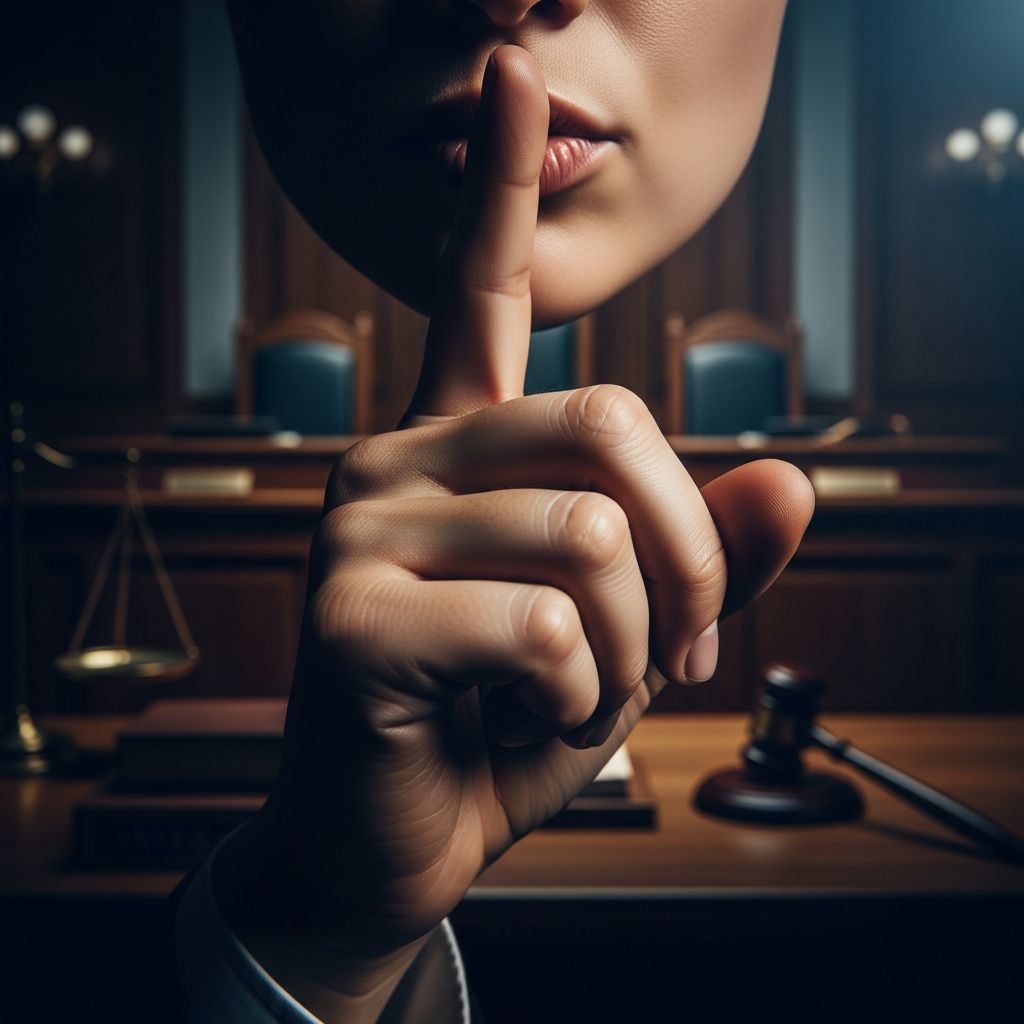
Gag orders serve as judicial tools to maintain the integrity of legal proceedings by limiting public discourse on sensitive cases. These directives prevent the spread of information that could bias jurors or compromise trial fairness.
Defining Gag Orders and Their Core Purpose
A gag order, also referred to as a non-dissemination order, is a judicial mandate that prohibits parties involved in a case from sharing specific details publicly. This includes attorneys, defendants, witnesses, and sometimes law enforcement or jurors. The primary aim is to shield the judicial process from external influences like media hype or prejudicial statements that might sway public opinion or potential jurors.
Courts issue these orders when there’s a substantial risk that unchecked commentary could undermine a fair trial. For instance, in high-profile criminal matters, sensationalized reports might taint jury pools, making it difficult to seat impartial jurors. By curbing extrajudicial statements, judges aim to preserve the defendant’s Sixth Amendment right to an unbiased jury.
Legal Foundations and Constitutional Boundaries
Gag orders represent a form of prior restraint on speech, which courts view with skepticism under the First Amendment. The U.S. Supreme Court has established that such restrictions are presumptively unconstitutional unless they pass strict scrutiny: there must be a compelling governmental interest, and the order must be narrowly tailored as the least restrictive means to achieve it.
The compelling interest typically revolves around ensuring a fair trial by averting prejudicial publicity. Judges must demonstrate a clear threat from specific publicity, that less intrusive alternatives like jury sequestration or careful voir dire are insufficient, and that the order targets only necessary speech. Broad orders silencing all discussion are rarer and harder to justify than narrow ones limiting particular facts.
Who Falls Under Gag Order Restrictions?
- Attorneys: Lawyers are frequent targets due to their influence; ethical rules like ABA Model Rule 3.6 already limit trial publicity, but court orders add teeth.
- Parties and Witnesses: Defendants, plaintiffs, and testifiers must refrain from media interactions to avoid self-incrimination risks or testimony tampering.
- Law Enforcement: Officers connected to the case are barred from commenting to prevent leaks that could influence investigations or trials.
- Jurors: Post-trial or during sequestration, jurors may face limits to protect deliberations.
- Media: Direct orders on press are almost always unconstitutional, though indirect effects occur via participant silence.
Distinguishing Types of Gag Orders
Gag orders vary in scope to match case needs. Narrow gag orders pinpoint sensitive details like witness identities or evidence specifics, allowing general case discussion. Broad gag orders, conversely, halt nearly all public statements when pervasive media coverage threatens trial integrity.
| Type | Description | Common Use Cases | Constitutional Hurdle |
|---|---|---|---|
| Narrow | Limits disclosure of particular facts | Protecting trade secrets, witness safety | Moderate; easier to justify |
| Broad | Prohibits most case-related comments | High-profile trials with intense scrutiny | High; requires strong evidence of harm |
This table illustrates how courts calibrate restrictions, prioritizing minimal speech interference.
Real-World Applications in Notable Cases
High-visibility trials often invoke gag orders. In the 2023 criminal proceedings involving former President Donald Trump, a judge imposed restrictions after inflammatory social media posts threatened witnesses and staff. The D.C. Circuit Court upheld a modified version, balancing free speech with courtroom safety, citing the need to prevent intimidation.
Similarly, during Joaquín ‘El Chapo’ Guzmán’s 2019 trial, orders shielded witnesses from cartel threats, ensuring testimony integrity. Harvey Weinstein’s 2020 case saw attorneys muzzled to curb media frenzy that risked juror bias. These examples highlight gag orders’ role in managing publicity storms without fully silencing participants.
Enforcement Mechanisms and Penalties
Violations trigger swift judicial responses. Courts hold offenders in contempt, imposing fines, incarceration, or both. Attorneys risk bar sanctions, including suspension or disbarment; for example, a 2018 political case lawyer paid $10,000 for breaching terms.
Severe breaches can force mistrials, derailing proceedings and wasting resources. In the 2007 Duke Lacrosse scandal, prosecutor Mike Nifong’s press violations contributed to his disbarment under ethical rules mirroring gag order principles. Repeat or egregious defiance may escalate to felony contempt charges.
Challenging and Appealing Gag Orders
Parties aggrieved by a gag order can seek immediate relief. Appeals courts review for First Amendment compliance, often narrowing or vacating overly expansive mandates. Challengers argue lack of compelling need, availability of alternatives like admonishing juries, or insufficient evidence of prejudice risk.
Success hinges on proving the order fails strict scrutiny. Media intervenors frequently join challenges, asserting public interest in open justice. Outcomes reinforce that gag orders must be precise surgical interventions, not blunt instruments.
Alternatives to Traditional Gag Orders
Courts prefer non-restrictive strategies first:
- Change of Venue: Relocate trials to less exposed areas.
- Jury Sequestration: Isolate jurors from media.
- Anonymous Juries: Conceal juror identities.
- Admonitions: Instruct jurors to ignore outside info.
- Sealed Proceedings: Close parts of trials to public view.
These options mitigate risks with less speech suppression, aligning with constitutional preferences.
Broader Implications for Justice and Speech
Gag orders embody the tension between fair trials and free expression. While essential for impartiality in sensational cases, overuse erodes public trust in courts. Critics argue they favor secrecy over transparency, potentially shielding misconduct. Proponents counter that without them, miscarriages like prejudice-driven verdicts rise.
Evolving media landscapes, including social platforms, complicate enforcement. Viral posts amplify risks, prompting judges to adapt orders dynamically. Ongoing Supreme Court guidance ensures gag orders evolve as safeguards, not suppressants.
Frequently Asked Questions (FAQs)
What triggers a judge to issue a gag order?
Judges act when public statements pose a high likelihood of biasing jurors, threatening witnesses, or exposing sensitive data, after exhausting milder measures.
Can the media be directly gagged?
Rarely; direct press restraints are typically unconstitutional. Orders target participants, indirectly limiting reportable info.
What are the worst consequences of violating one?
Contempt charges, fines, jail, mistrials, or professional ruin like attorney disbarment.
Do gag orders apply in civil cases?
Yes, especially where trade secrets or privacy matter, though criminal trials see more use.
How long do they last?
Usually until trial conclusion or verdict, sometimes extending through appeals if needed.
Navigating Gag Orders as a Legal Professional
Attorneys must tread carefully, consulting ethics rules and documenting compliance. Preemptive media strategies, like unified statements, can satisfy urges to communicate without breaching limits. Training on digital footprints is vital in the social media era.
For laypersons subpoenaed or charged, silence protects not just the case but personal liability. Seeking counsel early clarifies bounds.
References
- Gag Orders — Middle Tennessee State University Free Speech Center. 2023. https://firstamendment.mtsu.edu/article/gag-orders/
- What Is a Gag Order? Definition, Examples and More — Freedom Forum. 2023-10-12. https://www.freedomforum.org/what-is-a-gag-order/
- Gag Order: Understanding Its Legal Definition and Implications — US Legal Forms Legal Resources. 2024. https://legal-resources.uslegalforms.com/g/gag-order
- Gag order? Punishment for talking about a case? Can a court do that? — UNC School of Government. 2022-05-17. https://civil.sog.unc.edu/gag-order-punishment-for-talking-about-a-case-can-a-court-do-that/
- Gag Orders Explained: When Courts Silence the Public — Palmer Litigation. 2023. https://palmerlitigation.com/gag-orders-explained-when-courts-silence-the-public/
Similar Articles








Read full bio of medha deb


