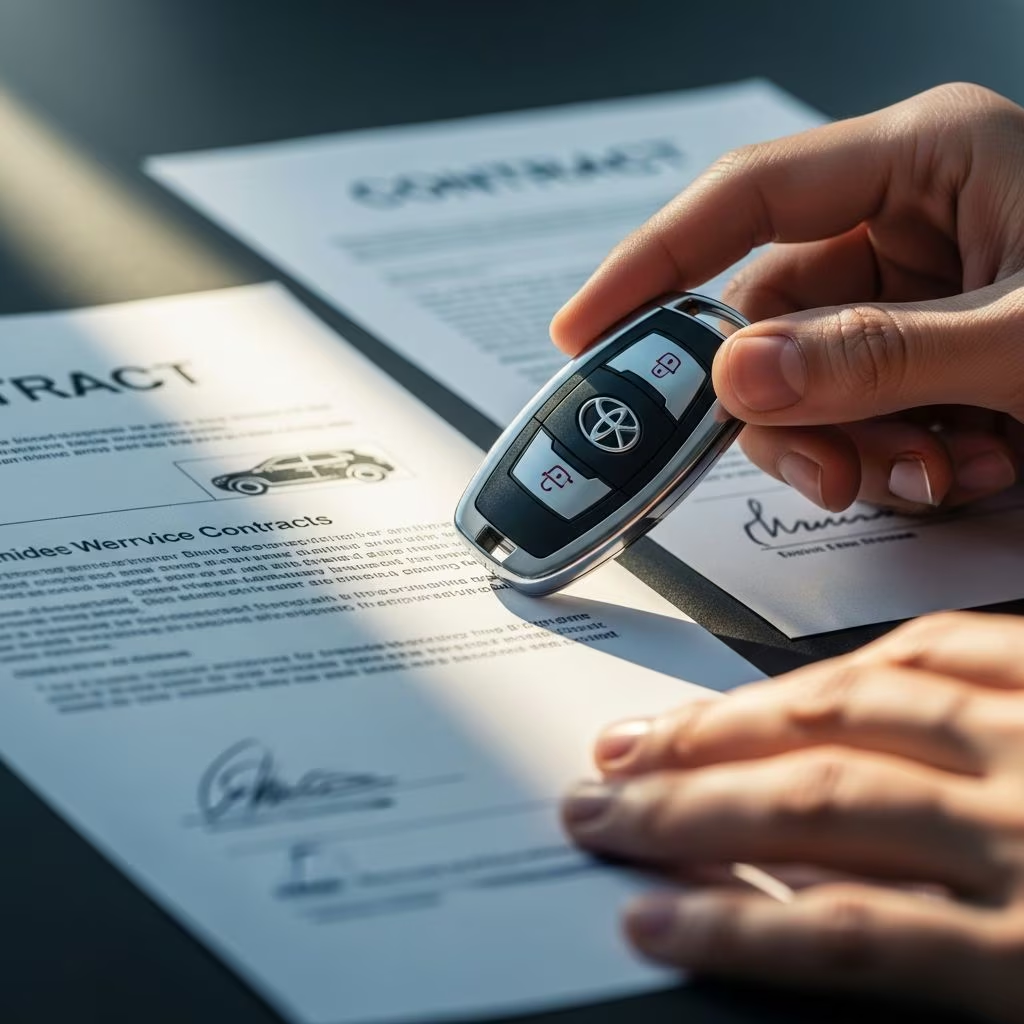
When you buy a car, you are often offered an extended warranty or vehicle service contract at the dealership or by mail later on. These products can be expensive and confusing, and the way they are marketed can make it hard to tell whether you are getting a useful form of protection or just an unnecessary add-on.
This guide explains, in clear language, what these contracts are, how they differ from standard auto warranties, what they typically cover and exclude, and how to evaluate whether purchasing one makes sense for your situation.
1. What Is an Extended Warranty or Vehicle Service Contract?
The terms “extended warranty” and “vehicle service contract” are often used interchangeably in car sales, advertising, and phone solicitations. Legally, however, there is an important distinction.
- Auto warranty: A warranty is a promise from the manufacturer or seller to repair or replace certain defects in the vehicle within a specified time or mileage limit. It is included in the purchase price of a new vehicle and sometimes a certified used vehicle.
- Vehicle service contract (VSC): A service contract is a separate agreement you buy in addition to the vehicle. The provider agrees to pay for or perform certain repairs or services for a set period or mileage.
- “Extended warranty” (in marketing): In practice, many service contracts are sold and advertised as “extended warranties,” even though they do not qualify as warranties under federal law because they are not included in the price of the vehicle and are sold separately.
In short, a vehicle service contract is usually not a true warranty. It is a paid, optional contract that may extend or supplement some of the protections you get from your factory warranty, but it is governed by its own terms and exclusions.
2. How Service Contracts Differ from Manufacturer Warranties
To understand what you are buying, it helps to see how a typical factory warranty compares with a service contract that is marketed as an extended warranty.
| Feature | Manufacturer Warranty | Vehicle Service Contract / Extended Warranty |
|---|---|---|
| Included in vehicle price? | Yes, included with new vehicles and some certified used vehicles. | No, purchased separately and always costs extra. |
| Legal definition | Warranty under federal warranty law. | Generally treated as a service contract, sometimes regulated like insurance at the state level. |
| Who provides it? | Vehicle manufacturer (or occasionally dealer for limited warranties). | Manufacturer, dealer, or independent third-party company. |
| When can you buy it? | Automatically part of the vehicle purchase. | At purchase or later, depending on provider and coverage rules. |
| Typical coverage period | Defined years/miles (for example, 3 years/36,000 miles for bumper-to-bumper). | Varies widely; may extend beyond factory warranty or start after it ends; may also have mileage and time limits. |
| Scope of coverage | Defects in materials or workmanship, subject to stated exclusions. | Specific components or systems; some contracts are very limited, others more comprehensive but still exclude many items. |
| Regulation and oversight | Covered by federal warranty laws and state consumer protection laws. | Often regulated at the state level as service contracts or insurance, with licensing and solvency requirements. |
3. What These Contracts Typically Cover
Coverage under an extended warranty or vehicle service contract can range from very narrow to fairly broad. The label on the product is not enough—you must read the detailed coverage section of the contract.
Common types of coverage include:
- Powertrain coverage: Often the least expensive option, usually limited to major mechanical components such as the engine, transmission, and drivetrain.
- Stated-component coverage: Covers only the specific parts and systems listed in the contract (for example, air conditioning, steering, electrical system). Anything not listed is excluded.
- Exclusionary coverage: Among the broadest forms; instead of listing what is covered, the contract lists what is excluded. Everything else that is mechanical is generally covered.
- Additional benefits: Some contracts may offer roadside assistance, towing, rental car reimbursement, or trip-interruption coverage when a breakdown occurs far from home.
Even the most comprehensive contracts still have limits. Many do not pay for routine maintenance, cosmetic issues, or damage from accidents or environmental causes.
4. What Is Usually Not Covered
One of the most common sources of surprise and frustration for consumers is finding out after a breakdown that the issue is excluded under the contract. While exclusions vary by company and state law, the following are commonly not covered:
- Routine maintenance: Oil changes, filters, brake pads, wiper blades, and similar services are usually considered normal upkeep and are your responsibility.
- Normal wear and tear: Parts that are expected to wear out as you drive (for example, tires, brake pads, clutches) may not be covered unless the contract specifically says otherwise.
- Cosmetic or non-mechanical issues: Paint, upholstery, trim, and many body components are often outside the contract.
- Damage from accidents, misuse, or neglect: Damage from collisions, racing, off-road use outside manufacturer guidance, or failure to maintain the vehicle according to the owner’s manual is typically excluded.
- Pre-existing conditions: Many contracts exclude problems that existed before the contract became effective, even if you did not know about them.
- Unauthorized modifications: Aftermarket parts or modifications that contribute to a failure may void coverage for related repairs.
Because exclusions are critical, they should be read line by line before you sign or pay anything.
5. Cost, Term, and Key Contract Terms
Extended warranties and vehicle service contracts vary widely in price and structure. Understanding the main financial and legal terms can help you compare offers more effectively.
5.1 Price and payment structure
- Total price: Service contracts can cost hundreds or several thousand dollars, depending on the level of coverage, vehicle type, and length of contract.
- Financing: Dealers often roll the cost into your auto loan, increasing both the amount you finance and the interest charges over time.
- Deductibles: Many contracts require you to pay a deductible per visit or per repair, which can significantly affect your actual out-of-pocket costs.
5.2 Duration and mileage limits
- Time and mileage: Contracts specify how long coverage lasts, usually in years and miles (for example, 5 years/100,000 miles from the in-service date or from contract purchase).
- Start date: Some contracts start at the vehicle’s original in-service date, not the date you buy the contract, so part of the advertised term may overlap with your factory warranty.
- Expiration conditions: Coverage usually ends when either the time or mileage limit is reached, whichever comes first.
5.3 Obligations and claim process
- Obligor: The entity legally responsible for paying claims is called the obligor. This may be the manufacturer, the dealer, or a third-party company.
- Administrator: A contract may name a separate administrator that handles claim approvals and payments.
- Maintenance requirements: You may be required to follow specific maintenance schedules and keep records to preserve coverage. Failure to do so can be used to deny claims.
- Repair facilities: Some contracts restrict you to certain repair shops or require prior authorization before work is done.
6. How to Evaluate Whether a Service Contract Is Worth It
Whether an extended warranty or vehicle service contract is a good purchase depends heavily on your vehicle, your finances, and the specific terms of the contract. Regulators and consumer advocates emphasize that these contracts are always optional and that you should take time to decide without pressure.
6.1 Questions to ask before you buy
- How long does my manufacturer’s warranty last, and what does it cover?
- When would this service contract actually start, and how does it overlap with existing coverage?
- Exactly which parts and systems are covered? Which are explicitly excluded?
- Are wear-and-tear and pre-existing conditions covered or excluded?
- What is the deductible per repair or per visit?
- Can I choose my repair shop, or am I limited to specific facilities?
- Is the contract transferable if I sell the car? Is there a fee to transfer?
- Can I cancel the contract and receive a refund, and under what conditions?
6.2 Situations where a contract may be more useful
While many consumers never recover the full cost of a service contract in repairs, there are situations where it may provide meaningful value:
- You plan to keep the vehicle for many years and drive high mileage beyond the factory warranty period.
- You own a model known for expensive repairs to specific systems, and the contract clearly covers those components.
- You would have difficulty paying for a large, unexpected repair and value predictable monthly costs over potential large out-of-pocket expenses.
- You select a contract from a reputable, financially stable provider with strong consumer reviews and regulator oversight.
7. Red Flags and Common Sales Tactics
Because extended warranties and vehicle service contracts are lucrative products, aggressive marketing and questionable practices are common. Regulatory agencies have warned consumers about particular red flags.
- High-pressure sales: Being told you must decide immediately, that the offer is “today only,” or that your coverage will “expire” if you do not act right away.
- Misrepresenting relationship to manufacturer: Telemarketers or mail solicitations that suggest they are calling from the manufacturer or dealer when they are not.
- Vague or missing contract language: Refusal to provide the full written contract in advance, or relying only on a brochure rather than detailed terms.
- Promises not reflected in writing: Verbal assurances about coverage that do not appear in the contract will be hard to enforce later.
- Unclear cancelation and refund rules: Contracts that make it difficult or costly to cancel, or that provide only very limited refunds.
If any of these warning signs appear, it is wise to pause, request complete documentation, and research the company through state regulators or consumer complaint databases before committing.
8. Regulatory Oversight and Your Rights
Service contracts and extended warranties are subject to a mix of federal and state oversight.
- Federal warranty law: While service contracts themselves are not the same as warranties, the federal Magnuson–Moss Warranty Act governs how written warranties on consumer products must be disclosed and can interact with service contract marketing and disclosures.
- State insurance and service contract laws: In the United States, many states regulate vehicle service contracts as a form of insurance or as a separate category that requires registration or licensing of providers, financial solvency standards, and consumer disclosures.
- Consumer protection agencies: State insurance departments and consumer protection offices provide guidance, investigate complaints, and sometimes take enforcement actions against abusive companies.
If you encounter problems such as unexpected denials of coverage, failure to pay claims, or misleading sales tactics, you can usually file complaints with your state attorney general, state insurance regulator, or consumer protection agency, depending on how the contract is classified where you live.
9. Practical Tips Before You Sign
To protect yourself and make a more informed decision, consider the following steps before agreeing to any extended warranty or vehicle service contract:
- Take your time: Do not feel obligated to buy at the time of vehicle purchase. Ask for a copy of the contract to review at home.
- Compare options: Check whether the vehicle manufacturer sells its own extended coverage, and compare that with dealer and third-party contracts.
- Research the provider: Look up the company with your state insurance department or consumer affairs office to confirm licensing status and review complaint history.
- Read every page: Focus on what is not covered, how claims are processed, and what your obligations are (maintenance, documentation, notice).
- Do the math: Compare the total cost (including any finance charges) with realistic estimates of potential repairs on your specific vehicle model.
- Keep documentation: Save the full contract, any amendments, proof of payment, and all maintenance and repair records. You may need these if a claim is denied.
10. Frequently Asked Questions (FAQs)
Q1: Is an extended warranty the same thing as a vehicle service contract?
In everyday language, these terms are often used interchangeably, but under the law, a true warranty is included in the price of the product, while a service contract is sold separately for an additional charge. Most “extended warranties” sold for cars are technically vehicle service contracts.
Q2: Do I have to buy a service contract to get a car loan?
No. Auto service contracts are optional products. Federal and state regulators emphasize that they cannot be required as a condition of financing, even if some salespeople imply otherwise.
Q3: Can I buy a service contract after my factory warranty expires?
Often yes, although eligibility rules vary. Some providers only sell contracts while the vehicle is still under the original warranty, while others will sell coverage for older or higher-mileage vehicles, sometimes at higher prices or with more exclusions.
Q4: What happens if I sell my car?
Some contracts are transferable to a new owner, sometimes for a fee, while others are not. Transfer rules and any associated costs should be clearly spelled out in the contract you receive.
Q5: What if my claim is denied and I think it should be covered?
Start by asking the administrator or obligor for a written explanation citing the contract section relied on for the denial. If you still disagree, you can escalate through the company’s internal appeals process and, if necessary, file a complaint with your state insurance department or consumer protection agency, which oversees service contract providers.
References
- Auto Warranties and Auto Service Contracts — Federal Trade Commission. 2023-08-10. https://consumer.ftc.gov/articles/auto-warranties-and-auto-service-contracts
- Extended warranty — Cited via underlying sources on regulation of service contracts in the United States, including state insurance oversight. 2023-05-01. https://en.wikipedia.org/wiki/Extended_warranty
- Understanding Auto Service Contracts — NEA Member Benefits. 2022-03-15. https://www.neamb.com/your-car/understanding-auto-service-contracts
- Guide to Automobile Service Contracts, Extended Warranties and Other Repair Agreements — California Department of Insurance. 2025-02-18. https://www.insurance.ca.gov/01-consumers/105-type/95-guides/01-auto/servcontextwar.cfm