
Understanding Equifax Settlement Emails and Your Next Steps
Learn how to evaluate Equifax settlement emails, avoid scams, and protect your identity after the 2017 data breach.
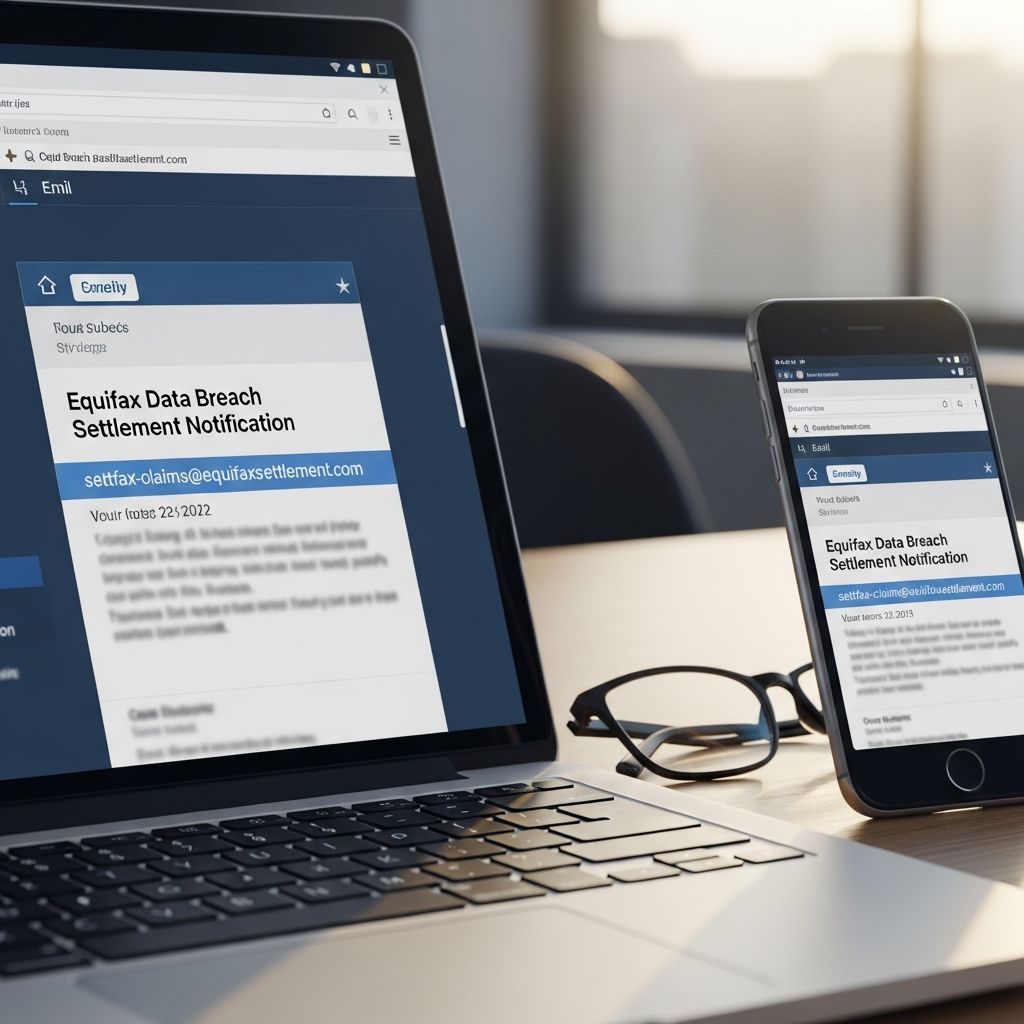
Millions of people in the United States were affected by the 2017 Equifax data breach. As part of a major settlement with federal and state authorities, affected consumers may receive emails or letters about payments and other benefits. Understanding these messages is essential to avoid scams and to make informed decisions about your personal information.
This guide explains why you might receive an Equifax settlement message, how to verify if it is legitimate, what benefits the settlement provides, and the steps you can take to safeguard your identity.
1. Background: What Happened in the Equifax Data Breach?
In September 2017, Equifax announced that hackers accessed the personal data of about 147 million people in the United States, including Social Security numbers, birth dates, and other sensitive information. Government agencies described this as one of the largest breaches of personal data ever reported.
In response, Equifax reached a global settlement with:
- The Federal Trade Commission (FTC)
- The Consumer Financial Protection Bureau (CFPB)
- Attorneys general in 50 U.S. states and territories
The settlement created a fund of up to $425 million to assist people whose information was exposed, including credit monitoring, identity restoration services, and reimbursement for certain costs.
2. Why You Might Receive an Email or Letter
If you are getting an email or letter about the Equifax settlement, it is typically for one of these reasons:
- You previously filed a claim. Many consumers filed claims during the initial or extended claims periods to request credit monitoring, reimbursement for out-of-pocket losses, or compensation for time spent responding to the breach.
- You are being notified about a payment. The court-appointed settlement administrator is responsible for sending out settlement payments, including prepaid cards and other cash benefits, on a rolling basis.
- You requested credit monitoring. Some people requested credit monitoring as their primary benefit and were contacted with instructions on how to activate this service.
Not everyone whose data was impacted will receive a payment notice. Emails and letters usually go to people who submitted valid claims before the applicable deadlines, which have now passed.
3. Key Settlement Benefits: What Was Offered?
The settlement provides several categories of benefits for eligible consumers. The table below summarizes the main types of relief that were available under the Equifax data breach settlement.
| Type of Benefit | What It Covers | Who May Qualify |
|---|---|---|
| Credit Monitoring | Multi-year credit monitoring and identity theft protection, typically through a third-party provider. | Consumers who chose monitoring instead of cash during the initial claim period. |
| Cash in Place of Monitoring | Alternative cash payment for those who verified they already had qualifying credit monitoring (subject to reduction based on number of claims). | Claimants who opted for cash rather than monitoring and met eligibility conditions. |
| Out-of-Pocket Loss Reimbursement | Repayment for certain costs reasonably linked to the breach, such as identity theft-related expenses. | Claimants who submitted documentation of qualifying losses during the claim windows. |
| Time Spent Remedying Issues | Compensation for hours spent preventing or addressing identity theft issues related to the breach, up to a capped amount. | Consumers who documented or attested to the time spent during the claim periods. |
| Identity Restoration Services | Access to assistance if your identity is misused as a result of the breach, for a defined period of time. | People whose data was impacted by the breach, even if they did not file a claim, subject to settlement terms. |
Deadlines for filing new claims have passed, but payments for existing claims and certain additional distributions are still being sent.
4. How to Recognize a Legitimate Settlement Email or Letter
Scammers often copy the look and feel of real government or corporate messages, especially when money is involved. To protect consumers, the FTC and CFPB have published guidance explaining how to recognize genuine Equifax settlement communications.
4.1 Check the Sender and Domain
- Official settlement emails about payments are sent from addresses that end in a specific settlement domain, such as
@equifaxbreachsettlement.com. - The official settlement website is operated by the court-appointed administrator, not by Equifax itself, and uses a clearly labeled domain.
- Be skeptical of look-alike addresses with extra characters, misspellings, or unrelated domain endings.
4.2 Look for Red Flags of Phishing
Legitimate settlement communications will not:
- Ask you to provide full Social Security numbers, bank account passwords, or other highly sensitive credentials by email or text.
- Pressure you to act immediately using threatening or urgent language.
- Direct you to send money, buy gift cards, or pay a fee in order to receive your settlement payment.
If you are unsure, navigate independently to an official government or settlement site by typing the address into your browser rather than clicking on a link in the message.
5. What to Do If You Receive a Prepaid Card or Payment Notice
Many consumers are receiving prepaid cards or digital payments as part of final settlement distributions. The settlement administrator, following court-approved terms, is responsible for calculating and sending these payments.
5.1 Steps to Take When You Get a Card or Payment Email
- Confirm the source. Verify that the email or letter uses the official settlement domains or recognized payment brands referenced in government guidance.
- Check the instructions. Legitimate communications will provide clear, step-by-step directions to activate or access your payment through the official processors identified by the settlement.
- Keep records. Save copies of emails, card mailers, and any confirmation pages in case you need to reference them later.
5.2 If You Think Something Is Wrong
- Compare any message you receive with information posted on an official government site about the Equifax settlement.
- If an email or letter claims to be related to the settlement but asks for unusual information or payment, treat it as suspicious.
- Report suspected scams to the FTC through its complaint tools; the agency encourages consumers to report fraud attempts involving data breach settlements.
6. If You Missed the Deadline: What Options Remain?
The main claim-filing deadlines for the Equifax data breach settlement have expired. That means you can no longer submit new claims for credit monitoring, alternative cash payments, or reimbursement of losses under the settlement.
However, some protections may still be available:
- Identity restoration assistance. The settlement provides access to identity restoration services for consumers whose data was impacted, even if they did not file a claim, for a defined period of years after the settlement became effective.
- Ongoing rights under credit and consumer laws. Separate from the settlement, federal law gives you rights to dispute inaccurate information in your credit reports and to place fraud alerts or credit freezes.
If you believe your identity has been misused, you can still take advantage of these broader legal protections.
7. Protecting Yourself After a Data Breach
Government agencies consistently emphasize that data breaches can have long-term consequences, including identity theft and fraudulent accounts. Even if you never receive money from a settlement, you can take steps to lower your risk.
7.1 Monitor Your Credit and Accounts
- Review your credit reports regularly. You are entitled to free credit reports from major credit reporting agencies under federal law. Checking them helps you spot unauthorized accounts or errors.
- Watch your bank and card statements. Look for small or unfamiliar transactions and contact your financial institution promptly if you find anything suspicious.
7.2 Consider a Fraud Alert or Credit Freeze
- Fraud alerts can make it harder for identity thieves to open new credit accounts in your name, as businesses may need to verify your identity more carefully. Fraud alerts are supported by federal consumer protection rules.
- Credit freezes restrict most new creditors from accessing your credit file, which can prevent new accounts from being opened in your name without your consent. Freezes are generally available for free under U.S. law.
These tools do not affect your existing accounts, but they can significantly reduce the risk of new fraudulent credit lines.
7.3 Create a Recovery Plan if Identity Theft Occurs
If you find signs that someone is using your information, it is important to act quickly:
- Document the suspicious activity, such as collection notices, denied credit applications, or unfamiliar charges.
- Contact the businesses involved to dispute fraudulent transactions or accounts.
- Use official identity theft recovery resources to create a written, step-by-step plan for resolving the problem.
8. Common Misconceptions About the Equifax Settlement
Because the settlement has been in the news for years, there are several misunderstandings that continue to circulate. Clarifying these points can help you set realistic expectations.
- “Everyone affected will get a large payment.” In reality, individual cash payments often ended up being much smaller than early estimates, because the total amount available for certain benefits had to be divided among many qualifying claims.
- “Equifax sends the money directly.” A court-appointed settlement administrator, not Equifax and not the federal agencies, calculates and distributes payments under the court-approved terms.
- “New claims are still open indefinitely.” Filing deadlines for both initial and extended claims periods have passed, so new claims under this settlement are generally no longer accepted.
- “You must pay to receive your settlement funds.” Legitimate settlement payments do not require you to send money, purchase gift cards, or pay processing fees.
9. Practical Tips to Avoid Settlement Scams
Scammers track news about large settlements and often attempt to impersonate official programs. The same guidelines apply whether the settlement involves Equifax or another company.
- Start from trusted sites. When in doubt, go directly to an official government or settlement site by typing the web address into your browser. The FTC and CFPB maintain dedicated pages for major settlements.
- Verify before you click. Hover over links in emails to see the real destination. If it does not match the official domain publicized by government agencies, do not click.
- Guard your personal data. Do not provide your Social Security number, bank account number, or login credentials in response to unsolicited settlement messages.
- Report fraud attempts. Reporting suspected scams to government agencies helps alert others and may support future enforcement actions.
10. Frequently Asked Questions (FAQs)
Q1: I received an email about an Equifax settlement payment. How can I tell if it is real?
Legitimate settlement emails come from the official settlement administrator and use specific domains referenced on government and settlement websites. They do not ask for sensitive personal information or payment to release your funds.
Q2: Can I still file a new claim for the Equifax breach?
No. The deadlines for filing both initial and extended claims have passed. While payments are still being made to people who filed on time, new claims under this settlement are generally closed.
Q3: I never filed a claim, but my data was exposed. Do I get anything?
You are unlikely to receive a payment if you did not file a claim before the deadlines. However, the settlement includes identity restoration services for affected consumers for a set period, and you still have rights under federal law to dispute errors and take steps like placing fraud alerts or credit freezes.
Q4: Who is sending the money—Equifax or the government?
A court-appointed third-party settlement administrator is responsible for calculating and distributing settlement payments according to the court-approved agreement. Equifax funds the settlement, but does not directly decide or send individual payments.
Q5: What should I do if I think someone is using my information from the breach?
Document any suspicious activity, contact affected businesses to dispute fraudulent charges, consider placing a fraud alert or credit freeze, and use official identity theft recovery guidance from federal agencies to build and follow a recovery plan.
References
- Equifax Data Breach Settlement — Federal Trade Commission. 2024-11-07 (updated). https://www.ftc.gov/enforcement/refunds/equifax-data-breach-settlement
- Equifax data breach settlement — Consumer Financial Protection Bureau. 2024-11-07 (updated). https://www.consumerfinance.gov/equifax-settlement/
- Equifax Data Breach Settlement: Home — Official Settlement Administrator. 2024-01-22 (updated). https://www.equifaxbreachsettlement.com
- Key Dates – Equifax Data Breach Settlement — Official Settlement Administrator. 2024-01-22. https://www.equifaxbreachsettlement.com/dates
- Equifax Statement on Court-Appointed Third-Party Settlement Administrator Distributing Final Payments in the Data Breach Settlement — Equifax Inc. 2024-11-07. https://www.equifax.com/newsroom/all-news/-/story/equifax-statement-on-court-appointed-third-party-settlement-administrator-distributing-final-payments-in-the-data-breach-settlement/
- Settlement Claims Administrator Sending Final Payments — Equifax Inc. 2024-11-07. https://www.equifax.com/personal/education/personal-finance/articles/-/learn/settlement-claims-administrator-sending-cash-payments/
- Equifax Data Breach Settlement: Your Guide to 2025 Payments — Nolo. 2025-01-15. https://www.nolo.com/legal-updates/equifax-data-breach-settlement-how-to-get-compensation.html
Similar Articles








Read full bio of Sneha Tete


