
Understanding Driving Under the Influence of Drugs
Learn how impaired driving laws treat prescription, over-the-counter, and illegal drugs, and what legal risks and defenses may apply.
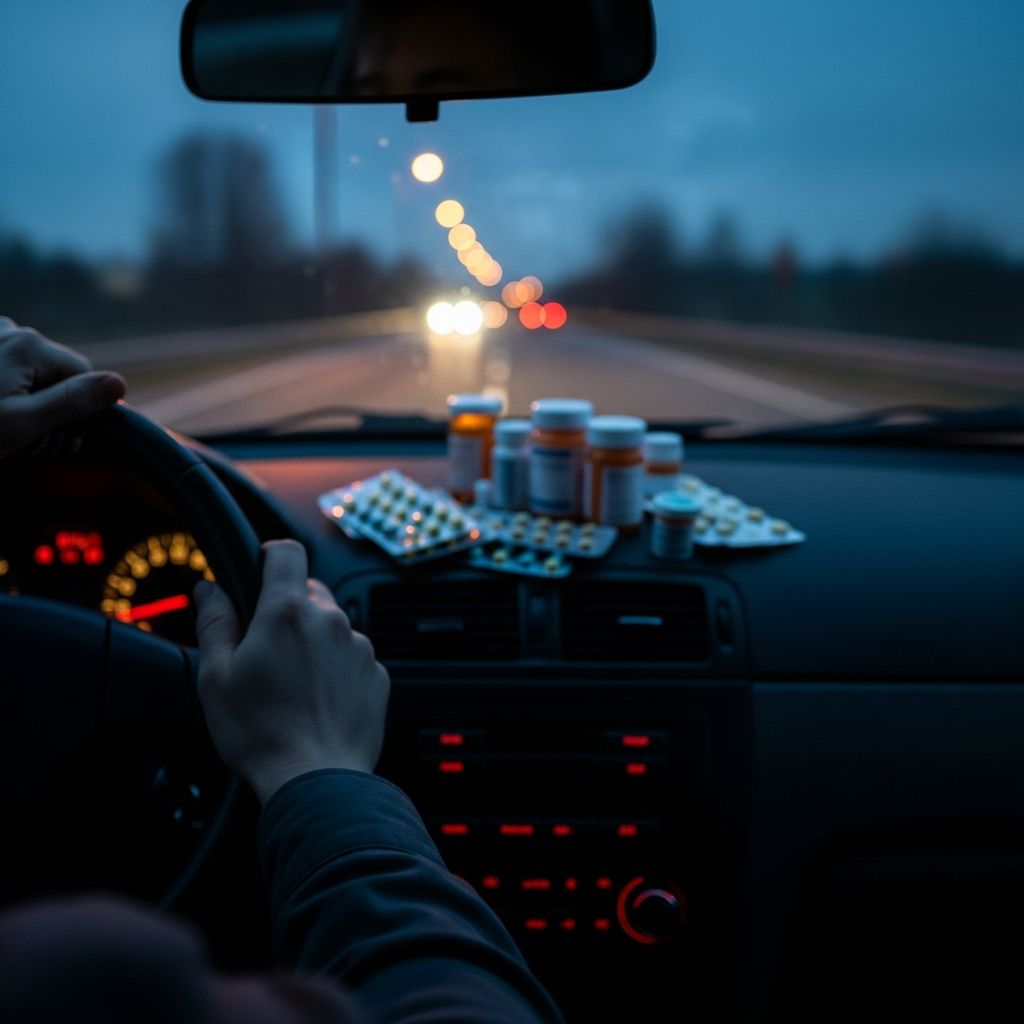
Driving under the influence of drugs (often called drugged driving or DUI of drugs) covers far more than illegal street drugs. It can include prescription medications, over-the-counter remedies, cannabis, and other substances that interfere with safe driving.12
This guide explains what drug-impaired driving means, how laws treat different substances, the penalties you could face, how officers investigate these cases, and the issues that commonly arise in court.
What Counts as “Driving Under the Influence of Drugs”?
Most U.S. jurisdictions define impaired driving in similar terms: operating a vehicle when your ability to drive safely is affected by alcohol, drugs, or both.26 The key concept is impairment, not whether the substance is legal or illegal.
Legal Definition of Being “Under the Influence”
Legal references often use the phrase under the influence to mean that a person’s physical or mental abilities are affected to any degree that makes an activity unsafe.7 For driving, that usually focuses on:
- Reduced reaction time
- Poor judgment or decision-making
- Difficulty focusing or staying alert
- Problems with coordination, balance, or vision
In many states, the prosecution does not have to prove that a driver was severely impaired — only that their ability to drive safely was affected in some meaningful way.
Types of Substances That Can Lead to DUI Charges
Drug-impaired driving laws are intentionally broad. According to federal and state safety agencies, drivers may be charged when they are impaired by:235
- Illegal drugs (for example, cocaine, heroin, methamphetamine)
- Marijuana / cannabis, including medical or recreational use
- Prescription medications, such as opioids, benzodiazepines, or sleep aids
- Over-the-counter medicines, including cold remedies or allergy drugs that cause drowsiness
- Other chemical substances that affect the brain or nervous system
Even when a substance is prescribed or sold legally, driving after taking it can still be a crime if it impairs your ability to operate a vehicle safely.36
How Drugged Driving Differs from Alcohol DUI
Alcohol-related DUIs and drug-related DUIs share the same basic goal: keeping impaired drivers off the road. But the way they are investigated and proven is often different.
| Issue | Alcohol DUI | DUI of Drugs |
|---|---|---|
| Common legal standard | Blood Alcohol Concentration (BAC) of 0.08% or higher in most states5 | No universal numerical limit; often based on observed impairment or specific drug levels where defined |
| Testing methods | Breath, blood, or sometimes urine tests | Usually blood or urine tests; some states use saliva or other toxicology tools |
| Time the substance stays detectable | Rises and falls predictably over hours | Many drugs remain detectable for days or weeks, even after impairment has ended8 |
| Field sobriety indicators | Well-studied patterns tied to specific BAC ranges | Effects vary widely between drug types and doses |
Per Se Drug Laws vs. Impairment-Based Laws
States use two main approaches to define drugged driving:
- Per se drug statutes: Some states make it illegal to drive with any measurable amount of certain controlled substances in your system, or set specific thresholds (for example, a set nanogram limit for THC in blood).1
- Impairment-based statutes: Other states focus on whether the driver was actually impaired, regardless of the precise amount of the drug detected.
Because drug metabolism and effects vary so much, there is ongoing debate over the fairness and scientific accuracy of per se limits for drugs, especially cannabis.18
How Officers Investigate Suspected Drug-Impaired Driving
Law enforcement officers are trained to look for behavioral signs that a driver may be under the influence of a substance, then use tools and procedures to gather evidence.3
Initial Traffic Stop and Observations
An investigation typically begins when an officer notices something unusual, such as:
- Weaving, drifting, or inconsistent lane position
- Driving much slower or faster than surrounding traffic
- Ignoring traffic signals or stop signs
- Delayed starts at green lights
- Sudden braking or other erratic maneuvers
After stopping the vehicle, the officer may look for signs such as:
- Slurred or slow speech
- Confusion or trouble following instructions
- Bloodshot or glassy eyes, dilated or constricted pupils
- Unusual odors, including marijuana or chemical smells
- Paraphernalia, pill bottles, or open packages in the vehicle
Field Sobriety and Drug Recognition Evaluations
Officers often use standard field sobriety tests designed primarily for alcohol. When drugs are suspected, some departments rely on specially trained Drug Recognition Experts (DREs) who follow a structured evaluation protocol that may include:
- Eye movement and pupil size assessments
- Balance and coordination tests
- Pulse, blood pressure, and body temperature checks
- Questions about drug use, medical conditions, and symptoms
These observations can support a claim that a driver was impaired, but they are often challenged in court on scientific and procedural grounds.
Chemical Testing: Blood, Urine, and Other Methods
If an officer has probable cause, they may request a chemical test. For drug DUIs, that usually means:
- Blood tests to measure specific drug concentrations
- Urine tests to detect the presence of drug metabolites
- Saliva or oral fluid tests in some jurisdictions, particularly for roadside screening
Drug tests can confirm that a substance is present, but they do not automatically prove that a driver was impaired at the time of driving. Some drugs are detectable long after their impairing effects have worn off, which creates legal disputes over what test results truly show.8
Criminal Penalties and Other Consequences
Penalties for driving under the influence of drugs can be similar to or even harsher than those for alcohol-related DUIs. Exact punishment varies by state, the driver’s record, and whether anyone was injured.
Common Criminal Penalties
- Fines that can range from hundreds to thousands of dollars
- Jail or prison time, particularly for repeat offenses or cases involving injury or death
- Probation with strict conditions such as drug treatment, counseling, or regular testing
- Felony charges in serious or repeat-offender cases
Driver’s License Consequences
Administrative actions from motor vehicle agencies can be triggered by a drugged driving arrest or conviction, independent of the criminal case.56 These may include:
- License suspension or revocation for a set period
- Ignition interlock device (IID) requirements in some states, especially if alcohol is also involved
- Restricted or conditional licenses limiting when and where you may drive
- Reinstatement fees and additional administrative requirements
Other Long-Term Impacts
- Higher insurance premiums or cancellation of coverage
- Criminal record affecting employment, professional licensing, or immigration status
- Civil liability for property damage, injuries, or deaths caused by a crash
- Travel restrictions to certain countries that limit entry based on criminal convictions
Special Issues: Prescription and Over-the-Counter Drugs
One of the most confusing aspects of DUI law is that having a valid prescription does not automatically protect you from a drugged driving charge.
Lawful Use vs. Safe Driving
Many medications have side effects like drowsiness, dizziness, slowed thinking, or blurred vision. Safety agencies warn that these effects can make driving dangerous, especially when combined with alcohol or other drugs.25
Important points to keep in mind:
- Legal authority to use a drug (such as a prescription) is separate from the legal duty to drive safely.
- Some labels explicitly warn against operating vehicles or machinery.
- Mixing medications with alcohol can dramatically increase impairment, even with small amounts of alcohol.5
Talking With Your Health-Care Provider
If you are prescribed a new medication, ask:
- Whether it can affect driving or reaction time
- How long side effects may last when starting or changing the dose
- Whether it interacts with alcohol or other drugs you take
- If there are safer alternatives for people who must drive regularly
Taking these precautions can reduce both safety risks and the chance of facing a DUI of drugs charge.
Common Legal Defenses and Disputed Issues
Every case is fact-specific, but defense strategies in drug DUI cases often focus on how the stop was made, how tests were conducted, and whether results truly show impairment at the time of driving.
Challenging the Traffic Stop or Arrest
Possible issues include:
- Lack of reasonable suspicion for the initial stop
- Insufficient probable cause to request chemical testing
- Improper administration of field sobriety tests
- Failure to inform the driver of implied consent rights where required
Disputing Toxicology Results
Defense arguments may target:
- Sample handling and storage (chain of custody issues)
- Laboratory methods or calibration errors
- Timing of the test relative to driving — especially when there was a significant delay
- Lack of clear correlation between the measured drug level and actual impairment
Because scientific understanding of how many drugs affect driving is still evolving, expert testimony is often used on both sides to interpret lab results.8
Alternative Explanations for Symptoms
Some signs that officers associate with drug use (such as red eyes, tremors, or unusual behavior) can be caused by:
- Fatigue or sleep disorders
- Medical conditions, including neurological or psychiatric issues
- Allergies, infections, or environmental irritants
- Stress or anxiety related to the traffic stop itself
In some cases, medical evidence or witness testimony can help explain observed behavior without conceding that the driver was impaired by drugs.
Safety Tips to Avoid Drug-Impaired Driving
Beyond legal consequences, drug-impaired driving is a significant public health issue. National data show that a substantial share of serious crashes involve drivers who have used drugs, often in combination with alcohol.28
Practical Steps for Drivers
- Read medication labels and follow warnings about drowsiness and machinery.
- Avoid mixing substances such as alcohol with sedating medications.
- Test how a new medication affects you before driving long distances or in heavy traffic.
- Plan alternative transportation (rideshare, taxi, public transit, designated driver) when taking impairing drugs.
- Talk honestly with your doctor if driving is a frequent necessity for work or caregiving.
What Friends and Families Can Do
- Offer rides or help arrange transport for someone who has taken an impairing substance.
- Encourage loved ones who misuse drugs or alcohol to seek treatment and support.
- Speak up if you believe someone is about to drive while impaired; it may prevent a serious crash.
Frequently Asked Questions About Drug-Impaired Driving
Q: Can I be charged with DUI if I only took my prescribed medication?
Yes. Having a valid prescription does not prevent a DUI charge if the medication impairs your ability to drive safely. Many states explicitly include prescription drugs and over-the-counter medicines in their impaired driving laws.236
Q: Is it legal to drive after using marijuana where it is legal to buy or possess it?
No. Even in states that allow medical or recreational cannabis, it remains illegal to drive while under its influence. Law enforcement and safety agencies treat marijuana impairment similarly to other forms of impaired driving.13
Q: How do officers know if I am drug-impaired instead of just tired or sick?
Officers rely on driving behavior, observations at the roadside, field sobriety tests, and sometimes specialized drug recognition evaluations. If they develop probable cause, they may request blood, urine, or other tests to check for drugs, but these findings can be challenged in court.
Q: Are penalties for drugged driving the same as for alcohol DUIs?
Often they are similar, including fines, possible jail time, probation, and driver’s license consequences. In some situations—such as cases involving certain controlled substances or prior convictions—penalties can be just as severe or more severe than alcohol-related DUI penalties, depending on the state.
Q: What should I do if I am arrested for driving under the influence of drugs?
Because drug DUI cases can involve complex scientific and legal questions, many defendants choose to speak with a qualified criminal defense attorney in their area. A lawyer can explain local laws, review the legality of the stop and testing, and discuss possible defenses or negotiation options.
References
- Drug-impaired driving — Various state statutes summarized. 2024-01-10. https://en.wikipedia.org/wiki/Drug-impaired_driving
- Impaired Driving: Get the Facts — Centers for Disease Control and Prevention (CDC). 2023-12-05. https://www.cdc.gov/impaired-driving/about/index.html
- Drug-Impaired Driving — National Highway Traffic Safety Administration (NHTSA). 2024-03-01. https://www.nhtsa.gov/risky-driving/drug-impaired-driving
- Chapter 9: Alcohol and Other Drugs — New York State Department of Motor Vehicles. 2023-08-15. https://dmv.ny.gov/new-york-state-drivers-manual-and-practice-tests/chapter-9-alcohol-and-other-drugs
- DUI (Driving Under the Influence) — Washington State Department of Licensing. 2023-09-20. https://dol.wa.gov/driver-licenses-and-permits/suspended-license/types-driver-license-suspensions/dui-driving-under-influence
- Under the Influence — Legal Information Institute, Cornell Law School. 2021-06-01. https://www.law.cornell.edu/wex/under_the_influence
- Drugged Driving DrugFacts — National Institute on Drug Abuse (NIDA). 2024-02-01. https://nida.nih.gov/publications/drugfacts/drugged-driving
Similar Articles








Read full bio of Sneha Tete


