
Disturbing The Peace Laws: A Practical Legal Guide
Learn how disturbing the peace laws work, what conduct they cover, and what penalties you could face if charged.
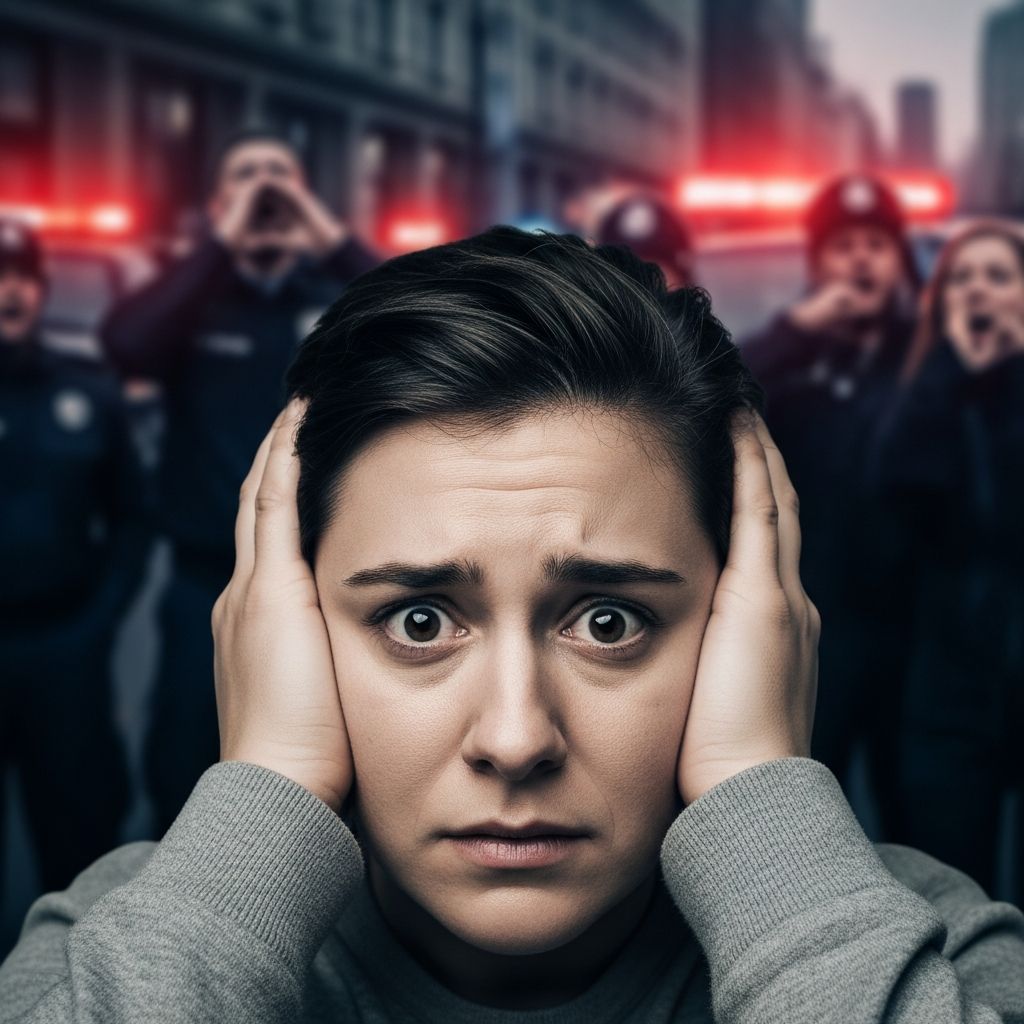
Disturbing the peace, sometimes called breach of the peace or grouped under disorderly conduct, is a common criminal charge that covers behavior disrupting public order or quiet enjoyment of a space. Although often treated as a relatively minor offense, a conviction can still lead to fines, possible jail time, and a criminal record.
What Does “Disturbing the Peace” Mean?
There is no single nationwide definition of disturbing the peace. Each state or local jurisdiction defines the offense in its own statutes or ordinances. However, most laws have a similar core idea: the person engages in conduct that unreasonably disrupts public order or the peace and quiet others are entitled to enjoy.
Typical legal descriptions emphasize behavior that:
- Violates or threatens public order or community tranquility
- Unreasonably interferes with another person’s right to peace and quiet
- Creates or risks creating a violent or disorderly situation
Many jurisdictions treat disturbing the peace as a type of public order offense that can include violations of other laws designed to preserve good order, such as certain types of disorderly conduct or noise violations.
Common Types of Conduct That May Be Charged
Because disturbing the peace is a broad concept, it can cover many forms of behavior that disturb others in public or, in some places, even in private settings where neighbors are affected.
Typical Examples Seen in Statutes
While wording varies by jurisdiction, conduct often associated with disturbing the peace or similar offenses includes:
- Physical fights or brawls in public places
- Threatening or challenging someone to a fight in a public area
- Loud and unreasonable noise, such as shouting or blasting music late at night
- Using abusive or “fighting” words in a way likely to provoke an immediate violent reaction
- Public intoxication combined with disruptive behavior in some jurisdictions
- Obstructing traffic or blocking sidewalks while refusing lawful orders to move on
- Refusing to disperse from a disruptive group after being ordered to do so by law enforcement
Some states list disturbing the peace as a distinct offense, while others fold similar behavior into more general breach of the peace or disorderly conduct laws.
Illustrative Legal Standards
Court decisions help clarify what conduct crosses the line. For example, courts in one state have described a two-part test to determine whether conduct is disturbingly disruptive:
- Most people would view the behavior as unreasonably disruptive under the circumstances.
- The behavior has actually infringed on another person’s right to be undisturbed.
Other courts focus more explicitly on whether actual or threatened violence is present. Some jurisdictions require a clear danger of violence; others allow conviction even without violent conduct, as long as there is serious disruption of public order.
Disturbing the Peace vs. Related Offenses
Disturbing the peace overlaps with several other public order offenses. The exact label often depends on how your state structures its criminal code.
| Concept | Typical Focus | How It Relates |
|---|---|---|
| Disturbing / Breach of the peace | Conduct that violates public order or disturbs public tranquility | Umbrella term; may include a wide range of disruptive acts. |
| Disorderly conduct | Disruptive behavior, often specifically defined by statute (e.g., fighting, loud noise, blocking traffic). | In some states, disturbing the peace is covered by disorderly conduct laws. |
| Noise ordinance violations | Excessive or unreasonable noise above set limits. | May be charged instead of, or in addition to, disturbing the peace when noise is the main issue. |
| Unlawful assembly / Riot | Group activity that threatens or results in serious public disturbance or violence. | More serious forms of group-based breach of the peace. |
When Does Speech Become Disturbing the Peace?
Because disturbing the peace often involves loud or offensive expression, there is a direct tension between these laws and First Amendment protections in the United States.
Constitutional Limits on Breach-of-the-Peace Laws
The U.S. Supreme Court has repeatedly ruled that states may not use vague or overly broad breach-of-the-peace laws simply to punish unpopular or offensive viewpoints. For example:
- In Cox v. Louisiana, the Court held that breach-of-the-peace laws must be narrowly drawn and cannot be applied in a way that suppresses lawful protest or unpopular ideas.
- In Cohen v. California, the Court ruled that wearing a jacket in a courthouse with an offensive anti-war slogan could not be punished as disturbing the peace because it was not directed at a particular person and did not create a serious risk of violence.
Courts distinguish between protected speech and punishable conduct. As a general rule, speech alone is less likely to qualify as disturbing the peace unless it involves:
- Fighting words—direct, personally abusive words likely to provoke an immediate physical response
- True threats—serious expressions of intent to commit violence
- Very loud or intrusive expression that unreasonably invades others’ quiet enjoyment, even if the message itself is protected
How Serious Is a Disturbing the Peace Charge?
In most states, disturbing the peace or similar public order offenses are classified as misdemeanors or even as infractions for minor violations. Penalties vary with the jurisdiction, the specific facts, and the defendant’s prior record.
Possible Consequences
- Fines: Many statutes authorize fines, sometimes a few hundred dollars for low-level offenses, and higher amounts for repeat or aggravated conduct.
- Short jail sentences: Misdemeanor disturbing-the-peace convictions can carry possible jail time, commonly up to several months in some states.
- Probation: Courts may impose supervised or unsupervised probation with conditions such as obeying all laws or avoiding certain locations.
- Community service or counseling: Some courts order community service or participation in anger management, substance use, or similar programs, particularly when alcohol or conflict is involved.
- Criminal record: Even a low-level conviction can appear on background checks and may affect employment, licensing, or immigration status, depending on the situation.
In a few circumstances, conduct that begins as a breach-of-the-peace type offense may be charged or enhanced as a more serious crime—such as assault, unlawful assembly, or inciting a riot—if violence or significant property damage occurs.
Key Elements Prosecutors Must Prove
The specific elements vary, but many disturbing-the-peace or breach-of-the-peace laws require proof of several core components:
- Act or behavior: The defendant engaged in an act, such as fighting, shouting, or creating loud noise, as defined by the statute.
- Mental state: The act was done intentionally, willfully, or sometimes recklessly—rather than purely by accident.
- Public or quasi-public setting: Much of the time, the conduct occurs in public or affects people beyond the actor’s household.
- Unreasonable disturbance: Ordinary people would consider the behavior excessively disruptive given the time, place, and circumstances.
- Impact on others: The conduct either actually disturbed others or posed a clear risk of disturbing public order or provoking violence.
Because these elements rely heavily on context, two very similar behaviors can be treated differently depending on location, time of day, crowd reaction, warnings from officers, and local norms.
Possible Defenses to a Disturbing the Peace Charge
Defenses depend on the statute and facts, but several recurring arguments appear in breach-of-the-peace cases.
Constitutional and Legal Defenses
- Protected speech: If the charge is based mainly on the content of speech, a defendant may argue that the words were protected expression under the First Amendment and did not amount to fighting words, true threats, or incitement.
- Vagueness or overbreadth: A law that is too vague or broad, or applied to suppress lawful protest or unpopular viewpoints, can be challenged as unconstitutional.
- Lack of public disturbance: Where no person was actually disturbed and no serious risk of disruption existed, courts may find the offense not proven.
Fact-Based Defenses
- No willful conduct: If the disturbance was accidental or caused by factors outside the defendant’s control, they may argue the mental state requirement is not met.
- Reasonable noise or behavior: The defense may present evidence that the conduct was reasonable under the circumstances (for example, ordinary noise during daytime hours).
- Mistaken identity: In crowded or chaotic scenes, witnesses may misidentify who was responsible for the disruption.
- Self-defense: In cases involving fights, a defendant may assert they acted lawfully to protect themselves or others from an aggressor.
A criminal defense lawyer can evaluate which defenses are viable based on the statute, police reports, witness statements, and any video or audio evidence.
What To Do If You Are Charged
Even though disturbing the peace is often treated as a relatively low-level offense, it should still be taken seriously. Steps to consider include:
- Read the charging document carefully to understand the statute cited and the alleged conduct.
- Avoid discussing the incident with anyone but your attorney, particularly on social media or in text messages.
- Preserve evidence, such as videos, messages, or witness contact information, that may support your version of events.
- Consult a qualified criminal defense attorney in your state to review the case, explain potential penalties, and negotiate with prosecutors if appropriate.
- Consider diversion or plea options where available, such as community service or educational programs that might reduce or resolve the charge.
An attorney can also help assess whether constitutional issues or factual weaknesses in the state’s case might justify filing motions to dismiss or reduce the charge.
Practical Tips for Avoiding Disturbing the Peace Issues
While every case is fact-specific, simple practical steps can reduce the risk of being accused of disturbing the peace:
- Be mindful of noise levels, especially late at night or in residential areas.
- Avoid public confrontations when emotions run high; walk away when possible.
- Know and respect local noise and assembly ordinances, particularly if organizing events, protests, or parties.
- If police ask a crowd to disperse or move, comply calmly and document the interaction if you believe your rights are being violated.
- Use nonviolent, lawful methods to express views, especially during protests, to reduce the risk of charges tied to public order.
Frequently Asked Questions (FAQs)
Is disturbing the peace always a crime?
Yes. Disturbing the peace or breach of the peace is a criminal offense in all U.S. states, though it may be labeled differently and can range from an infraction to a misdemeanor, and in rare aggravated circumstances be associated with felony-level conduct.
Can I be arrested for disturbing the peace without a warrant?
In many jurisdictions, officers may arrest someone without a warrant if they commit a breach-of-the-peace-type offense in the officer’s presence or if there is an ongoing disturbance threatening public order. Exact powers depend on local law.
Does it count as disturbing the peace if I am on my own property?
Sometimes. If loud or disruptive behavior on private property affects neighbors or the surrounding public—for example, through excessive noise or dangerous activity—it may fall under disturbing-the-peace or local nuisance and noise laws.
Can I be convicted just for using offensive language?
Not usually. Offensive political or personal views, without more, are often protected by the First Amendment. However, speech that qualifies as fighting words, true threats, or extremely loud and intrusive noise may still be punishable even when it includes expressive content.
Will a disturbing the peace conviction stay on my record?
In many states, a conviction appears on your criminal record until it is expunged, sealed, or otherwise removed under state procedures. Whether you qualify for record relief and when you can apply depends on local law and the outcome of your case.
References
- Disturbing the peace — Legal Information Institute, Cornell Law School. 2021-12-01. https://www.law.cornell.edu/wex/disturbing_the_peace
- Disturbance of the peace — Legal Information Institute, Cornell Law School. 2021-12-01. https://www.law.cornell.edu/wex/disturbance_of_the_peace
- Disturbing the Peace — LawInfo. 2023-06-15. https://www.lawinfo.com/resources/criminal-defense/disturbing-the-peace/
- Breach of the Peace — The First Amendment Encyclopedia, Free Speech Center at MTSU. 2022-04-10. https://firstamendment.mtsu.edu/article/breach-of-peace-laws/
- Breach of the peace — Crown Prosecution Service (UK). 2019-07-01. https://www.cps.gov.uk/legal-guidance/breach-peace
- Disturbing the Peace and Related Offenses — U.S. Department of Justice, National Criminal Justice Reference Service (NCJRS). 1983-01-01. https://www.ojp.gov/ncjrs/virtual-library/abstracts/disturbing-peace-and-related-offenses
Similar Articles








Read full bio of medha deb


