
Understanding Design Patents for Small Businesses
Learn how design patents protect product appearance, how they differ from utility patents, and what small businesses must know to use them effectively.
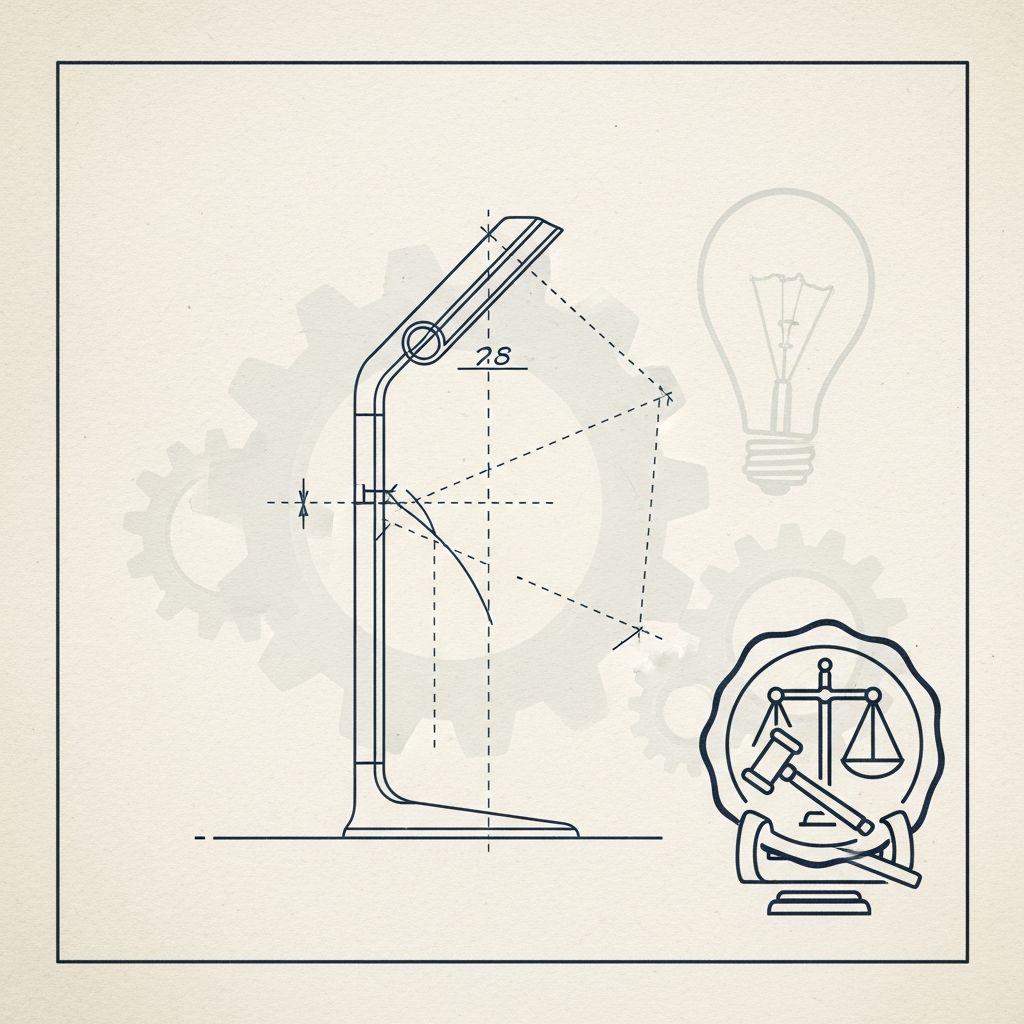
For many small businesses, the look and feel of a product is just as valuable as what it does. A well-crafted shape, unique contour, or distinctive surface pattern can separate your product from a crowded market of near-identical competitors. In the United States, this visual identity can be secured through a design patent, a specialized form of intellectual property protection administered by the U.S. Patent and Trademark Office (USPTO).
This guide explains what design patents are, how they differ from other types of protection, when they make sense, and what business owners should consider before investing time and money in a design patent application.
What a Design Patent Actually Protects
Under U.S. law, a design patent protects any new, original, and ornamental design for an article of manufacture. In plain terms, it covers how a product looks, not how it works.
The protected design can include:
- Overall shape of a product, such as the silhouette of a bottle or electronic device.
- Configuration or arrangement of elements, like the layout of buttons or ridges on a handle.
- Surface ornamentation, such as engraved patterns, textures, or decorative graphics applied to a product’s surface.
The design must be visually perceptible and tied to a specific article of manufacture. Purely abstract artwork, for example, is not protected by a design patent unless it is applied to a product, such as wallpaper, packaging, or fabric.
Design Patents vs. Utility Patents
Design patents are often confused with utility patents, but they serve different purposes and rely on different legal standards.
| Feature | Design Patent | Utility Patent |
|---|---|---|
| What it protects | Ornamental appearance (visual design) | Functional features, structure, or process |
| Key question | Is the way it looks new and ornamental? | Is the way it works new and useful? |
| Typical drawings | Line drawings showing the design from multiple views | Technical drawings, flowcharts, structural diagrams |
| Term (U.S.) | 15 years from grant date, no maintenance fees | Generally 20 years from filing, with maintenance fees |
| Infringement focus | Whether an ordinary observer would find the accused product’s design substantially the same | Whether the claims’ functional limitations are met |
Importantly, a single product can be covered by both types of patents. The USPTO allows applicants to obtain a design patent for the visual design and a utility patent for the underlying functional invention when both are novel and meet statutory requirements.
Ornamental vs. Functional: The Core Legal Boundary
For a design to be patentable, its distinctive visual features must be primarily ornamental, not dictated solely by function. Courts and the USPTO look at whether alternative designs could serve the same function:
- If multiple shapes or configurations could perform the same role, the chosen design is more likely considered ornamental.
- If the design is the only shape that works for that function, it may be considered purely functional and ineligible for design patent protection.
This distinction matters because patent law reserves design patents for protecting aesthetic qualities, while functional improvements belong under utility patents or may remain unprotected if they do not meet utility patent standards.
How Design Patents Compare to Trademarks and Trade Dress
Design patents are just one tool in a broader intellectual property toolkit that includes trademarks and trade dress. While they can overlap in what they protect, they operate differently:
- Trademarks identify the source of goods or services, such as brand names or logos. They can last indefinitely with continued use and renewal.
- Trade dress extends trademark principles to the overall appearance of a product or its packaging, so long as that appearance identifies source and is not functional.
- Design patents grant a time-limited monopoly on specific ornamental designs, regardless of whether consumers recognize the design as indicating a brand.
Design patents can complement trade dress claims. A patented design that becomes distinctive in the marketplace may later qualify for trade dress protection, offering longer-term rights after the design patent expires. However, features claimed as trade dress must still be nonfunctional under trademark law.
When a Design Patent Makes Business Sense
Not every visually appealing product demands a design patent. For smaller companies with limited budgets, it pays to be selective. Design patents tend to add the most value where:
- The product’s appearance drives consumer choice—for example, in fashion, consumer electronics, furniture, or home goods.
- Your design will be highly visible to customers, making it easy for competitors to copy and for you to identify infringers.
- You expect the design to be on the market long enough to justify the cost and time to obtain a patent.
- There are competing products with similar functions, so a unique look is a key differentiator.
- You plan to license the design or present it to larger partners who expect formal IP protection.
Because design patents are often less expensive and faster to obtain than utility patents, they can be attractive to startups and small businesses seeking a defined, enforceable right in a relatively short timeframe.
Basic Eligibility Requirements
To qualify for a U.S. design patent, your design must satisfy several legal thresholds under Title 35 of the U.S. Code and related USPTO rules.
- Novelty: The design must be new; it cannot have been publicly disclosed (in prior patents, publications, products, or other public uses) before certain dates set by patent law.
- Originality: The applicant must have created the design; straightforward copying of an existing design will not qualify.
- Ornamentality: The main features must be decorative rather than purely functional.
- Tied to an article of manufacture: The design must be applied to or embodied in a tangible product.
- Definite and consistent: The drawings must show the design clearly from enough viewpoints for the USPTO and the public to understand what is claimed.
Because U.S. law imposes strict time limits on filing after public disclosure or sale of the product, waiting too long to apply can permanently forfeit rights. Consulting a patent professional early in the design and commercialization process can help avoid this pitfall.
Key Elements of a Design Patent Application
While the precise structure of an application is defined by USPTO regulations, most successful design patent filings share a similar set of elements:
- Title that accurately describes the article of manufacture (for example, “Bottle,” “Chair,” or “Display Screen with Graphical User Interface”).
- Specification with a brief description of the design and any special features or embodiments.
- Drawings, usually line drawings, that show the design from multiple views (front, rear, top, bottom, left, right, and perspective) sufficient to capture the full visual appearance.
- Single claim defining the design as shown in the drawings, often using standard claim language required by the USPTO.
- Proper inventor information, declarations, and fees as required by patent rules.
The quality and clarity of the drawings are particularly critical. Because the design patent’s scope is defined by what is shown visually, imprecise or inconsistent drawings can limit or even invalidate the protection.
Costs, Timelines, and Maintenance
Compared to utility patents, design patents are typically less burdensome to obtain and maintain:
- The USPTO examination process for design patents is often shorter, with many applications completing examination within about one to two years, depending on backlog and complexity.
- Government filing and issue fees are generally lower than those for utility applications, and design patents do not require maintenance fees over their 15-year term in the United States.
The total cost to a business will depend on professional fees for preparing drawings, drafting the application, and communicating with the USPTO. Many applicants choose to work with patent attorneys or agents because small errors in a design application can significantly narrow or undermine the resulting protection.
Enforcing a Design Patent
Once granted, a U.S. design patent gives the owner the right to prevent others from making, using, selling, offering for sale, or importing into the United States products whose designs are covered by the patent’s claim.
Key points on enforcement include:
- Infringement standard: Courts often ask whether an ordinary observer, familiar with prior designs, would see the accused design as substantially the same as the patented design.
- Remedies can include injunctions to stop sales, monetary damages, and, in some cases, the infringer’s profits attributable to the design.
- Design patent litigation can be complex and expensive, so businesses usually reserve it for products with meaningful commercial value or strategic importance.
Even without litigation, the existence of a design patent can deter would-be copyists and strengthen a company’s leverage in licensing negotiations and commercial disputes.
Strategic Tips for Small Businesses
For smaller companies with limited budgets, a thoughtful strategy can maximize the value of design patents:
- Prioritize core products whose appearance is central to your brand identity or competitive advantage.
- Consider filing multiple design applications that cover key variants (for example, different versions or portions of a product) when budget allows.
- Coordinate design patent filings with trademark and trade dress strategies to build a layered IP portfolio where appropriate.
- Review competitors’ products periodically to identify potential infringement and decide if enforcement or licensing discussions make sense.
- Keep records of your design development, including sketches, prototypes, and launch dates, to assist with both application preparation and later enforcement.
By treating visual design as a business asset—rather than an afterthought—small businesses can better justify the cost of pursuing and maintaining design patent protection.
Frequently Asked Questions (FAQs)
Q1: Do I need a prototype before applying for a design patent?
No. U.S. law does not require a working prototype for a design patent. What matters is that the design is sufficiently developed to be fully and accurately shown in the drawings submitted with the application.
Q2: Can I protect a user interface or screen design?
Yes, graphical user interfaces (GUIs) and screen layouts can be protected as design patents when they meet the requirements for new, original, and ornamental designs applied to an electronic display or device.
Q3: Can one design patent cover multiple different products?
Generally, a single design patent focuses on one design for one article of manufacture. If you have substantially different designs or different types of products, you may need to file separate applications, though related variants can sometimes be covered through careful drafting.
Q4: What if my design also improves how the product works?
If the design provides both a functional improvement and a new ornamental appearance, you may be able to seek both a utility patent (for the functional aspect) and a design patent (for the visual appearance), provided each meets the respective legal standards.
Q5: Is a copyright enough instead of a design patent?
Copyright law protects certain artistic and graphic works, but design patents are specifically tailored to protect the appearance of useful articles. For three-dimensional product designs or integrated surface ornamentation on manufactured goods, a design patent can often offer clearer and stronger protection than copyright alone.
References
- Design patent application guide — U.S. Patent and Trademark Office. 2024-02-05. https://www.uspto.gov/patents/basics/apply/design-patent
- Design Patent vs Utility Patent: Differences Explained — Greenlight Guru. 2023-03-10. https://www.greenlight.guru/blog/design-vs-utility-patents-device
- Leveraging the U.S. Design Patent System to Protect Innovative Commercial Product Designs — Finnegan, Henderson, Farabow, Garrett & Dunner, LLP. 2018-06-01. https://www.finnegan.com/en/insights/articles/leveraging-the-u-s-design-patent-system-to-protect-innovative.html
- How to Patent a Design — Arapacke Law. 2022-09-15. https://arapackelaw.com/patents/how-to-patent-a-design/
- Design Patents 101 – Part 1 of 2 — Lewis Brisbois Bisgaard & Smith LLP. 2019-05-01. https://lewisbrisbois.com/blog/category/intellectual-property-technology/design-patents-101-part-1-of-2
- Understanding Design Patents: Why Every Manufacturer Should Consider Using Them — Don V. Kelly. 2009-01-01. https://www.evans-dixon.com/DMS-%232761742-v2-Website_Article_Patent_Understanding_Design_Patents.pdf
Similar Articles








Read full bio of medha deb


