
Understanding Demand Drafts and Telephone Checks
Learn how demand drafts, telephone checks, and preauthorized drafts work, and how to protect your bank account from misuse.
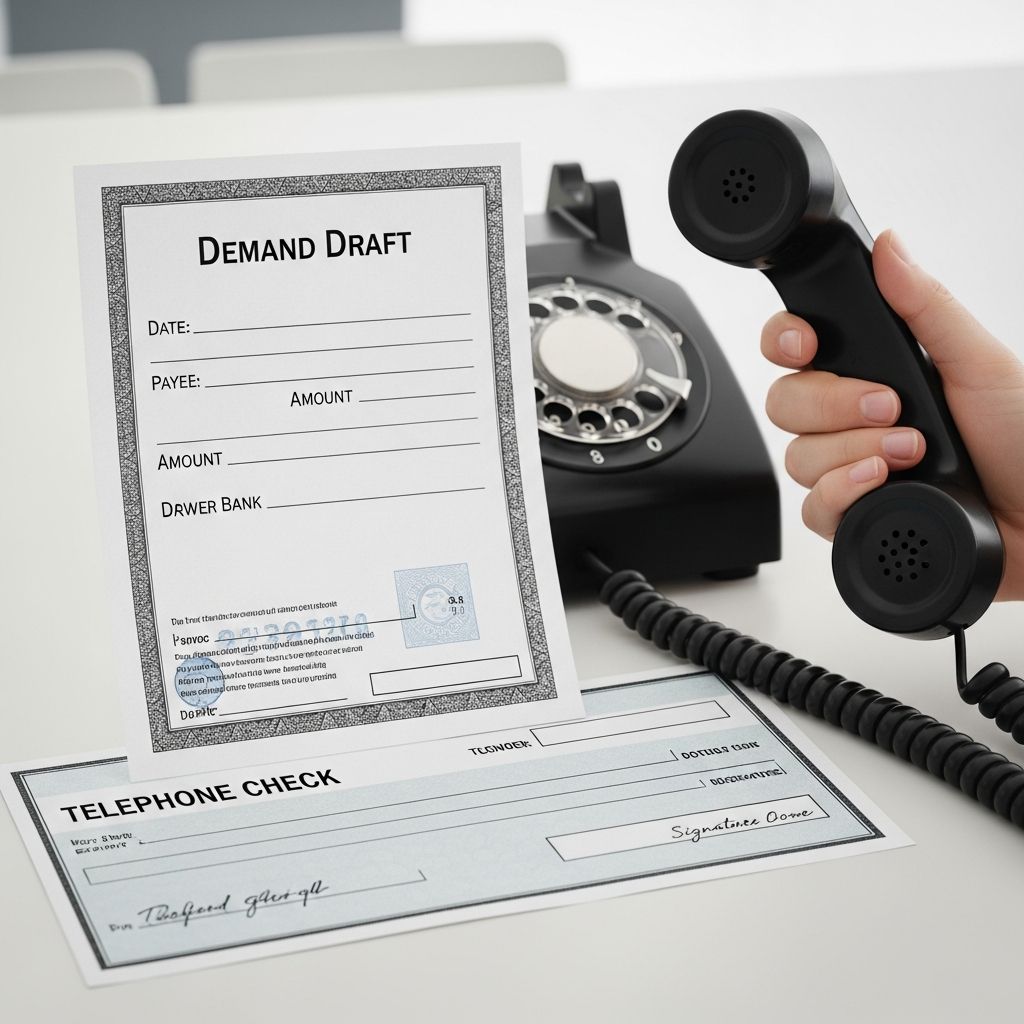
Demand drafts, telephone checks, and other preauthorized drafts allow companies to pull money directly from your bank account without requiring your handwritten signature on a paper check. These tools can be convenient, but they also carry unique risks that consumers should understand and manage carefully.
Key Takeaways at a Glance
- Demand drafts (also called remotely created checks) are payment orders that do not use your handwritten signature but still withdraw money from your account.
- Telephone checks and preauthorized drafts are often created after you give payment instructions over the phone or online instead of writing a check.
- These instruments are processed through the check system and will appear on your bank statement like a check, even though you never wrote one.
- They are widely used for recurring payments, phone or online purchases, and some bill payments, but have been associated with higher fraud and error rates in some markets.
- You have legal rights to dispute unauthorized or incorrect drafts, but you must review your statements quickly to act within required time limits.
What Is a Demand Draft?
A demand draft is a negotiable instrument that instructs a bank to pay a specified amount from your account to a payee, even though you did not physically sign a paper check. In many consumer transactions in the United States, this type of item is also known as a remotely created check (RCC).
In traditional banking, demand drafts are often used to transfer money between accounts or to pay third parties, and they are generally considered secure when properly authorized. However, when a draft is created without your handwriting or physical presence, it becomes harder for your bank to verify whether you truly approved the payment.
| Feature | Traditional Paper Check | Demand Draft / Remotely Created Check |
|---|---|---|
| Who creates it? | You (the account holder) fill out and sign the check. | Typically the payee or a payment processor creates the draft using your account details. |
| Signature requirement | Must show your handwritten signature. | Does not require your handwritten signature; may show a typed authorization statement instead. |
| How is it authorized? | You write, sign, and deliver the check. | Authorization is usually given by phone, online, or through another remote agreement. |
| How it appears on statements | As a check with a check number and payee name. | As a check-like withdrawal; may not be obvious that it was created remotely. |
| Main risk | Lost or stolen physical checks; forged signatures. | Fraudulent or unauthorized creation using your account number and routing number. |
What Is a Telephone Check or Preauthorized Draft?
A telephone check or preauthorized draft is a kind of demand draft that is created after you give payment instructions by phone, through a recorded call, or via another remote method instead of signing a paper document.
In practice, the company you are paying may ask for:
- Your bank name
- Your routing number
- Your account number
- Your permission to withdraw a specific amount on a specific date or set of dates
Using this information, the company or its payment processor produces a check-like instrument that can be sent through the banking system as if it were an ordinary check, even though no paper ever changed hands.
How These Drafts Are Typically Used
Demand drafts and telephone checks are most often used where a business needs to collect funds but the customer is not present in person or is interacting remotely.
- One-time purchases made by phone or through an order center
- Payment of utility, insurance, or subscription bills when you call in a payment
- Installment plans or membership fees scheduled to be collected monthly from your account
- Remote transactions with service providers that prefer not to accept or process card payments
- Transfers between your own accounts at different financial institutions (via bank-issued drafts)
For legitimate businesses, these instruments can lower processing costs and allow them to continue collecting payments even when a card is not available. However, the same features make demand drafts attractive to scammers, particularly those operating through telemarketing or unsolicited calls.
Why Demand Drafts and Telephone Checks Carry Extra Risk
Because remotely created drafts do not require a handwritten signature, banks cannot rely on the usual comparison between the signature on the item and the signature on your account card. That makes it easier for bad actors to generate a draft without your knowledge if they manage to obtain your bank routing and account numbers.
Common Risk Factors
- Limited visual cues: On a printed image of the draft, your signature line may contain only a phrase such as “authorized by account holder” rather than an actual signature, making it less obvious to you that the draft was created remotely.
- Difficulty detecting fraud: If you receive statements electronically or do not check them frequently, a fraudulent draft may look like any other check debit.
- Telemarketing scams: Fraudulent callers may pressure you into providing account information, then create unauthorized drafts. U.S. regulators have highlighted remotely created checks as a payment channel often abused by deceptive telemarketers.
- Recurring withdrawals: When you authorize recurring telephone drafts, future debits may continue even after you stop using the service unless you properly revoke authorization.
Your Legal Protections and Dispute Rights
In the United States, consumer protections vary depending on whether a payment is treated as an electronic fund transfer or a check-based transaction. Demand drafts and remotely created checks are generally handled under check rules rather than the federal electronic fund transfer rules.
That distinction matters because different timelines and responsibilities apply when you challenge a transaction. For example, under federal rules for electronic fund transfers, consumers generally have strong rights to dispute unauthorized debits if they report them in a timely manner. Check-based items such as demand drafts are instead governed largely by the Uniform Commercial Code and by your bank’s deposit account agreement, which can set specific deadlines for reporting problems.
To protect your rights, it is important to:
- Read your account agreement to understand how long you have to report an unauthorized or incorrect charge.
- Review statements every month and immediately question any draft you do not recognize.
- Submit your dispute in writing if your bank requires written notice for certain claims.
How to Recognize Demand Drafts on Your Bank Statement
Demand drafts and telephone checks will usually appear among your check withdrawals, but the exact way they are labeled varies by bank. Some institutions may display a number that is clearly not part of your usual check sequence, or they may include a description such as “draft,” “RCC,” or “TEL draft.”
Ways to identify them include:
- Looking for check withdrawals that you do not remember writing.
- Noticing check numbers that are far outside your usual range (for example, a long sequence of zeros or an unusual code).
- Requesting a copy or image of any suspicious item from your bank so that you can see who created it and what information they used.
If an item turns out to be a remotely created check or demand draft that you did not authorize, you should contact your bank without delay.
Steps to Take Before Authorizing a Telephone or Draft Payment
Before giving any business permission to debit your bank account using a demand draft or telephone check, it is wise to slow down and run through a safety checklist.
Verify the Business
- Confirm the company’s full legal name and contact information from an independent source, such as its official website or a billing statement you already have.
- Search for complaints or alerts from regulators or consumer protection agencies about that business.
- Be cautious if the company initiated the call unexpectedly or uses high-pressure sales tactics.
Clarify the Payment Terms
- Ask whether the debit is one-time or recurring.
- Record the amount, date, and authorization number or confirmation code they provide.
- Request written documentation of the terms by email or mail.
- Find out how you can cancel future debits and how much advance notice is required.
Consider Using Alternatives
- For recurring bills, see if you can authorize an electronic debit through your bank’s online bill-pay system instead of providing your account number to a third party.
- Where available, a debit or credit card payment may provide clearer dispute and chargeback rights than a remotely created draft.
- For large transactions with unfamiliar parties, some consumers prefer more controlled methods such as certified checks, bank drafts issued directly by the bank, or wire transfers with documented instructions.
What to Do If You Find an Unauthorized Demand Draft
If you discover a demand draft or telephone check that you did not approve, swift action is essential.
- Contact your bank immediately
Call the customer service number on your statement or bank card. Explain that a draft or check debit appears to be unauthorized. Ask how to formally dispute it and whether the bank can place a stop payment on future drafts from the same source. - Request a copy of the item
Ask for an image or physical copy of the draft. This can help you identify who initiated it and what information they used. - Submit a written dispute if required
Your bank may ask you to complete a written statement of unauthorized use. Provide details such as the date, amount, and why you believe the charge is unauthorized. - Consider closing or changing the account
If your account information has been compromised, your bank may recommend closing the account and opening a new one with a different number to prevent additional unauthorized drafts. - Report the incident to authorities if fraud is involved
If you suspect a scam or identity theft, consider reporting it to appropriate consumer protection agencies or law enforcement.
Practical Tips to Protect Your Bank Account
Because demand drafts rely heavily on your routing and account numbers, handling that information carefully is one of the best defenses against misuse.
- Limit where you share your account details: Only provide your bank account and routing numbers to organizations you trust and with whom you have an ongoing relationship.
- Avoid sharing account information by unsolicited phone calls: If someone calls claiming to represent a company you do business with, hang up and call back using a verified number from your statement or the company’s official website.
- Use secure channels: When providing account details online, ensure you are on a secure, encrypted website owned by the business you intend to pay.
- Set up alerts: Many banks offer text or email alerts for large withdrawals or check payments. Activating these can help you spot suspicious drafts quickly.
- Monitor joint accounts: If you share an account, make sure all account holders understand how demand drafts work and agree on who can authorize them.
Frequently Asked Questions (FAQs)
Q1: Is a demand draft the same as an electronic debit?
No. A demand draft or remotely created check is processed through the check clearing system and appears as a check debit, whereas an electronic debit (such as an ACH transfer) is processed through an electronic funds network. Different legal rules and timelines may apply to each.
Q2: Can my bank refuse to accept a demand draft?
Banks generally accept properly created drafts that meet clearinghouse standards, but they may place conditions or monitoring controls on remotely created checks because of fraud risk. Some financial institutions restrict their use or scrutinize them more closely.
Q3: How can I stop recurring telephone drafts I no longer want?
First, contact the company you authorized and clearly tell them to stop taking payments from your account. Document the date, time, and person you spoke with. Then, notify your bank that you are revoking authorization for that company to debit your account and ask about placing a stop payment order. Check later statements to confirm that withdrawals have ended.
Q4: Is it safer to pay by card instead of a telephone check?
In many cases, using a debit or credit card can provide clearer dispute rights and may offer additional consumer protections from card network rules, especially for unauthorized or fraudulent transactions. However, you should still only share card details with trusted merchants and through secure channels.
Q5: What information should I keep after authorizing a demand draft?
Keep a record of the company name, the date and amount of the authorization, any confirmation or reference number, and copies of any written or electronic documentation you receive. This information will be important if you later need to dispute a charge or prove that you limited the authorization to a specific amount or time period.
References
- Demand draft — Wikipedia. 2024-05-08. https://en.wikipedia.org/wiki/Demand_draft
- Demand Draft — ClearTax. 2023-07-12. https://cleartax.in/glossary/demand-draft
- Demand Draft — Corporate Finance Institute. 2022-10-19. https://corporatefinanceinstitute.com/resources/wealth-management/demand-draft/
- DEMAND DRAFT — Indrayani Co-operative Bank Ltd. 2021-03-01. https://indrayanibank.com/demand-draft/
- Difference Between Cheque and Demand Draft: A Detailed Guide — Razorpay. 2023-11-02. https://razorpay.com/learn/difference-between-cheque-and-demand-draft/
Similar Articles








Read full bio of Sneha Tete


