
Understanding Criminal Charges in the U.S. Justice System
A clear, practical guide to how criminal charges work, from first accusation through possible trial, sentencing, and appeal.
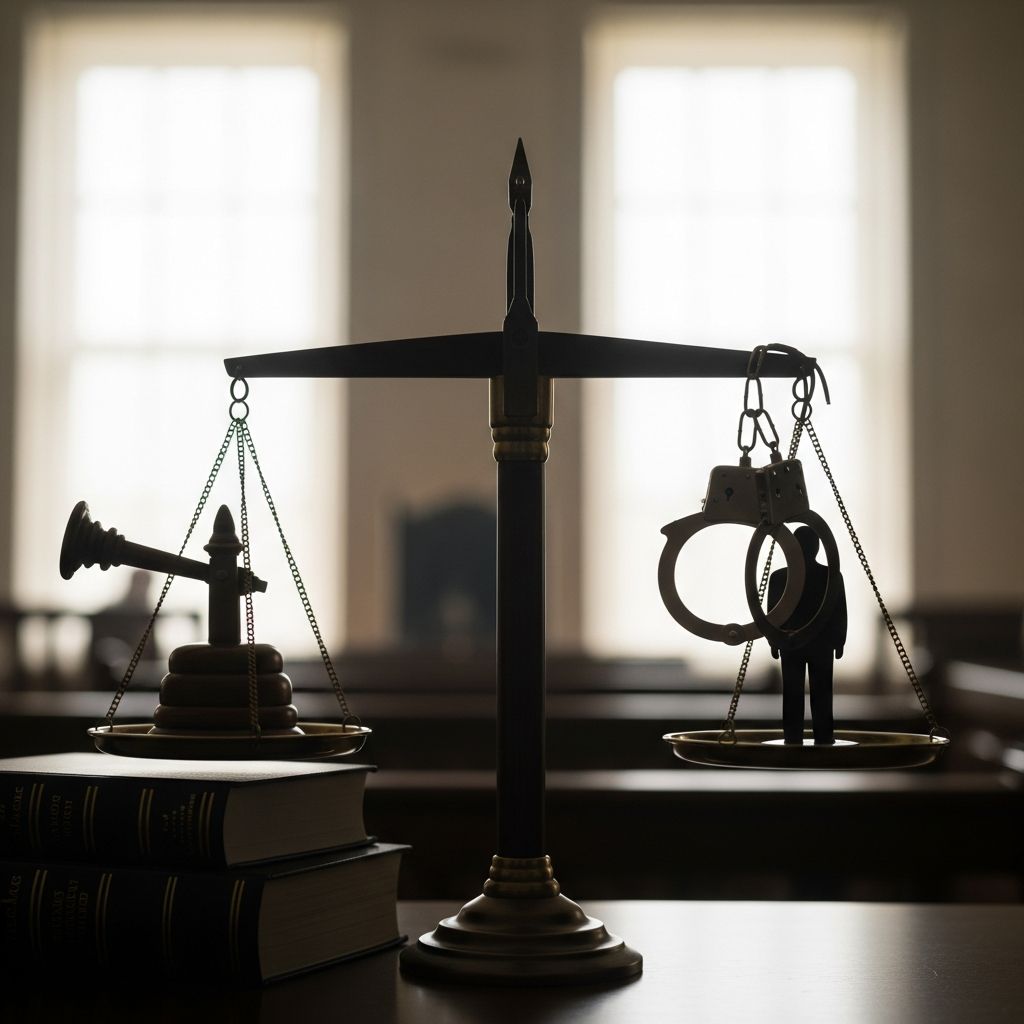
Criminal charges mark the formal point at which the government accuses a person of breaking a criminal law. Knowing what a charge is, how it is filed, and what happens afterward can help you better understand your rights and options if you or someone you know faces prosecution.
What Is a Criminal Charge?
A criminal charge is a formal allegation by a government authority that a person has committed a specific crime. It usually appears in a written document such as a complaint, information, or indictment and identifies the offense, the relevant statute, and basic facts supporting the accusation.
Criminal charges serve several key functions:
- Notify the accused of exactly what law they are alleged to have violated.
- Trigger the court process, including arraignment, bail, and later hearings.
- Define the potential penalties the person could face if convicted.
- Protect rights by requiring probable cause or grand jury review before serious charges move forward in many systems.
Who Decides Which Charges to File?
In most U.S. jurisdictions, the decision about which specific crimes to charge is made by a prosecutor after reviewing evidence gathered by law enforcement.
Typical decision-makers include:
- Local prosecutors (district attorneys, state attorneys, county prosecutors) for state and local crimes.
- United States Attorneys for federal offenses prosecuted in federal court.
The prosecutor weighs factors such as:
- Whether there is enough evidence to meet the legal standard of probable cause or higher.
- The seriousness of the alleged conduct.
- Plea bargaining prospects and available resources.
- Applicable statutes of limitations and sentencing ranges.
How a Criminal Case Typically Begins
Although procedures vary across states and between state and federal courts, most criminal cases move through similar early stages.
| Stage | What Happens | Key Participants |
|---|---|---|
| Investigation | Police or other agencies gather facts, interview witnesses, and collect evidence. | Law enforcement, investigators, sometimes prosecutors |
| Arrest or Summons | Person is taken into custody or ordered to appear in court based on alleged offense. | Police, magistrate or judge |
| Charging Decision | Prosecutor reviews reports and decides what criminal counts to file. | Prosecutor, sometimes grand jury |
| Initial Hearing / First Appearance | Defendant is informed of the charges, rights, and may address bail. | Judge, prosecutor, defense, defendant |
| Arraignment | Formal reading of charges and entry of plea (guilty, not guilty, or no contest). | Judge, prosecutor, defense, defendant |
Investigation and Evidence Gathering
The process usually starts when law enforcement receives a report of suspected criminal activity. Officers or agents then conduct a criminal investigation.
Investigative steps may include:
- Interviewing victims, witnesses, and potential suspects.
- Collecting physical, digital, and forensic evidence.
- Applying for and executing search or arrest warrants approved by a judge.
- Consulting with prosecutors about which charges may be supported by the evidence.
In some cases, the investigation is brief and leads quickly to charges and an arrest; in others, particularly complex or large-scale cases, it can take months or even years.
From Arrest to First Court Appearance
When officers believe there is probable cause that a person committed a crime, they may make an arrest or, for less serious offenses, issue a summons ordering the person to appear in court on a specific date.
After arrest:
- The accused is taken into custody and typically booked at a jail.
- Authorities have a limited time to file formal charges or release the person, often a few days depending on the jurisdiction.
- The first court hearing (sometimes called an initial appearance or first appearance) takes place, at which the judge reviews the charges and may address bail.
At the first appearance, the judge will generally:
- Advise the defendant of the charges and their basic rights, including the right to counsel.
- Determine whether the defendant will be held in custody, released on bail, or allowed to remain free on conditions such as a personal recognizance bond.
Charging Documents: Complaint, Information, and Indictment
The accusation is formalized in a charging document that sets out the offense or offenses at issue.
Common types include:
- Complaint: Often used for initial charges in lower courts, especially for misdemeanors or when a case begins through a police complaint filed with a judge.
- Information: A formal written accusation by a prosecutor, typically used in many state systems without a grand jury for some felonies.
- Indictment: A charging document returned by a grand jury after it hears evidence and votes that probable cause exists.
In the federal system, use of a grand jury indictment is required for most serious felony charges unless the defendant waives that right.
The Role of the Grand Jury in Serious Cases
A grand jury is a group of citizens called to review evidence presented by prosecutors and decide whether there is probable cause to issue an indictment in felony cases.
Key features of grand jury proceedings include:
- They are closed to the public, with only the prosecutor, witnesses, and jurors present.
- The prosecutor, not the defense, controls which evidence the grand jury sees.
- Jurors vote whether to return an indictment, which formally charges the accused with one or more criminal counts.
Some states use grand juries for only the most serious crimes; others rely more heavily on prosecutors filing informations with judicial review.
Arraignment and Entering a Plea
Once charges are filed and probable cause is found by a judge or grand jury, the defendant appears for an arraignment.
At this hearing, the court will typically:
- Formally state the charges against the defendant in open court.
- Confirm that the defendant understands the nature of the allegations and the potential penalties.
- Ensure that the defendant is represented by an attorney or is informed of the right to counsel, including court-appointed counsel if indigent.
- Ask the defendant to enter a plea to each charge, often:
- Guilty – admitting the offense.
- Not guilty – disputing the accusation and requesting a trial.
- No contest (nolo contendere) – not admitting guilt but not contesting the charge, which may have particular legal effects depending on the jurisdiction.
If a not-guilty plea is entered, the case generally moves toward trial, with deadlines set for pretrial motions and discovery.
Discovery and Pretrial Motions
During the discovery phase, each side exchanges information and evidence that may be used at trial, subject to constitutional and procedural rules.
Typical discovery and pretrial steps include:
- The prosecutor providing police reports, witness lists, and other materials to the defense.
- The defense requesting additional evidence and sometimes conducting its own investigation.
- Filing motions to suppress certain evidence, dismiss charges, or change the trial venue.
- Pretrial hearings where the judge rules on these motions, which can shape or even end the case before trial.
Plea Bargaining and Case Resolution
In practice, most criminal cases end with a plea agreement rather than a full trial. A plea bargain is an agreement between the prosecutor and the defendant, often involving:
- A guilty or no-contest plea to some or all charges.
- Reduction or dismissal of other counts.
- Recommendations for a particular sentence or sentencing range.
The judge must usually review and approve the plea. If accepted, the case proceeds directly to sentencing without a trial.
The Criminal Trial
If no plea agreement is reached and the defendant maintains a not-guilty plea, the case goes to trial. Trials may be held before a judge alone (bench trial) or a jury, depending on the nature of the charges and applicable law.
Key elements of a criminal trial include:
- Jury selection (for jury trials), where prosecutors and defense counsel question potential jurors and may challenge some for cause or through limited peremptory challenges.
- Opening statements by the prosecution and defense outlining what they intend to prove.
- Presentation of evidence, with the prosecution bearing the burden of proving guilt beyond a reasonable doubt.
- Cross-examination, where each side questions the other’s witnesses.
- Closing arguments, summarizing each side’s view of the evidence.
- Jury deliberations and verdict, or a ruling by the judge in a bench trial.
If the defendant is found not guilty, the charges are dismissed and the case ends. If the defendant is convicted, the case proceeds to sentencing.
Sentencing After Conviction
When a defendant pleads guilty or is found guilty, the judge imposes a sentence based on applicable statutes, guidelines, and the facts of the case.
Possible sentencing outcomes include:
- Fines or restitution payments.
- Probation, often with conditions such as counseling or community service.
- Short-term local jail sentences.
- Longer-term incarceration in state or federal prison.
- Combination sentences (for example, jail followed by probation).
Many systems use sentencing guidelines or factors that consider the severity of the offense, the defendant’s criminal history, and mitigating or aggravating circumstances.
Appeals and Post-Conviction Review
Defendants who are convicted generally have the right to seek review of legal errors through an appeal to a higher court.
Common appellate issues include:
- Challenges to the sufficiency of evidence.
- Alleged errors in admitting or excluding evidence.
- Claims that the sentence was unlawful or unreasonable.
- Constitutional claims, such as ineffective assistance of counsel.
Additional post-conviction procedures, such as habeas corpus petitions, may be available in some circumstances, especially where constitutional violations are alleged.
Key Rights When Facing Criminal Charges
Criminal procedure is structured to protect the constitutional rights of people accused of crimes. While specific rules differ by jurisdiction, important protections typically include:
- The right to be informed of the nature and cause of the accusation.
- The right to counsel, including appointed counsel if you cannot afford a lawyer in many cases.
- The right to a speedy and public trial by an impartial jury for serious offenses.
- The right to confront and cross-examine witnesses.
- The privilege against self-incrimination.
- The requirement that guilt be proven beyond a reasonable doubt.
Frequently Asked Questions About Criminal Charges
Q: Is a criminal charge the same as a conviction?
A: No. A criminal charge is only an allegation that starts the court process. A conviction occurs only if the defendant pleads guilty or is found guilty at trial.
Q: Can charges be changed or dismissed after they are filed?
A: Yes. Prosecutors may add, reduce, or dismiss charges as new evidence appears, after plea negotiations, or if courts grant motions that limit the available proof.
Q: Do all criminal cases go to trial?
A: No. Most cases are resolved through plea agreements, diversion programs, or dismissal prior to trial, with only a relatively small share reaching a full trial.
Q: What should someone do if they are charged with a crime?
A: It is generally important to seek legal counsel promptly, avoid discussing the case with anyone other than an attorney, and carefully follow all court orders and appearance dates.
Q: Are criminal procedures the same in every state?
A: No. Each state has its own criminal code and procedural rules, and federal courts follow separate federal rules. However, many stages—such as charging, arraignment, trial, and appeal—are broadly similar across jurisdictions.
References
- Steps in the Federal Criminal Process — U.S. Department of Justice, Office of the U.S. Attorneys. 2020-10-14. https://www.justice.gov/usao/justice-101/steps-federal-criminal-process
- Criminal Cases — Administrative Office of the U.S. Courts. 2021-06-01. https://www.uscourts.gov/about-federal-courts/types-cases/criminal-cases
- The Legal Process in the United States: A Criminal Case — Animal Legal Defense Fund. 2022-04-15. https://aldf.org/article/the-legal-process-in-the-united-states-a-criminal-case/
- How a Criminal Case Proceeds in Court — St. Joseph County, Indiana (Official Government Site). 2019-08-20. https://www.sjcindiana.gov/701/How-a-Criminal-Case-Proceeds-in-Court
- Criminal Definitions — University of Michigan Student Legal Services. 2018-09-10. https://studentlegalservices.umich.edu/article/criminal-definitions
- What Is Criminal Procedure? — Thomson Reuters Legal. 2023-03-07. https://legal.thomsonreuters.com/blog/criminal-procedure/
Similar Articles








Read full bio of medha deb




