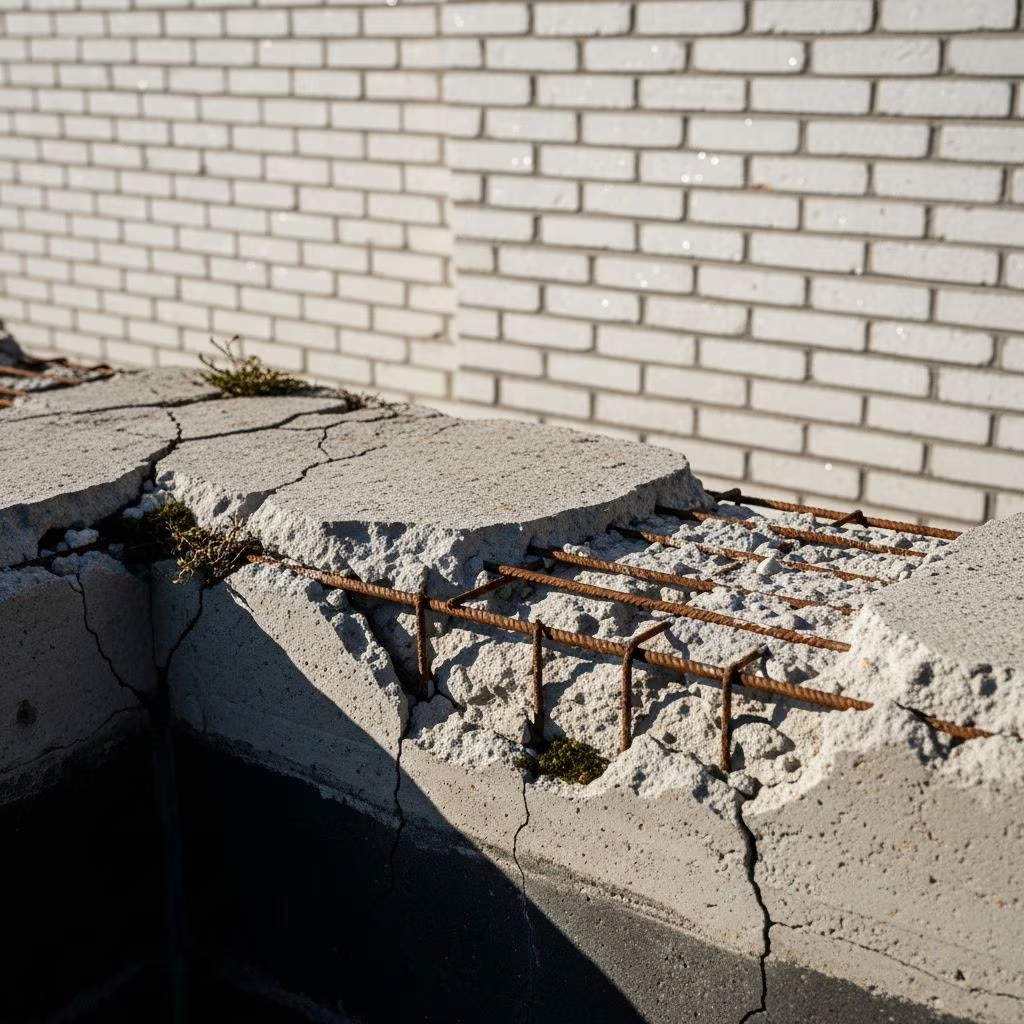
Buying or building a home or commercial property is often one of the largest financial commitments a person will ever make. When the finished structure turns out to have serious problems, owners quickly discover that construction defects can be costly, stressful, and legally complex. This guide explains what construction defects are, how they arise, how they are classified, and what legal options may be available to affected owners.
What Is a Construction Defect?
A construction defect is generally understood as a flaw in the design, materials, or workmanship of a building that reduces its value, interferes with its intended use, or creates a risk to the health or safety of occupants. These defects are different from normal aging or ordinary wear and tear.
| Feature | Construction Defect | Normal Wear and Tear |
|---|---|---|
| Cause | Design, material, or workmanship failure; code violations | Long-term use and exposure to elements |
| Timing | Often appears soon after completion, but may emerge years later | Gradual and expected over the life of the building |
| Legal Significance | May support claims for damages or repairs | Generally not compensable; considered owner’s responsibility |
| Impact | Can impair structural integrity or safety | Typically cosmetic or minor unless ignored for a long time |
In legal disputes, courts and experts often focus on whether the building was constructed in a “reasonably workmanlike manner,” whether it complies with applicable building codes, and whether it performs as a typical buyer could reasonably expect.
Common Sources of Construction Defects
Although every project is unique, construction defects generally arise from one or more of the following problem areas.
- Design errors by architects or engineers, such as inadequate structural support or poor water drainage planning.
- Defective or inappropriate materials, including products that fail prematurely or do not meet required specifications.
- Poor workmanship, such as improper installation of roofing, plumbing, or electrical systems.
- Subsurface and site issues, including unstable soil or inadequate grading and drainage.
- Code violations, where work does not meet state or local building code requirements.
- Inadequate supervision or quality control by contractors and developers.
In some disputes, owners, contractors, design professionals, and manufacturers may disagree about which of these factors is responsible for the damage, so multiple experts may be involved in investigating the cause.
Types of Construction Defects by Nature of the Problem
Defects can be grouped based on the aspect of the project that failed. Understanding these categories helps owners and professionals diagnose issues and identify potentially responsible parties.
1. Design-Related Defects
Design defects stem from mistakes in architectural or engineering plans. These may include underestimating loads on structural components, failing to provide adequate water drainage, or not specifying proper fire-resistance requirements.
- Insufficient structural bracing that leads to sagging floors or roof movement.
- Roof geometry that channels water toward vulnerable areas, causing leaks.
- HVAC layouts that cannot maintain safe or comfortable indoor conditions.
When flawed plans are followed correctly but still produce a defective building, liability may fall primarily on the design professionals rather than the contractor.
2. Material and Product Defects
Material defects arise when products used in the building are inherently faulty, damaged, or unsuitable for their intended use.
- Concrete that crumbles earlier than expected due to improper mix or contamination.
- Roofing materials that deteriorate rapidly, leading to water intrusion.
- Windows or doors that warp or fail to seal, allowing air or water to enter.
Manufacturers or suppliers may bear part of the responsibility if defective products cause damage, especially if the contractor installed them according to instructions and applicable standards.
3. Workmanship and Construction Deficiencies
Construction defects in the narrow sense are failures in how the work was carried out. Even good plans and quality materials can result in defects if they are installed incorrectly.
- Improperly installed flashing or waterproofing membranes around roofs and windows.
- Plumbing connections that leak, promoting mold growth inside walls.
- Inadequate fastening or reinforcement of structural members.
- Poorly compacted backfill around foundations, leading to settlement and cracks.
These defects are often traced back to contractors, subcontractors, or workers who did not follow plans, codes, or industry standards.
4. Subsurface and Site-Related Problems
Subsurface defects relate to the soil and site conditions on which the building is constructed.
- Unstable or expansive soils that shift, causing foundation movement.
- Inadequate grading that channels water toward the structure instead of away.
- Insufficient drainage systems that allow water to accumulate near foundations.
Site investigations and geotechnical studies are often used to assess whether the developer or design team properly evaluated and responded to soil conditions before construction.
Patent vs. Latent Defects
Construction law frequently distinguishes between patent and latent defects. This distinction matters for inspection duties and time limits to bring claims.
Patent Defects
Patent defects are problems that are reasonably apparent during ordinary inspection. They are visible or obvious without specialized testing, such as a cracked window, misaligned door, or missing railing.
- Typically discovered before purchase or shortly after completion.
- Often addressed through punch lists, warranty claims, or routine repairs.
- Owners may be expected to identify and report these issues within a relatively short time.
Latent Defects
Latent defects are hidden problems that are not observable through reasonable inspection and may remain undiscovered for years.
- Examples include concealed structural weaknesses, inadequate reinforcement, or defective waterproofing behind walls.
- They may only become apparent when damage surfaces, such as significant cracking, leaks, or mold growth.
- Many jurisdictions have special statutes of limitation or “statutes of repose” that set outer time limits on claims related to latent deficiencies.
Because latent defects can cause extensive damage over time, they are often at the center of large and complex construction defect lawsuits.
Typical Examples of Construction Defects
While every case turns on its specific facts, some recurring examples appear frequently in disputes and legal decisions.
- Water intrusion around windows, roofs, balconies, or foundations, often leading to rot or mold.
- Foundation movement or significant settlement due to poor compaction or inadequate grading.
- Cracking in structural elements, such as beams, columns, or load-bearing walls.
- Roof failures, including leaks, ponding water, or premature deterioration.
- Defective mechanical systems, such as HVAC, plumbing, or electrical installations that do not perform safely or as intended.
- Toxic mold and moisture problems caused by persistent leaks or poor ventilation, which can create health risks and costly remediation needs.
Impact on Property Owners and Occupants
Construction defects can have immediate and long-term consequences for owners, tenants, and even surrounding properties.
- Economic loss: Reduced property value, repair costs, relocation expenses, and increased insurance premiums.
- Safety concerns: Risk of structural failure, fire hazards, or unsafe indoor air conditions.
- Disruption of use: Temporary loss of use of part or all of the building during investigation or repair.
- Disputes between neighbors or associations: In multi-unit developments, defects can affect common areas and multiple owners, complicating decision-making and cost sharing.
Who May Be Legally Responsible?
Liability for construction defects is often shared among several participants in the project. The specific parties and legal theories depend on state law and the facts of the case, but potential defendants commonly include:
- Developers and builders who oversee or coordinate the project and warrant its overall quality.
- General contractors and subcontractors responsible for hands-on construction work.
- Architects and engineers who design the structure or specific systems.
- Material manufacturers and suppliers whose products are alleged to be defective.
- Inspectors or code officials, in limited circumstances, where negligent approval may have contributed to the problem.
Determining who is potentially liable often requires technical investigations, contract review, and analysis of building codes and industry standards.
Legal Theories in Construction Defect Cases
Construction defect lawsuits may be brought under various legal theories, sometimes in combination. The applicable claims depend on the parties involved, contractual language, and state statutes.
- Negligence: Alleging that contractors, designers, or others failed to exercise reasonable care in performing their work.
- Breach of contract: Claiming that the finished product did not meet the requirements of a construction or purchase agreement.
- Breach of warranty: Relying on express warranties in contracts or implied warranties of habitability and good workmanship recognized under state law.
- Strict liability (in some jurisdictions): Asserting that certain parties, such as mass housing developers or product manufacturers, are liable for defects regardless of negligence.
- Fraud or misrepresentation: Alleging that a seller or builder knowingly concealed defects or made false statements about the condition of the property.
Many states have enacted statutes specifically addressing construction defect claims, including pre-suit notice requirements, opportunity-to-repair provisions, and time limits, so local law plays a significant role in shaping any case.
Steps Owners Can Take When a Defect Is Suspected
Owners who believe their property may suffer from construction defects should proceed carefully to preserve evidence, protect safety, and comply with legal deadlines.
- Document the problem with dated photographs, videos, and written notes about when and how the issue was noticed.
- Review contracts and warranties to understand any notice requirements or dispute resolution clauses.
- Consider a professional inspection by a qualified engineer or building expert to assess the cause and extent of damage.
- Notify responsible parties in writing, such as the builder or developer, following any procedures required by state law.
- Consult an attorney experienced in construction defect or real estate law to evaluate legal options and deadlines.
Some disputes can be resolved through warranty service, insurance claims, or negotiated settlements. Others may require formal litigation, arbitration, or mediation.
Frequently Asked Questions (FAQs)
Q: How do I know if a problem is a construction defect or just maintenance?
A: A construction defect usually results from a failure in design, materials, or workmanship and appears earlier or more severely than normal wear would predict. Routine maintenance issues, by contrast, develop gradually as part of the normal aging of the building. A qualified inspector or engineer can help determine the difference.
Q: Can I still bring a claim if I discover a defect many years after construction?
A: It depends on your state’s statutes of limitation and statutes of repose. Many jurisdictions set specific time limits for bringing construction defect claims, especially for latent defects. An attorney familiar with local law can explain which deadlines apply to your situation.
Q: Who pays for repairs while a construction defect dispute is ongoing?
A: Owners often must decide whether to make temporary or permanent repairs to protect health and safety, even while liability is contested. Repair costs, loss of use, and related expenses may later be claimed as damages from responsible parties if the owner prevails. Legal and insurance advice is important when planning repairs during a dispute.
Q: Are home inspectors responsible if they miss a major defect?
A: In some circumstances, an inspector who failed to identify defects that should have been discovered during a reasonable inspection may face claims for negligence or breach of contract. However, many inspections are limited in scope and may exclude hidden or latent defects, so liability depends on the terms of the inspection agreement and state law.
Q: Do construction defects only occur in new buildings?
A: Defects most commonly arise or are discovered in new or recently renovated structures, but they can also appear in older buildings where prior work was defective. Renovations, additions, and repairs can all introduce new design, material, or workmanship problems.
References
- Construction Defects & Related Lawsuits — Justia. 2023-05-10. https://www.justia.com/real-estate/home-ownership/owning-a-home/construction-defect/
- What Are Construction Defects? — Poles, ICBO / JurisPro (PDF). 2000-01-01. https://www.jurispro.com/files/articles/Poles%20-%20ICBO.pdf
- Construction Defects and Negligence: Impacts and Legal Remedies — KPPB LAW. 2022-09-15. https://www.kppblaw.com/construction-defects-and-negligence-impacts-and-legal-remedies/
- Types of Construction Defects — Travelers Insurance. 2021-08-01. https://www.travelers.com/resources/business-industries/construction/types-of-construction-defects
- Real Estate Construction Defects: What You Should Know — Furukawa Castles LLP. 2023-12-01. https://furukawacastles.com/blog/2023/12/what-you-should-know-construction-defects/
- Construction Defects — RAK Law Firm. 2023-04-20. https://www.raklawfirm.com/practice-areas/construction-litigation/construction-defects/
- Construction Defect Attorneys — Burg Simpson Law Firm. 2022-07-11. https://www.burgsimpson.com/wyoming/construction-defects/