
Understanding Colorado Law and the Court System
A practical guide to Colorado laws, court structure, and key legal topics for residents, visitors, and businesses.
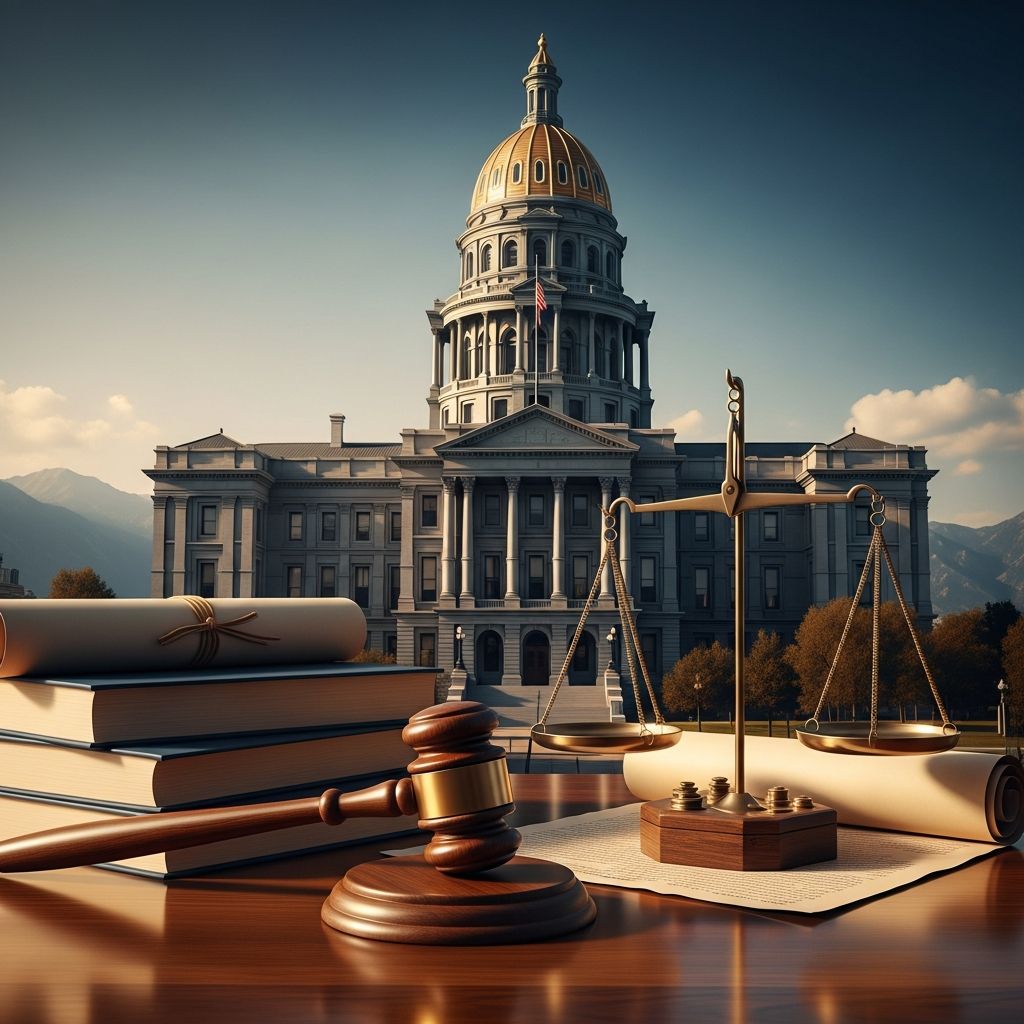
Colorado has its own constitution, statutes, regulations, and court system that work together to govern daily life in the state. Understanding how these pieces fit together can help you make better decisions, recognize when you may need legal help, and navigate the system with more confidence.
This guide explains how Colorado law is organized, how the courts are structured, and highlights major legal topics that frequently affect residents, visitors, and businesses.
How Colorado Law Is Organized
Colorado law comes from several sources, each playing a different role in the overall legal framework.
- Colorado Constitution – Sets out the structure of state government, defines the powers of each branch, and protects fundamental rights at the state level.
- Colorado Revised Statutes (C.R.S.) – State laws passed by the General Assembly and signed by the Governor, covering areas like crimes, contracts, property, and family law.
- Administrative rules and regulations – Detailed rules adopted by state agencies (such as the Department of Public Health & Environment or the Department of Revenue) to implement statutes.
- Case law – Written decisions of Colorado appellate courts that interpret statutes, regulations, and constitutional provisions, and that bind lower courts in similar cases.
- Local ordinances – Laws adopted by cities and counties, often dealing with zoning, building codes, noise, and traffic within local boundaries.
Because these layers interact, a single dispute—such as a landlord–tenant disagreement or criminal charge—may involve several types of law at once.
The Structure of Colorado’s Court System
Colorado’s judicial branch is responsible for resolving disputes, interpreting laws, and ensuring fair procedures in criminal and civil cases. It includes multiple levels of courts, each with its own jurisdiction.
Main Types of Courts in Colorado
| Court Type | Primary Role | Typical Cases |
|---|---|---|
| Municipal Courts | Handle violations of city ordinances within city limits. | Local traffic tickets, animal control issues, noise and zoning violations, petty offenses. |
| County Courts | Limited jurisdiction trial courts in each county. | Misdemeanors, traffic offenses, small civil cases (amount limits apply), small claims, some preliminary felony matters. |
| District Courts | Trial courts of general jurisdiction across Colorado’s judicial districts. | Felonies, large civil disputes, divorces, custody, juvenile matters, probate, and mental health cases. |
| Water Courts | Specialized divisions of district courts focused on water rights. | Adjudication and enforcement of water rights in Colorado’s river basins. |
| Colorado Court of Appeals | Intermediate appellate court reviewing most appeals from district courts and certain agencies. | Appeals in civil and criminal cases, administrative agency decisions. |
| Colorado Supreme Court | State’s highest court and court of last resort. | Final review of selected appeals, water law appeals, certain election and constitutional issues, attorney discipline. |
Judicial Districts and Local Access to Courts
Colorado is divided into judicial districts, each covering one or more counties and served by district and county courts. Each district has an elected district attorney who prosecutes state criminal cases in that area.
Within this framework:
- State courts (district and county) are part of the Colorado Judicial Branch, administered centrally but operating across the state.
- Municipal courts are created by statute or local charters and are part of local government, not the state judicial department.
Civil vs. Criminal Matters in Colorado
Most legal disputes fall into either civil or criminal categories, although some situations can involve both.
Criminal Cases
Criminal proceedings in Colorado involve alleged violations of state criminal statutes, prosecuted in the name of the People of the State of Colorado.
- Prosecutors – District attorneys decide whether to file charges and represent the state in criminal cases.
- Charges – Offenses are classified as petty offenses, misdemeanors, or felonies, with penalties ranging from fines and probation to long prison terms.
- Rights of the accused – Defendants have rights such as the right to counsel, jury trial in many cases, and protection against unreasonable searches and seizures under the U.S. and Colorado Constitutions.
- Victim participation – Victims have rights to information, to be heard at certain stages, and to request restitution, as recognized in Colorado law.
Serious felony cases typically proceed in district court, while lower-level offenses may be handled in county or municipal court, depending on the type of law allegedly violated.
Civil Cases
Civil disputes are lawsuits between private parties, businesses, or government entities seeking money damages or court orders rather than criminal penalties.
- Examples – Contract disputes, personal injury claims, business conflicts, property boundary disagreements, landlord–tenant issues, and discrimination claims.
- Burden of proof – Typically a “preponderance of the evidence,” which is a lower standard than in criminal cases.
- Court level – Smaller-value cases may be filed in county court or small claims court; larger or more complex cases generally go to district court.
Key Areas of Colorado Law That Affect Everyday Life
Colorado’s statutes and court decisions cover many topics. The following areas commonly affect residents and visitors.
Family and Domestic Relations
Family-related matters in Colorado are governed primarily by state statute and resolved in district court.
- Marriage and divorce – Colorado recognizes civil marriage and provides for dissolution of marriage, legal separation, and allocation of marital property.
- Parental responsibilities – Instead of the older term “custody,” courts allocate parental responsibilities, including decision-making and parenting time, based on the child’s best interests.
- Child support – Colorado uses statutory guidelines that consider each parent’s income and parenting schedule to determine support obligations.
- Protection orders – Courts can issue civil protection orders in cases involving domestic abuse, stalking, or threats, often on an expedited basis when safety is at risk.
Property, Housing, and Land Use
Colorado law governs how real estate is owned, transferred, and used, and how landlords and tenants must treat one another.
- Landlord–tenant relations – State statutes regulate issues like security deposits, habitability standards, notice requirements for termination, and the eviction process.
- Home ownership – Real property transfers typically require written deeds, and many disputes about ownership or boundaries are resolved in district court.
- Local zoning and building codes – Cities and counties adopt ordinances controlling land use, building safety, and development density.
Employment and Workplace Issues
Colorado workers are protected by a mix of federal and state laws addressing wages, hours, leave, and workplace safety.
- Wage and hour laws – State rules, along with federal law, set minimum wage, overtime, and pay practices for many employees.
- Anti-discrimination protections – Employees are generally protected from discrimination based on factors such as race, sex, disability, and other protected characteristics under state and federal law.
- Workplace safety – Employers must comply with health and safety standards, and injured workers may be eligible for workers’ compensation benefits.
Traffic, Driving, and DUIs
Because of Colorado’s climate and geography, driving law is especially important.
- Traffic violations – Ranging from minor speeding tickets to serious offenses like reckless driving, handled in municipal or county court, depending on the law at issue.
- DUI and DWAI – Driving under the influence (DUI) and driving while ability impaired (DWAI) carry criminal penalties and can affect driving privileges.
- Points system – The Department of Revenue tracks points for moving violations; accumulating too many can lead to license suspension.
Unique Features of Colorado Law
Several areas of law are especially significant in Colorado due to geography, economy, and voter initiatives.
- Water rights – Colorado follows the doctrine of prior appropriation, meaning water rights are often based on “first in time, first in right.” Specialized water courts handle these cases.
- Marijuana regulation – Colorado was an early adopter of recreational cannabis legalization, but it maintains strict state rules on licensing, possession limits, and local control, all under the shadow of continuing federal prohibition.
- Outdoor recreation and liability – Statutes and case law address liability for injuries related to skiing, rafting, hiking, and other activities central to the state’s tourism industry.
How Cases Move Through the Colorado Courts
Although every case is different, most follow a similar path through the court system.
From Filing to Judgment
- Filing – A civil case usually begins with a complaint filed by the plaintiff; a criminal case begins when charges are filed by a district attorney or, less commonly, through an indictment.
- Pretrial stage – Parties exchange information (discovery), file motions, and may participate in mediation or settlement conferences.
- Trial – Cases that do not settle may proceed to trial before a judge or jury, where evidence and legal arguments are presented.
- Judgment and post-trial motions – The court enters a judgment, and parties may ask the judge to reconsider certain rulings.
Appeals and Higher Court Review
If a party believes the trial court made legal errors, it may seek review in an appellate court.
- Appeals of right – Most appeals from district courts go to the Colorado Court of Appeals, which reviews the record for legal errors rather than re-trying the case.
- Discretionary review – The Colorado Supreme Court chooses which cases to hear, often focusing on issues of broad importance, conflicting interpretations of law, or matters it has exclusive jurisdiction over, such as certain water cases.
- Further review – In rare instances involving federal constitutional questions, parties may petition the U.S. Supreme Court to review a Colorado Supreme Court decision.
Accessing Colorado Courts and Legal Help
The Colorado Judicial Branch and partner organizations provide resources to help people understand and navigate court processes.
- Self-help materials – Official forms, instructions, and guides for common case types (family, protection orders, small claims, etc.) are available through the state court system.
- Legal aid – Nonprofit legal services organizations may assist people with low incomes in areas such as housing, family law, and public benefits.
- Private attorneys – For complex or high-stakes matters, many people hire licensed Colorado attorneys; the state regulates attorney admission, discipline, and continuing education through the judicial branch.
- Alternative dispute resolution – Mediation and arbitration are frequently used to resolve disputes without a full trial, sometimes ordered by courts or agreed to by the parties.
Frequently Asked Questions About Colorado Law
Do federal courts handle Colorado cases too?
Yes. Federal courts in Colorado hear cases involving federal law, disputes between citizens of different states above a certain dollar amount, and some matters involving the federal government. However, the vast majority of legal disputes in Colorado are resolved in state courts.
Where do I start if I receive a traffic ticket?
Your ticket should state the court you must appear in, the deadline, and whether you can pay by mail or online. Many traffic matters are handled in municipal or county court, depending on whether you allegedly violated a local ordinance or state statute.
Can I represent myself in Colorado courts?
Yes, individuals may represent themselves (called proceeding “pro se”) in most civil and some criminal matters, but they are still required to follow court rules and procedures. Because the consequences can be significant, people often seek legal advice even if they plan to appear without a lawyer.
How can I find official Colorado laws?
Current versions of the Colorado Revised Statutes and many court rules are available through official state resources, along with court forms and guidance on procedures.
What should I do if I am a crime victim in Colorado?
Victims can contact local law enforcement or the district attorney’s office in their judicial district. Many offices provide victim advocates who offer information, court accompaniment, and assistance with safety planning and restitution requests.
References
- Overview of the Colorado Judicial Branch — Colorado Legislative Council Staff. 2018-12-01. https://content.leg.colorado.gov/sites/default/files/r25-180_overview_of_the_colorado_judicial_branch-accessible_1.pdf
- The Legal System: An Overview — H. Michael Steinberg, Criminal Lawyer Colorado. 2013-01-01. https://www.criminal-lawyer-colorado.com/your-legal-rights/the-legal-system-an-overview.html
- Colorado’s Judicial System — Denver District Attorney. 2020-01-01. https://www.denverda.org/colorados-judicial-system/
- Overview of the State of Colorado Court System — Themis Advocates Group. 2019-01-01. https://www.themisadvocatesgroup.com/assets/docs/Colorado.pdf
- Explainer: Key Facts About Colorado’s Courts — Colorado Judicial Institute. 2022-06-01. https://coloradojudicialinstitute.org/what-we-do/public-education/explainer-key-facts-about-colorados-courts.html
- Courts — Colorado Judicial Branch. 2023-01-01. https://www.courts.state.co.us/Courts/Index.cfm
- Judicial System Basics — Colorado Judicial Department & Colorado Legal Services. 2021-09-01. https://lawhelp.colorado.gov/judicial-system-basics
Similar Articles








Read full bio of medha deb


