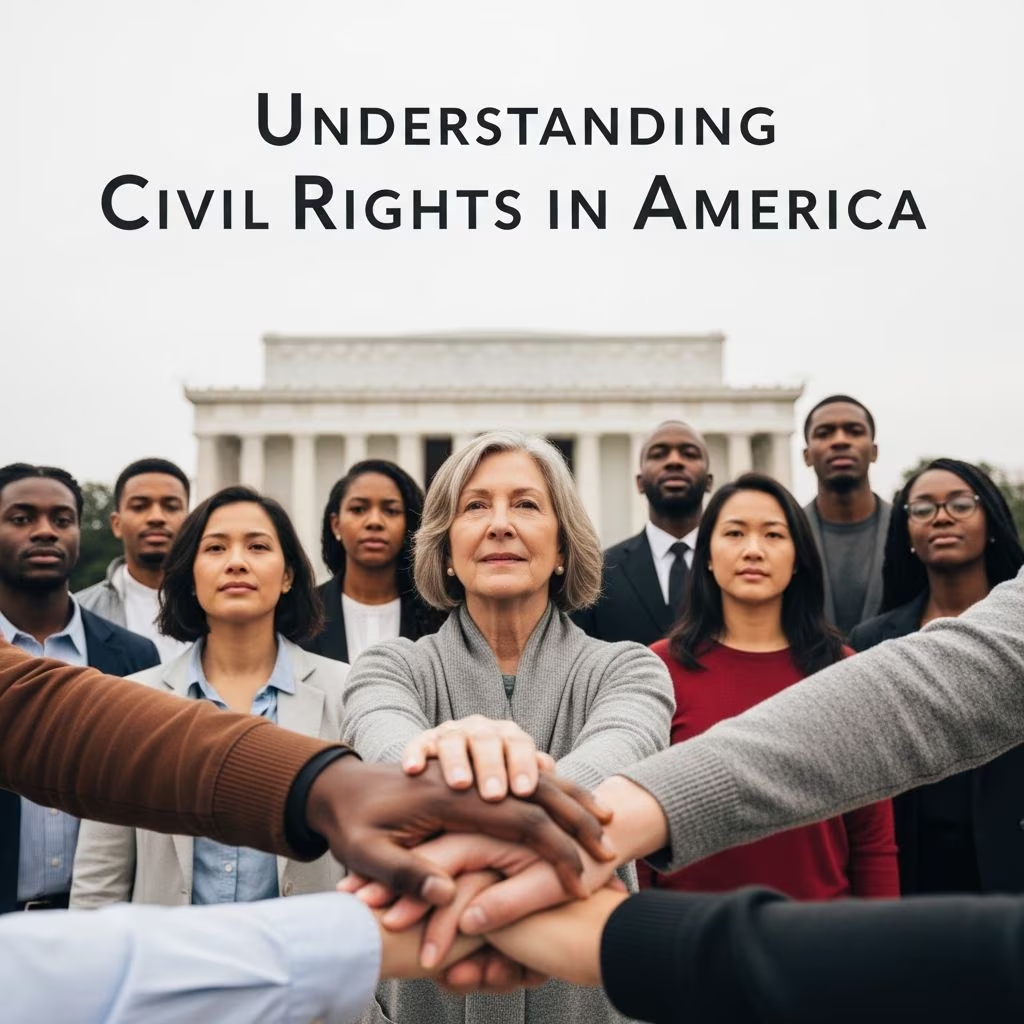
What Are Civil Rights, and Why Do They Matter?
Civil rights are the fundamental rights and freedoms that every person is entitled to as a member of society, regardless of race, gender, religion, national origin, disability, or other protected characteristics. These rights ensure that individuals can participate fully in civic life, access public services, and be treated fairly by government and private institutions.
Unlike natural rights, which are considered inherent to all human beings, civil rights are established and protected by law. In the United States, they are grounded in the Constitution, federal statutes, and court decisions. Their purpose is to prevent discrimination and guarantee equal treatment under the law.
The Constitutional Foundation of Civil Rights
The U.S. Constitution does not use the term “civil rights” in a single clause, but several amendments form the legal backbone of these protections.
- Thirteenth Amendment (1865): Abolished slavery and involuntary servitude, laying the groundwork for racial equality.
- Fourteenth Amendment (1868): Guarantees equal protection under the law and due process, serving as the primary constitutional basis for most civil rights claims.
- Fifteenth Amendment (1870): Prohibits denying the right to vote based on race, color, or previous condition of servitude.
- Nineteenth Amendment (1920): Secured women’s right to vote, expanding political participation.
- Twenty-Fourth Amendment (1964): Bans poll taxes in federal elections, removing a major barrier to voting.
- Twenty-Sixth Amendment (1971): Lowers the voting age to 18, broadening democratic access.
These amendments, especially the Fourteenth, have been interpreted by the Supreme Court to prohibit discriminatory laws and practices by state and local governments. Over time, Congress has also passed legislation to enforce these constitutional guarantees.
Key Federal Civil Rights Laws
While the Constitution sets the framework, federal statutes provide detailed protections and enforcement mechanisms. Some of the most important civil rights laws include:
| Law | Year | Key Protections |
|---|---|---|
| Civil Rights Act of 1964 | 1964 | Prohibits discrimination in employment, public accommodations, and federally funded programs based on race, color, religion, sex, or national origin. |
| Voting Rights Act of 1965 | 1965 | Strengthens voting rights protections, especially in areas with histories of racial discrimination in voting. |
| Civil Rights Act of 1968 (Fair Housing Act) | 1968 | Prohibits discrimination in the sale, rental, and financing of housing based on race, religion, national origin, and later expanded to include sex, disability, and familial status. |
| Americans with Disabilities Act (ADA) | 1990 | Prohibits discrimination against individuals with disabilities in employment, public services, transportation, and public accommodations. |
| Age Discrimination in Employment Act (ADEA) | 1967 | Protects workers 40 and older from employment discrimination. |
These laws are enforced by federal agencies such as the Department of Justice, the Equal Employment Opportunity Commission (EEOC), and the Department of Housing and Urban Development (HUD), as well as through private lawsuits in federal and state courts.
Landmark Civil Rights Court Decisions
Court rulings have played a crucial role in defining and expanding civil rights. Some of the most influential decisions include:
- Brown v. Board of Education (1954): The Supreme Court ruled that racial segregation in public schools violates the Equal Protection Clause of the Fourteenth Amendment, effectively overturning the “separate but equal” doctrine from Plessy v. Ferguson (1896).
- Loving v. Virginia (1967): Struck down laws banning interracial marriage, affirming that marriage is a fundamental right protected by the Constitution.
- Obergefell v. Hodges (2015): Held that the Fourteenth Amendment requires all states to license marriages between same-sex couples and to recognize such marriages performed in other states.
- United States v. Windsor (2013): Invalidated part of the Defense of Marriage Act, allowing the federal government to recognize same-sex marriages.
- Shelby County v. Holder (2013): Weakened key provisions of the Voting Rights Act by striking down the formula used to determine which jurisdictions needed federal preclearance before changing voting laws.
These cases illustrate how courts can both expand rights and, in some instances, limit the reach of existing protections, depending on the composition of the judiciary and the legal arguments presented.
Protected Classes and Forms of Discrimination
Civil rights law protects individuals from discrimination based on certain characteristics, often referred to as “protected classes.” These include:
- Race and color
- Religion
- Sex (including pregnancy, sexual orientation, and gender identity in many federal and state contexts)
- National origin
- Age (40 and older in employment)
- Disability
- Genetic information
- Familial status (in housing)
Discrimination can take many forms, including:
- Disparate treatment: Intentional discrimination, such as refusing to hire someone because of their race.
- Disparate impact: Policies that appear neutral but disproportionately harm members of a protected class, such as a hiring test that unfairly disadvantages certain groups.
- Harassment: Unwelcome conduct based on a protected characteristic that creates a hostile environment.
- Retaliation: Punishing someone for asserting their civil rights, such as filing a complaint or participating in an investigation.
Understanding these categories helps individuals recognize when their rights may have been violated and what legal remedies may be available.
Where Civil Rights Are Enforced
Civil rights protections apply in many areas of life, including:
- Employment: Hiring, firing, promotions, pay, benefits, and workplace conditions must be free from discrimination.
- Education: Students have the right to attend public schools and universities without discrimination and to receive reasonable accommodations for disabilities.
- Housing: Landlords and lenders cannot refuse to rent, sell, or finance housing based on protected characteristics.
- Public accommodations: Businesses open to the public, such as restaurants, hotels, and theaters, must serve all customers equally.
- Voting: Citizens have the right to register and vote without facing discriminatory barriers.
- Law enforcement: Individuals are protected from excessive force, unlawful searches, and discriminatory policing practices.
When rights are violated in these settings, individuals can file complaints with federal or state agencies or pursue lawsuits in court.
How to Assert and Protect Your Civil Rights
If you believe your civil rights have been violated, there are several steps you can take:
- Document the incident: Keep detailed notes, including dates, times, locations, names of people involved, and any witnesses.
- Review applicable laws: Determine which civil rights law may apply (e.g., Title VII for employment, Title VI for federally funded programs, Title IX for education).
- Contact the appropriate agency: For employment discrimination, file a charge with the EEOC. For housing discrimination, contact HUD. For voting issues, contact the Department of Justice or a civil rights organization.
- Consult an attorney: A civil rights lawyer can help you understand your options, meet deadlines, and represent you in negotiations or court.
- Know the time limits: Federal civil rights claims often have strict deadlines (e.g., 180 or 300 days to file with the EEOC, depending on the state).
Many nonprofit organizations and legal aid groups also provide free or low-cost assistance to individuals facing civil rights violations.
Modern Challenges and Ongoing Debates
While significant progress has been made, civil rights remain a dynamic and contested area of law and policy. Some current issues include:
- Voting access: Debates over voter ID laws, mail-in voting, and redistricting continue to raise concerns about racial and partisan discrimination in elections.
- Police accountability: High-profile incidents of police violence have led to calls for reforms in use-of-force policies, body cameras, and independent oversight.
- Immigrant rights: Questions about detention conditions, access to asylum, and family separation policies highlight tensions between national security and civil liberties.
- Religious liberty vs. anti-discrimination: Conflicts arise when religious beliefs are used to justify refusing service to LGBTQ+ individuals or others, raising complex questions about the balance between religious freedom and equal treatment.
- Online discrimination: Algorithms and automated decision-making in hiring, lending, and housing can perpetuate bias, prompting calls for greater transparency and regulation.
These challenges show that civil rights are not a fixed set of rules but an evolving framework that must adapt to new social, technological, and political realities.
Common Misconceptions About Civil Rights
Several myths and misunderstandings about civil rights persist:
- Misconception: Civil rights only protect minorities.
Reality: Civil rights protect everyone from discrimination based on protected characteristics, regardless of majority or minority status. - Misconception: The Civil Rights Act of 1964 ended all discrimination.
Reality: While it was a landmark achievement, discrimination persists in many forms, and enforcement remains necessary. - Misconception: Civil rights only apply to government actions.
Reality: Many civil rights laws also regulate private businesses and organizations, especially in employment, housing, and public accommodations. - Misconception: You can only sue for civil rights violations in federal court.
Reality: Many claims can be brought in state courts under both federal and state civil rights laws.
Clarifying these points helps promote a more accurate understanding of what civil rights are and how they function in practice.
Frequently Asked Questions
What is the difference between civil rights and civil liberties?
Civil rights are protections against discrimination and unequal treatment, often enforced through legislation. Civil liberties are fundamental freedoms, such as free speech, religion, and due process, that are primarily protected by the Constitution from government overreach.
Can private businesses violate civil rights?
Yes. Under laws like the Civil Rights Act of 1964 and the ADA, private businesses that are public accommodations or employers with a certain number of employees must comply with anti-discrimination rules.
What should I do if I experience workplace discrimination?
Document the incident, report it to your employer’s HR department if possible, and consider filing a charge with the EEOC within the required time frame. Consulting an employment lawyer can help you understand your rights and options.
Are LGBTQ+ individuals protected under civil rights laws?
Yes. In Bostock v. Clayton County (2020), the Supreme Court held that Title VII of the Civil Rights Act of 1964 prohibits employment discrimination based on sexual orientation and gender identity. Many states and localities also have explicit protections for LGBTQ+ people in housing, public accommodations, and other areas.
Can I be retaliated against for asserting my civil rights?
No. Federal and state civil rights laws prohibit retaliation against individuals who file complaints, participate in investigations, or oppose discriminatory practices. If retaliation occurs, it can itself be the basis for a legal claim.
How do state civil rights laws differ from federal laws?
State laws often mirror federal protections but may offer broader coverage, such as protecting additional classes (e.g., marital status, political affiliation) or applying to smaller employers. Some states also have stronger remedies or shorter deadlines, so it’s important to consult local law.
Conclusion: Civil Rights as a Living Commitment
Civil rights are not a historical artifact but a living commitment to fairness, dignity, and equal opportunity. They are enforced through a combination of constitutional principles, federal and state laws, court decisions, and the vigilance of individuals and communities.
Understanding what civil rights are, how they are protected, and how to assert them empowers people to challenge injustice and contribute to a more just society. As new challenges emerge, the principles of equality and non-discrimination remain essential guides for both law and civic life.
References
- U.S. Constitution Amendments — National Archives. https://www.archives.gov/founding-docs/amendments
- Civil Rights Act of 1964 — U.S. Equal Employment Opportunity Commission. https://www.eeoc.gov/statutes/title-vii-civil-rights-act-1964
- Brown v. Board of Education — National Archives. https://www.archives.gov/education/lessons/brown-v-board
- Americans with Disabilities Act of 1990 — U.S. Department of Justice. https://www.ada.gov/
- Bostock v. Clayton County, 590 U.S. ___ (2020) — Supreme Court of the United States. https://www.supremecourt.gov/opinions/19pdf/17-1618_hfci.pdf