
Understanding Civil Litigation in the United States
A practical guide to how civil lawsuits work, from filing a claim to judgment, appeal, and settlement decisions.
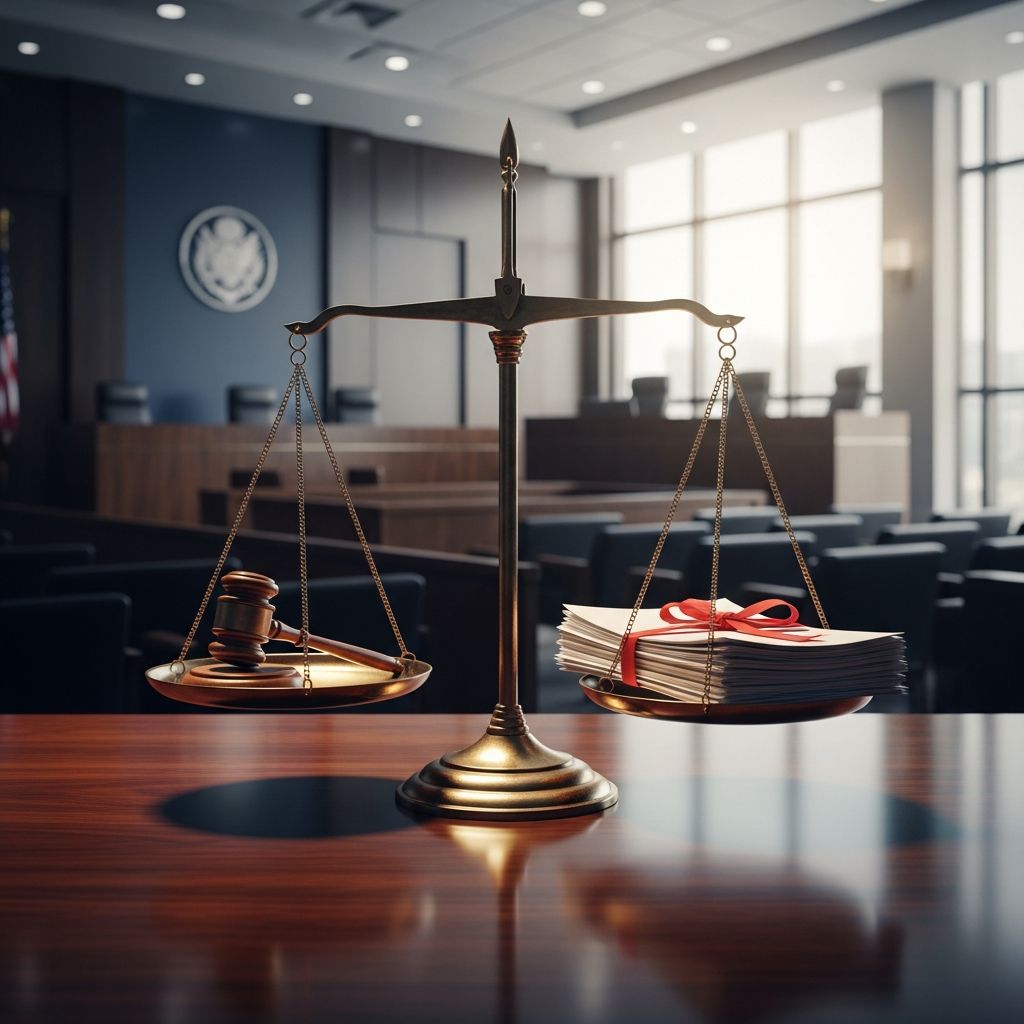
Civil litigation is the legal process used to resolve disputes between private parties, businesses, or government entities when criminal charges are not involved. It covers everything from contract disputes and injury claims to employment conflicts and property disagreements. Knowing how lawsuits actually work can help you make informed choices about whether to sue, defend, or settle.
What Civil Litigation Is (and What It Is Not)
Civil cases focus on rights, obligations, and money or specific relief, not punishment or jail time. The party bringing the lawsuit usually seeks compensation (damages) or a court order requiring someone to do, or stop doing, something.
Key differences from criminal cases include:
- Parties: Civil cases are typically private parties versus private parties (or government acting in a non-criminal role).
- Burden of proof: Most civil claims use a preponderance of the evidence standard—more likely than not—rather than proof beyond a reasonable doubt.1
- Remedies: The outcome is usually money damages or court orders (injunctions, declaratory judgments), not incarceration or criminal fines.
Common Types of Civil Lawsuits
While civil litigation covers many areas, some disputes appear frequently in courts across the United States.
Typical Civil Claims
- Contract disputes: Broken agreements over goods, services, loans, leases, or business deals.
- Tort claims: Personal injury, property damage, and other harms caused by negligence or intentional acts.
- Employment disputes: Wrongful termination, discrimination, wage and hour claims, or harassment.
- Property and real estate issues: Boundary disagreements, landlord–tenant conflicts, construction defects.
- Business and commercial cases: Partnership breakups, shareholder disputes, unfair competition, trade secrets.
- Family-related civil matters: Although governed by special rules, many divorce, custody, and support cases follow civil procedures.
The Main Players in a Civil Case
Several people and institutions shape the course of litigation.
| Role | Description |
|---|---|
| Plaintiff | The person or entity who files the lawsuit, claiming to have been harmed. |
| Defendant | The party being sued who must respond to the allegations and defend against the claim. |
| Judge | Neutral decision-maker who manages procedure, rules on evidence and motions, and may decide the case if there is no jury. |
| Jury | In jury trials, a group of citizens who decide the facts and return a verdict. |
| Attorneys | Lawyers representing each side, responsible for strategy, filings, negotiations, and courtroom advocacy. |
| Court staff | Clerks, court reporters, and other personnel who support the judge and manage case records. |
Before Filing: Evaluating a Potential Lawsuit
Not every dispute should become a lawsuit. Before filing, parties and their lawyers generally assess:
- Legal basis: Whether the facts support a recognized claim under state or federal law.
- Evidence: Documents, witnesses, photos, contracts, and other proof that can be presented in court.
- Time limits: Statutes of limitation set strict deadlines for filing different types of claims.2
- Jurisdiction and venue: Which court has the authority to hear the case and which location is appropriate.
- Costs and benefits: The likely expense, time, stress, and potential outcome compared to alternatives like settlement or mediation.
In many areas, parties must attempt some form of pre-suit negotiation or alternative dispute resolution before or soon after filing, especially in employment or commercial cases.
Starting a Lawsuit: Pleadings and Service
The Complaint
The lawsuit begins when the plaintiff files a complaint (sometimes called a petition). This initial document typically:
- Identifies the parties and the court.
- States the essential facts of what happened.
- Lists each legal claim (cause of action).
- Explains how the plaintiff was harmed.
- Requests specific relief, such as damages or injunctive orders.
Serving the Defendant
After filing, the plaintiff must formally deliver the complaint and a court summons to the defendant. This step, known as service of process, gives the defendant official notice and starts the clock for responding. Rules for proper service are detailed in state and federal procedural rules and must be followed carefully for the case to move forward.3
The Answer and Other Initial Responses
Once served, the defendant usually has a limited time—often 20 to 30 days in many courts—to respond. Common options include:
- Answer: Admits or denies each allegation and may raise defenses.
- Counterclaim: A lawsuit back against the plaintiff arising from the same dispute.
- Motion to dismiss: A request to throw out all or part of the case because of legal defects, such as lack of jurisdiction or failure to state a valid claim.
Discovery: Exchanging Information and Evidence
Once the basic pleadings are complete, the case typically moves into discovery, the structured process for obtaining evidence from the other side and from third parties. The goal is to avoid “trial by ambush” and give both sides a chance to learn the key facts before trial.
Common Discovery Tools
- Interrogatories: Written questions that must be answered under oath.
- Requests for production: Demands for documents, electronic records, photos, and similar materials.
- Depositions: In-person or remote questioning of witnesses, with a court reporter transcribing testimony.
- Requests for admission: Statements the other side must admit or deny; used to narrow disputed issues.
- Subpoenas: Orders requiring non-parties to provide documents or testify.
Civil procedure rules in each jurisdiction set limits on discovery, including what is considered relevant and proportional to the needs of the case.4
Pre-Trial Motions and Case Management
During and after discovery, parties may bring various motions asking the court to decide specific issues before trial.
Key Pre-Trial Motions
- Motion to compel: Seeks a court order forcing the other side to respond to discovery.
- Motion for protective order: Asks the court to limit or shield certain discovery to prevent undue burden or protect confidentiality.
- Motion for summary judgment: Argues that, based on the undisputed facts, the moving party is entitled to win without a trial.
- Motions in limine: Requests to admit or exclude specific evidence at trial.
Court systems often use scheduling orders and status conferences to manage cases, set deadlines, and encourage settlement where appropriate.
Trial: Presenting the Case in Court
If the case does not settle or get resolved by a dispositive motion, it proceeds to trial. Trials may be decided by a judge alone (bench trial) or by a jury, depending on the type of case and the parties’ choices.
Typical Stages of Trial
- Jury selection (if applicable): Lawyers and the judge question potential jurors to ensure impartiality and remove those who cannot be fair.
- Opening statements: Each side outlines what they expect the evidence will show.
- Presentation of evidence: Witness testimony, documents, and exhibits are introduced, with opportunities for cross-examination.
- Closing arguments: Lawyers explain how the evidence supports their side and the legal standards.
- Jury instructions and deliberation: The judge explains the law, and the jury deliberates privately before reaching a verdict.
- Verdict and judgment: The jury (or judge in a bench trial) issues a decision, and the court enters a formal judgment.
Appeals: Challenging the Outcome
After judgment, the losing party may have the right to appeal to a higher court. An appeal is not a new trial; instead, appellate judges review the record for legal errors that might have affected the outcome.
Important aspects of appeals include:
- Strict deadlines: Notices of appeal must be filed within a short window after judgment, often 30 days, depending on jurisdiction.
- Written briefs: Each side submits detailed arguments about how the law applies to the case.
- Oral argument: In many appeals, lawyers appear before a panel of judges to answer questions about the issues raised.
- Possible results: The appellate court can affirm the judgment, reverse it, send the case back for a new trial, or modify parts of the decision.
Settlement and Alternative Dispute Resolution
Most civil cases do not end with a full trial. Studies of federal courts suggest that only a small fraction of civil filings—often under 10%—reach trial, with the majority resolved by dismissal, settlement, or other means.5
Reasons Parties Settle
- Cost control: Litigation, especially discovery and expert witnesses, can be expensive.
- Risk management: Trials are unpredictable; settlement provides certainty.
- Time and stress: Lawsuits can take months or years, affecting business operations and personal well-being.
- Privacy: Settlements can keep details out of public court records.
Common ADR Methods
- Negotiation: Direct discussions or attorney-led talks to reach an agreement.
- Mediation: A neutral mediator helps the parties explore options and move toward compromise but cannot impose a decision.
- Arbitration: A neutral arbitrator (or panel) hears evidence and issues a binding or nonbinding decision, often faster and more flexible than court.
Costs, Fees, and the Role of Insurance
Civil litigation can be costly, but the structure of fees and the presence of insurance coverage may substantially affect strategy.
How Legal Fees Are Commonly Structured
- Hourly billing: The attorney charges for time spent on the case.
- Contingency fees: In many personal injury or consumer cases, the lawyer is paid a percentage of any recovery and nothing if the case is lost.
- Flat fees or hybrids: Some matters use fixed fees or mixed hourly/contingent arrangements.
Many court systems also allow the prevailing party to recover certain litigation costs, and some statutes authorize fee-shifting, where the losing party pays the winner’s legal fees in specific types of cases.
Insurance and Defense
In tort, employment, or business disputes, insurance policies may provide defense counsel and coverage for settlements or judgments, subject to policy limits and exclusions. Promptly notifying an insurer after being sued is critical to avoid jeopardizing coverage.
Managing Risk and Avoiding Litigation
While not all disputes can be prevented, thoughtful planning can reduce the chances of ending up in court.
- Clear contracts: Written agreements with precise terms, dispute clauses, and choice-of-law provisions.
- Compliance programs: Training and policies that follow applicable laws and industry standards.
- Documentation: Keeping accurate records of transactions, decisions, and communications.
- Early communication: Addressing problems promptly before they escalate into formal claims.
Frequently Asked Questions About Civil Litigation
How long does a typical civil lawsuit take?
Timeframes vary widely. Some small claims resolve in a few months, while complex commercial or injury cases can last several years, especially if there is an appeal. Court resources, the complexity of the facts, and the parties’ willingness to settle all influence the schedule.
Do I really need a lawyer for a civil case?
Individuals are allowed to represent themselves, but civil procedure and evidence rules can be complicated. A lawyer can help evaluate the claim, navigate deadlines, negotiate settlement, and present the case effectively. Businesses are often required to appear through counsel in many courts.
Can a civil case become a criminal case?
Civil and criminal matters are separate, but the same conduct can trigger both. For example, an assault might lead to a criminal prosecution and a civil personal injury suit. Evidence from one proceeding may be relevant in the other, which is why legal advice is especially important in overlapping situations.
What happens if I ignore a lawsuit?
If a defendant fails to respond by the deadline, the court can enter a default judgment, meaning the plaintiff may win automatically and gain the right to collect money or other relief. Ignoring court papers is almost always more damaging than responding and defending.
Is everything that happens in a lawsuit public?
Most court filings and hearings are public, but there are exceptions. Courts may seal certain records, protect trade secrets, or anonymize sensitive information, particularly in cases involving minors, privacy issues, or national security. Mediation communications and many settlement negotiations are generally confidential.
References
- Understanding the Federal Courts — Administrative Office of the U.S. Courts. 2023-06-01. https://www.uscourts.gov/about-federal-courts
- Federal Rules of Civil Procedure — Legal Information Institute, Cornell Law School. 2023-12-01. https://www.law.cornell.edu/rules/frcp
- Preponderance of the Evidence — Legal Information Institute, Cornell Law School. 2020-08-15. https://www.law.cornell.edu/wex/preponderance_of_the_evidence
- Statutes of Limitations — U.S. Department of Justice, Justice Manual § 651. 2018-11-08. https://www.justice.gov/archives/jm/civil-resource-manual-651-statutes-limitations
- Civil Litigation Management Manual — Federal Judicial Center. 2010-01-01. https://www.fjc.gov/content/civil-litigation-management-manual-2d-ed
- U.S. Courts: Judicial Business 2023 — Administrative Office of the U.S. Courts. 2023-09-30. https://www.uscourts.gov/statistics-reports/judicial-business-2023
Similar Articles








Read full bio of medha deb


