
Understanding Case Initiation vs. Subsequent Filings
Learn how to distinguish between initiating a case and filing into an existing matter in modern civil litigation.
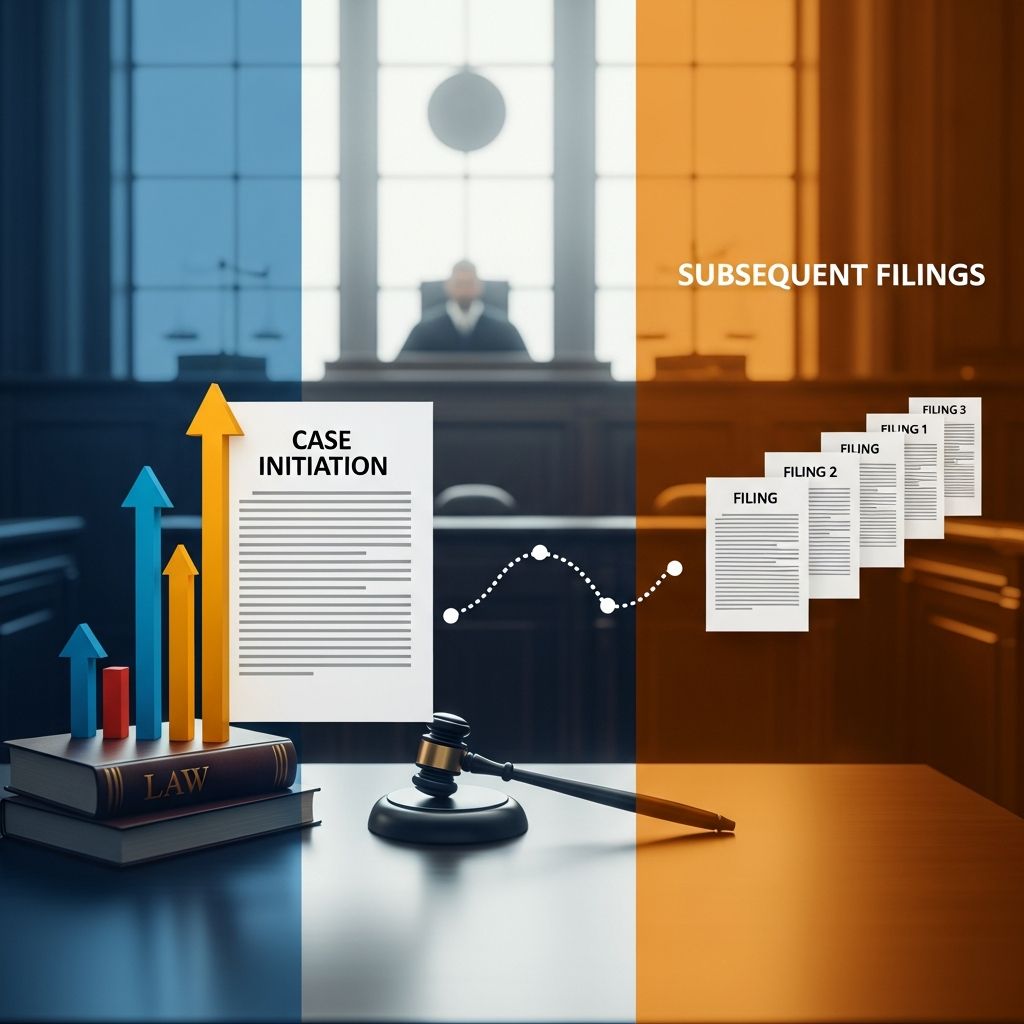
In every civil lawsuit, documents are not all treated the same way by the court. Some filings start a brand-new case and trigger a host of court processes, while others are submitted later into an already existing case record. Understanding the difference between case-initiating filings and subsequent filings is essential for accurate fee calculation, proper service, and compliance with court rules.
This guide explains how to tell the two categories apart, what each one does in the life cycle of a case, and how electronic filing (eFiling) platforms typically organize these options.
Why the Distinction Matters
Marking a document as either a case initiation or a subsequent filing is more than a clerical choice. It affects:
- Whether a new case number is created or an existing one is used.
- Which filing fees apply, including initial appearance fees and add-on charges.
- Service requirements, including issuance of summons and deadlines to serve the complaint.
- Docketing and tracking by the court, which rely on the correct classification to route filings appropriately.
- Downstream deadlines such as time to answer, respond, or move to dismiss.
Misclassifying a filing can lead to rejected documents, delays in case processing, or even missed deadlines that impact substantive rights.
The Civil Case Lifecycle in Brief
To see where case initiation ends and subsequent filing begins, it helps to understand the major stages of a typical civil lawsuit.
| Stage | Primary Purpose | Typical Filing Type |
|---|---|---|
| Case Initiation | Start the lawsuit and open a court file | Complaint, petition, initial pleading |
| Pleadings | Define the parties’ claims and defenses | Answer, counterclaims, cross-claims, amendments |
| Discovery | Exchange evidence and information | Discovery requests, motions to compel |
| Pretrial | Resolve legal issues, narrow disputes | Motions to dismiss, summary judgment, pretrial statements |
| Trial | Present evidence and obtain a judgment | Trial briefs, exhibit lists, jury instructions |
| Post-Judgment | Enforce or challenge the judgment | Appeals, enforcement motions, satisfaction of judgment |
What Is a Case-Initiating Filing?
A case-initiating filing is the first document submitted to the court that creates a new civil case. In U.S. courts, the most common case-initiating document is the complaint (sometimes called a petition), filed by the plaintiff.
According to the federal courts, a civil case in federal court begins when the plaintiff files a complaint and serves it on the defendant. Many state systems follow the same model.
Core Features of Case-Initiating Filings
- Creates the case docket: Once accepted, the court opens a file, assigns a case number, and establishes the caption.
- Establishes jurisdiction: The initiating document must show why the chosen court has authority over the subject matter and the parties.
- Defines the dispute: It states the facts, legal claims, and requested relief, giving the defendant formal notice of the lawsuit.
- Triggers service obligations: After filing, the plaintiff must serve the summons and complaint according to applicable rules.
- Starts key deadlines: Time to answer or move to dismiss typically runs from service of the initiating pleading.
Common Examples of Case Initiation
Examples of filings that usually count as case-initiating include:
- Civil complaint or petition for damages, injunction, or declaratory relief.
- Petition in family law cases (e.g., dissolution of marriage or custody request), depending on local rules.
- Petition for judicial review of an administrative decision.
- Application for a protective order or restraining order where the proceeding is new.
Each jurisdiction’s rules specify which documents may open a new case. Always check local court guidance or administrative orders for jurisdiction-specific examples.
What Counts as a Subsequent Filing?
Once a case is opened, every document filed after the initiating filing is a subsequent filing. These submissions do not create a new case; instead, they are added to the existing docket and move the case forward through pleadings, discovery, pretrial motions, trial, and post-judgment activity.
Typical Subsequent Filings
- Responsive pleadings: Answers, counterclaims, cross-claims, third-party complaints, and replies.
- Motions: Motions to dismiss, to strike, for summary judgment, to compel discovery, to continue trial, and more.
- Discovery documents: Interrogatories, requests for production, requests for admission, deposition notices, and related certificates or motions.
- Pretrial documents: Witness lists, exhibit lists, pretrial memoranda, and proposed jury instructions.
- Post-judgment filings: Notices of appeal, motions for a new trial, enforcement motions, and satisfactions of judgment.
Key Characteristics of Subsequent Filings
- Use an existing case number: They are always filed into a previously opened court case.
- Linked to prior events: Many subsequent filings respond to, enforce, or challenge earlier orders or pleadings.
- Trigger shorter deadlines: Time to respond to motions or discovery requests is often shorter than time to answer a complaint.
- Variable fees: Some are fee-free, while others (e.g., certain motions or post-judgment actions) may carry specific filing fees, depending on local schedules.
Comparing Case Initiation and Subsequent Filings
| Aspect | Case-Initiating Filing | Subsequent Filing |
|---|---|---|
| Purpose | Starts a new case | Advances an existing case |
| Case Number | Creates the case number | Uses an existing case number |
| Service | Requires formal service of process | Usually served per rule or local order, but not as original process |
| Typical Document | Complaint or petition | Answer, motion, discovery paper, post-judgment motion |
| Impact on Deadlines | Starts time to respond to lawsuit | Creates interim deadlines (responding to motions, discovery, etc.) |
| Fee Structure | Initial filing fee; may be highest single fee | May have smaller or no fee, depending on filing type and jurisdiction |
How eFiling Systems Present Case Initiation vs. Subsequent Filings
Modern eFiling platforms usually separate filing options into at least two major categories:
- Start a New Case (or similar language) for case-initiating documents.
- File into Existing Case for subsequent filings.
Within each path, you may be asked to choose a more specific filing code, such as “Complaint,” “Answer,” “Motion for Summary Judgment,” or “Notice of Appeal.” Correct selection ensures that the document is indexed properly and routed to the right workflow inside the court.
Common eFiling Pitfalls
- Using the wrong path: Attempting to file a complaint as a subsequent filing, or filing a responsive pleading as a new case, can cause immediate rejection.
- Mismatched document type: Choosing a generic or incorrect filing code may delay processing if the clerk must manually correct it.
- Incomplete party information: For case initiation, omitting parties or mislabeling their roles (plaintiff/defendant/petitioner/respondent) can create long-term docket issues.
- Incorrect fee selection: Misclassification may lead to overpayment or underpayment of mandatory fees.
Practical Tips for Choosing the Right Category
When you are unsure whether your document is initiating a case or filing into an existing one, consider these questions:
- Does a case number already exist? If not, you are likely initiating a case. If yes, you are almost certainly filing a subsequent document.
- Is this the first time the dispute is being brought before this court? If you are bringing a new controversy to the court, it is case initiation.
- Is the filing explicitly described in local rules as an initiating document? Some specialized petitions (e.g., certain administrative appeals) are defined this way.
- Is the filing clearly responding to an existing order or pleading? If it answers, opposes, enforces, or modifies something that already exists in the case, it is subsequent.
Workflow Checklist for Legal Professionals
Before submitting any filing, use a quick checklist:
- Identify whether the dispute already has a case number in this court system.
- Confirm how the filing type is defined in the relevant court rules and fee schedule.
- Verify party roles and ensure the caption matches the court’s format.
- Check required supporting documents (e.g., civil cover sheet, summons, or proposed order).
- Confirm that service requirements are understood and calendared.
Impact on Court Fees and Cost Planning
Court fee schedules typically distinguish between initial filing fees (paid when a case is opened) and fees for certain subsequent motions or proceedings. The U.S. federal judiciary, for example, publishes a detailed schedule of filing fees, which includes the cost to file a civil action and separate fees for some later filings.
From a budgeting standpoint:
- Initial filings often represent the largest single court fee in a case.
- Subsequent filings may incur smaller, event-based charges, such as for post-judgment motions or appeals.
- Incorrect designation can result in improper charges and may require time-consuming corrections.
Subsequent Filings That Reshape the Case
Not every subsequent filing merely adds information; some documents can significantly change the scope or trajectory of the case even though they are not technically case-initiating. Examples include:
- Amended complaints: Expand or narrow the claims while remaining in the same case.
- Third-party complaints: Add new parties alleged to be responsible for some or all of the plaintiff’s claimed damages.
- Counterclaims and cross-claims: Introduce new disputes between existing parties but still within the same case number.
- Post-judgment motions: Seek to modify, clarify, or overturn the court’s judgment, or to enforce it against the losing party.
Although substantial, these filings are still categorized as subsequent because they operate within an existing court file rather than creating a new matter.
Best Practices for Law Firms and Legal Departments
Firms that routinely handle civil litigation can reduce errors and rejections by building internal procedures around the case initiation vs. subsequent filing distinction:
- Develop standardized intake forms that capture information needed for initial complaints and verify whether any related case already exists.
- Maintain a filing code reference keyed to court rules and eFiling platform options, updated as courts revise their categories.
- Assign quality control review of all initiating filings before submission to verify caption, parties, fee category, and required attachments.
- Train staff regularly on changes in local rules, administrative orders, and standing orders that affect filing classifications.
- Audit rejections to identify patterns—e.g., common misclassifications—and adjust workflows accordingly.
Frequently Asked Questions (FAQs)
Q: How do I know if my document should start a new civil case?
A: If the document is the first time a dispute is being brought to a particular court and there is no existing case number for that matter, it is almost always a case-initiating filing. Complaints and petitions are typical examples, and they must satisfy the court’s jurisdictional and pleading requirements.
Q: Is an amended complaint considered a new case initiation?
A: No. An amended complaint is usually filed under the existing case number, even though it may change the claims or parties. It is a subsequent filing that modifies the original pleading rather than opening a new case.
Q: If I file a counterclaim, am I initiating a new case?
A: A counterclaim introduces new claims but remains within the same lawsuit. It is typically treated as part of the existing case, making it a subsequent filing rather than a separate case initiation.
Q: Do all subsequent filings require payment of a fee?
A: No. Some subsequent filings are free, while others—such as certain motions, post-judgment applications, or appeals—may carry specific charges. Parties must consult the applicable fee schedule published by the court to confirm which filings trigger fees.
Q: Can a misclassified filing affect my deadlines?
A: Yes. If a filing is rejected because it was misclassified, you may lose time and risk missing a statute of limitations or response deadline. To minimize this risk, verify the correct category before submitting and monitor electronic notices from the court closely.
References
- Civil Cases — Administrative Office of the U.S. Courts. 2024-02-01. https://www.uscourts.gov/about-federal-courts/types-cases/civil-cases
- The Legal Process in the United States: A Civil Case — Animal Legal Defense Fund. 2022-06-15. https://aldf.org/article/the-legal-process-in-the-united-states-a-civil-case/
- How Does a Lawsuit Work? Basic Steps in the Civil Litigation Process — Stoel Rives LLP. 2021-09-20. https://www.stoel.com/insights/publications/how-does-a-lawsuit-work-basic-steps-in-the-civil
- Basic Steps in a Court Case — New York State Unified Court System. 2020-05-01. https://www.nycourts.gov/courthelp/goingtocourt/caseBasics.shtml
- Civil Litigation Process: The Basics — National Women’s Law Center. 2021-11-01. https://nwlc.org/wp-content/uploads/2021/11/Civil-Litigation-Fact-Sheet.pdf
Similar Articles








Read full bio of Sneha Tete


