
Understanding Car Safety Recalls and Your Legal Options
Learn how car safety recalls work, what your rights are, and the legal steps you can take if a defective vehicle causes injury or loss.
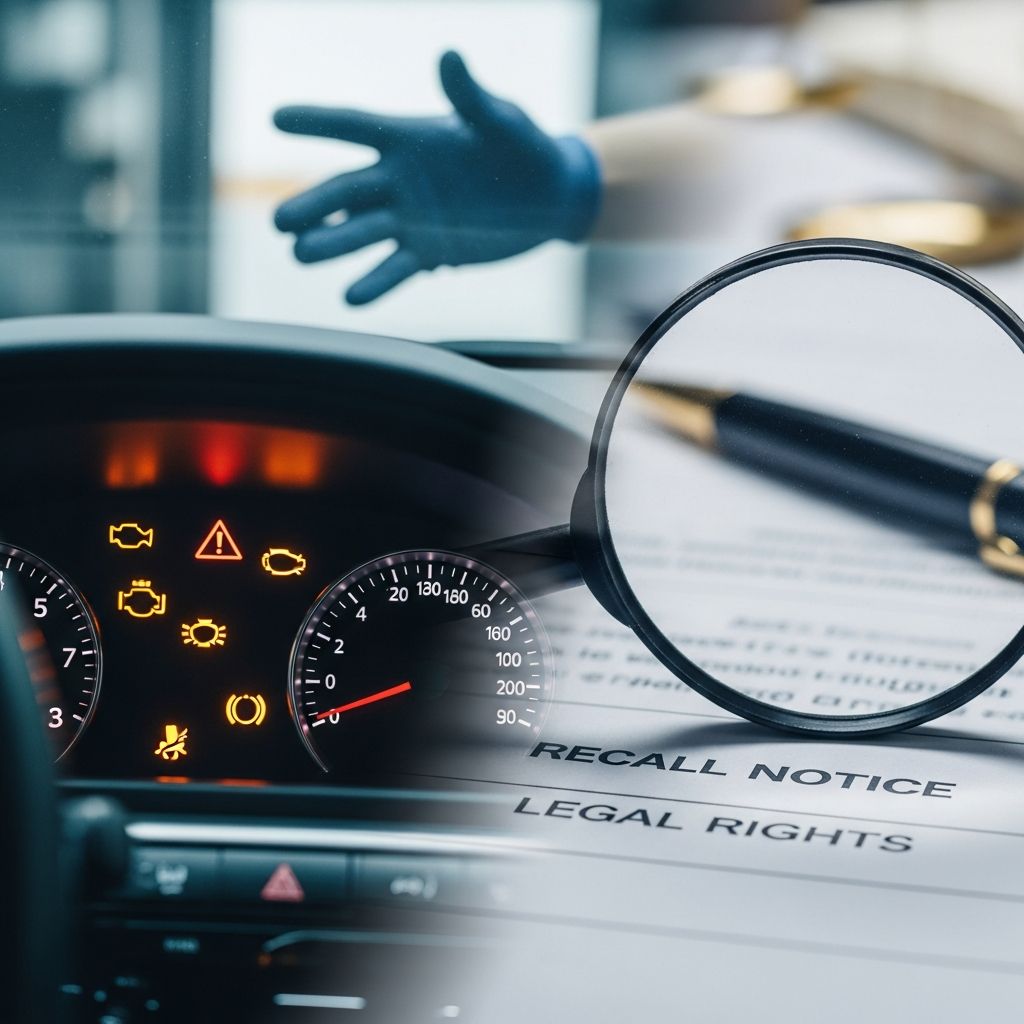
Millions of vehicles are recalled every year for safety-related defects. Some issues are minor and easily repaired, while others involve serious hazards that can lead to crashes, injuries, or deaths if not corrected. Understanding how car safety recalls work, and how they intersect with product liability law, can help you protect your safety and your legal rights.
What Is a Car Safety Recall?
A vehicle safety recall is an official action taken when a car, truck, or vehicle-related equipment has a defect that creates an unreasonable risk to safety or fails to comply with federal motor vehicle safety standards. In the United States, recalls can be initiated either by the manufacturer or by the National Highway Traffic Safety Administration (NHTSA) after investigation.
- Safety-related recalls involve defects that can cause crashes or increase the risk of injury (for example, defective airbags, steering problems, or fire risks).
- Noncompliance recalls involve failures to meet federal safety standards, even if a specific defect has not yet caused known injuries.
- Equipment recalls may involve tires, child seats, or other components used in or on a vehicle.
When a safety defect or noncompliance is confirmed, the law requires the manufacturer to provide a free remedy to affected owners—typically by repair, replacement, or refund.
How Safety Defects Are Discovered
Defects that lead to recalls can come to light in several ways, and you as a vehicle owner play a role in that process.
Common Sources of Safety Defect Information
- Consumer complaints submitted directly to NHTSA’s Vehicle Safety Hotline or online database.
- Manufacturer testing and internal quality reviews that reveal patterns of failure.
- Crash and injury data reported by law enforcement, insurers, or medical providers, which may suggest defect-related patterns.
- Technical service data from dealerships and repair centers that repeatedly see the same problem in a particular model.
- Petitions from consumers or safety organizations asking NHTSA to investigate a suspected defect.
NHTSA’s Defect Investigation Process
Under federal law, NHTSA’s Office of Defects Investigation (ODI) follows a structured process when investigating alleged safety defects.
| Stage | What Happens |
|---|---|
| Screening | ODI reviews complaints, crash reports, and other information to decide whether a formal investigation is warranted. |
| Analysis | ODI evaluates petitions, technical data, and failure patterns to determine if a safety-related defect may exist. |
| Investigation | ODI conducts a detailed investigation, requests data from the manufacturer, and assesses the safety risk. |
| Recall Management | Once a recall is launched, ODI’s Recall Management Division monitors the scope and completion rates and may reopen issues if remedies are inadequate. |
If the data show a safety-related defect exists, NHTSA can formally request that the manufacturer conduct a recall and notify owners.
How You Learn About a Recall
Federal law requires manufacturers to notify vehicle owners, dealers, and distributors when a safety recall is launched. Owners typically receive notices by first-class mail, and manufacturers must send them within 60 days after informing NHTSA of the recall decision.
Official Recall Notifications
A recall notice usually includes:
- The make, model, and model years affected.
- A description of the safety defect or noncompliance.
- Risks associated with continuing to drive the vehicle.
- Any warning signs you might notice (noises, dashboard lights, handling problems).
- Instructions on how to obtain the free repair or remedy and how long it is expected to take.
If your vehicle registration and mailing address are current, your manufacturer should automatically send you any recall notice affecting your vehicle.
Checking for Recalls Yourself
Even if you have not received a letter, you are still entitled to a free remedy if your vehicle is part of an open safety recall. You can check for active recalls by:
- Using NHTSA’s VIN lookup tool and entering your Vehicle Identification Number (VIN).
- Downloading and using the SaferCar mobile app, which can send alerts when recalls affect your vehicles or equipment.
- Reviewing recall information from your vehicle manufacturer or dealership websites.
Vehicle owners are strongly encouraged by NHTSA and safety organizations to check for open recalls regularly and get defects corrected promptly.
Your Legal Rights to Free Repairs and Remedies
When a safety recall is issued, federal law gives you specific rights regarding the remedy and the cost.
Types of Recall Remedies
Manufacturers generally have three options for correcting a safety defect once a recall is initiated:
- Repair – Fixing or replacing the defective part at no cost to you.
- Replacement – Providing a comparable vehicle or piece of equipment if repair is not feasible.
- Refund – Refunding the purchase price, minus reasonable depreciation, under certain conditions.
For vehicles, repair is the most common remedy. For equipment such as tires or child seats, manufacturers may choose repair, replacement, or refund.
Key Consumer Protections
- No charge for recall remedies: The manufacturer must correct the defect free of charge within a reasonable time.
- No dealership discrimination: Dealers are required to perform recall repairs even if you bought the vehicle elsewhere.
- Past repair reimbursement: In many cases, if you previously paid out-of-pocket to fix a problem later covered by a recall, you may be eligible for reimbursement if you can document the costs.
If a dealer refuses to perform the recall remedy as described in the recall notice, you can contact the manufacturer and file a complaint with NHTSA.
Safety Recalls and Product Liability Claims
A recall is about correcting a safety problem going forward, but it does not automatically compensate you for injuries, property damage, or other losses that a defect has already caused. Those issues are typically addressed under product liability and related legal theories.
How Recalls Intersect With Product Liability
In a product liability case involving a vehicle defect, a recall may serve as important evidence, but a lawsuit can exist even if no recall has been issued. From a legal perspective:
- A recall can help show that a defect existed and was recognized by the manufacturer or NHTSA.
- A recall may support an argument that the manufacturer failed to warn consumers promptly or adequately.
- The absence of a recall does not prevent you from claiming a vehicle was defectively designed or manufactured.
Depending on your state’s law, potential legal theories may include:
- Strict product liability (defective design, manufacturing defect, or failure to warn).
- Negligence in design, testing, quality control, or warnings.
- Breach of warranty (express warranty or implied warranties of merchantability and fitness).
If you have been injured in a crash where a defect may have played a role—such as failed brakes, steering loss, or non-deploying airbags—an experienced attorney can help investigate and determine whether a product liability claim is appropriate.
Practical Steps if Your Car Is Recalled
If you receive a safety recall notice, or discover through a VIN check that your car is subject to a recall, consider the following steps.
1. Read the Recall Notice Carefully
- Identify the specific parts or systems involved.
- Understand the risk level and whether NHTSA or the manufacturer recommends limited driving or immediate parking.
- Review any interim safety instructions, such as avoiding certain road conditions or loads.
2. Schedule the Recall Repair
- Contact an authorized dealer for your vehicle’s brand to schedule service.
- Ask about parts availability and the expected repair time; for large recalls, some parts may be in short supply initially.
- Confirm that the repair will be performed at no cost to you.
3. Document Everything
- Keep copies of the recall letter, repair orders, and any communications with the dealer or manufacturer.
- Note any symptoms or incidents you experienced before the repair (such as warning lights or loss of control).
- Retain receipts if you had related repairs done before the recall; you may seek reimbursement depending on the recall terms.
4. Consider Legal Advice After an Accident
If a vehicle defect contributed to a collision or injury before or even after a recall repair, legal advice may be critical. A lawyer can help you:
- Investigate whether a defect was involved and obtain relevant technical and corporate records.
- Determine which parties may be liable (manufacturer, component supplier, dealer, or others).
- Evaluate damages for medical costs, lost wages, pain and suffering, and property loss.
Common Myths About Car Safety Recalls
Misunderstandings about recalls can lead owners to delay repairs or ignore notices altogether. Here are several widespread myths and the facts behind them.
- Myth: If my car still drives fine, the recall is not serious.
Fact: Many defects only show up under specific conditions and may not appear in everyday driving until a sudden, dangerous failure occurs. Safety organizations emphasize that recalls should be addressed as soon as possible. - Myth: I have to pay something for a recall repair.
Fact: Federal law requires that safety recall remedies be provided free of charge within a reasonable time, subject to certain limits based on vehicle age and mileage. - Myth: If there was no recall, the vehicle can’t be defective.
Fact: A vehicle can be defective even without a recall. Recalls rely on available data, and some defects are only recognized after lawsuits, further testing, or long-term use. - Myth: A recall automatically proves my legal case.
Fact: While a recall can be powerful evidence that a defect exists, you must still prove that the defect caused your specific injuries or losses under applicable state law.
Staying Proactive About Vehicle Safety
Managing recall-related risks is an ongoing process. To stay ahead of potential problems, consider these proactive habits:
- Keep your contact information current with your state’s motor vehicle agency and your vehicle manufacturer so recall notices reach you promptly.
- Check for recalls at least a few times a year using your VIN, especially before long trips or after buying a used vehicle.
- Respond quickly to any recall notice, even if the defect seems minor or has not affected you yet.
- Retain service records, which can help document how long a defect has existed and whether it contributed to later problems.
For many families, their vehicle is one of their most important and expensive possessions. Understanding car safety recalls, and how they connect to your legal rights, helps you protect both your safety and your financial interests if something goes wrong.
Frequently Asked Questions (FAQs)
Q: Does a recall mean I should stop driving my car immediately?
Not always. Some recalls involve urgent hazards where the manufacturer or NHTSA advises owners to park the vehicle until repairs are made; others allow you to continue driving with caution. The recall notice or NHTSA information will explain the recommended actions for your specific defect.
Q: Are recall repairs always free, even for older vehicles?
Safety recall remedies must generally be provided at no charge, but there are time and mileage limitations in some circumstances, particularly for very old vehicles. NHTSA and federal regulations govern these details, and your recall notice or dealer can clarify your specific eligibility.
Q: Can I get compensation from the manufacturer just because my car was recalled?
A recall by itself does not provide compensation for inconvenience, lost time, or diminished resale value. It only ensures a free remedy for the defect. To recover money for injuries or economic losses, you usually need to pursue a separate claim or lawsuit under product liability or related legal theories.
Q: What if the dealer says the parts are not available yet?
Large or complex recalls can lead to parts shortages. In that situation, ask the dealer and manufacturer whether any interim safety measures, loaner vehicles, or other accommodations are available. Document all communications, especially if you must continue driving a vehicle with a known defect.
Q: Do recalls affect used cars I buy from a private seller?
Yes. Safety recalls follow the vehicle, not the owner. Before buying a used car—whether from a dealer or a private party—you should run the VIN through NHTSA’s recall lookup tool and ask for documentation showing that any open recalls were repaired.
References
- Recalls Look-up by VIN (Vehicle Identification Number) – FAQ — National Highway Traffic Safety Administration (NHTSA). 2023-05-01. https://vinrcl.safercar.gov/vin/faq.jsp
- How Do Car Recalls Work? — Progressive, Life Lanes. 2022-06-15. https://lifelanes.progressive.com/understanding-car-recalls/
- Motor Vehicle Safety Defects and Recalls: What Every Vehicle Owner Should Know — National Highway Traffic Safety Administration (NHTSA). 2021-03-01. https://www.nhtsa.gov/sites/nhtsa.gov/files/documents/mvdefectsandrecalls_808795.pdf
- Check To Protect – Frequently Asked Questions — National Safety Council. 2019-08-01. https://www.nsc.org/getmedia/aa678768-445f-49a9-8009-eb0f7056d61a/ctp-faqs.pdf
- Car Recall Guide: Your Questions Answered — Consumer Reports. 2023-09-21. https://www.consumerreports.org/cars/car-recalls-defects/car-recall-guide-your-questions-answered-a1115780728/
- What You Need to Know About Vehicle Safety Recalls — AAA (American Automobile Association). 2022-04-01. https://www.ace.aaa.com/automotive/advocacy/automotive-safety-recalls-explained.html
Similar Articles








Read full bio of medha deb


