
Understanding Alcohol Laws by State in the U.S.
Learn how U.S. federal rules and state-specific alcohol laws interact, from age limits to serving rules and local exceptions.
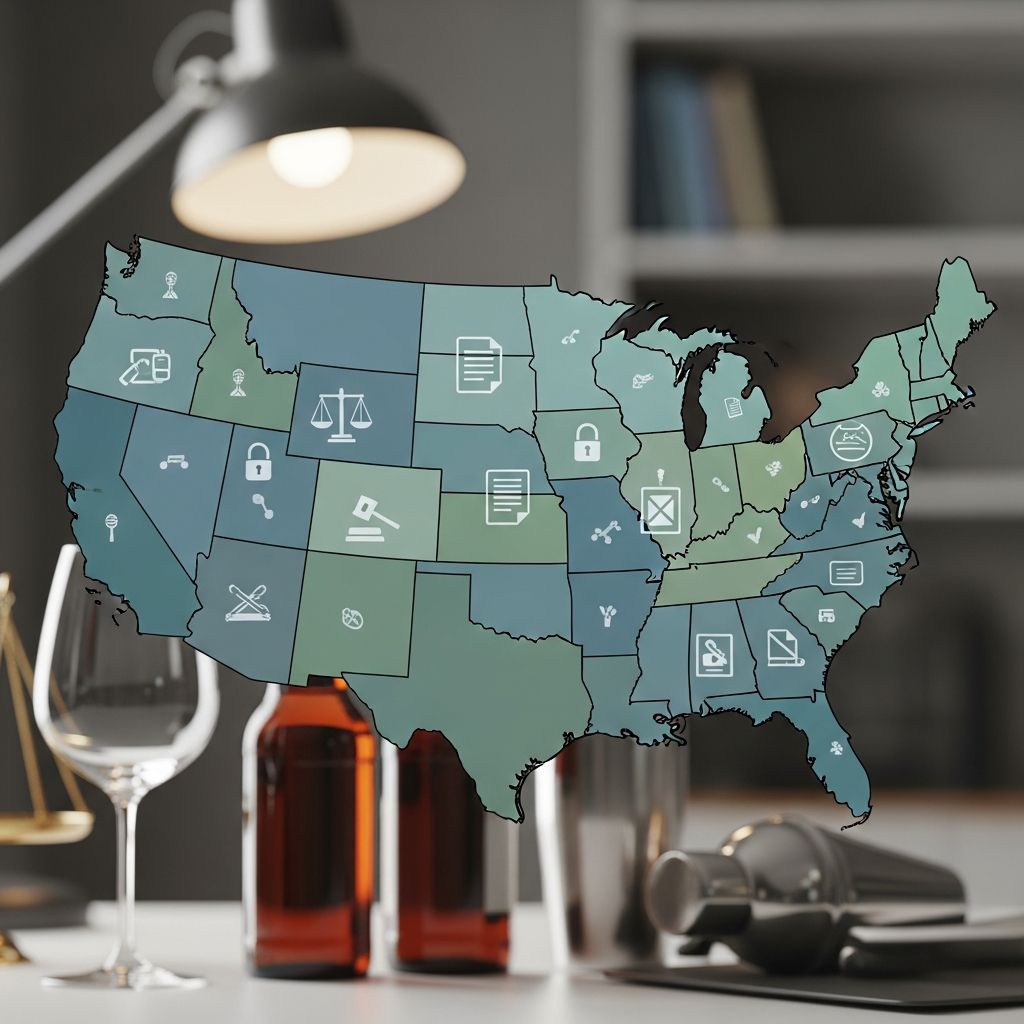
Alcohol laws in the United States form a complex network of federal, state, and local rules that can change dramatically when you cross a state line or even a county boundary. Understanding the basics helps you avoid legal trouble, especially around underage drinking, driving, and buying or serving alcohol.
This guide explains how alcohol is regulated, what the national drinking age really means, where states differ, and why you should always double-check local rules before you drink or serve alcohol.
1. How Alcohol Is Regulated in the United States
Alcohol regulation in the U.S. is shaped by both federal law and state-level authority. After Prohibition ended, states were given primary responsibility for controlling how alcohol is produced, sold, and distributed within their borders.
1.1 Federal role: Setting national baselines
At the national level, Congress and federal agencies set certain minimum standards that all states must follow if they want to keep important federal funding. Two of the most influential federal rules are:
- National Minimum Drinking Age: The Federal Uniform Drinking Age Act of 1984 effectively pushed every state to set the minimum legal age to purchase alcohol at 21, by tying compliance to federal highway funds.
- Zero-tolerance for under-21 drivers: Federal law also requires states to adopt “zero tolerance” rules that make it illegal for drivers under 21 to operate a vehicle with a very small amount of alcohol in their system, typically at or above 0.02% blood alcohol concentration (BAC).
These federal requirements leave states room to create limited exceptions, especially for private or family settings, but no state is allowed to ignore the 21 purchase age or the underage zero-tolerance driving standard without financial penalties.
1.2 State and local control: The real day-to-day rules
Beyond the federal minimums, states hold broad powers to regulate alcohol. Many of them also allow counties and cities to adopt additional restrictions, such as “dry” or “moist” status that limits or bans alcohol sales locally.
States can control:
- Who may sell or serve alcohol and at what age
- Which businesses can obtain licenses to sell alcohol
- Where and when alcohol can be sold (hours, days, and locations)
- What kinds of promotions and advertising are allowed
- Whether some communities can remain dry (no alcohol sales) or moist (limited alcohol sales)
Because of this structure, a rule that is legal in one state (or county) might be illegal a few miles away. Checking local laws is especially important if you travel, attend college out of state, or work in hospitality.
2. Minimum Legal Drinking Age and Underage Exceptions
All U.S. states prohibit providing alcohol to people under 21, with only narrow exceptions that vary by state. To understand how these rules work, it helps to distinguish between purchasing alcohol and possessing or consuming it in special situations.
2.1 The 21-year rule: National standard with state enforcement
Every state sets the minimum age to legally buy alcohol at 21, consistent with the 1984 federal law. This includes purchases in:
- Bars and restaurants (on-premises consumption)
- Liquor stores, groceries, and convenience stores (off-premises sales)
- Online or delivery services that sell alcoholic beverages
Businesses that sell or serve alcohol are typically required to check identification, and many face fines, license suspensions, or criminal penalties if they sell to someone under 21.
2.2 Common categories of underage exceptions
Although no state allows unrestricted drinking under 21, some states make limited exceptions in specific settings. These exceptions are often tightly defined and may combine several conditions at once.
Depending on the state, underage possession or consumption might be allowed in one or more of the following circumstances:
- Private residence with a parent or guardian: Many states allow someone under 21 to drink alcohol in a private home when a parent, guardian, or in some cases a spouse of legal drinking age is present and consents.
- Religious ceremonies: Some states permit underage consumption when alcohol is part of a recognized religious service, such as certain communion practices.
- Educational or culinary programs: A more limited number of states allow supervised tasting or handling of alcohol in professional training programs, like culinary schools or hospitality courses, typically without the student becoming intoxicated.
- Employment-related handling: Depending on the state, underage employees may be allowed to serve alcohol in restaurants or bars or to stock and handle beverages in stores, even though they cannot legally drink them.
Where there is an exception based on parental or family consent, the law often limits it to specific locations, such as private property, the parent’s home, or other non-commercial settings. No state allows a parent or any other person to authorize underage drinking in ways that ignore the state’s own restrictions.
| Aspect | Typical Rule | Possible State-Level Exceptions |
|---|---|---|
| Purchase age | 21+ nationwide | None; all states comply with federal standards |
| Underage possession | Generally prohibited | Private home, religious use, limited education contexts, or with parent/guardian consent in specific locations |
| Underage consumption in public | Usually illegal | In a small number of states, allowed in certain restaurants or bars when with a parent or guardian, under strict conditions |
| Serving or handling at work | Often allowed for ages 18–20 in many states | Some states are stricter (21+), while a few allow younger servers in limited roles |
3. Who May Sell or Serve Alcohol, and Where
Alcohol laws do not only address who may drink. They also govern who may sell or serve alcohol, which businesses can obtain licenses, and what types of beverages may be offered in different kinds of establishments.
3.1 Age requirements for servers and sellers
In many states, the minimum age to serve alcohol in restaurants or bars, or to work as a clerk selling alcohol in stores, is lower than 21. States typically set rules such as:
- 18–20 years old to serve or sell alcohol in most on-premises or off-premises settings (common in many states)
- 21 years old required to serve or bartend in certain higher-risk venues, such as nightclubs or bars, in a few states
- Under 18 sometimes allowed to handle closed containers or to bus tables but not to pour or sell alcohol directly
Specific age thresholds vary from state to state, and some distinguish between serving beer and wine versus distilled spirits.
3.2 License vs. control states
States also differ in how they organize the alcohol market. There are two broad models:
- License states: The government issues licenses to private businesses, which may sell alcohol according to state rules and local ordinances.
- Control states: The state government itself directly controls part of the alcohol system, often managing the wholesale distribution or even retail sale of some or all types of alcohol, especially distilled spirits.
In control states, consumers might need to buy certain beverages, such as spirits, from state-run or state-regulated stores rather than from regular supermarkets or private liquor shops. In license states, private retailers play a larger role, but they remain highly regulated.
4. Time, Place, and Manner: When and Where Alcohol Can Be Sold
Even if you are over 21, you cannot necessarily buy or consume alcohol whenever and wherever you want. State and local laws tightly regulate times of day, days of the week, and types of locations where sales and public drinking are allowed.
4.1 Hours and days of sale
States set the basic rules for when alcohol may be sold, and many allow cities or counties to make those rules stricter. Common limits include:
- Cutoff times for on-premises sales (e.g., late-night deadlines for bars and restaurants)
- Restricted hours for off-premises sales at grocery or liquor stores
- Special rules for Sundays and certain holidays, sometimes called “blue laws”
In some areas, Sunday sales may be banned entirely or allowed only during designated hours, such as mid-morning to evening. These rules often reflect local traditions and community views about alcohol.
4.2 Dry, moist, and wet communities
Even within a state that broadly allows alcohol sales, some local governments restrict or ban them:
- Dry areas: No legal alcohol sales, though possession may still be allowed
- Moist areas: Only limited types of alcohol or limited types of sales are allowed (for example, beer and wine but not spirits, or restaurant sales but no package stores)
- Wet areas: Alcohol sales generally permitted under state licensing rules
These local decisions can create situations where one county allows full retail sales while the neighboring county is dry, so residents travel across county lines to purchase alcohol.
4.3 Open container and public drinking rules
Separate from sales restrictions, many states and cities have open container laws that limit where you can possess or consume alcohol in public. Open container rules typically address:
- Whether you may carry an open alcoholic beverage on public streets or sidewalks
- Whether passengers may drink alcohol in motor vehicles
- Whether public parks, beaches, or event spaces allow alcohol, and under what conditions
These rules vary widely, and in many states, cities set their own ordinances that are stricter than state law.
5. Underage Drinking, Driving, and Enforcement
States pair alcohol laws with enforcement mechanisms designed to reduce harms linked to underage drinking and impaired driving. While details differ, most states rely on a mix of age checks, criminal penalties, and civil consequences.
5.1 Zero-tolerance rules for drivers under 21
Because of federal requirements, every state has laws that make it illegal for drivers under 21 to operate a vehicle with a small amount of alcohol in their system, typically 0.02% BAC or higher. These “zero-tolerance” rules are much stricter than the standard adult legal limit of 0.08% BAC used in most states.
Violations can lead to:
- License suspension or revocation
- Fines and court costs
- Mandatory education or treatment programs
- Increased insurance costs and potential long-term consequences on driving records
5.2 Consequences for providing alcohol to minors
All states prohibit giving alcohol to people under 21, except in narrow circumstances defined by state law. Adults who provide alcohol illegally to minors can face:
- Criminal charges, ranging from misdemeanors to more serious offenses if harm results
- Fines and possible jail time, depending on the severity and state law
- Civil lawsuits if an underage person causes injury or damage after being supplied alcohol
Businesses that sell alcohol to underage customers risk losing their licenses and may face repeated inspections or compliance checks.
6. Staying Informed and Compliant
Because alcohol laws differ so much by state and locality, and because they can change over time, the safest approach is to treat any summary as a starting point, not a substitute for the actual law.
6.1 Where to find accurate state and local information
To get up-to-date details about specific rules in your area, consider:
- Checking your state’s alcohol beverage control agency or equivalent regulator, which typically publishes summaries of state laws and regulations.
- Reviewing official state statutes and administrative codes, which provide the legally binding language.
- Contacting local government offices or law enforcement for questions about city or county ordinances.
For businesses, legal counsel or industry associations can provide more specialized advice about compliance with licensing, training, and liability rules.
6.2 Practical tips for consumers
While the specific law in your area may differ, a few general practices can help you stay within legal boundaries:
- Assume the legal purchase age is 21 unless an official state source tells you otherwise.
- Do not rely on family consent as a blanket permission for underage drinking; state laws strictly define when exceptions apply.
- Be especially cautious when crossing state lines, traveling for holidays, or visiting college towns, where enforcement patterns can differ.
- Remember that driving after any drinking is far riskier for under-21 drivers due to strict BAC limits and serious penalties.
Frequently Asked Questions (FAQs)
Q1: Is it ever legal for someone under 21 to drink alcohol in the U.S.?
A: Yes, but only in limited situations that depend on state law. Some states allow underage consumption in a private residence with a parent or guardian’s permission, for religious ceremonies, or in certain supervised educational settings. No state allows unlimited underage drinking or lets a parent override all state rules.
Q2: Can a parent legally give their child alcohol at home?
A: In some states, parents or guardians may provide alcohol to their own minor child in a private residence, but in others this is not allowed at all. Even where it is legal, the exception is usually narrow and does not extend to driving or public places.
Q3: If I am under 21, can I serve alcohol in a restaurant or bar?
A: Many states allow people who are 18–20 to serve or sell alcohol in certain jobs, but some require servers or bartenders to be 21. States may also distinguish between serving beer and wine versus spirits, or between on-premises and off-premises sales.
Q4: Do all states have the same rules about buying alcohol on Sundays?
A: No. Some states or localities still restrict or ban Sunday sales (often called blue laws), others allow sales only during specific hours, and many allow normal Sunday sales. The schedule can also differ between bars and stores.
Q5: How can I find the alcohol laws for the state I’m visiting?
A: The most reliable approach is to check that state’s alcohol regulatory agency website or published consumer guidance, and then confirm with local authorities if you have questions about county or city rules.
References
- Alcohol Laws by State — Federal Trade Commission (FTC). 2023-10-04. https://consumer.ftc.gov/alcohol-laws-state
- Alcohol Laws: Drinking Age and More — WebMD. 2023-06-26. https://www.webmd.com/mental-health/addiction/alcohol-laws
- List of Alcohol Laws of the United States — Wikipedia (citing U.S. federal statutes and state codes). Accessed 2025-12-07. https://en.wikipedia.org/wiki/List_of_alcohol_laws_of_the_United_States
- Alcohol Laws by State — World Population Review. 2025-01-15. https://worldpopulationreview.com/state-rankings/alcohol-laws-by-state
- Alcohol Policy — National Institute on Alcohol Abuse and Alcoholism (NIAAA). 2022-09-08. https://www.niaaa.nih.gov/alcohols-effects-health/alcohol-policy
- Structure of U.S. Alcohol Regulation — National Alcohol Beverage Control Association (NABCA). 2021-05-01. https://www.nabca.org/structure-of-us-alcohol-regulation
- Alcohol Beverage Authorities in United States, Canada, and Puerto Rico — Alcohol and Tobacco Tax and Trade Bureau (TTB). 2024-02-20. https://www.ttb.gov/business-central/alcohol-beverage-authorities-in-united-states-canada-and-puerto-rico
Similar Articles








Read full bio of Sneha Tete


