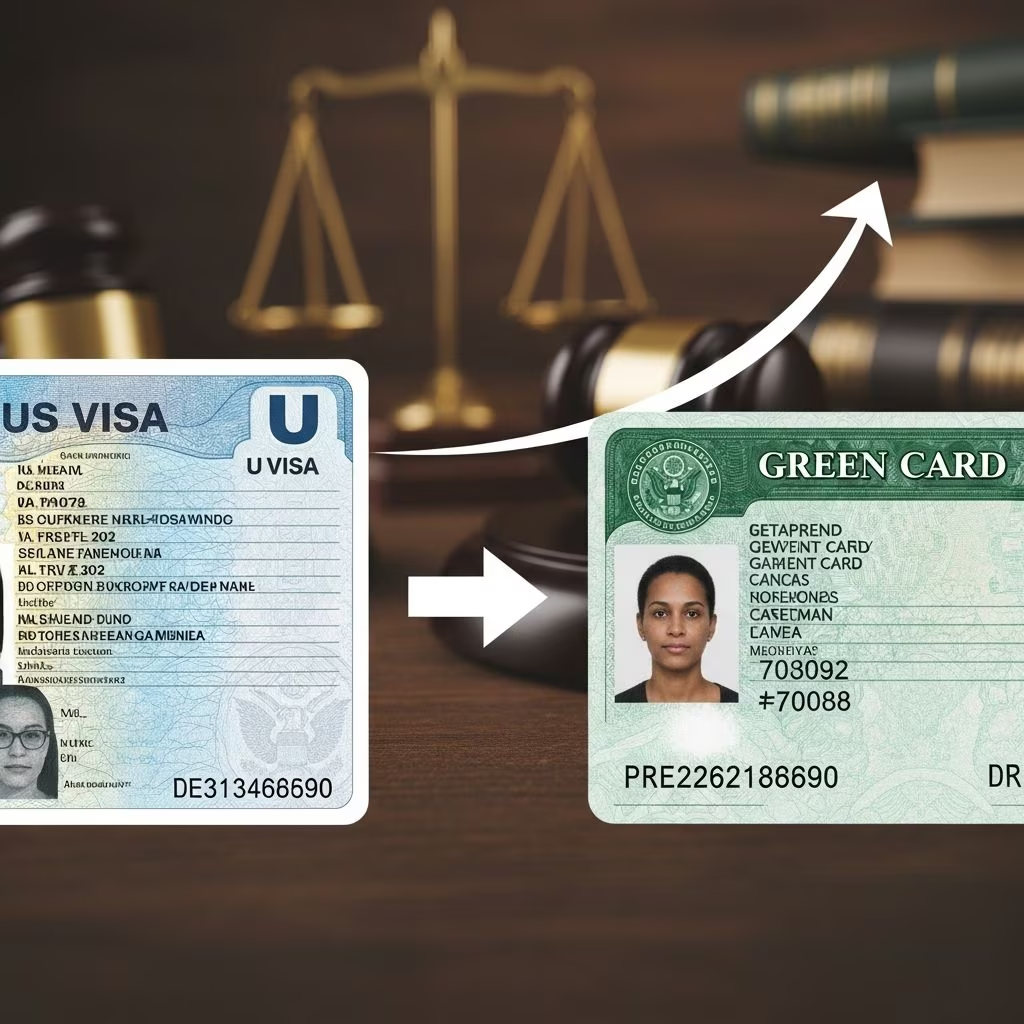
The U visa offers critical protection for victims of certain crimes who assist law enforcement, but many wonder if it paves the way to permanent residency. Yes, after meeting specific criteria, U visa holders can apply for a green card, marking a major step toward long-term stability in the United States. This guide breaks down the process, requirements, and strategies for success.
Understanding the U Visa Foundation
The U visa, established under the Victims of Trafficking and Violence Protection Act, provides temporary nonimmigrant status to individuals victimized by qualifying crimes such as domestic violence, sexual assault, or human trafficking, provided they substantially help investigators or prosecutors. This status grants work authorization and protection from deportation, setting the stage for future immigration benefits.
While the U visa itself is temporary—typically valid for four years—it creates a structured pathway to lawful permanent residency. Unlike many nonimmigrant visas, it explicitly allows adjustment of status without leaving the country, making it a powerful tool for eligible victims.
Core Eligibility Criteria for Green Card Adjustment
To transition from U visa to green card, applicants must satisfy strict conditions outlined in immigration law. Failure in any area can derail the process, so thorough preparation is essential.
- Three Years of Continuous Physical Presence: You must remain in the US for at least three years from the date U status begins, without interruptions exceeding 90 consecutive days or 180 aggregate days, unless tied to the criminal case.
- Current U Nonimmigrant Status: Applications must be filed while still in valid U visa status, before expiration.
- Public Interest Waiver: USCIS evaluates if granting permanent residency serves the public good, considering criminal history, immigration violations, and other factors. A clean record strongly favors approval.
- Admissibility or Waivers: Address any grounds of inadmissibility, such as prior unlawful presence, via Form I-192 if needed.
These rules ensure only committed, law-abiding individuals advance, balancing victim support with national security.
Step-by-Step Application Process
Navigating the adjustment process requires precision. Here’s a clear roadmap:
- Gather Evidence: Compile proof of continuous presence (e.g., tax returns, school records, medical bills), U visa documents, and law enforcement certifications.
- Complete Form I-485: Submit the Application to Register Permanent Residence or Adjust Status, along with fees (currently around $1,440, subject to change) and supporting forms like I-765 for work authorization and I-131 for travel documents.
- Attend Biometrics: USCIS schedules fingerprinting and photo sessions for identity verification and FBI checks, typically within weeks of filing.
- Undergo Background Review: Expect comprehensive checks on criminal and immigration history; delays can last 12-24 months.
- Prepare for Interview (If Required): Some cases proceed without one, but be ready to discuss your U visa basis, presence, and moral character.
- Receive Decision: Approval leads to green card issuance; denials can be appealed or refiled under certain conditions.
| Step | Timeline | Key Documents |
|---|---|---|
| Form I-485 Filing | After 3 years | I-485, I-485 Supplement E, fees |
| Biometrics | 1-4 weeks post-filing | Appointment notice |
| Background Checks | 6-24 months | N/A (automated) |
| Interview/Decision | Varies | Passport, ID, evidence |
Proving Continuous Physical Presence
This requirement trips up many applicants. ‘Continuous’ doesn’t mean constant presence but avoids trips that suggest abandonment of US residence. Track entries/exits via I-94 records and bolster with secondary evidence like employment stubs or affidavits from community members. Exceptions exist for travel related to the qualifying crime.
Family Members’ Path to Permanent Residency
Derivative U visa holders—spouses, children under 21, and sometimes parents or siblings if the principal is under 21—can also pursue green cards. They mirror the principal’s timeline, needing their own three-year presence and clean records.
- Principals file Supplement E to extend derivatives’ status during waits.
- Derivatives submit separate I-485s, proving relationships via birth/marriage certificates.
- Aging-out children may switch to other categories if they turn 21 before approval.
Family unity is prioritized, but each member must independently qualify.
Common Challenges and Solutions
Delays plague the system due to backlogs; current processing exceeds two years in many cases. Criminal convictions post-U visa, even misdemeanors, demand waivers showing rehabilitation. Unlawful entries prior to U status require I-192 waivers, approved discretionarily.
To mitigate:
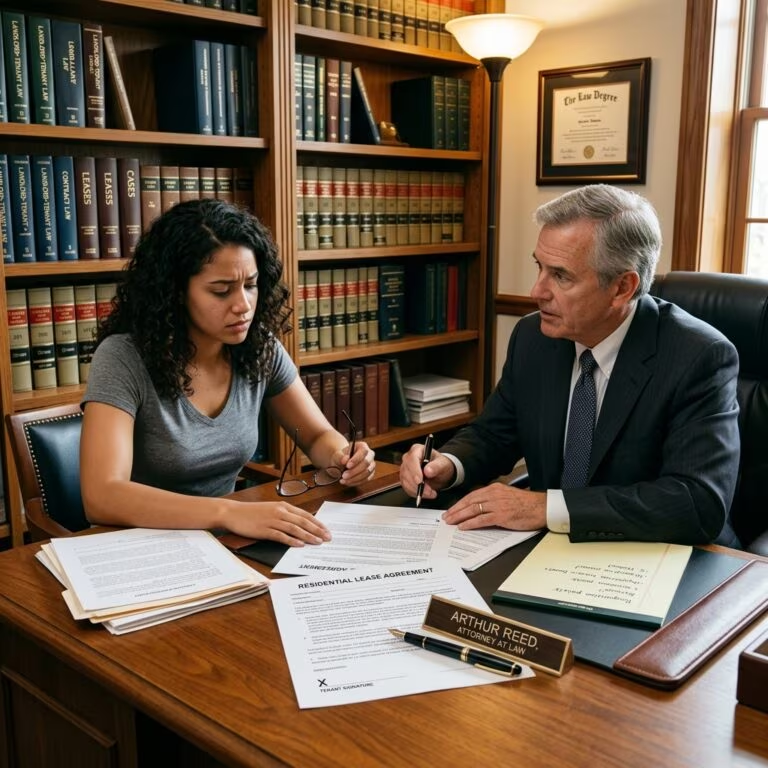
- Consult accredited attorneys early.
- Maintain meticulous records from day one.
- Apply for EAD/AP renewals to stay authorized.
Benefits of Green Card Achievement
Upon approval, green card holders gain indefinite US residence, unrestricted work rights, and eligibility for citizenship after five years (or three if married to a US citizen). Family sponsorship expands, and public benefits access improves. This status offers security unattainable under temporary visas.
Recent Policy Updates and Processing Times
USCIS continually refines U visa procedures; check for form revisions. As of 2026, adjustment waits average 18-30 months, with priorities for long-pending cases. Visa availability isn’t capped for U adjustments, unlike initial petitions.
Frequently Asked Questions (FAQs)
What if I travel abroad during my U visa?
Short trips under 90 days are generally fine if not excessive; apply for advance parole via I-131 to preserve continuity.
Can I apply for a green card before three years?
No, the statute mandates at least three years of continuous presence.
What happens if my U visa expires during adjustment?
File Supplement E for automatic four-year extensions while I-485 pends.
Do I need a lawyer?
Not required, but recommended due to complexities; find help via DOJ-accredited representatives.
Are there fees waivers?
Yes, for low-income applicants via I-912.
References
- 8 CFR § 245.24: Adjustment of status for U nonimmigrants — U.S. Citizenship and Immigration Services. 2024-01-15. https://www.uscis.gov/policy-manual/volume-7-part-m
- Immigration and Nationality Act § 245(m) — U.S. Department of Justice. 2023-06-01. https://www.uscis.gov/laws-and-policy/legislation/immigration-and-nationality-act
- U Visa to Green Card: Step by Step — Pro Se Pro. 2025-03-12. https://www.prosepro.co/articles/u-visa-to-green-card
- If my U visa petition gets approved, when can I get lawful permanent residence? — WomensLaw.org. 2024-11-20. https://www.womenslaw.org/laws/federal/immigration/u-visa-crime-victims/after-you-apply-u-visa/if-my-u-visa-petition-gets
- FAQ: U Visas for Survivors of Crimes — UC Davis School of Law. 2021-08-02. https://law.ucdavis.edu/sites/g/files/dgvnsk10866/files/media/documents/FAQ_U_Visas_for_Survivors_of_Crimes_FINAL_updated_08-02-2021.pdf