
Tulsa Race Massacre: The Erasure of History and Justice
Explore the enduring fight for reparations and historical accountability.
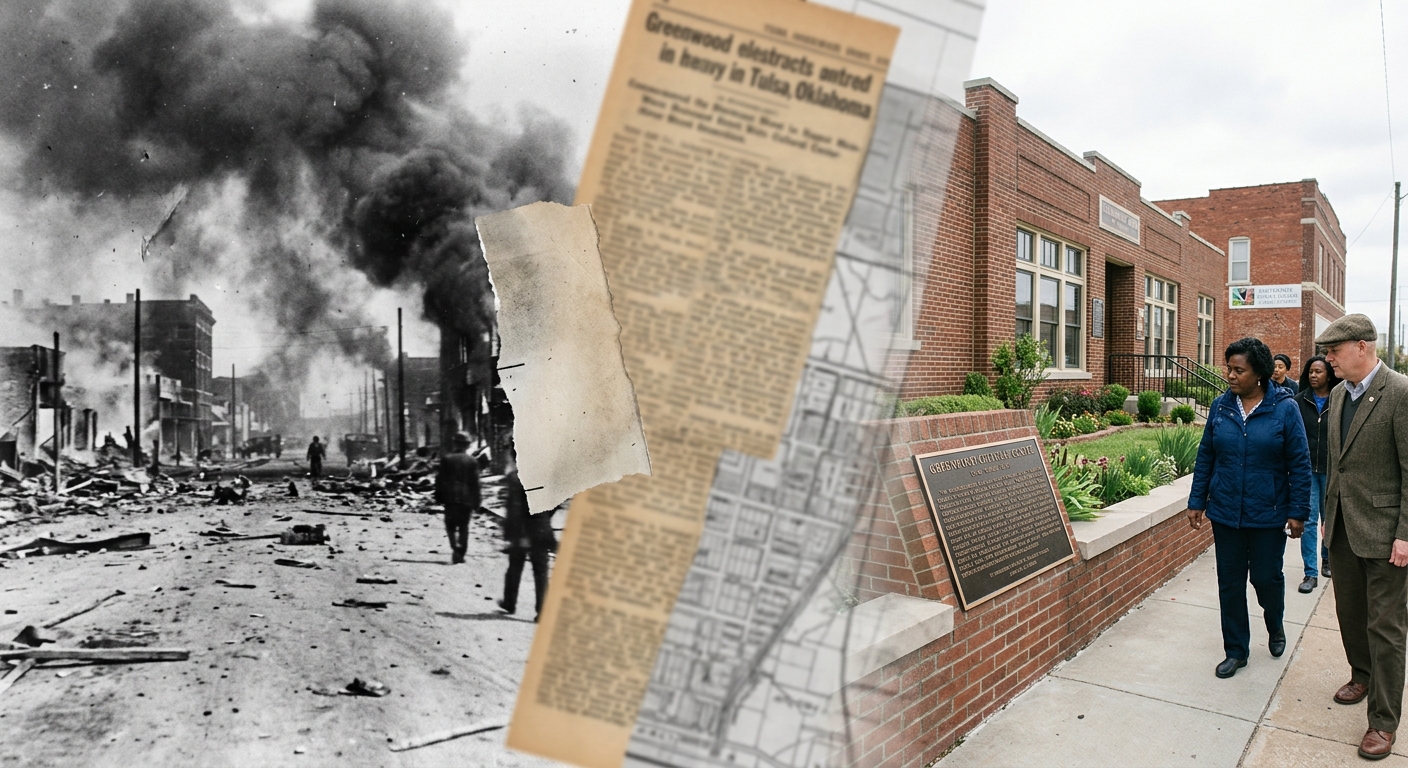
The Deliberate Silence of History
History is not merely a passive repository of facts, dates, and events; it is a highly active narrative, carefully sculpted by those holding the reins of power. In the broad chronicles of the United States, certain chapters are illuminated with profound civic pride, while others are relegated to the dark corners of deliberate obscurity. One of the most glaring, catastrophic examples of this manufactured amnesia is the Tulsa Race Massacre of 1921. For decades, the systemic destruction of the thriving Black community in the Greenwood District of Tulsa, Oklahoma, was meticulously excised from public school textbooks, local civic discourse, and the collective American memory. The enduring legacy of Greenwood is not only a story of unparalleled entrepreneurial success and subsequent racial violence but also a profound testament to the insidious nature of historical erasure. Today, as the few remaining centenarian survivors continue to fiercely advocate for justice and tangible compensation, their arduous battle converges with a much broader national debate regarding what history gets taught, who decides its parameters, and the deep-seated violence inherent in the act of forced forgetting.
Anatomy of Historical Erasure
When violence of a systemic and structural magnitude occurs, the immediate physical devastation is frequently followed by a secondary, equally insidious assault: the erasure of the event from public consciousness. The aftermath of the catastrophe in Tulsa was defined by an orchestrated campaign of institutional silence. Local authorities, many of whom were implicitly or explicitly complicit in the devastation, swiftly moved to bury the truth to evade accountability and legal liability. Police records mysteriously vanished, newspaper articles detailing the true scope of the massacre were strategically ripped from archival bound volumes, and a heavy, unspoken embargo was placed on discussing the tragedy in polite society, local government halls, or educational settings.
Generations of Tulsans grew up completely unaware that the very ground they walked on was the site of one of the deadliest episodes of racial violence in American history. This historical amnesia was not a byproduct of time passively slipping away; it was an active, deliberate policy of concealment. Suppressing the memory of the massacre served a dual purpose: it protected the white perpetrators from criminal prosecution and it effectively delegitimized the victims’ subsequent claims for restorative justice and financial restitution. By completely erasing the narrative, local and state institutions disenfranchised the grief and immense financial devastation inflicted upon Black Tulsans. It was not until the late twentieth and early twenty-first centuries that dedicated historians, steadfast activists, and resilient descendants forced the city to formally acknowledge the event. In a monumental modern development, the United States Department of Justice issued a comprehensive report in January 2025 formally evaluating the massacre. The DOJ concluded that the tragedy was not a random occurrence of uncontrolled mob violence, but rather a highly coordinated, military-style attack designed to obliterate a thriving Black enclave. This review, conducted under the auspices of the Emmett Till Unsolved Civil Rights Crimes Act, marked an extraordinary step by the federal government to pierce the veil of silence and deliver an official accounting of the barbarity.
The Prosperity and Devastation of Black Wall Street
A Flourishing Haven of Black Enterprise
To fully grasp the sheer magnitude of what was violently stolen, one must first understand what was painstakingly built. At the dawn of the 1920s, the Greenwood District of Tulsa was a shining, unparalleled beacon of African American economic independence, cultural resilience, and community ingenuity. Discriminatory segregationist policies had inadvertently forced Black Tulsans to turn inward and create a self-sustaining micro-economy. The triumphant result was a bustling, vibrant, and incredibly wealthy neighborhood affectionately known throughout the nation as “Black Wall Street.”
The Greenwood District was an economic anomaly in an era defined by aggressive racial disenfranchisement. The community embodied specific pillars of exceptional success:
- Economic Independence: Greenwood retained vast amounts of capital within the community. A single dollar often circulated locally for over a year before leaving the neighborhood, fostering immense local wealth.
- Professional Excellence: The avenue was populated with highly educated professionals, hosting elite surgeons, skilled lawyers, educators, and real estate magnates dedicated to serving Black Tulsans.
- Cultural Flourishing: Luxury hotels, modern movie theaters, and sophisticated entertainment venues offered safe, high-quality spaces free from the daily indignities of Jim Crow laws.
It was a sanctuary where African Americans could thrive, amassing real wealth and creating the foundation for generational prosperity. The undeniable economic vibrancy of Greenwood stood as a direct, irrefutable challenge to the prevailing white supremacist narrative that falsely asserted Black inferiority.
The Ruin of 1921
This unprecedented prosperity was violently, irrevocably shattered in the span of less than 48 hours. The pretext for this apocalyptic violence was remarkably flimsy—a common hallmark of lynchings and race riots during that era. It centered around a May 1921 elevator encounter between Dick Rowland, a young Black shoeshiner, and Sarah Page, a white elevator operator. Though historians remain divided on the exact nature of their interaction—many believe he simply tripped and grabbed her arm to steady himself—highly sensationalized, inflammatory reporting by the local white-owned press quickly weaponized the minor incident. This irresponsible journalism fanned the flames of intense racial animus, actively inciting violence against Rowland and threatening the broader Black community.
On the evening of May 31, a massive white mob gathered outside the Tulsa courthouse where Rowland was detained, openly declaring their intent to lynch him. When a small group of Black World War I veterans arrived to offer protection for Rowland, a scuffle ensued, and a shot was fired. This single spark ignited an inferno of widespread racial terror. Over the next day, an enraged white mob—which included hundreds of private citizens explicitly deputized and armed by local law enforcement—descended upon Greenwood. They engaged in a coordinated, systematic assault: looting homes of valuables, intentionally burning businesses, and shooting Black men, women, and children indiscriminately. Horrifically, the mob even utilized private airplanes to drop crude incendiary devices on the neighborhood, marking one of the very first instances of aerial bombing on American soil. By the time martial law was finally declared on June 1, 1921, the thriving community had been reduced to a wasteland of smoldering ash. Thirty-five square city blocks were completely obliterated, leaving nearly 10,000 Black Tulsans homeless, traumatized, and entirely destitute.
The Protracted Quest for Restitution
The Century-Long Battle
The embers of Greenwood had barely cooled when the systemic, institutional denial of justice commenced. Major insurance companies universally denied the substantial claims filed by Black property owners, maliciously citing “riot clauses” embedded in their policies to avoid payouts. Furthermore, the local government of Tulsa actively obstructed any rebuilding efforts, immediately passing highly restrictive new zoning ordinances that required fireproof materials, rendering reconstruction financially impossible for the newly impoverished residents. Despite these seemingly insurmountable legal and financial roadblocks, the indomitable spirit of Greenwood’s inhabitants could not be completely extinguished. Many survivors stubbornly rebuilt their homes using salvaged scrap materials, enduring years of severe hardship as they fought in hostile courts to reclaim their basic property rights. However, the immense generational wealth that had been so painstakingly accumulated was irrevocably lost, fundamentally stunting the economic trajectory of thousands of families for generations to come.
The desperate battle for restitution has spanned well over a century, carried forward by dedicated descendants and the last living survivors of the atrocity. Three known survivors—Viola Ford Fletcher, Lessie Benningfield Randle, and Hughes Van Ellis (who unfortunately passed away during the litigation process)—became the prominent vanguard of a renewed, high-profile legal effort. In 2020, they courageously launched a lawsuit against the city of Tulsa, the state of Oklahoma, and other municipal entities utilizing the state’s public nuisance law. The plaintiffs powerfully argued that the massacre created a lingering, century-long nuisance that continues to manifest today in profound racial disparities, stark economic inequities, and deep systemic divisions within modern Tulsa.
Legislative and Legal Horizons
This contemporary legal journey has been fraught with formidable, often agonizing hurdles. In July 2023, a Tulsa County District Court judge controversially dismissed the survivors’ case, a devastating ruling that dealt a severe blow to advocates who deeply believed the judicial system might finally mandate reparative justice. However, refusing to surrender, the survivors appealed the dismissal. Recognizing the immense historical weight of the matter, the Oklahoma Supreme Court subsequently agreed to consider whether the lower court’s decision was legally sound and to determine if the case should rightfully be remanded for further thorough adjudication.
Parallel to these intense judicial struggles, legislative avenues are increasingly being explored by federal lawmakers. In June 2025, U.S. Congressman Al Green introduced landmark legislation titled the “Original Justice for Living Survivors of the 1921 Tulsa/Greenwood Race Massacre Act.” This historic bill was specifically and meticulously crafted to provide direct federal financial compensation to the remaining living survivors, formally acknowledging the abject failure of state and local governments to rectify the atrocities. The proposed legislation seeks to award more than $20 million in direct damages to both Viola Ford Fletcher and Lessie Benningfield Randle. This effort serves as a vital, tangible acknowledgment of the profound suffering they endured and the subsequent century-long denial of their constitutional rights. These concurrent legal and legislative efforts powerfully underscore a crucial societal paradigm shift: the growing recognition that authentic restorative justice requires both substantial financial restitution and unvarnished, institutional truth-telling.
The Modern Campaign Against Truth
Educational Censorship as the New Erasure
The systemic concealment that immediately followed the Tulsa Race Massacre is not merely an isolated historical relic; its ideological successors are highly active and deeply entrenched today. Across the United States, a coordinated, heavily funded political campaign has emerged to strictly restrict the way American history—particularly regarding race, systemic inequality, and civil rights—is taught in public K-12 schools and public universities. These legislative efforts, often colloquially referred to by civil liberties organizations as “educational gag orders,” explicitly target open classroom discussions of racism, implicit bias, and the historical oppression of marginalized communities.
According to rigorous, ongoing tracking by free expression advocates, including a comprehensive 2024 analytical report by PEN America, dozens of states have recently enacted or proposed harsh legislation that severely curtails educational speech. These laws typically operate by utilizing intentionally vague language and the looming threat of severe penalties to instill a deep chilling effect among educators. Teachers and professors, deeply fearful of punitive administrative measures, devastating lawsuits, or outright job loss, frequently resort to preemptive self-censorship. As a result, they strategically omit critical but uncomfortable historical events—like the brutal devastation of Black Wall Street—from their curriculum.
This modern, sweeping wave of educational censorship directly mirrors the very violence of forgetting that originally allowed the perpetrators of the Tulsa Race Massacre to escape any semblance of accountability. By legally mandating ignorance, proponents of these gag orders deliberately seek to sanitize the national narrative, insulating contemporary systems of power from the necessary scrutiny of historical context. When the state officially dictates that the brutal, documented realities of racial injustice cannot be frankly discussed, it perpetuates a profound form of intellectual and civic violence. The systemic suppression of truth entirely denies students the crucial opportunity to understand the deep historical root causes of modern racial disparities, thereby severely hindering the development of a more equitable, empathetic, and informed democratic society.
The Imperative of Remembering
The ongoing fight to rigorously preserve the memory of the Greenwood District is inextricably linked to the broader, national struggle for civil rights, equity, and genuine societal healing. Remembering is not merely an act of passively dwelling in the sorrow of the past; it is an active, vital mechanism for forging a just and equitable future. Historical acknowledgment serves as the absolute foundational bedrock upon which any authentic reconciliation must be built. The stories of the Tulsa survivors—their incredible resilience, their enduring trauma, and their relentless, century-long demand for justice—must be permanently elevated and firmly enshrined within our collective national consciousness.
To truly confront the dark history of the 1921 massacre is to bravely confront the systemic racism that undeniably continues to permeate American institutions today. It requires an unwavering commitment to restorative justice that heavily transcends the boundaries of superficial apologies or empty political rhetoric. True, lasting accountability necessitates concrete financial reparations for the deliberate destruction of generational wealth, rigorous educational curricula that adamantly refuse to shy away from historical atrocities, and an unwavering, active defense against modern attempts to legally censor the truth. Ultimately, the insidious violence of forgetting can only be defeated by the relentless, courageous pursuit of remembrance.
Frequently Asked Questions (FAQs) About the Tulsa Race Massacre
What was the Tulsa Race Massacre?
The Tulsa Race Massacre was a devastating, highly coordinated racial attack that occurred between May 31 and June 1, 1921, in Tulsa, Oklahoma. A heavily armed white mob, which included numerous individuals officially deputized by local authorities, descended upon the highly prosperous Black neighborhood of Greenwood. The mob murdered an estimated hundreds of Black residents, looted homes, and burned 35 square city blocks to the ground, displacing nearly 10,000 individuals.
Why was the Greenwood District referred to as “Black Wall Street”?
Due to the strict, oppressive segregation laws of the Jim Crow era, Black Tulsans were largely excluded from the white economy. In response, they created a highly self-sufficient, thriving internal micro-economy. The Greenwood District featured luxury hotels, vibrant restaurants, robust professional medical and legal services, and numerous highly successful Black-owned businesses. Its immense concentration of wealth earned it the moniker “Black Wall Street,” heavily symbolizing Black economic independence.
What is the current status of the reparations lawsuit by the survivors?
In 2020, the last known living survivors of the massacre filed a major lawsuit demanding formal reparations under Oklahoma’s public nuisance law. Although a district court judge controversially dismissed the lawsuit in July 2023, the survivors immediately appealed the decision, and the Oklahoma Supreme Court subsequently agreed to review the case. Additionally, in June 2025, robust federal legislation was introduced aiming to provide over $20 million in direct compensation to each of the remaining survivors.
How do modern educational gag orders relate to the history of Tulsa?
Following the 1921 massacre, local and state authorities actively and deliberately suppressed the history of the event for decades, strictly ensuring it was left out of textbooks and public discourse. Modern “educational gag orders”—laws that restrict how educators can teach about race, systemic inequality, and historical injustices—parallel this historical erasure. Free expression organizations firmly argue that these contemporary laws perpetuate the dangerous “violence of forgetting” by intentionally censoring the difficult realities of American history from today’s students.
References
- Justice Department Announces Results of Review and Evaluation of the Tulsa Race Massacre — U.S. Department of Justice. 2025-01-10. https://www.justice.gov/opa/pr/justice-department-announces-results-review-and-evaluation-tulsa-race-massacre
- Oklahoma’s high court will consider a reparations case from 1921 Tulsa Race Massacre survivors — Associated Press. 2023-08-16. https://apnews.com/
- Congressman Al Green Introduces Legislation to Deliver Justice to the Living Survivors of the 1921 Tulsa/Greenwood Race Massacre — U.S. Representative Al Green. 2025-06-27. https://algreen.house.gov/media/press-releases/congressman-al-green-introduces-legislation-deliver-justice-living-survivors
- America’s Censored Classrooms 2024 — PEN America. 2024-10-08. https://pen.org/report/americas-censored-classrooms-2024/
Similar Articles








Read full bio of medha deb


