
Truth About Bamboo Fabrics and Green Marketing Claims
Learn how bamboo fabrics are really made, what “eco-friendly” labels mean, and how to spot misleading green marketing claims.
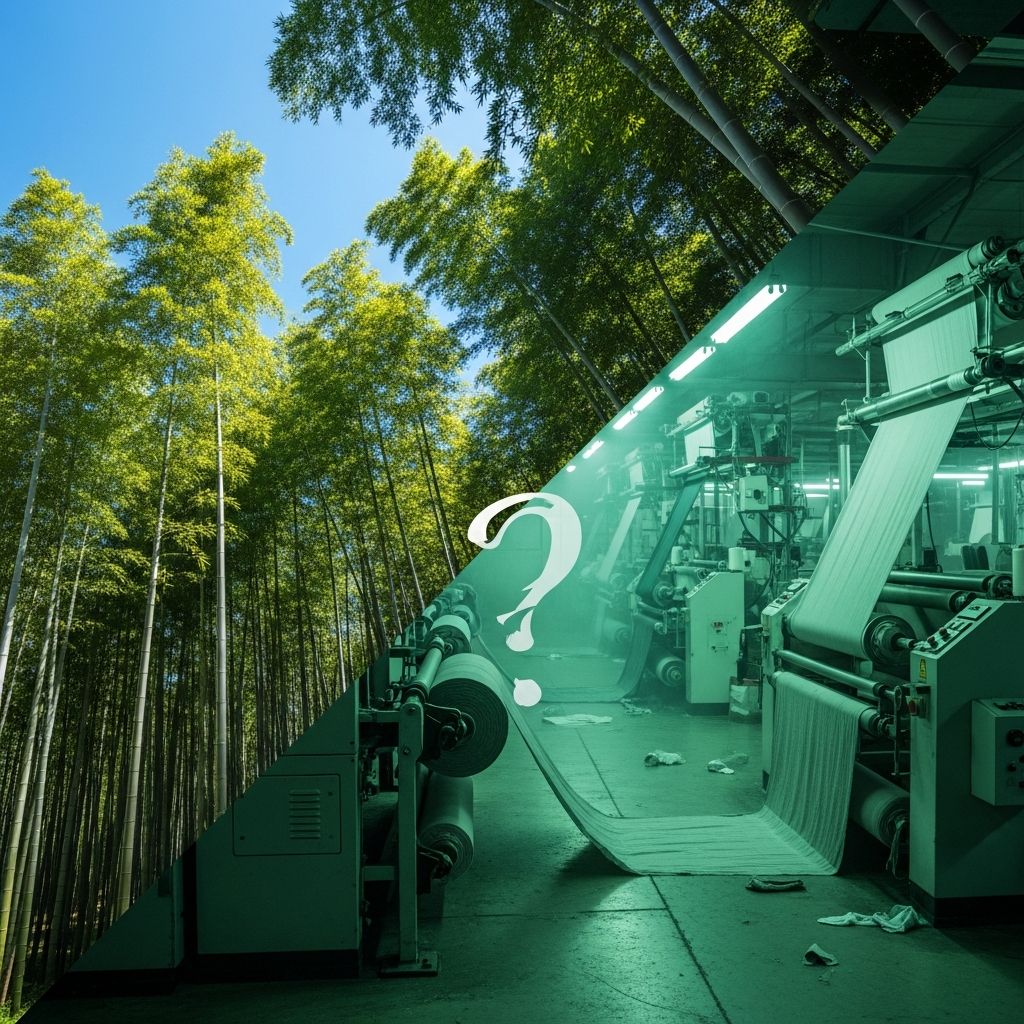
Bamboo clothing and textiles are often promoted as naturally green, antibacterial, and gentle on the environment. In reality, most so-called bamboo fabrics are actually rayon or viscose made from bamboo, produced through a chemical process that raises environmental and labeling concerns.
This guide explains how bamboo fabrics are really made, what claims are allowed, how U.S. law treats fiber labeling, and how you can evaluate products that market themselves as bamboo-based or eco-friendly.
1. Bamboo vs. Bamboo Fabric: What’s the Difference?
Bamboo the plant and bamboo the fabric are not the same thing. Understanding the difference is key to evaluating environmental and performance claims.
1.1 The bamboo plant
Bamboo is a fast-growing grass that can reach maturity in a few years, often with relatively low pesticide use compared with some conventional crops like cotton. Many varieties can be harvested without killing the plant, and their root systems can help stabilize soil.
- Rapid growth: Some commercial species can grow several feet per day under optimal conditions.
- Perennial root systems: The plant can regrow from the same roots after harvesting.
- Varied cultivation practices: Environmental impact depends on how and where bamboo is grown, including land use change, fertilizers, and water use.
1.2 From plant to textile fiber
To become fabric, bamboo must be converted into fibers that can be spun into yarn. There are two main pathways:
- Chemical/viscose process: Bamboo is turned into a pulp and dissolved using chemicals, then regenerated as rayon fibers. This is how most bamboo textiles on the market are made.
- Mechanical process: Bamboo is crushed and combed to mechanically separate fibers, similar to flax for linen. This method is less common and more expensive.
Because the viscose process fundamentally changes the fiber, the resulting product is rayon (or viscose), not natural bamboo fiber.
2. How Bamboo Rayon Is Made
Most clothing labeled as bamboo is actually made through a regenerated cellulose process, using bamboo as the starting material.
2.1 The viscose / rayon production process
While exact methods vary among manufacturers, the typical steps for bamboo viscose are similar to those used for other rayon fibers:
- Bamboo stalks are chipped and processed into a cellulose pulp.
- The pulp is treated with chemicals such as sodium hydroxide and carbon disulfide to form a viscous solution.
- The solution is forced through spinnerets into a chemical bath, regenerating cellulose into filaments.
- The filaments are washed, sometimes bleached, and spun into yarn.
This process can release hazardous chemicals if not properly controlled, and the environmental impact depends heavily on how the chemicals are recovered and wastewater is treated.
2.2 Mechanical bamboo fiber (rare in clothing)
A much smaller share of bamboo textiles comes from mechanically processed bamboo fibers that remain closer to the original plant structure. This process usually involves:
- Crushing bamboo stalks
- Using enzymes to break down woody components
- Combing out remaining fibers and spinning them into yarn
Mechanically processed bamboo is more comparable to linen made from flax and is less common in mass-market clothing owing to higher production costs and lower yields.
3. Environmental Reality vs. Green Image
Marketing often highlights bamboo’s natural growth advantages while downplaying the impact of turning it into rayon. To evaluate claims, it helps to separate plant-level traits from process-level realities.
3.1 Claimed environmental benefits
Manufacturers and retailers often associate bamboo textiles with:
- Sustainable raw material: Fast growth and potential for high yield per area.
- Lower pesticide use: Some varieties can be grown with relatively few chemical inputs compared with certain conventional crops.
- Biodegradability: Cellulose-based fibers, including rayon, can biodegrade under appropriate conditions.
3.2 Environmental concerns about viscose production
Viscose production, regardless of the plant source, can pose environmental and worker-safety issues if not well controlled:
- Chemical use: Carbon disulfide exposure has been linked to neurological and reproductive health concerns in workers.
- Water pollution: Poorly managed plants can discharge contaminated effluent into waterways.
- Deforestation risks: For some cellulosic fibers, sourcing wood pulp can drive forest loss; responsible sourcing systems attempt to mitigate this.
Newer viscose and lyocell processes with closed-loop systems and stricter environmental controls can reduce impacts, but practices vary significantly among producers.
4. What the Law Requires on Fiber Names and Labels
In the United States, labeling for textile products is governed by the Textile Fiber Products Identification Act and its implementing rules, enforced by the Federal Trade Commission (FTC).
4.1 Required fiber identification
Under U.S. law, the fiber content label must use the generic name of the fiber (such as rayon, cotton, polyester) rather than the plant or source used to make it, except under limited circumstances.
- Products made from regenerated cellulose using the viscose process must be labeled as “rayon” (or “viscose,” where allowed), even if the cellulose came from bamboo.
- Labels that say only “bamboo” for such products are considered misleading because they suggest a natural bamboo fiber rather than a regenerated one.
- If desired, manufacturers can add a qualifier such as “rayon made from bamboo” or “viscose derived from bamboo,” as long as “rayon” or “viscose” is clear and prominent.
4.2 Responsibility for accurate labeling
Multiple parties have legal obligations to ensure accurate labels and advertising, including:
- Manufacturers and importers: Must correctly identify fibers and comply with FTC labeling requirements.
- Wholesalers and distributors: Should not pass along goods with deceptive or noncompliant labels.
- Retailers: Can be held responsible if they sell products with labels or marketing materials that misrepresent fiber content or performance.
5. Examples of Potentially Misleading Claims
Certain marketing phrases can give an inaccurate impression about what a bamboo-derived textile really is or what it can do. Regulators focus on whether a typical consumer is likely to be misled.
5.1 Fiber name and composition claims
The following types of claims are problematic when the product is actually rayon made from bamboo:
- “100% bamboo” when the correct generic fiber name is rayon.
- “Pure bamboo fiber” if the fabric is chemically regenerated cellulose, not mechanically processed fiber.
- Omitting “rayon” or “viscose” in the fiber content statement while using bamboo alone as the descriptor.
5.2 Performance and health-related statements
Claims may also be deceptive if they cannot be supported with reliable evidence or if they attribute plant-level properties to the final fabric without proof. Examples include:
- Antibacterial or antimicrobial promises that do not hold up after the chemical processing and repeated laundering.
- Health-related claims implying the fabric prevents disease, treats skin conditions, or provides medical benefits without robust data.
- Overstated environmental claims like “completely green” or “environmentally harmless” if the manufacturing process involves significant chemical and resource use.
Regulators assess such claims under general advertising standards that require objective, competent, and reliable evidence to substantiate them.
6. How to Read Bamboo Textile Labels
Consumers can better understand what they are buying by paying attention to specific information on hang tags, sewn-in labels, and product descriptions.
6.1 Key elements to look for
- Fiber content statement: This is usually expressed as a percentage, for example, “95% rayon from bamboo, 5% spandex.” The mention of “rayon” or “viscose” is critical.
- Country of origin: Indicates where the product was manufactured or processed.
- Care instructions: How to wash, dry, and iron the garment, which may give insight into its durability.
6.2 Sample label descriptions
| Label wording | What it likely means | Potential issue |
|---|---|---|
| “100% bamboo” | Often rayon made from bamboo, especially in soft, drapey knits. | May be misleading if not identified as rayon. |
| “95% rayon from bamboo, 5% elastane” | Regenerated cellulose fiber with stretch component. | Acceptable if rayon is clearly disclosed. |
| “Organic bamboo” | May refer to cultivation methods for the bamboo plant. | Does not address chemicals used in rayon processing. |
7. Evaluating Eco and Health Claims as a Shopper
There is no single test that reveals the full environmental footprint of a garment, but you can ask targeted questions and look for specific information to make more informed choices.
7.1 Questions to consider
- Does the label clearly state “rayon,” “viscose,” or “lyocell” along with any mention of bamboo?
- Is there a third-party certification (for example, credible organic, forest management, or chemical-management schemes)?
- Does the company provide transparent information about its supply chain and production practices?
- Are performance claims (antimicrobial, odor control, UV protection) supported with data or just marketing language?
7.2 When bamboo-based fabrics can still be a good option
Even if they are more accurately described as rayon or viscose, bamboo-derived fabrics may offer useful properties:
- Soft handfeel and drape, often perceived as more comfortable than some synthetic fibers.
- Good moisture management and breathability in many knit structures.
- Potentially lower fossil fuel use than purely petroleum-derived fibers, depending on the feedstock and process.
The key is to understand that these benefits stem from a regenerated cellulose fiber and not from intact bamboo fibers.
8. Advice for Businesses Selling Bamboo-Derived Textiles
Companies that manufacture, import, or sell bamboo-based textiles can reduce legal and reputational risk by aligning their labels and marketing with regulatory expectations.
8.1 Labeling best practices
- Use the correct generic fiber name (such as “rayon”) in fiber content disclosures.
- If mentioning bamboo, phrase it as “rayon made from bamboo” or similar wording that does not omit the rayon component.
- Avoid ambiguous or unqualified terms like “bamboo fabric” when the product is a regenerated fiber and not a mechanically processed bamboo textile.
8.2 Substantiating environmental and performance claims
- Maintain reliable evidence (such as laboratory tests or life-cycle assessments) for antimicrobial, odor-control, or environmental impact statements.
- Ensure that staff, from marketing to customer service, understand the difference between the bamboo plant and regenerated fibers.
- Regularly review advertising, online content, and packaging for compliance with current regulatory guidance.
9. Frequently Asked Questions (FAQs)
Q1: Is clothing labeled as “bamboo” always rayon?
Most soft, drapey fabrics marketed as bamboo—such as T-shirts, leggings, and bed linens—are made from rayon or viscose derived from bamboo. Mechanically processed bamboo fiber textiles exist but are far less common and typically have a texture more like linen.
Q2: Are bamboo rayon fabrics naturally antibacterial?
While raw bamboo plants contain compounds that can inhibit microbial growth, these properties do not necessarily persist through the high-chemical viscose process. Any antibacterial or odor-control claims for finished fabrics require specific testing rather than assumptions based on the plant itself.
Q3: Are bamboo-based fabrics better for the environment than cotton?
The answer depends on many factors, including how the bamboo is grown, how the rayon process is managed, and how cotton is produced in the comparison. Some studies suggest that responsibly made cellulosic fibers can have advantages over conventional cotton, but poorly controlled viscose production can have serious environmental impacts.
Q4: How can I tell if a bamboo product is genuinely eco-friendly?
Look for clear fiber identification (such as “rayon from bamboo”), credible third-party certifications, and detailed information about responsible sourcing and manufacturing. Be cautious of vague statements like “environmentally friendly” without supporting details or certifications.
Q5: Is bamboo rayon safe to wear?
Finished rayon fabrics are widely used in clothing and home textiles. The main health and environmental concerns relate to how they are manufactured, particularly worker exposure to chemicals and pollution from factories. Consumers concerned about production impacts can look for brands that disclose their use of cleaner processes or certified supply chains.
References
- Advertising and Marketing of Bamboo Textiles — Federal Trade Commission. 2010-01-27. https://www.ftc.gov/business-guidance/resources/avoiding-bamboozling-your-customers-ethically-marketing-bamboo-textiles
- Bamboo: A multipurpose species for agroforestry — Food and Agriculture Organization of the United Nations (FAO). 2007-01-01. https://www.fao.org/forestry/44920-0a1e6c8a1720b6d0a0b36c309b2b5f6a0.pdf
- Bamboo Fabric: Properties, Production, and Applications — North Carolina State University, Wilson College of Textiles. 2015-06-01. https://textiles.ncsu.edu/tat/bamboo-fibers-and-fabrics/
- Dirty Fashion Revisited: Spotlight on Viscose — Changing Markets Foundation. 2018-06-18. https://changingmarkets.org/wp-content/uploads/2018/06/CM-DIRTY-FASHION-REVISITED-LR.pdf
Similar Articles








Read full bio of medha deb


