
Evaluating Trump’s Criminal Justice Policy Proposals
Analyzing the potential impacts of sweeping changes to the U.S. justice system.
A Pivot in Criminal Justice Philosophy
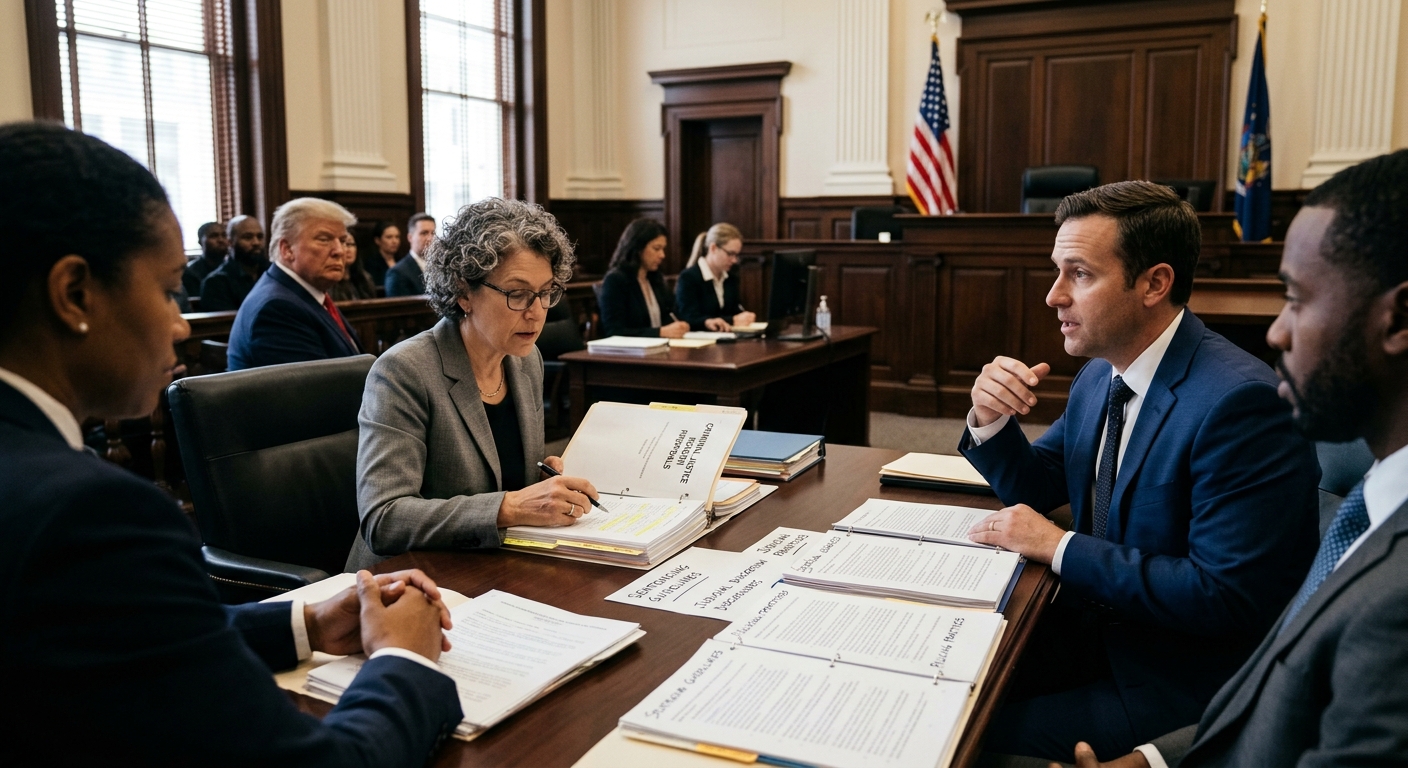
The landscape of the United States criminal justice system is continually shifting, reflecting a deep, ongoing national debate over the delicate balance between rehabilitation and punishment. As the 2024 presidential election season progresses, the policy proposals put forward by former President Donald Trump outline a stark, uncompromising “law and order” framework. This vision represents a massive departure from recent bipartisan reform efforts, which largely focused on reducing mass incarceration and improving police accountability. Instead, the updated political platform leans heavily into escalating punitive measures. This comprehensive blueprint encompasses a sweeping expansion of federal authority, the accelerated militarization of local police departments, aggressive street-level enforcement tactics, and a dramatic widening of capital punishment to include drug-related offenses. Understanding the magnitude of these proposals is essential for policymakers, legal scholars, and citizens. The implications of these policies extend far beyond the courtroom, threatening to reshape the daily interactions between law enforcement and the communities they serve, while fundamentally altering the federal government’s approach to civil liberties and domestic security.
Reversing Rehabilitative Gains: The First Step Act
One of the most widely celebrated legislative achievements of Donald Trump’s first administration was the signing of the First Step Act in 2018. This landmark bipartisan legislation signaled a monumental shift in federal criminal justice policy, primarily designed to ease harsh mandatory minimum sentences and provide meaningful incentives for prisoner rehabilitation. By allowing federal inmates to earn valuable time credits for participating in educational, vocational, and anti-recidivism programs, the law sought to safely transition thousands of non-violent offenders back into their communities. It was hailed as a critical move away from the draconian sentencing standards that fueled the mass incarceration crisis of the 1980s and 1990s.
However, current campaign rhetoric marks a profound pivot away from this rehabilitative ethos. Promising to clamp down decisively on crime, the former president’s updated platform suggests an embrace of maximalist incarceration strategies. This shift raises significant alarms regarding the potential reincarceration of individuals who previously benefited from early release mechanisms, or a permanent freeze on the bureaucratic processes that allow for such sentence reductions. If the rehabilitative pathways created by the First Step Act are dismantled, the federal prison system will likely experience a rapid resurgence of overcrowding. Legal advocates emphasize that rolling back these critical reforms would disproportionately devastate low-level offenders who have rigorously demonstrated a commitment to turning their lives around.
Police Militarization and Federal Intervention
Another core tenet of the proposed criminal justice agenda is the aggressive militarization of state and local police departments, coupled with an unprecedented willingness to utilize federal troops for domestic enforcement. For decades, the federal transfer of surplus military equipment to domestic law enforcement agencies has been a flashpoint for debate. Proponents argue that heavily armored vehicles, high-powered firearms, and tactical military gear are absolutely essential for protecting officers in increasingly volatile and dangerous scenarios. Conversely, civil rights advocates maintain that equipping local police forces like combat soldiers fundamentally alters the psychological dynamics of community policing, often transforming quiet neighborhoods into perceived war zones.
Beyond equipment transfers, the current platform proposes utilizing the Insurrection Act to deploy active-duty U.S. military personnel directly onto American streets. This centuries-old legal provision grants the executive branch the authority to use federal troops to suppress severe civil disorder or rebellion. Utilizing military forces to enforce local laws or police civilian protests represents a drastic blurring of the fundamental lines between national defense operations and civilian law enforcement. The Posse Comitatus Act generally prohibits military involvement in domestic policing; invoking the Insurrection Act circumvents this barrier. Normalizing the deployment of military forces in domestic urban centers threatens to violently escalate tensions during periods of civil unrest, centralizing immense coercive power within the executive branch.
Aggressive Policing Tactics and Qualified Immunity
Accountability within policing has dominated national conversations, leading to widespread calls for greater transparency, the use of body cameras, and civilian oversight boards. In a sharp counter-movement, the proposed law and order agenda heavily champions blanket immunity for law enforcement officers across the country. The stated goal is to comprehensively shield police from civil liability in cases involving alleged misconduct, effectively cementing the controversial judicial doctrine of qualified immunity into an absolute barrier against civilian lawsuits. Proponents argue that officers must make instantaneous, life-or-death choices and should never be paralyzed by the looming threat of financial ruin from frivolous litigation.
Conversely, legal scholars and constitutional watchdogs warn that stripping away the few remaining avenues for civilian recourse eliminates a crucial deterrent against the abuse of authority. When officers are completely insulated from the legal and financial consequences of their actions, the likelihood of constitutional violations—particularly the use of excessive force—inevitably increases. In tandem with broad legal immunity, the agenda strongly advocates for a national resurgence of proactive, controversial policing methods, specifically “stop-and-frisk.” This practice permits officers to detain and physically search individuals based merely on a low threshold of reasonable suspicion. Historically, such policies have systematically targeted minority populations, yielding severe racial disparities while demonstrating limited efficacy in permanently reducing violent crime.
Expanding the Death Penalty: New Frontiers in Capital Punishment
Perhaps the most severe and polarizing component of the proposed overhaul is the dramatic expansion of the federal death penalty. In the United States, capital punishment has traditionally been subjected to rigorous constitutional constraints, almost exclusively reserved for the most heinous and aggravated cases of intentional murder. However, the current political rhetoric forcefully pushes to classify drug trafficking and large-scale drug dealing as capital offenses. Drawing direct inspiration from highly authoritarian nations that routinely execute drug offenders, this proposal frames the ongoing opioid epidemic not as a complex public health crisis requiring comprehensive intervention, but as a severe moral failing punishable by state-sanctioned execution.
The aggressive push to execute drug dealers represents a massive expansion of the federal government’s lethal authority and immediately faces profound constitutional hurdles. Specifically, the Eighth Amendment’s strict prohibition against cruel and unusual punishment has historically been interpreted by the Supreme Court to require proportionality in sentencing, generally barring the death penalty when the defendant did not directly intend to cause a victim’s death. Furthermore, this policy builds upon the unprecedented string of federal executions that occurred during the final months of the Trump presidency. Expanding federal executions also resurrects fierce logistical and ethical controversies, notably regarding the specific drugs utilized in lethal injections, which recent Justice Department reviews indicate may cause unconstitutional levels of pain and suffering.
Mass Confinement: Immigration and Urban Homelessness
The overarching philosophy of maximizing physical state control extends well beyond the boundaries of the traditional judicial system, aggressively permeating the realms of immigration enforcement and urban management. The proposed agenda explicitly envisions the rapid construction of vast, sprawling detention camps strategically designed to facilitate the mass deportation of millions of undocumented immigrants. Such facilities would represent a logistical undertaking unparalleled in modern American history, fundamentally disrupting the demographic, social, and economic fabric of the nation while raising immediate, profound humanitarian and due process concerns.
In a parallel strategy, the platform addresses the mounting crisis of urban homelessness through a strict lens of mass confinement rather than social welfare or public health. Radical proposals have surfaced to completely ban urban street camping and to forcefully relocate unhoused populations to enormous, government-run “tent cities” or detention-style encampments situated far outside major metropolitan boundaries. By criminalizing the mere presence of unhoused individuals within city limits, this approach heavily prioritizes aesthetic order and the removal of visible poverty over addressing the systemic root causes of the crisis, such as severe mental illness, untreated addiction, and crippling housing shortages. Treating both immigration and homelessness primarily as law enforcement and carceral issues underscores a rigid governance philosophy heavily reliant on mass detention.
Comparative Analysis: Current vs. Proposed Policies
To understand the magnitude of these shifts, it is helpful to compare the current standard of justice with the proposed changes:
| Policy Area | Current Standard / Recent History | Proposed Agenda |
|---|---|---|
| Federal Sentencing | Focus on rehabilitation and reducing minimums (First Step Act). | Rollbacks on early release; return to maximalist incarceration. |
| Police Oversight | Push for transparency and limits on qualified immunity. | Universal police immunity and nationwide “stop-and-frisk.” |
| Military Deployment | Regulated surplus gear; Posse Comitatus Act broadly respected. | Massive militarization; active domestic use of the Insurrection Act. |
| Capital Punishment | Reserved for aggravated murder; currently under federal moratorium. | Expanded to drug traffickers; rapid resumption of executions. |
| Social Crises Management | Handled via social services, shelters, and immigration courts. | Handled via mass detention camps and forced physical relocation. |
The Future of American Law Enforcement
The sweeping criminal justice proposals put forth on the 2024 campaign trail represent a profound ideological pivot toward an uncompromising, highly militarized vision of law enforcement. By proposing the rollback of the First Step Act, the rapid expansion of capital punishment, the frequent deployment of the military for domestic policing, and the institutionalization of aggressive street-level tactics, the blueprint seeks to consolidate unprecedented punitive power within the executive branch. While these policies are politically framed as necessary and urgent measures to restore order and combat rising urban crime, they pose severe, potentially irreversible challenges to civil liberties, established constitutional norms, and decades of evidence-based reform. As the national debate over the future of the American justice system intensifies, voters and lawmakers alike must critically evaluate the long-term societal impacts of prioritizing mass detention and lethal enforcement over accountability, rehabilitation, and the strict protection of fundamental constitutional rights.
Frequently Asked Questions
What is the First Step Act, and how might it change?
The First Step Act is a bipartisan law passed in 2018 aimed at reducing the federal prison population by easing mandatory minimums and allowing non-violent inmates to earn early release through rehabilitation programs. Proposed changes suggest rolling back these leniencies, effectively freezing early releases and prioritizing prolonged mass incarceration.
How does the proposed agenda alter the death penalty?
The proposed policy seeks to massively expand capital punishment, specifically advocating for the execution of drug dealers and traffickers. This is a severe escalation from existing federal legal standards, which reserve the death penalty almost exclusively for cases of intentional, aggravated murder.
What is the Insurrection Act?
The Insurrection Act of 1807 allows the U.S. president to deploy active military troops domestically to suppress rebellions or extreme civil unrest. The new proposals suggest utilizing this act more frequently to police American cities, circumventing standard bans on military involvement in domestic law enforcement.
Why is the debate over police immunity so significant?
Police immunity, often discussed legally as qualified immunity, shields officers from being held personally liable in civil lawsuits for alleged constitutional violations. Critics argue it prevents accountability for police brutality, while supporters insist it is entirely necessary for officers to make rapid decisions without the constant fear of personal financial ruin.
What are the proposed plans for handling unhoused populations?
The agenda proposes strictly criminalizing urban homelessness by banning street camping. It suggests forcefully relocating unhoused individuals to government-run “tent cities” or large encampments located outside of major urban centers, effectively treating the social crisis of homelessness as a carceral and law enforcement issue.
References
- Trump calls for death penalty to ‘get tough’ on drug pushers — The Associated Press. 2018-03-19. https://apnews.com/article/donald-trump-us-news-ap-top-news-nh-state-wire-in-state-wire-f32f3f721ec7492c9748b52da7010464
- Thousands of federal inmates to be released under 2018 law — The Associated Press. 2022-01-13. https://apnews.com/article/coronavirus-pandemic-health-crime-donald-trump-5872a0f823101c640e4f8d6896582a85
- Drug used in federal executions under Trump may cause ‘unnecessary pain and suffering,’ Garland says — The Associated Press. 2025-01-16. https://apnews.com/article/federal-executions-pentobarbital-merrick-garland-63a51052fb821033b000300958a74281
- The Supreme Court upholds mandatory prison terms for some low-level drug dealers — The Associated Press. 2024-03-15. https://apnews.com/article/supreme-court-first-step-act-drug-dealers-811c0800b2053676150f1f1bb5bb6678
Similar Articles








Read full bio of medha deb




