
Traveling with Firearms: Key Legal Rules
Master the essentials of transporting guns safely and legally across states, by air, and in vehicles in 2026.
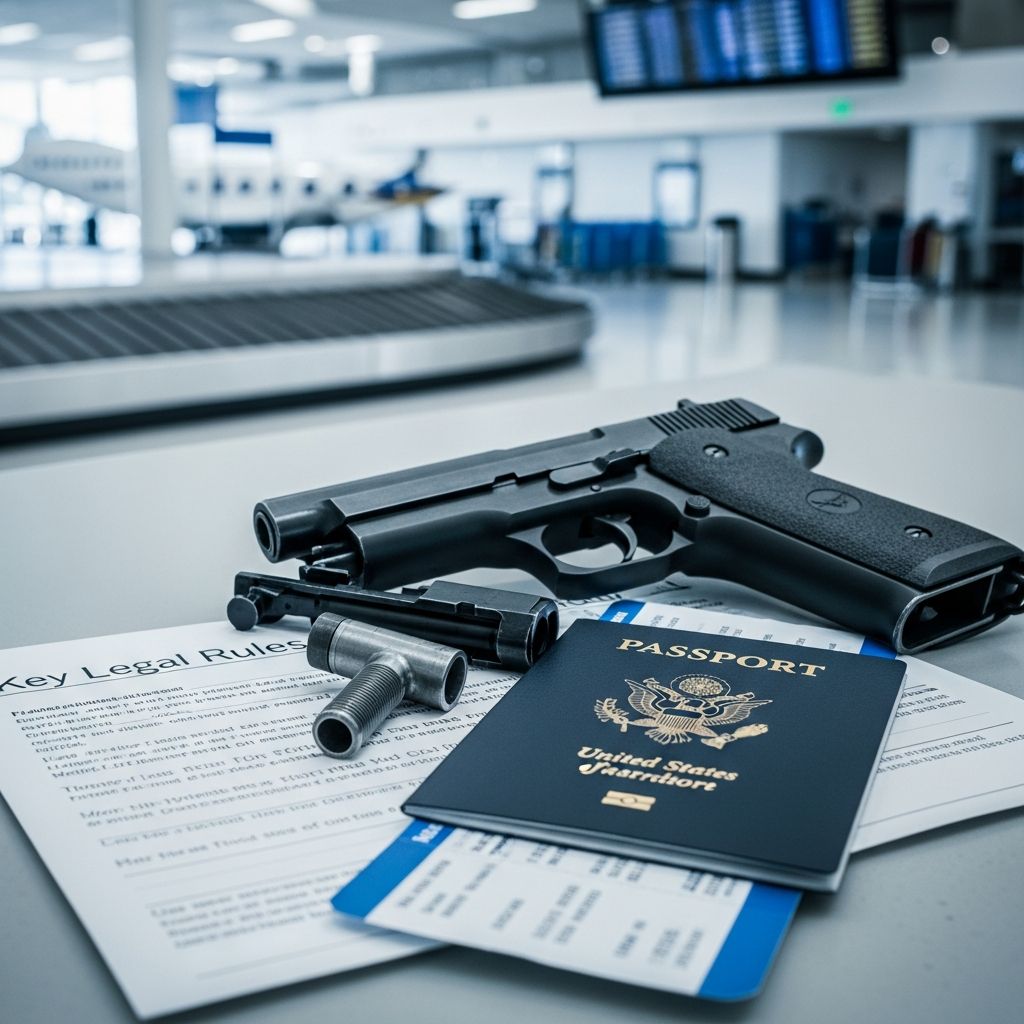
Transporting firearms across state lines or by air demands meticulous attention to evolving federal and state regulations. In 2026, with shifting reciprocity agreements and court rulings, gun owners must prioritize compliance to avoid severe penalties. This guide outlines critical strategies for lawful travel.
Understanding Federal Firearm Transport Framework
The foundation for interstate firearm movement rests on the Firearm Owners’ Protection Act (FOPA), codified in 18 U.S.C. § 926A. This statute shields travelers from state-specific prohibitions when firearms are unloaded, encased, and inaccessible during continuous transit through jurisdictions. For instance, a driver passing through a restrictive state like New York en route from Pennsylvania to Connecticut remains protected if the gun stays locked in the trunk.
Federal Aviation Administration (FAA) rules further govern air travel, mandating that checked firearms be unloaded, in locked hard-sided cases, and declared at check-in. Ammunition must be separately packaged in approved boxes. Airlines like Southwest Airlines enforce these by prohibiting cabin carry-ons except for law enforcement, with violations risking confiscation or bans.
State Reciprocity and Concealed Carry Challenges
Concealed carry reciprocity varies widely, with tools like interactive maps essential for 2026 planning. Over 25 states honor permits from most others, but mismatches persist—Illinois recognizes none, while Pennsylvania accepts 38.
| State Group | Recognizes Permits From | Notes for 2026 |
|---|---|---|
| Universal Reciprocity | 30+ states (e.g., AZ, FL, TX) | Includes military DD-214 holders |
| Limited/No Reciprocity | CA, NY, NJ, HI | Strict transport-only rules apply |
| Pending Changes | NC (S50 bill) | Potential permitless carry expansion |
North Carolina’s S50 legislation, overriding a veto in 2025, edges toward permitless carry but retains possession caveats, prohibiting carry in certain scenarios despite legal ownership. Travelers should verify via official state attorney general sites before departure.
Flying with Firearms: Step-by-Step Compliance
- Preparation: Confirm airline policy—Southwest requires hard cases and separate ammo. Use TSA-approved locks.
- At Check-In: Declare the firearm verbally and on luggage tags. Staff inspect without opening.
- Gate and Boarding: No issues post-check; retrieve at baggage claim in a locked state.
- Destination Rules: Upon landing, adhere to local laws immediately—e.g., Hawaii’s private property consent mandate.
International flights add ATF Form 6NIA/ATF Form 9 requirements for temporary export, with re-entry declarations mandatory.
Vehicle Transport: Highways and Pitfalls
Driving demands route-specific awareness. FOPA protects transient passage, but stops complicate matters. In Colorado, post-2026 semi-auto permits require fingerprints and waits, treating out-of-state purchases stringently. Kentucky’s extreme risk orders can seize guns indefinitely, requiring court petitions for return.
Safe practices include:
- Lock firearms in trunks or consoles, unloaded with magazines removed.
- Avoid overnight stays in hostile states without storage plans.
- Use apps for real-time reciprocity checks.
Navigating Private Property and Emerging Restrictions
The Supreme Court’s 2026 review of Hawaii’s law exemplifies tensions. Hawaii bans concealed carry on public-open private properties without explicit owner consent, upheld by the 9th Circuit citing colonial traditions. Challengers argue it burdens public carry rights under Bruen (2022), which mandates historical analogues for restrictions.
Practical implications: Gas stations, stores, or restaurants may require asking permission, risking denial or misdemeanor charges (up to 1 year imprisonment). Vehicle storage remains permissible if not on person. Similar laws proliferate, demanding vigilance.
2026-Specific Law Updates Impacting Travel
New federal tweaks zero NFA taxes on suppressors and short-barreled rifles from January 1, but ATF registration, photos, and background checks persist, with felony penalties for non-compliance. Permitless carry pushes in states like North Carolina advance, yet pitfalls linger.
Proposed bills like Rep. Richard Hudson’s H.R. version seek nationwide reciprocity, allowing cross-state carry akin to driver’s licenses, potentially easing school zones and lines. Monitor via NRA-ILA or USCCA trackers.
Best Practices for Risk Mitigation
- Research Routes: Plot paths avoiding high-risk states or plan storage.
- Documentation: Carry permit, vehicle registration, and FOPA printouts.
- Insurance: Secure policies covering transport losses.
- Training: Annual legal refreshers via certified instructors.
- Tech Tools: Apps like Legal Heat or Reciprocity Maps for instant updates.
Common errors include assuming reciprocity symmetry (e.g., Utah honors many, but few honor Utah) or neglecting ammo rules.
Frequently Asked Questions
Can I transport a loaded firearm in my car across states?
No, federal safe passage requires unloaded and inaccessible storage. State laws may impose stricter rules.
What if I need to stop overnight in a non-reciprocal state?
Secure the firearm in a locked hotel safe or vehicle trunk; avoid carry. Consult FOPA protections carefully.
Are suppressors easier to travel with in 2026?
Taxes are eliminated, but NFA registration remains mandatory with severe penalties for lapses.
How does Hawaii’s private property law affect tourists?
Concealed carriers must obtain explicit permission for stores or gas stations, or face misdemeanor charges.
Is there a national concealed carry permit?
Not yet; pending legislation aims for reciprocity like driver’s licenses, but currently state-specific.
State Law Variations Table
| State | Transport Rule | Reciprocity Level | 2026 Notes |
|---|---|---|---|
| Texas | Unloaded, encased OK | High (38 states) | Permitless carry expanded |
| California | Locked container, unloaded | None | Strict private property bans |
| Hawaii | Consent for private public-open | None | SCOTUS challenge pending |
| North Carolina | Pending permitless tweaks | Moderate | S50 veto override |
This table highlights variances; always cross-check official sources.
References
- North Carolina: Update on Permitless Carry — NRA-ILA. 2025-12-16. https://www.nraila.org/articles/20251216/north-carolina-update-on-permitless-carry
- 5 Gun Law Changes Taking Effect in 2026 — YouTube (Video Transcript). 2026-01. https://www.youtube.com/watch?v=IisVBpMJoQg
- Court to hear oral argument on law banning guns on private property — SCOTUSblog. 2026-01. https://www.scotusblog.com/2026/01/court-to-hear-oral-argument-on-law-banning-guns-on-private-property/
- Driving with a Firearm Guide for 2026 — AccessNewswire. 2026. https://www.accessnewswire.com/newsroom/en/publishing-and-media/driving-with-a-firearm-guide-for-2026-state-reciprocity-tools-fopa-transport-r-1120521
- Traveler’s Guide to the Firearm Laws of the Fifty States — GunLawGuide.com. 2026. https://www.gunlawguide.com
- Guidelines for Checking Guns — Southwest Airlines. 2026. https://support.southwest.com/helpcenter/s/article/Checking-guns
Similar Articles








Read full bio of Sneha Tete


