
Trapped in Transit: The Border Crisis Facing Asylum Seekers
The harsh realities facing asylum seekers stranded at the border.
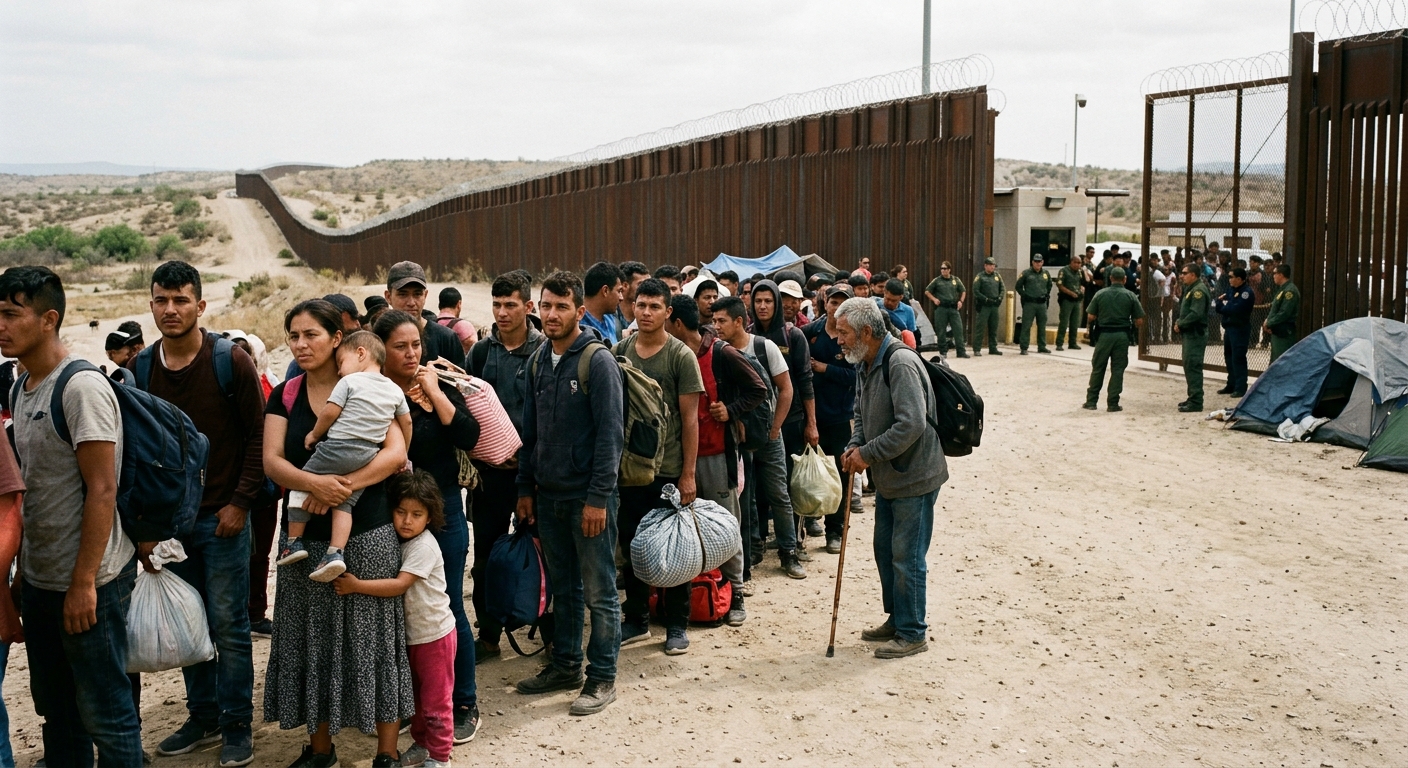
The Illusion of Order: A Bureaucratic Wall at the Border
The pursuit of safety is a fundamental human right recognized by international frameworks, yet for tens of thousands of asylum seekers, the journey toward refuge has culminated in a devastating humanitarian crisis. Fleeing persecution, political instability, and systemic violence in their home countries, individuals and families traverse treacherous terrains, such as the Darien Gap and Central America, only to be halted at the doorstep of the United States. Recent shifts in immigration policy have effectively replaced physical barriers with administrative and digital walls, creating an illusion of order while outsourcing the chaos to northern Mexican border towns. Under sweeping rules like the Circumvention of Lawful Pathways, non-Mexican migrants are heavily penalized if they cross between ports of entry or fail to secure an advance appointment to present their asylum claims.
This systemic bottleneck has fundamentally altered the geography of migration. Rather than being processed within a secure legal framework, vulnerable populations are forced to languish in makeshift encampments and overcrowded shelters across cities like Tijuana, Ciudad Juárez, Matamoros, and Reynosa. These areas lack the necessary infrastructure to support sudden, massive influxes of displaced persons. Basic necessities—such as clean drinking water, adequate sanitation, and reliable food sources—are critically scarce. Consequently, the waiting period, which can stretch into many months, strips asylum seekers of their dignity and exposes them to profound physical and psychological trauma. The policy of containment, designed to deter irregular migration, has instead engineered a static emergency where the desperation of stranded migrants deepens with each passing day.
Surviving in the Shadows: Extortion, Kidnapping, and Cartel Violence
The most alarming consequence of forcing asylum seekers to wait indefinitely in border regions is the creation of a highly lucrative shadow economy controlled by organized crime. Cartels and sophisticated criminal syndicates have weaponized the vulnerability of displaced people, treating human beings as commodities in a massive enterprise of exploitation. Because these migrants are effectively trapped—unable to move forward into the U.S. and terrified to return to the persecution they fled—they represent captive targets for extortion and violence.
Human rights monitoring organizations have documented an alarming escalation in targeted attacks against people waiting in Mexico. Reports consistently highlight a grim reality where kidnappings are not random acts of violence but systemic operations. Criminal groups are acutely aware that many asylum seekers have relatives residing in the United States who can be coerced into paying exorbitant ransoms. In this brutal environment, the dangers are omnipresent:
- Targeted Kidnappings: Criminal syndicates frequently abduct migrants directly from bus stations, shelters, or makeshift camps, holding them for thousands of dollars in ransom.
- Sexual and Gender-Based Violence: Women, girls, and LGBTQ+ individuals face disproportionate risks of sexual assault and human trafficking, often used as a tool of terror and compliance by cartels.
- Systemic Extortion: Migrants are routinely forced to pay “taxes” or protection fees to criminal groups simply to exist in certain neighborhoods or to access transportation hubs.
- Official Complicity: In many documented cases, local authorities and law enforcement turn a blind eye to these abuses or actively participate in the extortion, leaving migrants entirely without recourse or protection.
The daily reality for an asylum seeker in northern Mexico is dictated by sheer survival. With no legal right to work and no safe housing, families are forced to sleep on the streets or in squalid tent settlements where the rule of law is practically nonexistent. The psychological toll of surviving a perilous journey only to be hunted by cartels in a transit country is immeasurable, frequently resulting in severe PTSD, anxiety, and profound despair.
The Heightened Threat to Vulnerable Demographics
While the threat of violence casts a wide net over the entire migrant population, certain groups bear a disproportionately heavy burden. Pregnant women often lack access to critical maternal healthcare, leading to preventable complications and maternal mortality in border encampments. Unaccompanied minors, stripped of familial protection, are prime targets for forced recruitment by gangs or human trafficking rings. Furthermore, Black migrants and those who speak Indigenous languages face severe racial discrimination and linguistic isolation. This marginalization prevents them from accessing what little humanitarian aid is available and makes them highly visible targets for both state and non-state actors looking to exploit their lack of social capital.
The Tech Barrier: How Digital Metering Exacerbates the Crisis
In an attempt to modernize and streamline the asylum process, U.S. border authorities introduced a mandatory mobile application for scheduling appointments at ports of entry. While ostensibly designed to facilitate orderly processing, this digital tool has rapidly morphed into an insurmountable barrier for the world’s most vulnerable people. The reliance on a smartphone app as the primary gateway to international protection constitutes a form of “digital metering,” effectively filtering out those who lack resources, technological literacy, or basic infrastructure.
The challenges associated with this digital-first approach are multifaceted and severe. Firstly, the demand for appointments drastically outstrips the daily supply, creating a cruel lottery system where families anxiously refresh their screens day after day, week after week. Secondly, the application demands resources that destitute migrants simply do not have: a modern smartphone, a reliable internet connection, and electricity. In border encampments, electricity is a rare luxury, and cartels frequently steal mobile phones, instantly cutting migrants off from their only legal pathway to safety.
Glitches, Delays, and the Digital Divide
Beyond the lack of physical resources, the software itself has been plagued by systemic flaws that disproportionately impact specific demographics. Early versions of the application struggled with facial recognition technology, frequently failing to register the faces of darker-skinned migrants, thus preventing them from completing their applications. Furthermore, the interface is only available in a limited number of languages, entirely excluding those who speak Indigenous dialects or less common languages. When technical errors occur—such as false “fraud detected” flags or location tracking failures—migrants have no technical support hotline to call. They are left in a digital void, penalized not for lacking a valid asylum claim, but for falling victim to a glitchy algorithm. This digital wall stands in stark contrast to the core tenets of refugee law, which assert that the right to seek asylum should not be contingent upon technical proficiency or financial means.
Systemic Failures: International Obligations Falling Short
The current border management strategies raise profound concerns regarding compliance with international human rights standards. The United States is bound by the 1951 Refugee Convention and its 1967 Protocol, as well as domestic laws that enshrine the right to seek asylum regardless of the method of entry. A cornerstone of international refugee law is the principle of non-refoulement, which strictly prohibits the return of individuals to a country where they face serious threats to their life or freedom.
By implementing policies that mandate waiting periods in incredibly dangerous Mexican border towns, authorities are arguably engaging in a form of constructive refoulement. When migrants are explicitly blocked from accessing safety and are subsequently kidnapped, tortured, or killed while waiting for a digital appointment, the policies themselves become an active participant in their persecution. Human rights organizations have vehemently argued that conditioning asylum on arbitrary mobile applications and punishing those who cross irregularly out of sheer desperation represents a stark abandonment of humanitarian obligations. Instead of evaluating claims based on the merits of a person’s fear, the system is actively evaluating their ability to survive a manufactured administrative gauntlet.
The Path Forward: Restoring Human Dignity to the Asylum Process
Addressing the border crisis requires a fundamental shift away from policies rooted in deterrence and digital exclusion, moving toward frameworks centered on human dignity and legal compliance. First and foremost, the reliance on mandatory mobile applications as the sole arbiter of access to ports of entry must be dismantled, allowing individuals to present themselves and claim asylum physically, as mandated by historical legal precedents.
Furthermore, there must be a substantial investment in the processing capacity at ports of entry. Deploying additional asylum officers, interpreters, and legal personnel can ensure that claims are heard swiftly and fairly, eliminating the need for months-long waits in cartel-dominated territories. Collaboration with international humanitarian organizations and the Mexican government is essential to provide safe, secure, and well-resourced transit centers that protect migrants from organized crime. Ultimately, the metric for success at the border should not be the number of people successfully deterred or turned away, but the number of vulnerable lives protected in accordance with international law.
Frequently Asked Questions (FAQ)
Why are asylum seekers forced to wait in Mexico?
Recent immigration policies require non-Mexican asylum seekers to secure an appointment through a mobile application before presenting themselves at a U.S. port of entry. Because the number of daily appointments is severely limited, migrants are forced into a prolonged waiting period in Mexican border cities, leading to massive encampments and humanitarian crises.
What dangers do migrants face while waiting at the border?
Migrants stranded in transit face extreme violence, primarily orchestrated by cartels and organized crime syndicates. Common threats include targeted kidnappings for ransom, sexual and gender-based violence, systemic extortion, human trafficking, and severe lack of access to basic necessities like food, clean water, and medical care.
How does digital metering affect the right to seek asylum?
Digital metering conditions the legal right to seek asylum on the ability to access and operate a smartphone app. This creates an enormous barrier for those without resources, reliable internet, or technological literacy. Furthermore, language barriers and software glitches frequently prevent legitimate asylum seekers from ever making their claims.
Does turning asylum seekers away violate international law?
Human rights experts argue that forcing asylum seekers to remain in territories where their lives and freedoms are actively threatened violates the international legal principle of non-refoulement. Under international frameworks, individuals have the right to seek safety, and nations are obligated not to return them to dangerous conditions.
References
- Trapped, Preyed Upon, and Punished — Human Rights First. 2024-05-07. https://humanrightsfirst.org/library/trapped-preyed-upon-and-punished/
- CBP One Mobile Application Violates the Rights of People Seeking Asylum in the United States — Amnesty International. 2024-05-09. https://www.amnesty.org/en/latest/news/2024/05/usa-cbp-one-asylum-seekers/
- Americas | Annual Regional Overview — International Organization for Migration (IOM). 2026-04-16. https://missingmigrants.iom.int/
- “We Couldn’t Wait”: Digital Metering at the US-Mexico Border — Human Rights Watch. 2024-05-01. https://www.hrw.org/report/2024/05/01/we-couldnt-wait/digital-metering-us-mexico-border
Similar Articles








Read full bio of medha deb


