
Transforming Executive Forgiveness: The Shift Toward Equity in Federal Clemency
How new leadership and public defense perspectives are bringing hope and crucial reform to the federal clemency process.
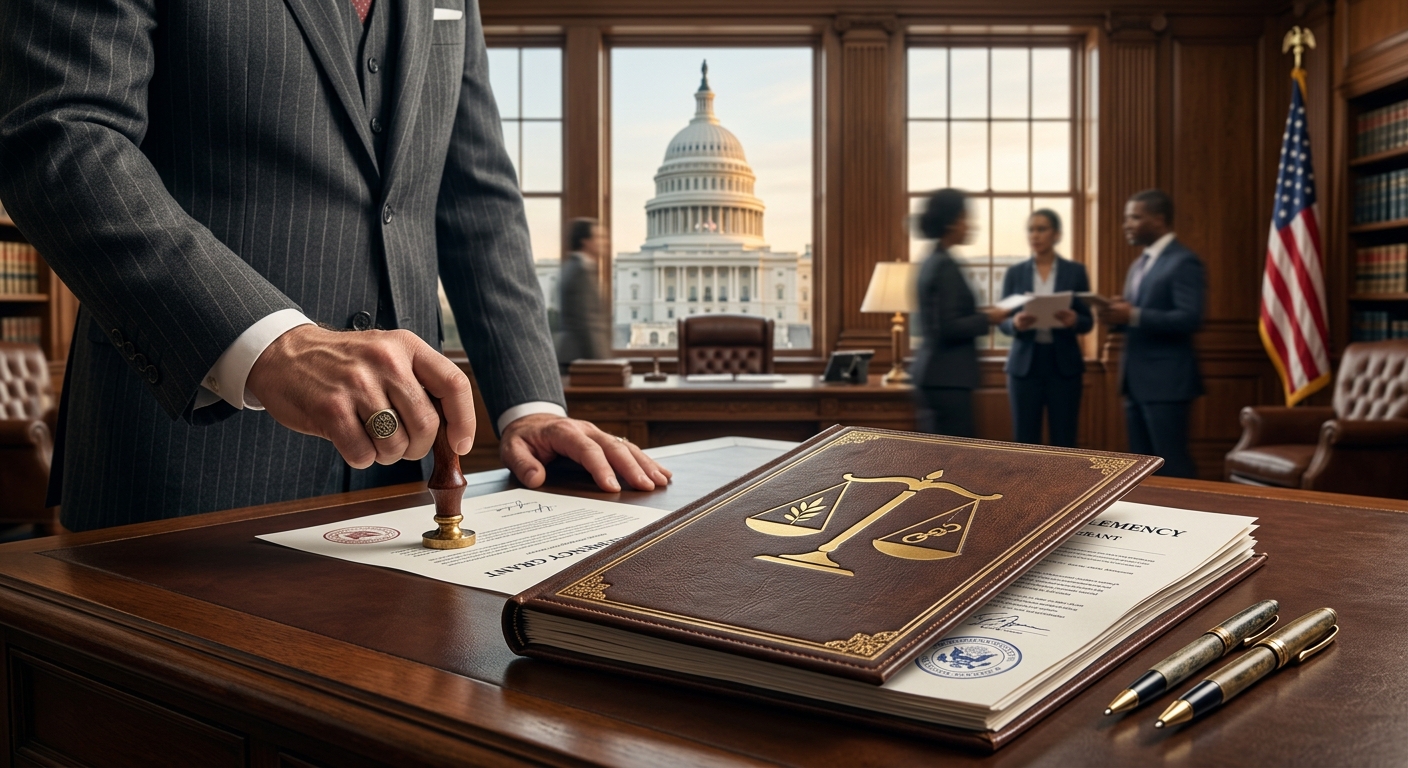
The Promise of Second Chances
The stark reality of mass incarceration has long cast a shadow over the United States, prompting continuous debate over how best to reconcile a punitive justice system with the fundamental human capacity for redemption. Over decades, the prison population swelled due to aggressive federal drug policies, mandatory minimum sentences, and a prevailing “tough on crime” political rhetoric. In this environment, executive clemency—once a regularly utilized tool for maintaining systemic equilibrium—became increasingly rare, highly politicized, and often reserved for well-connected individuals rather than ordinary citizens trapped in disproportionate sentences. For decades, federal clemency applicants have faced an arduous, often discouraging battle. The application process has been notoriously opaque, deeply bureaucratic, and historically slanted against those desperately seeking a second chance.
But a wave of institutional evolution is currently underway. Recent administrative appointments and policy realignments, particularly the integration of individuals with strong backgrounds in public defense into key oversight roles, signify a profound shift in the federal approach to executive forgiveness. By centering rehabilitation, addressing sentencing disparities, and prioritizing human dignity over perpetual punishment, this new perspective is breathing a renewed sense of hope into the thousands of individuals currently navigating the complex labyrinth of the federal clemency process.
Understanding the Mechanics of Federal Clemency
To grasp the magnitude of these shifting paradigms, it is crucial to understand how federal clemency operates at its structural core. The President’s authority to grant clemency is derived directly from Article II, Section 2 of the United States Constitution, which bestows the power to grant “Reprieves and Pardons for Offenses against the United States” . However, the President rarely acts alone in these matters. The Office of the Pardon Attorney (OPA), a specialized component within the Department of Justice (DOJ), is tasked with receiving, reviewing, and investigating applications for executive clemency, ultimately providing recommendations to the President .
When a petition is submitted, it does not immediately land on the Resolute Desk. Instead, the Office of the Pardon Attorney initiates an exhaustive investigatory process. This often involves coordinating with the Federal Bureau of Investigation (FBI) to conduct thorough background checks, soliciting input from federal judges, and evaluating the applicant’s post-conviction conduct. Every detail, from an individual’s disciplinary record inside a federal facility to their participation in educational and vocational programming, is meticulously scrutinized before a formal recommendation is drafted for the Deputy Attorney General, who then forwards it to the White House.
Federal clemency is not a monolith; it encompasses several distinct forms of relief, the most common being pardons and commutations.
| Type of Clemency | Definition & Scope | Primary Eligibility Requirement |
|---|---|---|
| Pardon | An official forgiveness of a crime that restores certain civil rights (e.g., voting, serving on a jury, or bearing arms) lost due to a federal felony conviction. | Typically requires a waiting period of at least five years after the completion of the sentence, including any period of probation or parole. |
| Commutation | A reduction of an ongoing sentence, either partially or completely. It does not erase the conviction, imply innocence, or restore civil rights. | The applicant must currently be serving a federal sentence. It is often sought by those serving disproportionately long sentences under outdated laws. |
| Remission of Fine | Cancels all or part of an unpaid criminal fine or restitution order. | Must demonstrate severe financial hardship and a good-faith effort to pay the fine previously. |
The Historical Imbalance in Executive Forgiveness
For the better part of a century, the federal clemency process has been marred by a distinct structural imbalance. Because the Office of the Pardon Attorney operates within the Department of Justice—the very agency responsible for prosecuting federal crimes—the system has inherently suffered from a prosecutorial bias.
Historically, the review process has relied heavily on the input of the original prosecuting offices. According to the Justice Manual, the views of the United States Attorney who handled the original case are given “considerable weight” in determining what recommendations the Department should make to the President . While gathering input from all stakeholders is a standard administrative practice, critics have long argued that relying so heavily on the original prosecutors creates an inherent conflict of interest. Prosecutors, by the very nature of their profession, are incentivized to protect the finality of their convictions and the severity of their negotiated sentences. As a result, countless deserving applications for commutations or pardons were routinely denied or left to languish in a massive administrative backlog, prioritizing finality over actual justice or rehabilitation.
The psychological toll this historically imbalanced system has exacted on applicants and their families cannot be overstated. Individuals who have spent years maintaining spotless disciplinary records, earning degrees behind bars, and proving their rehabilitation are often left in a state of indefinite purgatory. The crushing reality of an administrative backlog—which at times has swelled to over 15,000 pending petitions—means that many deserving applicants wait years, or even decades, only to receive a generic denial letter. This lack of transparency and speed breeds deep cynicism, reinforcing the perception that the clemency process is a broken lottery rather than a functioning apparatus of justice.
A Paradigm Shift: The Public Defender Perspective
The historical deadlock in clemency approvals makes recent shifts in departmental leadership so incredibly vital. Appointing officials whose professional careers were forged in the trenches of public defense brings a radically different philosophy to the Office of the Pardon Attorney. Unlike prosecutors, whose primary metric of success is securing convictions, public defenders are uniquely attuned to the mitigating circumstances that surround criminal behavior—be it poverty, mental health crises, addiction, or systemic marginalization.
A leader with a public defense background evaluates a clemency application not merely as a legal file challenging a past victory, but as a holistic narrative of a human being’s life. This defense-oriented perspective values post-conviction rehabilitation, exemplary institutional records, and the broader social imperative of family reunification. Furthermore, public defenders are intimately familiar with the devastating impact of mandatory minimums and the draconian sentencing disparities born out of the 1980s and 1990s “War on Drugs.” By acknowledging that the criminal justice system frequently over-punishes, a modernized Pardon Office is far more likely to recommend clemency as a necessary corrective tool rather than an extraordinary, near-impossible gift.
Recent Reforms and System Modernizations
Beyond philosophical shifts, the Department of Justice has recently implemented concrete, operational reforms designed to make the clemency process more equitable, transparent, and accessible to the average incarcerated person . For years, the application process was hindered by dense legalese, complex bureaucratic hurdles, and rigid documentation requirements that alienated applicants who lacked access to outside legal counsel.
- Form Simplification and Plain Language: The DOJ has completely overhauled its public-facing clemency applications. In a landmark move for accessibility, the updated pardon application eliminated the burdensome requirement for notarized signature pages, which previously served as a major bottleneck for applicants and their character references . The forms now utilize plain language, reducing complex legal jargon that often confused laypersons.
- Enhanced Language Access: Recognizing the diverse demographics of the federal prison population, the Office of the Pardon Attorney has prioritized language accessibility. The release of a Spanish-language commutation application marks a critical step forward in ensuring that non-English speakers have equal opportunity to petition the President for relief.
- Direct Outreach and Education: In an unprecedented shift toward proactive engagement, Pardon Office staff have begun partnering directly with the Federal Bureau of Prisons (FBOP). By visiting federal correctional facilities and hosting educational seminars, the office provides incarcerated individuals with direct, accurate information on how to navigate the clemency process effectively .
A significant aspect of the DOJ’s modernization effort involves aggressively addressing the systemic backlog of applications. Recognizing that justice delayed is often justice denied, the current administration has directed additional staffing and technical resources to the Office of the Pardon Attorney. By implementing streamlined case management software and prioritizing petitions from individuals serving overly lengthy terms under outdated laws, the Office has made strides in reducing average processing times . The goal is to ensure that petitioners receive timely answers, allowing them and their families to move forward with certainty rather than languishing in the shadow of a prolonged, opaque review process.
The Ripple Effect on Criminal Justice Reform
Revamping the federal clemency process is not just an administrative tweak; it is a vital component of the broader movement for criminal justice reform in the United States. Mass incarceration places an enormous economic and social burden on communities, disproportionately fracturing minority families and draining taxpayer resources. When clemency is utilized robustly and fairly, it functions as a crucial release valve for a system that has historically relied on excessive punishment.
Moreover, robust executive clemency sets a powerful precedent for legislative reform. When the executive branch actively commutes sentences for non-violent offenses or outdated mandatory minimums, it signals to Congress that these laws are fundamentally unjust and require permanent legislative repeal. In this way, the actions of a defense-minded Pardon Attorney do more than just free individuals; they highlight systemic flaws and build political momentum for comprehensive sentencing reform.
Looking Ahead: The Path to Meaningful Clemency
While the recent integration of public defense perspectives and the modernization of application forms bring undeniable hope, the journey toward a truly equitable clemency system is far from complete. Advocacy groups and legal scholars continue to push for deeper, structural changes.
One of the most prominent proposals among reform advocates is the complete removal of the Office of the Pardon Attorney from the Department of Justice. Proponents argue that establishing an independent clemency board—composed of a diverse array of stakeholders including formerly incarcerated individuals, mental health experts, and community leaders—would definitively sever the inherent conflict of interest posed by prosecutorial oversight. Until such legislative leaps are made, the continued dedication to transparency, efficiency, and a client-centered approach within the existing DOJ framework remains the strongest beacon of hope for federal applicants.
Ultimately, the power of clemency extends far beyond legal technicalities; it is profoundly personal. Every commutation granted represents a mother, father, sibling, or child who is finally permitted to return to their community and contribute meaningfully to society. When the process is guided by equity, empathy, and a genuine belief in second chances, it heals not only the individual but also the fractured communities left in the wake of excessive incarceration. While the structural evolution of the Pardon Office is a monumental step forward, the true measure of its success will be the lives restored and the families reunited in the years to come.
Frequently Asked Questions (FAQ)
What is the difference between a pardon and a commutation?
A pardon is an expression of the President’s forgiveness that restores civil rights lost due to a conviction, typically granted long after a sentence has been completed. A commutation, on the other hand, is a reduction of a currently active sentence but does not restore civil rights or imply innocence.
Can the President pardon someone for a state-level crime?
No. The President’s constitutional clemency power is strictly limited to federal offenses and offenses prosecuted in the D.C. Superior Court. Individuals seeking relief for state-level convictions must petition the governor or the respective state board of pardons .
Do I need an attorney to apply for federal clemency?
No, an attorney is not required. The Office of the Pardon Attorney provides free, publicly accessible applications. Recent reforms have streamlined these forms to make them easier for individuals to complete without professional legal assistance, although having an attorney can be helpful in compiling complex documentation and character references.
How long does the clemency review process take?
The timeline varies significantly depending on the complexity of the case, the completeness of the application, and the current backlog at the Office of the Pardon Attorney. While recent technological and staffing improvements aim to reduce processing times, applicants should generally expect the process to take several months to several years to reach a final Presidential decision.
References
- Office of the Pardon Attorney | About the Office — U.S. Department of Justice. 2026-01-23. https://www.justice.gov/pardon/about-office
- Fact Sheet: Justice Department Improvements to the Clemency Process — U.S. Department of Justice. 2023-12-28. https://www.justice.gov/opa/pr/fact-sheet-justice-department-improvements-clemency-process
- The Office of the Pardon Attorney Releases New Presidential Pardon Application — U.S. Department of Justice. 2024-06-10. https://www.justice.gov/opa/pr/office-pardon-attorney-releases-new-presidential-pardon-application
- Justice Manual | 9-140.000 – Pardon Attorney — U.S. Department of Justice. 2018-02-15. https://www.justice.gov/jm/jm-9-140000-pardon-attorney
- Office of the Pardon Attorney | Frequently Asked Questions — U.S. Department of Justice. 2026-04-29. https://www.justice.gov/pardon/frequently-asked-questions
Similar Articles








Read full bio of medha deb


