
Transforming Emergency Response: Moving Beyond Police-Only Dispatch
Rethinking 911 to prioritize civilian crisis responders for emergencies.
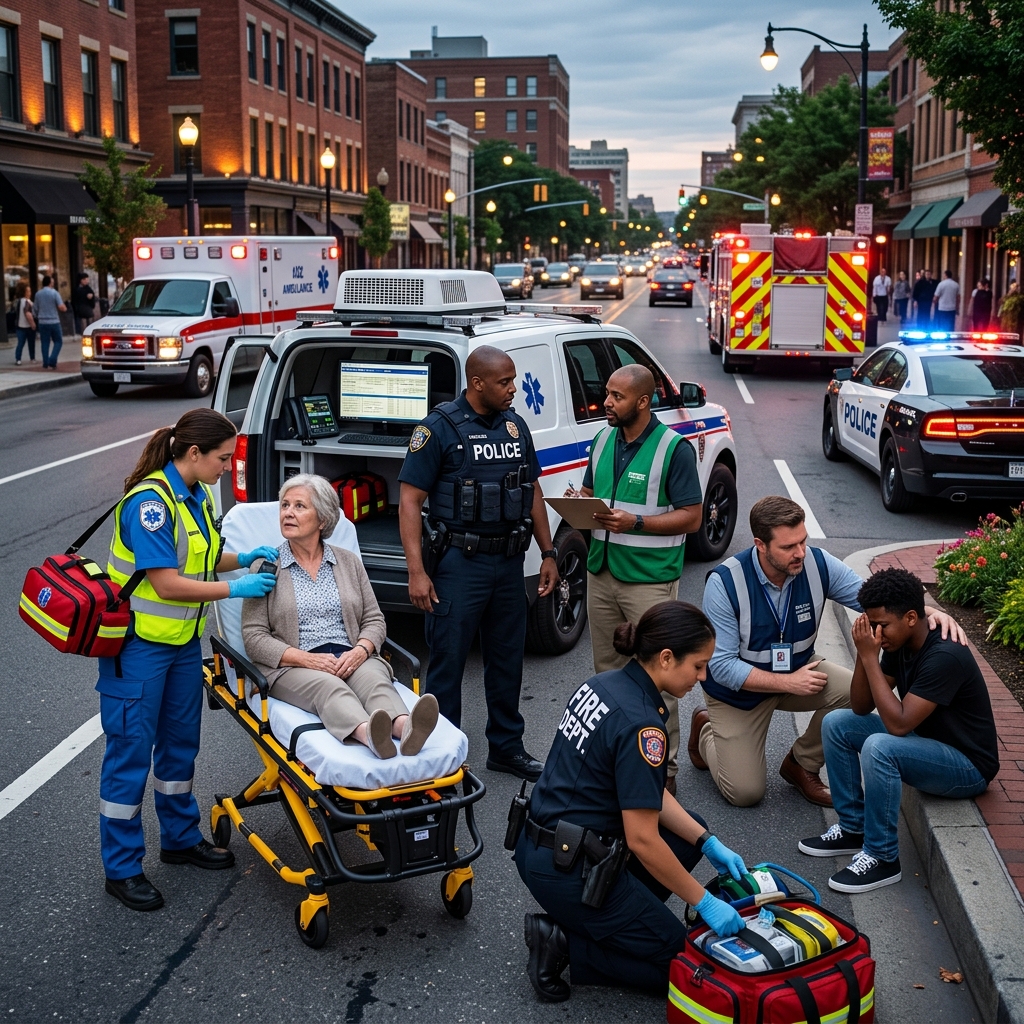
Introduction: The Evolution of Public Safety
For decades, the 911 emergency response system in the United States has operated on a simple, albeit flawed, premise: when someone calls for help, dispatch the police. This generalized approach was established to provide a rapid, standardized response to community emergencies. Over time, however, the scope of what constitutes an “emergency” has drastically shifted. Today, law enforcement agencies are routinely dispatched to handle incidents that fall far outside their traditional purview of crime control, such as mental health breakdowns, substance use overdoses, homelessness complaints, and minor neighborhood disputes. This default mechanism places an immense burden on police officers, who are often ill-equipped to provide clinical mental health interventions, and exposes vulnerable individuals to potentially traumatic, and sometimes fatal, encounters with armed authorities.
The call to reimagine the 911 system is not merely a critique of law enforcement but a fundamental recognition that public safety requires a multidisciplinary approach. Communities and policymakers are increasingly advocating for a tiered emergency response framework. By deploying civilian crisis responders, social workers, and paramedics to situations that do not involve a threat of violence, municipalities can reserve police resources for actual crimes while providing appropriate, compassionate care to those in acute distress.
The Flawed Paradigm of the 911 System
The architecture of the current 911 system forces dispatchers into a narrow decision-making funnel. When an operator receives a call, they are typically required to categorize the emergency under strict, pre-defined codes that overwhelmingly trigger a police dispatch. Because the system lacks nuance, situations that require a social worker or a medic are often misclassified as public disturbances or potential threats. This structural rigidity leaves call-takers with few alternatives, compelling them to send armed officers simply because no other resource is integrated into the dispatch board.
Data consistently demonstrates a disconnect between what communities need and what the 911 system provides. An extensive analysis by the Vera Institute of Justice revealed that in several major U.S. cities, fewer than 3 to 7 percent of 911 calls actually involve a violent crime in progress. The vast majority of calls are for non-criminal issues, traffic incidents, or low-level quality-of-life concerns. Despite this, the default response remains enforcement-oriented. This mismatch not only strains municipal budgets by tying up highly paid law enforcement officers with non-criminal tasks, but it also criminalizes behaviors that are inherently public health issues.
The Human Toll: Mental Health and Over-Policing
The consequences of sending armed, uniformed officers to behavioral health crises are profound and sometimes tragic. When individuals are experiencing a psychiatric emergency, the arrival of police—complete with sirens, flashing lights, and tactical gear—can inadvertently escalate the situation. People in the throes of a psychotic episode or severe panic may not be able to comply with rapid verbal commands, interpreting the officers’ presence as a threat rather than assistance. This dynamic often leads to the use of force.
The human cost of this systemic failure is staggering. According to comprehensive research conducted by the Treatment Advocacy Center, at least one in four fatal encounters with law enforcement involves an individual suffering from a severe mental illness. Furthermore, individuals with untreated serious mental illness are estimated to be 16 times more likely to be killed during a police encounter than other civilians. These statistics underscore a critical failure in the public safety safety net: relying on the criminal justice system to manage public health crises is not only ineffective, but it is also inherently dangerous.
Alternative First Responder Models
Recognizing the urgent need for systemic change, several cities have successfully implemented alternative first responder models that bypass traditional police dispatch entirely for certain types of calls. These programs rely on mobile crisis teams comprising behavioral health clinicians, paramedics, and peer support specialists.
- Denver’s STAR Program: The Support Team Assisted Response (STAR) program in Denver, Colorado, has become a leading model for alternative dispatch. Launched as a collaborative effort between mental health providers and the city, STAR dispatches a mental health clinician and a paramedic to non-violent calls related to mental health, depression, poverty, and substance use. An evaluation by the Urban Institute highlighted that the STAR program successfully diverted hundreds of calls from police, providing on-site de-escalation and connecting individuals to long-term community resources without a single incident requiring police backup or resulting in an arrest.
- Eugene’s CAHOOTS Model: Preceding STAR by decades, the Crisis Assistance Helping Out On The Streets (CAHOOTS) program in Eugene, Oregon, has long demonstrated the viability of civilian responders. Handling nearly 20 percent of the city’s 911 calls, CAHOOTS responders arrive in specialized vans equipped with medical supplies and comfort items, rather than weapons and handcuffs.
These models operate on the principle of harm reduction. By removing the threat of arrest and the intimidation of a firearm, civilian responders can quickly build rapport, de-escalate volatile emotions, and address the root cause of the caller’s distress.
Re-engineering the Dispatch Protocol
The success of alternative responder programs heavily relies on the initial point of contact: the 911 dispatcher. Re-engineering emergency response requires a fundamental overhaul of how calls are processed, triaged, and routed. Dispatchers must be retrained to ask specific, targeted questions that accurately assess the level of threat and the underlying nature of the crisis. This involves updating legacy dispatch software to include distinct decision trees for behavioral health emergencies.
Implementing this change requires structural support within the call center. Some progressive municipalities have begun embedding licensed clinical social workers or behavioral health professionals directly onto the dispatch floor. These professionals can take over calls that indicate a mental health component, conducting real-time psychiatric triage over the phone. If a field response is deemed necessary, they can dispatch the appropriate civilian crisis team. If the situation can be resolved via phone counseling, they eliminate the need for a physical deployment altogether, drastically improving efficiency.
The 988 Lifeline: A Parallel System for Mental Health
A critical advancement in removing mental health from the criminal justice system was the nationwide implementation of the 988 Suicide & Crisis Lifeline in the United States. Transitioned in July 2022 under the guidance of the Substance Abuse and Mental Health Services Administration (SAMHSA), 988 serves as a dedicated three-digit dialing code for individuals experiencing emotional distress, suicidal ideation, or substance use crises.
The goal of 988 is to create an alternative entry point for emergency services that bypasses 911 entirely. When people dial 988, they are connected to trained crisis counselors rather than police dispatchers. However, for this bifurcated system to work optimally, deep integration between 911 and 988 call centers is necessary. Dispatchers at 911 must be able to seamlessly transfer non-emergent behavioral health calls to 988, and conversely, 988 operators must have a direct line to deploy mobile crisis teams or, in rare cases of imminent physical danger, request a specialized police response.
Community Impact and Economic Viability
Transitioning toward civilian crisis response models yields significant benefits beyond the immediate safety of individuals in crisis; it also presents a compelling economic argument. The traditional policing model is incredibly expensive when applied to social issues. When a police officer responds to a mental health call, the default resolution often involves transporting the individual to a hospital emergency room or a county jail—both of which are highly costly interventions that frequently fail to provide long-term care.
Civilian response units operate at a fraction of the cost of law enforcement deployments. By treating individuals in the field and connecting them directly to outpatient psychiatric care, shelters, or substance use programs, municipalities save millions of dollars in emergency medical and penal expenses. Furthermore, these programs actively rebuild trust between local governments and marginalized communities. When residents know that dialing for help will result in a compassionate medical response rather than a punitive law enforcement action, they are far more likely to seek assistance before a crisis becomes fatal.
Comparison of Dispatch Models
To understand the paradigm shift, it is helpful to compare the traditional law enforcement response with the modernized, alternative dispatch approach.
| Feature | Traditional 911 Response | Reimagined Dispatch Model |
|---|---|---|
| Primary Responders | Armed police officers. | Paramedics, social workers, and peer specialists. |
| Triage Method | Categorization based on potential criminality. | Clinical assessment of behavioral health needs. |
| Primary Goal | Establish order, secure the scene, enforce laws. | De-escalate the crisis, provide medical/social support. |
| Common Outcomes | Arrest, involuntary hospital hold, escalation. | On-site counseling, voluntary referral to community services. |
| Cost Efficiency | High (involves costly jail bookings and ER visits). | High ROI (diverts from expensive institutional care). |
The Path Forward for Municipalities
Transforming a deeply entrenched emergency response system is a complex undertaking that requires sustained political will, legislative action, and community advocacy. Local governments must proactively audit their 911 call data to identify the true volume of calls that do not require police intervention. Armed with this data, city councils can reallocate a portion of their public safety budgets to fund mobile crisis teams and upgrade dispatch center technologies.
State and federal support also play crucial roles. Medicaid waivers and federal grants provided by agencies like SAMHSA can help subsidize the operational costs of 988 call centers and local civilian response units. Ultimately, this transformation is not about diminishing the role of police, but rather right-sizing it. Law enforcement must be allowed to focus on violent crime and complex investigations, while public health professionals are empowered to do what they do best: heal and support the community.
Frequently Asked Questions (FAQ)
Why shouldn’t police respond to mental health crises?
Police officers are primarily trained in law enforcement and threat neutralization, not clinical psychology or long-term behavioral therapy. The presence of armed, uniformed officers can often exacerbate a psychiatric emergency, triggering panic and increasing the risk of violence. Health professionals are better equipped to de-escalate these specific scenarios without using force.
Are civilian responders safe without police protection?
Yes. Data from established programs like Eugene’s CAHOOTS and Denver’s STAR indicate that civilian responders face incredibly low risks of violence. Call dispatchers are trained to rigorously screen out calls involving weapons or imminent physical violence. If a situation escalates unexpectedly, civilian teams are trained to safely retreat and call for law enforcement backup, though this is rarely needed.
What is the difference between 911 and 988?
911 is the traditional emergency number meant for immediate threats to physical safety, fires, and crimes in progress. 988 is the Suicide & Crisis Lifeline, specifically designed for individuals experiencing mental health emergencies, suicidal thoughts, or substance use crises. Dialing 988 connects callers to trained mental health counselors instead of police dispatchers.
How do alternative dispatch programs save money?
These programs save money by reducing the reliance on highly expensive interventions. They decrease the number of unnecessary emergency room visits, reduce the costs associated with jail bookings and court proceedings, and free up law enforcement officers to handle complex criminal cases rather than spending hours waiting at hospitals for psychiatric evaluations.
Conclusion
Reimagining the 911 system represents a necessary evolution in how society defines and delivers public safety. By acknowledging that not every emergency requires a law enforcement response, municipalities can implement more compassionate, effective, and economically viable solutions. Transitioning to civilian-led crisis response models and fully integrating the 988 Lifeline are critical steps toward reducing unnecessary police violence and ensuring that individuals in distress receive the care they truly need. It is a vital shift from a system based on enforcement to one rooted in community health and support.
References
- Overlooked in the Undercounted: The Role of Mental Illness in Fatal Law Enforcement Encounters — Treatment Advocacy Center. 2015-12. https://www.treatmentadvocacycenter.org/reports_publications/overlooked-in-the-undercounted/
- Evaluating Alternative Crisis Response in Denver’s Support Team Assisted Response (STAR) Program: Interim Findings — Urban Institute. 2024-09. https://www.urban.org/research/publication/evaluating-alternative-crisis-response-denvers-support-team-assisted-response
- 988 Suicide & Crisis Lifeline Fact Sheet — Substance Abuse and Mental Health Services Administration (SAMHSA). 2026-02-05. https://www.samhsa.gov/resource/988/988-fact-sheet
- 911 Analysis: Call Data Shows We Can Rely Less on Police — Vera Institute of Justice. https://www.vera.org/publications/911-analysis-call-data-shows-we-can-rely-less-on-police
Similar Articles








Read full bio of Sneha Tete




