
Transforming the Dream Act into Reality: The Push for Permanent Protection
Examining the legislative, legal, and economic drive to secure a permanent pathway to citizenship for America's undocumented youth.
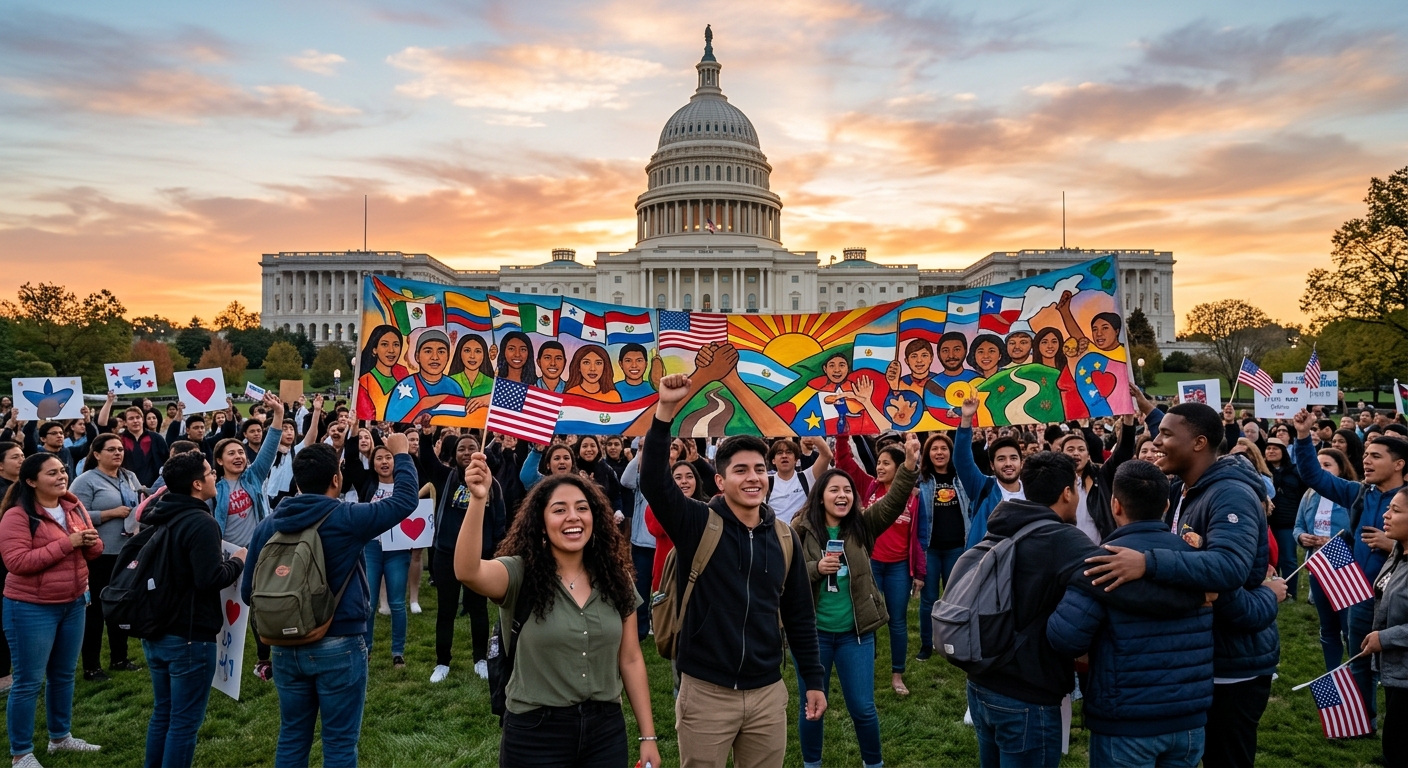
The Enduring Struggle for a Permanent Home
For millions of young people across the United States, the concept of the “American Dream” is not merely an abstract philosophical ideal; it is a tangible, urgent goal fraught with legal uncertainty and decades of political gridlock. These individuals, commonly referred to as “Dreamers,” were brought to the United States as children. They have grown up in American neighborhoods, attended American public schools, and pledged allegiance to the American flag. Culturally and socially, they are intrinsically American in every conceivable way, save for one critical element: the legal paperwork documenting their right to exist in the only country they have ever called home.
Over the past two decades, the legislative and executive battles over how to handle the status of undocumented youth have fluctuated wildly. While executive actions like the Deferred Action for Childhood Arrivals (DACA) program provided a temporary, patchwork shield against deportation, these measures were never intended to be permanent solutions. Today, as DACA faces unrelenting judicial challenges and administrative backlogs, the clarion call for a permanent legislative fix has never been louder. Advocacy for the Dream Act—a comprehensive bill designed to establish a formal pathway to citizenship—has expanded beyond traditional civil rights groups, increasingly garnering fervent support from mainstream business leaders, economic think tanks, and bipartisan coalitions who recognize that making this dream a reality is not just a moral imperative, but an economic necessity.
The Legislative Landscape: From Inception to the Dream Act of 2025
The legislative history of the Dream Act is a testament to persistent advocacy met with cyclical frustration. Originally introduced more than two decades ago, the Development, Relief, and Education for Alien Minors (DREAM) Act proposed a rigorous but achievable pathway for undocumented youth to earn lawful permanent residence. Despite majority public support, the bill has repeatedly fallen victim to partisan impasses, filibusters, and broader disagreements over comprehensive immigration reform.
However, the momentum for a legislative solution continues to build in response to the growing vulnerability of the Dreamer population. A prominent recent milestone in this ongoing effort was the introduction of the Dream Act of 2025 by a bipartisan coalition, notably led by Senate Democratic Whip Dick Durbin and Republican Senator Lisa Murkowski. Introduced in late 2025, this renewed legislative push aims to decisively end the era of temporary reprieves.
The proposed legislation outlines stringent but fair criteria for eligibility. To qualify for lawful permanent residence, and eventually citizenship, applicants must navigate a multi-tiered process. The foundational requirements proposed in recent iterations of the bill generally include:
- Arrival and Age: Demonstrating that the individual was brought to the United States as a minor and has maintained continuous physical presence in the country.
- Educational or Professional Milestones: Graduating from an American high school, obtaining a GED, and subsequently pursuing higher education, working lawfully for a minimum of three years, or completing honorable service in the United States military.
- Background Checks: Passing comprehensive criminal background checks, security clearances, and demonstrating good moral character.
- Financial Responsibilities: Paying application fees and meeting all applicable federal tax obligations.
By establishing these stringent criteria, the legislation addresses national security and economic concerns while rewarding the hard work and integration of individuals who are eager to fully participate in the American system.
The Limits of Executive Action: DACA’s Legal Labyrinth
Understanding the urgent advocacy for the Dream Act requires examining the precarious state of the DACA program. Initiated in 2012 as an executive branch memorandum, DACA provided eligible undocumented youth with temporary protection from deportation and a renewable two-year work authorization document. For hundreds of thousands of recipients, DACA was a lifeline that unlocked access to higher education, professional licensure, and stable employment.
Yet, because DACA was established via executive action rather than congressional legislation, it has remained inherently vulnerable to political transitions and judicial scrutiny. The program has been engulfed in a complex legal labyrinth for years. A significant turning point occurred when the U.S. District Court for the Southern District of Texas issued an injunction declaring the DACA policy unlawful, a decision that essentially froze the program’s expansion.
The legal precarity deepened following the January 2025 ruling by the U.S. Court of Appeals for the Fifth Circuit. Pursuant to these compounding judicial orders, the U.S. Citizenship and Immigration Services (USCIS) was severely restricted in its operations regarding the program. Under current enforcement policies resulting from these court decisions, USCIS is permitted to accept and process renewal requests for current DACA recipients, allowing them to maintain their work authorization and protection from deportation. However, the agency is strictly barred from processing initial, first-time DACA applications. This has created a bifurcated reality: older Dreamers who entered the program years ago cling to a fragile, renewable status, while a younger generation of undocumented high school graduates is entirely locked out of the workforce and vulnerable to sudden deportation.
Furthermore, systemic processing delays at USCIS have exacerbated the anxiety. Recent reports indicate that severe backlogs in processing renewals have led to DACA recipients experiencing temporary lapses in their status. When a renewal is delayed, the consequences are immediate and severe: individuals are placed on unpaid administrative leave by their employers, lose their health insurance, and suddenly face the terrifying prospect of deportation.
The Economic Imperative: Why Business Leaders Advocate for Change
While the moral and humanitarian arguments for protecting Dreamers are profound, the advocacy for the Dream Act has found a powerful new engine: the undeniable economic imperative. Across the political spectrum, economic analysts, Fortune 500 executives, and mainstream editorial boards have coalesced around the reality that marginalizing or deporting Dreamers would inflict catastrophic damage on the U.S. economy.
Dreamers are deeply embedded in the most critical sectors of the American workforce. They are frontline healthcare workers, educators, software engineers, and supply chain logistics managers. Removing hundreds of thousands of working-age, bilingual, and educated professionals from the labor pool during a period of ongoing labor shortages would severely disrupt business operations and stunt economic growth.
Data consistently illustrates the economic footprint of the undocumented youth population. Annually, DACA recipients and DACA-eligible individuals contribute billions of dollars in federal, state, and local taxes. They hold substantial spending power, which stimulates local economies through the purchase of homes, vehicles, and consumer goods. Consequently, prominent business roundtables and conservative-leaning financial advocates have publicly urged Congress to pass the Dream Act. Their argument is straightforward: providing a stable, legal framework for these workers removes market uncertainty, broadens the tax base, and ensures that the U.S. remains competitive in the global talent market.
Comparing the Frameworks: DACA vs. The Dream Act
To fully grasp why advocates insist that DACA is insufficient, it is essential to compare the temporary protections of the executive action with the permanent solutions proposed by the Dream Act.
| Feature | DACA (Executive Action) | Dream Act (Proposed Legislation) |
|---|---|---|
| Legal Status | Deferred action (temporary reprieve), not a lawful status. | Lawful Permanent Residence (Green Card), leading to citizenship. |
| Duration of Protection | Renewable every two years (subject to court orders). | Permanent, with a defined pathway to naturalization. |
| Work Authorization | Requires continuous, fee-based renewal. | Inherent to Lawful Permanent Resident status. |
| New Applicants | Currently blocked by federal court injunctions. | Would open a new, permanent application process for all eligible youth. |
| Vulnerability | High; can be altered by presidential administrations or courts. | Low; protected by federal law enacted by Congress. |
The Human Cost of Legislative Gridlock
Beyond the legal texts and economic projections lies a profound human element. The perpetual state of legal limbo exacts a heavy psychological toll on undocumented youth. Living from one court ruling to the next breeds chronic anxiety, depression, and a sense of institutional alienation. For years, Dreamers have been forced to plan their lives, careers, and families in two-year increments, acutely aware that an adverse ruling by an appellate court could instantly strip away their livelihoods and subject them to the threat of forced removal from the United States.
Grassroots coalitions and immigrant rights organizations have worked tirelessly to keep these human stories at the forefront of the national consciousness. By highlighting the deeply rooted lives of educators, nurses, and military service members who lack permanent status, advocates aim to bridge the partisan divide and illustrate the tangible devastation caused by congressional inaction. Transforming the Dream Act from a recurring legislative proposal into binding federal law is ultimately about recognizing the inherent humanity and undeniable contributions of a generation that is already fundamentally American.
Frequently Asked Questions (FAQs)
What is the primary difference between DACA and the Dream Act?
DACA (Deferred Action for Childhood Arrivals) is an executive policy that temporarily pauses deportation and grants a renewable two-year work permit, but it does not provide legal immigration status or a path to citizenship. The Dream Act is proposed congressional legislation that would grant eligible individuals Lawful Permanent Resident status (a Green Card) and eventually allow them to apply for U.S. citizenship.
Can new applicants currently apply for DACA?
No. Due to ongoing litigation, including decisions from the U.S. District Court for the Southern District of Texas and the U.S. Court of Appeals for the Fifth Circuit, USCIS is barred from processing initial, first-time DACA applications. However, USCIS continues to process renewal applications for individuals who already hold DACA status.
What requirements must be met under the proposed Dream Act of 2025?
While specific legislative language can evolve, the core requirements typically mandate that the individual arrived in the U.S. as a minor, has maintained continuous presence, passes rigorous criminal background and security checks, and fulfills educational, military service, or sustained employment criteria.
Why are business leaders advocating for the Dream Act?
Business leaders and economic experts support the Dream Act because Dreamers represent a vital, educated segment of the U.S. workforce. Providing them with permanent legal status stabilizes the labor market, ensures continued tax contributions, and prevents the severe economic disruptions that would occur if hundreds of thousands of integrated workers were abruptly removed from the economy.
References
- I-821D, Consideration of Deferred Action for Childhood Arrivals — U.S. Citizenship and Immigration Services (USCIS). 2026-06-01. https://www.uscis.gov/i-821d
- Find out about the Deferred Action for Childhood Arrivals (DACA) — USAGov. 2026-03-19. https://www.usa.gov/daca
- Durbin, Murkowski Introduce The Dream Act of 2025 — U.S. Senator Dick Durbin of Illinois. 2025-12-04. https://www.durbin.senate.gov/newsroom/press-releases/durbin-murkowski-introduce-the-dream-act
Similar Articles








Read full bio of medha deb


