
Trailblazing Women Lawyers Who Changed the Law
Explore how pioneering women lawyers broke barriers, reshaped legal systems, and opened doors for future generations worldwide.
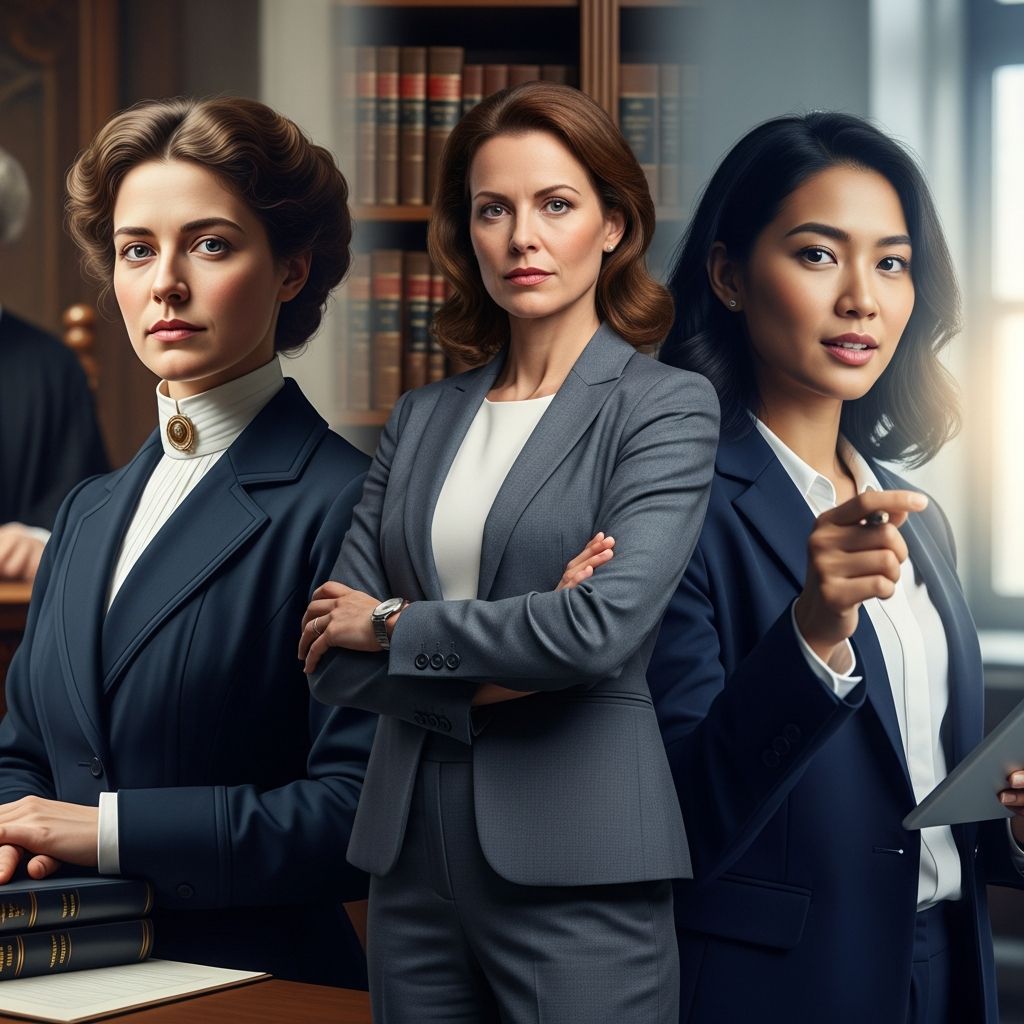
Across centuries and continents, women lawyers have challenged exclusion, rewritten unfair laws, and expanded the idea of who belongs in a courtroom. From the first women admitted to the bar to modern justices on the world’s highest courts, their stories combine legal innovation with profound social change.
This article highlights influential women whose legal work reshaped access to justice and civil rights. It is inspired by well-known examples but presents an original overview, emphasizing what today’s lawyers, students, and justice advocates can learn from their paths.
Why Women Lawyers Matter in Legal History
For much of modern history, the legal profession was defined as a male domain. In the United States, women were formally excluded from many bars until late in the 19th century; similar barriers existed worldwide. Pioneering women lawyers did not simply enter an existing system—they changed it.
- They expanded access to justice by creating institutions like public defender offices and legal aid programs.
- They challenged discriminatory laws on voting, employment, education, and family life.
- They diversified judicial benches, bringing new perspectives to constitutional and human rights issues.
- They became public symbols of women’s capability in leadership and decision-making roles.
These contributions shaped not only legal doctrine but also broader expectations about gender, power, and professional authority.
Early Pioneers: Opening the Courtroom Doors
The earliest women lawyers often had to fight just to sit for bar exams or attend law school. Their victories laid the groundwork for all who followed.
Clara Shortridge Foltz: Architect of the Public Defender
Clara Shortridge Foltz, the first woman lawyer in California, is best known for advancing the idea of a publicly funded defense for people who could not afford lawyers. She helped popularize what is now known as the public defender system, arguing that justice required competent counsel for the poor, not only for those who could pay.
- Fought to change state law so women could sit for the bar exam.
- Proposed the public defender concept at a national legal conference in the 1890s.
- Held numerous “firsts” in public office and legal roles, demonstrating women could lead in government.
Her ideas anticipated the principle the U.S. Supreme Court would later confirm in Gideon v. Wainwright (1963): criminal defendants have a constitutional right to counsel.
Others Who Broke the First Barriers
Foltz was one of several women who cracked open the legal profession:
- Arabella Mansfield (United States) – Generally recognized as the first woman admitted to a U.S. state bar in 1869, after successfully challenging gender restrictions in Iowa.
- Charlotte E. Ray – Among the first Black women admitted to the bar in the U.S. and believed to be the first woman to argue before the District of Columbia Supreme Court.
- Clara González de Behringer (Panama) – The first woman in Panama to earn a law degree and a leading feminist advocate in Latin America, pushing for women’s suffrage and education.
These early figures were often the only women in their law schools, bar associations, or courtrooms, setting precedents that later generations would normalize.
Challenging Discrimination: Lawyers as Civil Rights Architects
As more women entered the profession, some used their legal skills to challenge the very barriers they had faced. Their work transformed constitutional and human rights law.
Ruth Bader Ginsburg: Reframing Equal Protection
Ruth Bader Ginsburg moved from law professor to litigator to Supreme Court justice, redefining how the U.S. Constitution treats sex discrimination. Before joining the bench, she co-founded the Women’s Rights Project at the American Civil Liberties Union (ACLU) and argued landmark cases that persuaded the Supreme Court to apply equal protection principles to gender-based laws.
| Phase of Career | Key Contributions |
|---|---|
| Scholar and Litigator | Developed a strategic litigation campaign challenging laws that reinforced stereotypical roles for men and women. |
| ACLU Women’s Rights Project | Brought cases showing how sex-based classifications harmed both men and women, reshaping equal protection doctrine. |
| Supreme Court Justice | Wrote majority opinions and notable dissents on gender equality, voting rights, and civil procedure, influencing generations of jurists. |
Her strategy—incremental, fact-rich, and grounded in real-world harms—has become a model for rights-based impact litigation worldwide.
Constance Baker Motley and Civil Rights Litigation
Constance Baker Motley, working with the NAACP Legal Defense Fund, played a pivotal role in U.S. civil rights litigation. She was the first Black woman to argue a case before the U.S. Supreme Court and contributed to key desegregation lawsuits following Brown v. Board of Education.
- Drafted or argued cases that dismantled school segregation and discriminatory public accommodations.
- Later became a federal judge, demonstrating how civil rights lawyers can transition to the judiciary and carry their perspectives to the bench.
Women on the Bench: Redefining Judicial Leadership
Once nearly absent from the bench, women now serve on constitutional courts, supreme courts, and international tribunals around the world. Their presence has altered both decision-making processes and public perceptions of justice.
Sandra Day O’Connor: The First Woman on the U.S. Supreme Court
Sandra Day O’Connor became the first woman justice of the U.S. Supreme Court in 1981. Before her nomination, she had built a career in state politics and on the Arizona Court of Appeals.
- Often served as a decisive “swing vote” in close constitutional cases, including decisions on reproductive rights and federalism.
- Helped found organizations such as the National Association of Women Judges, supporting women’s advancement in the judiciary.
- Promoted civic education after retirement, emphasizing informed participation in democracy.
Her appointment symbolized a turning point: it became harder to claim that only men were suited to answer the nation’s hardest constitutional questions.
Beverley McLachlin: Transforming Canada’s High Court
Beverley McLachlin became the first woman Chief Justice of the Supreme Court of Canada in 2000 and the longest-serving in that position. Under her leadership, the Court handed down significant rulings on the Canadian Charter of Rights and Freedoms, Indigenous rights, and access to justice.
Her tenure illustrates how women at the helm of high courts can steer jurisprudence on equality and human rights while also managing institutional reforms, such as improving transparency and public outreach.
Lawyers as Public Officials and Policy Makers
Some women lawyers have left the courtroom to lead justice systems from within government, using their legal training to craft public policy and oversee national law enforcement.
Janet Reno: First Woman U.S. Attorney General
Janet Reno served as the first female Attorney General of the United States, leading the Department of Justice throughout both terms of President Bill Clinton’s administration.
- Oversaw federal law enforcement and civil rights enforcement during a period of intense political and social change.
- Became a visible symbol of women’s capacity for high-level legal leadership, inspiring more women to seek senior public roles.
Her tenure underscores how legal expertise can translate into national-level decision-making power, shaping everything from criminal enforcement priorities to civil rights policy.
Global Perspectives: Women Lawyers Beyond the United States
While many famous examples come from U.S. history, women lawyers across the world have also driven legal transformation and feminist advocacy.
Latin American and Caribbean Trailblazers
In Latin America, women attorneys often combined professional practice with activism in democratic transitions, human rights, and gender equality. Figures like Clara González de Behringer used legal education to promote women’s civic participation and labor rights.
- Founded feminist organizations and legal education programs for women.
- Advocated for suffrage and equal civil status in national constitutions.
These efforts contributed to a broader regional shift that has seen women increasingly represented in legislatures, courts, and bar associations.
Human Rights Advocates and International Law
Women lawyers have also played prominent roles in international criminal and human rights law—serving as prosecutors at international tribunals, judges on regional human rights courts, and senior officials in organizations such as the United Nations.
- Prosecuting war crimes and crimes against humanity, setting precedents on issues like sexual violence in conflict.
- Advising on treaties that address discrimination, trafficking, and protections for marginalized groups.
Their work shows how legal training can operate across borders, influencing global norms and enforcement mechanisms.
Enduring Themes in the Lives of Famous Women Lawyers
Despite differences in nationality, era, and practice area, several themes recur in the stories of famous women lawyers:
- Persistence amid exclusion: Many were initially denied bar admission, law school entry, or employment, yet persisted through litigation, legislation, or public campaigning.
- Strategic use of law for social change: Rather than fighting every battle at once, they often chose carefully crafted test cases or targeted reforms.
- Dual roles as professionals and activists: They balanced conventional legal careers with advocacy on voting rights, labor protections, racial justice, or gender equality.
- Commitment to mentoring: Once established, many devoted time to teaching, mentoring, and building professional networks for younger women in law.
Lessons for Today’s Law Students and Practitioners
The careers of these trailblazers offer practical guidance for anyone considering or pursuing a legal path.
Key Takeaways for Aspiring Lawyers
- Legal skills are tools, not ends in themselves. The most impactful lawyers connect doctrine to the real lives of clients and communities.
- Institution-building matters. Founding clinics, advocacy organizations, or new court systems can create lasting change far beyond a single case.
- Diversity improves justice systems. Research on courts suggests that more diverse benches can influence deliberations and outcomes, particularly in discrimination and civil rights cases.
- Resilience is a core professional competency. Many pioneers faced public ridicule, isolation, or professional retaliation yet continued their work.
Frequently Asked Questions (FAQs)
Who was the first woman to become a lawyer in the United States?
In 1869, Arabella Mansfield became the first woman admitted to a U.S. state bar (Iowa) after the court interpreted the word “person” broadly enough to include women, opening the door for others to follow.
Why is Ruth Bader Ginsburg often highlighted among women lawyers?
Ruth Bader Ginsburg is widely recognized because she combined a strategic litigation campaign against sex discrimination with a long tenure on the U.S. Supreme Court, where her opinions and dissents significantly shaped modern equality jurisprudence.
What is the significance of Clara Shortridge Foltz’s public defender idea?
Foltz’s proposal for government-funded defense counsel for indigent defendants helped lay intellectual groundwork for the modern public defender system, which ensures that people without resources still receive legal representation in criminal cases.
Have women lawyers influenced law outside of courtrooms?
Yes. Many have served as legislators, cabinet officials, law school deans, and community organizers, shaping statutes, legal education, and public discourse in addition to litigating cases.
Why is documenting the history of women lawyers important?
Recording these histories corrects the historical record, provides role models for underrepresented groups, and illuminates how legal systems evolve through the inclusion of new voices and perspectives.
References
- 6 Famous Female Lawyers & Their Impact — The Colleges of Law. 2021-03-24. https://www.collegesoflaw.edu/blog/2021/03/24/6-famous-female-lawyers-and-their-impact-on-the-field/
- Women lawyers who made history — The Impact Lawyers. 2020-03-08. https://theimpactlawyers.com/articles/women-lawyers-who-made-history
- The most famous women who have served as lawyers — One Legal. 2023-03-01. https://www.onelegal.com/blog/the-most-famous-women-lawyers/
- Famous Female Lawyers Who Shaped the Legal Industry — LexisNexis Legal Thought Leadership. 2021-03-05. https://www.lexisnexis.com/blogs/en-ca/b/legal-thought-leadership/posts/famous-female-lawyers-who-shaped-the-legal-industry
- Ruth Bader Ginsburg — Oyez, IIT Chicago-Kent College of Law. 2020-09-18. https://www.oyez.org/justices/ruth_bader_ginsburg
- Women in the Judiciary — United Nations Office on Drugs and Crime & UN Women. 2021-03-01. https://www.unodc.org/documents/ji/training/women_in_the_judiciary.pdf
- Enhancing Justice: Reducing Bias — National Center for State Courts. 2012-06-01. https://www.ncsc.org/~/media/Microsites/Files/CSI/BJS%20Reports/Enhancing_Justice_Reducing_Bias.ashx
Similar Articles








Read full bio of Sneha Tete


