
Top TV Judges Who Defined Courtroom Drama
Discover the most iconic television judges who captivated audiences with sharp rulings and unforgettable courtroom showdowns.
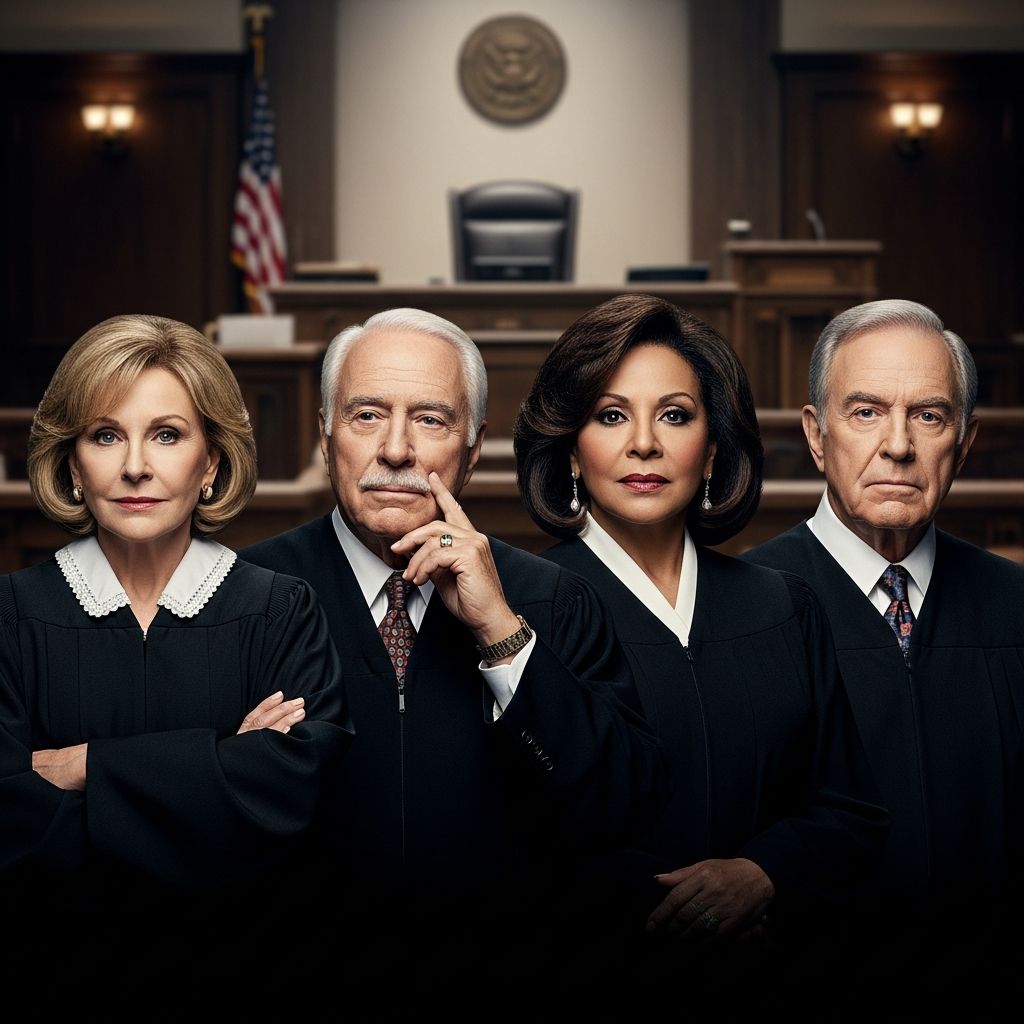
Television courtroom shows have long been a staple of daytime programming, blending real legal disputes with dramatic flair to keep viewers hooked. These programs feature judges who are not just arbitrators but entertainers, delivering justice with wit, authority, and charisma. From the no-nonsense rulings of Judge Judy to the street-smart wisdom of Judge Mathis, these figures have shaped how millions perceive the legal system. This article ranks and analyzes the most influential TV judges, drawing on their backgrounds, show formats, and lasting legacies.
The Rise of Reality Courtroom Television
Reality court shows emerged in the late 20th century as a cost-effective alternative to scripted dramas, offering genuine cases with binding arbitration. Pioneered by programs like The People’s Court, they tapped into public fascination with voyeuristic justice. By the 1990s and 2000s, the genre exploded, with judges becoming household names. These shows typically involve small claims disputes—ranging from unpaid loans to neighbor feuds—resolved in a studio mimicking a real courtroom. Their appeal lies in the judges’ unfiltered personalities, which humanize complex legal processes.
Audience metrics highlight their dominance: syndicated hits often topped Nielsen ratings, proving their enduring popularity. Unlike fictional portrayals, these real arbitrations educate viewers on basic legal principles while providing cathartic entertainment.
Judge Judy: The Queen of Quick Justice
Judith Sheindlin, known worldwide as Judge Judy, revolutionized the genre with her eponymous show that ran from 1996 to 2021. A former Manhattan family court judge, Sheindlin brought her decades of experience to television, handling cases with razor-sharp efficiency. Her style—blunt, impatient with excuses, and laced with sarcasm—made her a cultural icon. Episodes averaged 10-minute resolutions, emphasizing accountability over legalese.
Sheindlin’s impact extends beyond ratings; she reportedly earned over $100 million annually at her peak, underscoring the show’s profitability. Her rulings, while not actual court judgments, influenced public discourse on personal responsibility. Post-retirement, her Judy Justice continues the legacy on streaming platforms, proving her timeless appeal.
- Key Strengths: Uncompromising honesty and rapid case turnover.
- Notable Moments: Viral clips of her scolding litigants for dishonesty.
- Audience Reach: Over 10 million daily viewers at peak.
Judge Mathis: Street Justice with Heart
Greg Mathis, star of Judge Mathis since 1999, stands out for his unique blend of toughness and empathy. A former Detroit gang member turned judge, Mathis uses his past to connect with plaintiffs and defendants from similar backgrounds. His show focuses on moral lessons alongside legal resolutions, often incorporating life advice that resonates deeply.
Mathis’s real credentials include serving as a Michigan district court judge, lending authenticity to his arbitration. The program has aired over 20 seasons, maintaining strong viewership through its motivational tone. Fans praise his ability to defuse tense situations with humor, making complex disputes accessible.
| Aspect | Judge Mathis Show Highlights |
|---|---|
| Run Time | 1999–Present |
| Average Cases per Episode | 4–5 |
| Signature Style | Motivational speeches and tough love |
| Award Nominations | Multiple Daytime Emmy nods |
Judge Joe Brown: The Maverick Enforcer
Joseph B. Brown Jr., host of Judge Joe Brown from 1998 to 2013, brought a prosecutorial edge to the bench. As a former Shelby County criminal court judge in Tennessee, Brown handled high-stakes cases in real life before television. His show emphasized strict adherence to facts, often grilling litigants with legal trivia to expose weaknesses.
Brown’s tenure ended amid contract disputes, but his no-frills approach earned a loyal following. He was known for dramatic rulings and occasional outbursts, adding raw intensity. Post-show, Brown has pursued acting and commentary, keeping his name in legal entertainment circles.
- Unique Trait: Demanding proof from both sides equally.
- Memorable Feuds: On-air clashes with repeat offenders.
- Legacy: Influenced stricter arbitration standards.
Other Standout Figures in TV Justice
Beyond the top trio, several judges have left indelible marks. Marilyn Milian of The People’s Court (2001–present) offers poised, multilingual rulings with a focus on fairness. Her background as a Florida circuit judge adds gravitas. Similarly, Lynn Toler’s run on Divorce Court brought emotional depth to marital disputes, emphasizing mediation.
Faith Jenkins (Judge Faith) and Mablean Ephriam (Justice with Judge Mablean) represent diverse voices, tackling family law with cultural sensitivity. These shows diversify the genre, appealing to varied demographics.
Comparing the Icons: A Head-to-Head Analysis
To understand their dominance, consider this comparison:
| Judge | Show Years | Style | Peak Viewership (Millions) | Real Judiciary Experience |
|---|---|---|---|---|
| Judy Sheindlin | 1996–2021 | Blunt & Sarcastic | 10+ | Family Court |
| Greg Mathis | 1999–Present | Motivational | 5–7 | District Court |
| Joe Brown | 1998–2013 | Strict & Intense | 4–6 | Criminal Court |
| Marilyn Milian | 2001–Present | Balanced & Fair | 3–5 | Circuit Court |
This table illustrates stylistic diversity while highlighting shared roots in actual courts, enhancing credibility.
Cultural Impact and Criticisms
TV judges have democratized legal education, teaching concepts like evidence and contracts to non-lawyers. Studies show viewers report increased legal awareness post-watching. However, critics argue these shows sensationalize justice, prioritizing drama over nuance. Real judges, per American Bar Association guidelines, must avoid bias— a standard these arbitrators navigate carefully.
Despite flaws, their influence persists: merchandise, spin-offs, and parodies abound. They also inspire careers; many lawyers cite courtroom TV as entry points to law.
Frequently Asked Questions (FAQs)
What makes TV judges different from real ones?
TV judges act as arbitrators in binding but limited-jurisdiction shows, not full courts. Cases are pre-screened, and awards cap at small claims levels, unlike formal trials.
Are the cases on these shows real?
Yes, disputes are genuine, with parties agreeing to arbitration. Outcomes are enforceable, though dramatized for TV.
Who is the most watched TV judge ever?
Judge Judy holds the record with consistent top ratings over 25 years.
Do TV judges get paid like celebrities?
Top earners like Sheindlin command massive salaries, reflecting syndication success.
Will courtroom TV survive streaming?
Absolutely—platforms like Amazon host reboots, adapting to on-demand viewing.
The Future of Courtroom Entertainment
As traditional TV wanes, these judges pivot to digital: podcasts, YouTube, and true-crime crossovers. Emerging shows incorporate social media verdicts, blending old-school authority with new tech. Expect more diverse benches, reflecting societal shifts toward inclusivity.
In summary, TV judges like Judy, Mathis, and Brown aren’t just entertainers—they’re legal populists who made justice binge-worthy. Their formulas endure because they mirror life’s messiness, resolved with authority and flair.
References
- 7 of the best TV court shows of all time — Revolt TV. N/A. https://www.revolt.tv/article/7-of-the-best-tv-court-shows-of-all-time
- Who Is The Best TV Judge of All Time? (POLL) — TV Insider. N/A. https://www.tvinsider.com/gallery/best-tv-judge-of-all-time-poll-judge-joe-brown-mathis-judy-springer/
- Judge Joe Brown — Wikipedia. 2026-04-03. https://en.wikipedia.org/wiki/Judge_Joe_Brown
- Favorite Movie and Television Judges — ABA Journal. N/A. https://www.abajournal.com/gallery/favorite_movie_television_judges/
Similar Articles








Read full bio of Sneha Tete




